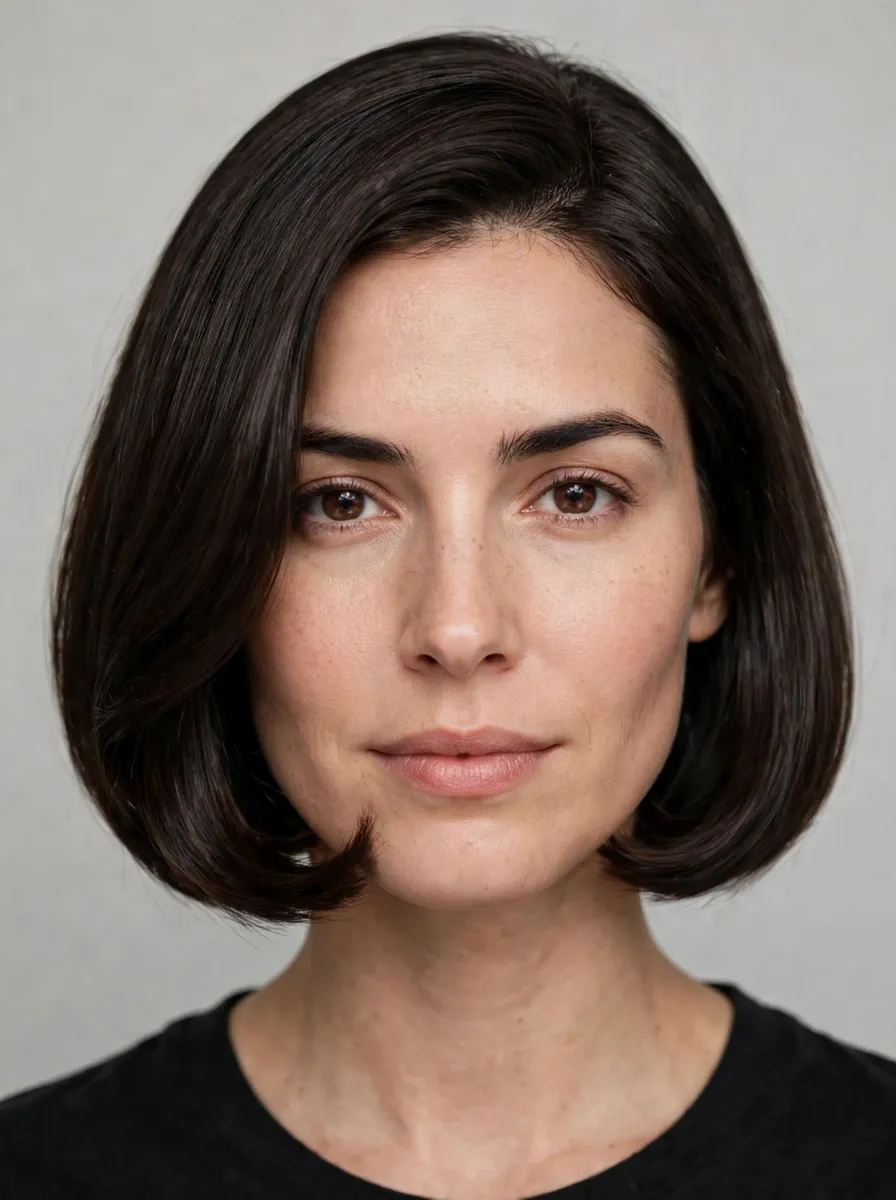
Pixie Cuts for Thick Hair: 10 Styles That Remove the Bulk

A pixie cut on thick hair is one of the great hair bargains: you have the density most short styles are designed to fake, so the shape holds itself up, styles in minutes, and grows out with structure. The only enemy is bulk. Thick hair cut without a debulking plan expands sideways as it grows and lands in the dreaded mushroom silhouette — round, wide and helmet-like.
Every style in this guide is chosen to prevent that: each one removes weight somewhere deliberate — an undercut, a taper, internal layers, point-cut texture — so the pixie sits close and defined instead of puffing out. If your hair is the opposite problem, the companion guide to pixie cuts for fine hair uses completely different techniques, which is exactly why the two should never be cut the same way.
1. Textured Pixie with a Soft Undercut
The reference style for thick hair. The sides and back are undercut — clipped short underneath while the top keeps its length and texture — which removes the exact zone where thick pixies go wide. “Soft” is the key word: the undercut is blended rather than disconnected, so it reads as a clean pixie, not a statement shave. This is the safest first pixie for very thick hair.
2. Long Pixie for Thick Hair
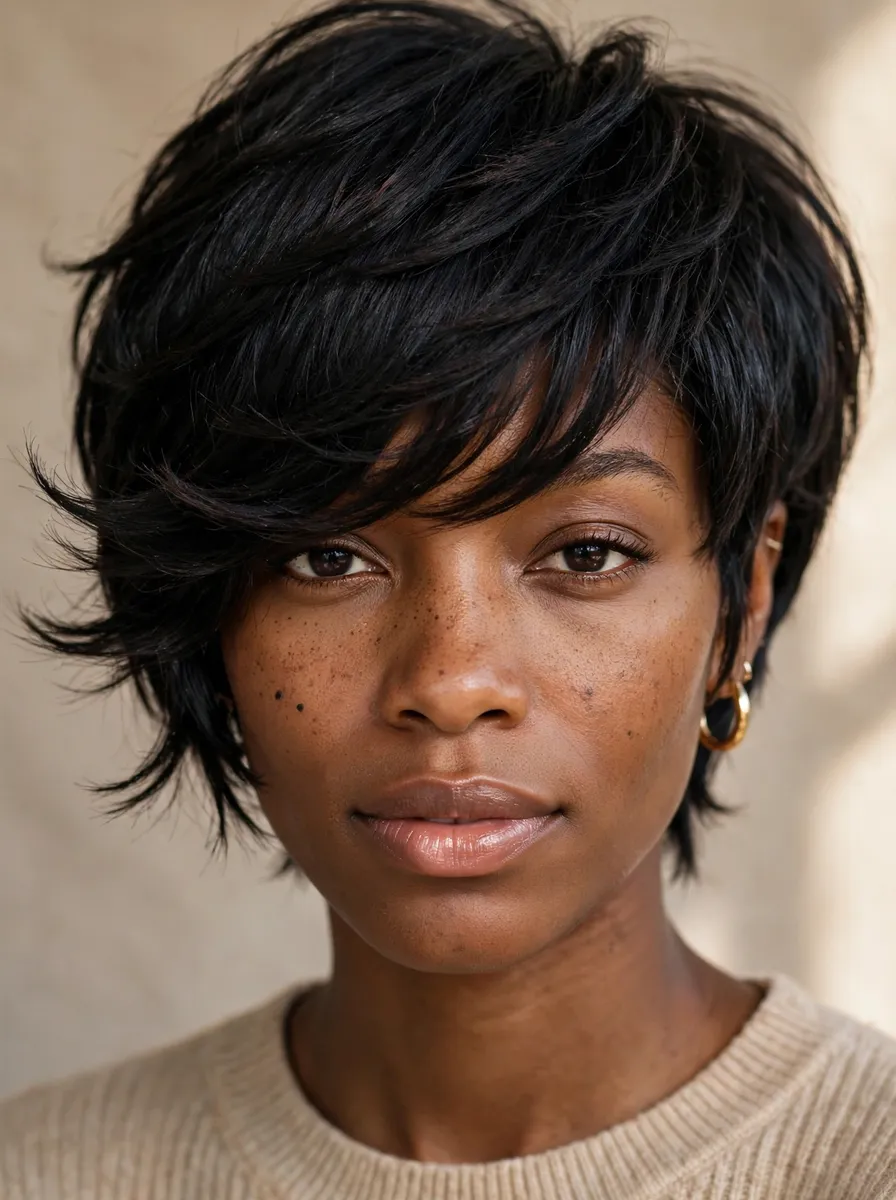
A longer top — three to four inches — worn swept forward or to the side, with the weight taken out through the mid-lengths rather than off the ends. Length is actually thick hair’s friend here: the weight of the longer top pulls the sides down and keeps the silhouette narrow. It is also the easiest pixie to grow out, which makes it the committal-phobe’s pick. Compare the styling approach with the general long pixie cuts guide.
3. Choppy Pixie
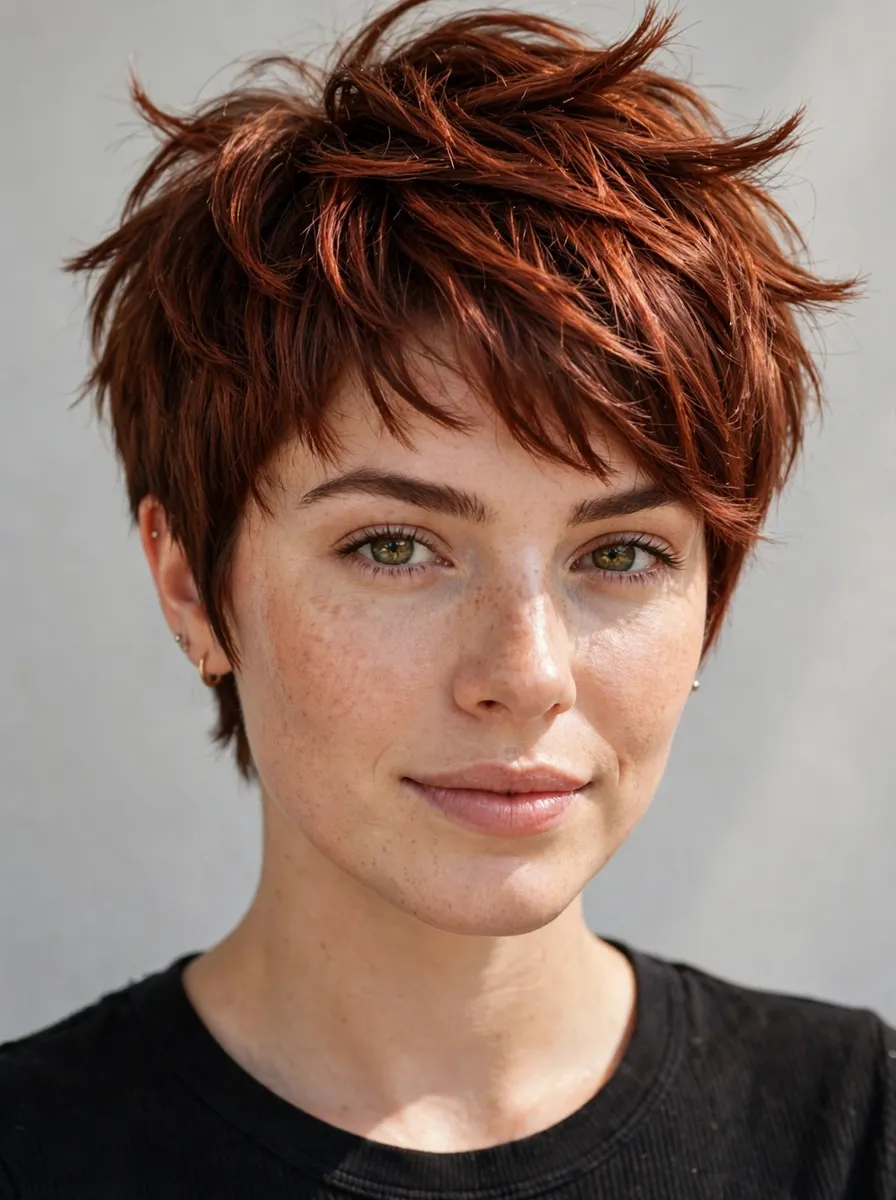
Point-cutting the ends into visible pieces breaks up thick hair’s solid mass better than any other technique. The choppiness is doing structural work: separated pieces cannot form a single rounded helmet shape. A fingertip of matte paste, pinched through the ends, is the whole styling routine.
4. Pixie Bob for Thick Hair
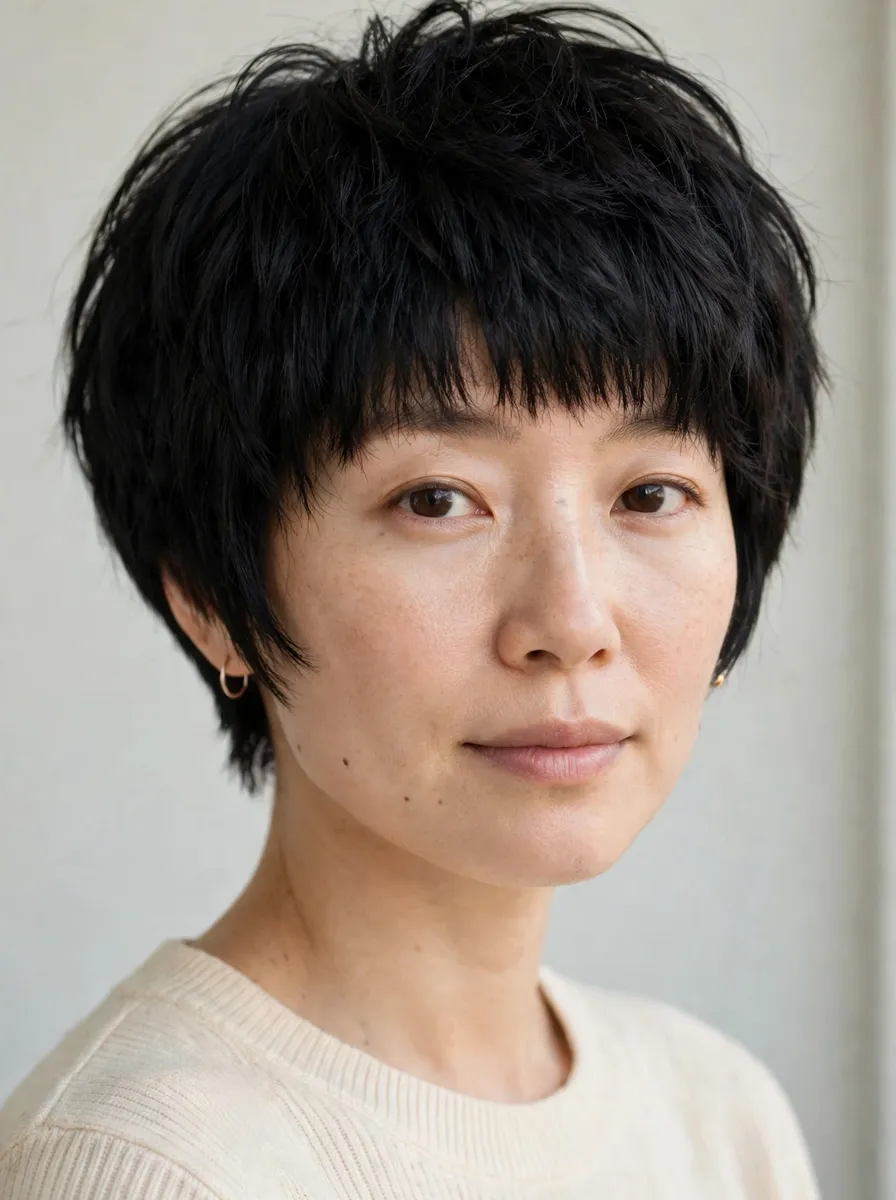
The bixie-pixie hybrid keeps bob length at the front and a cropped, debulked back. Thick hair gives the front sections real presence, while internal layering stops the back stacking into a wedge by week three. If you like this shape, the pixie bob haircuts and bixie cuts guides show the full range of the hybrid.
5. Tapered Pixie
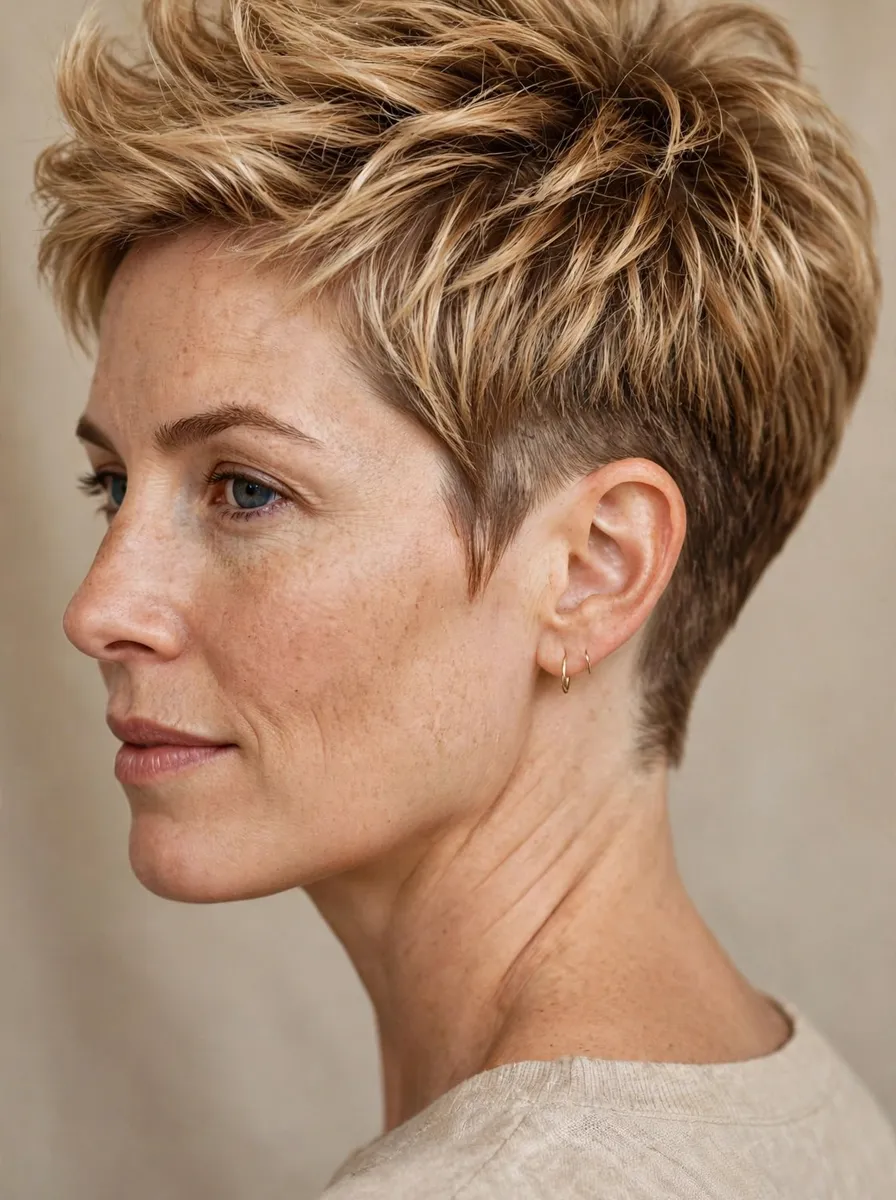
Tapering graduates the sides and nape down close to the head while the crown keeps texture. On thick hair the taper is what keeps the hairline clean — a blunt nape on dense hair kicks out within a fortnight. This is the lowest-maintenance shape here: the silhouette survives six to eight weeks because the growth pattern follows the taper.
6. Pixie with Side-Swept Bangs
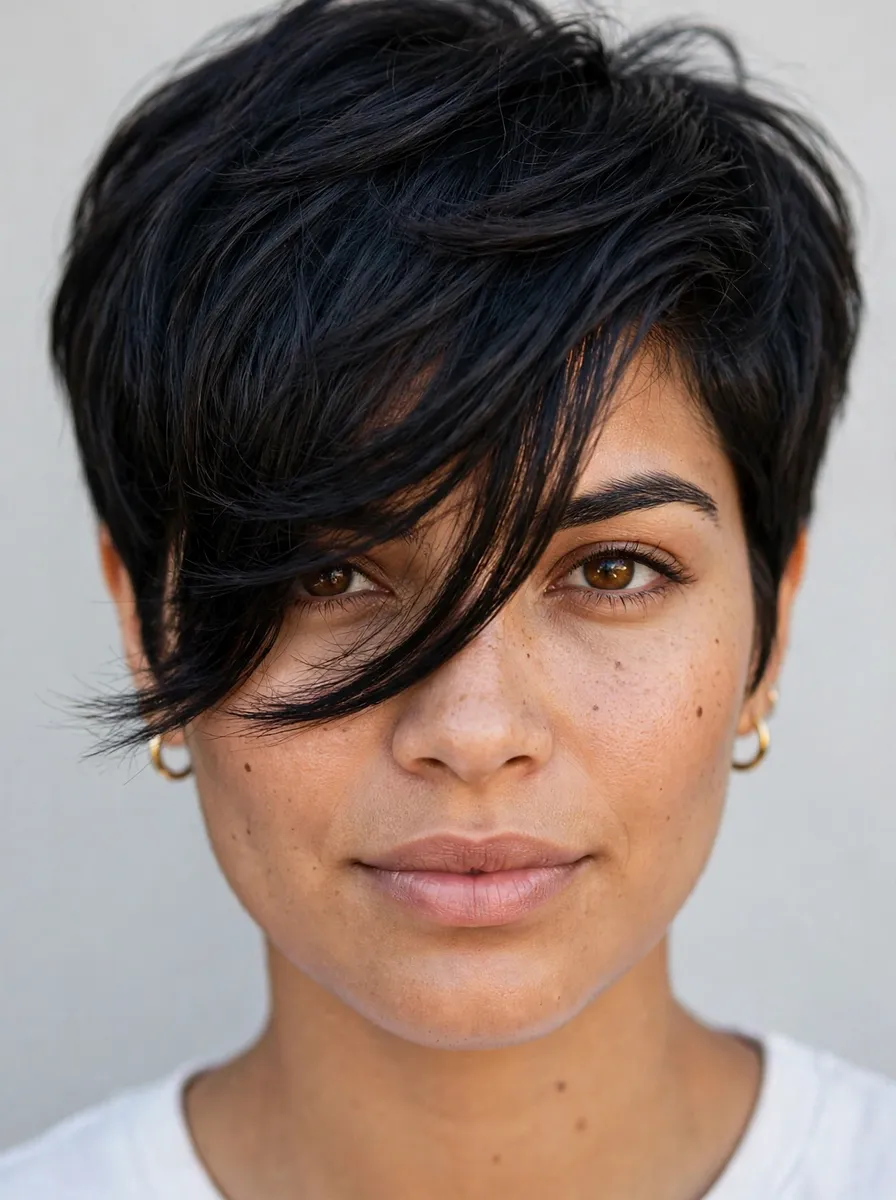
A long, sweeping fringe worn diagonally uses thick hair’s natural body as the styling — the fringe stays where it is swept because the hair has the weight to hold direction. The fringe must be point-cut and lightly thinned at the very ends only; a blunt, full-thickness fringe on thick hair sits like a shelf. For more fringe-led options see pixie cuts with bangs.
7. Curly Pixie for Thick Hair
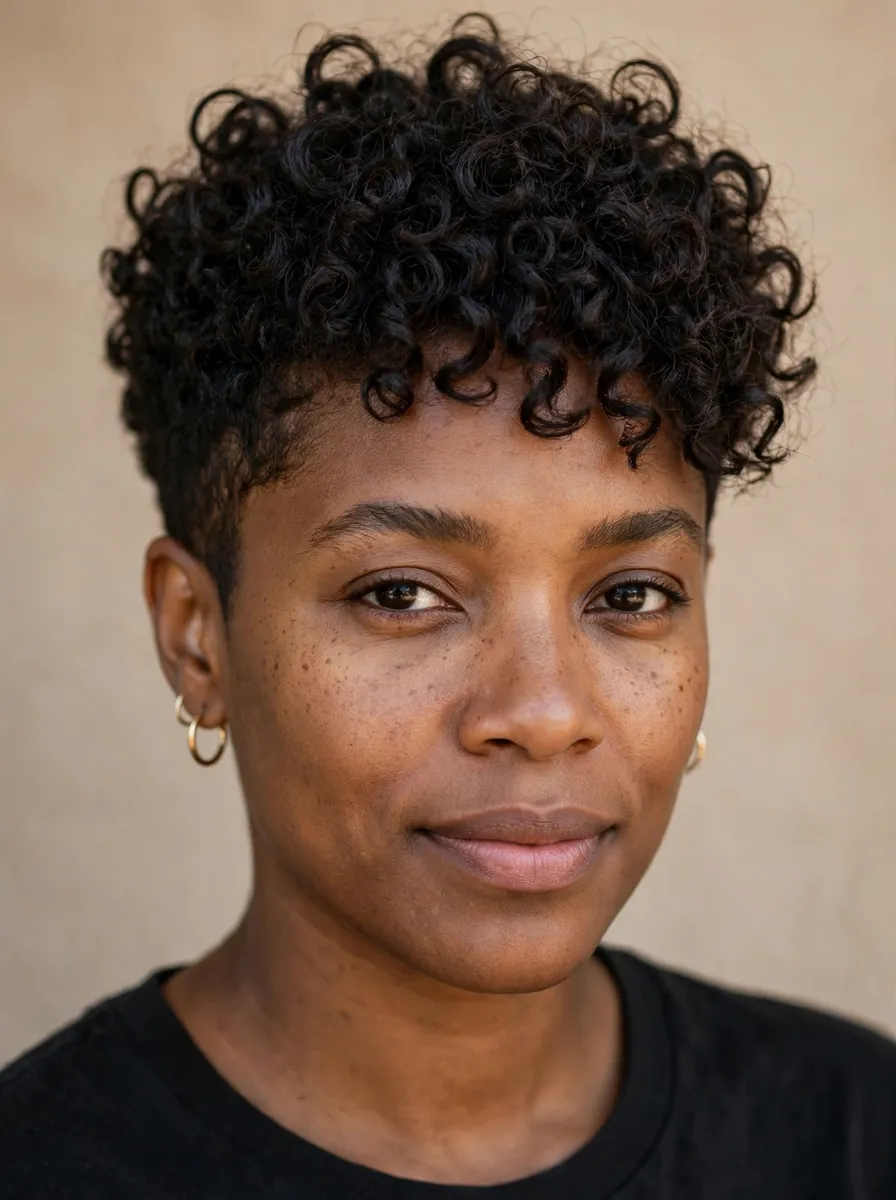
Thick curly hair at pixie length is gloriously voluminous — the trick is shaping the volume upward rather than outward. Keep the sides tapered or undercut, leave the top long enough for curls to form complete rings, and have it cut dry so the stylist sees the true silhouette. The curly pixie cuts guide covers curl-specific shaping in depth.
8. Shaggy Pixie
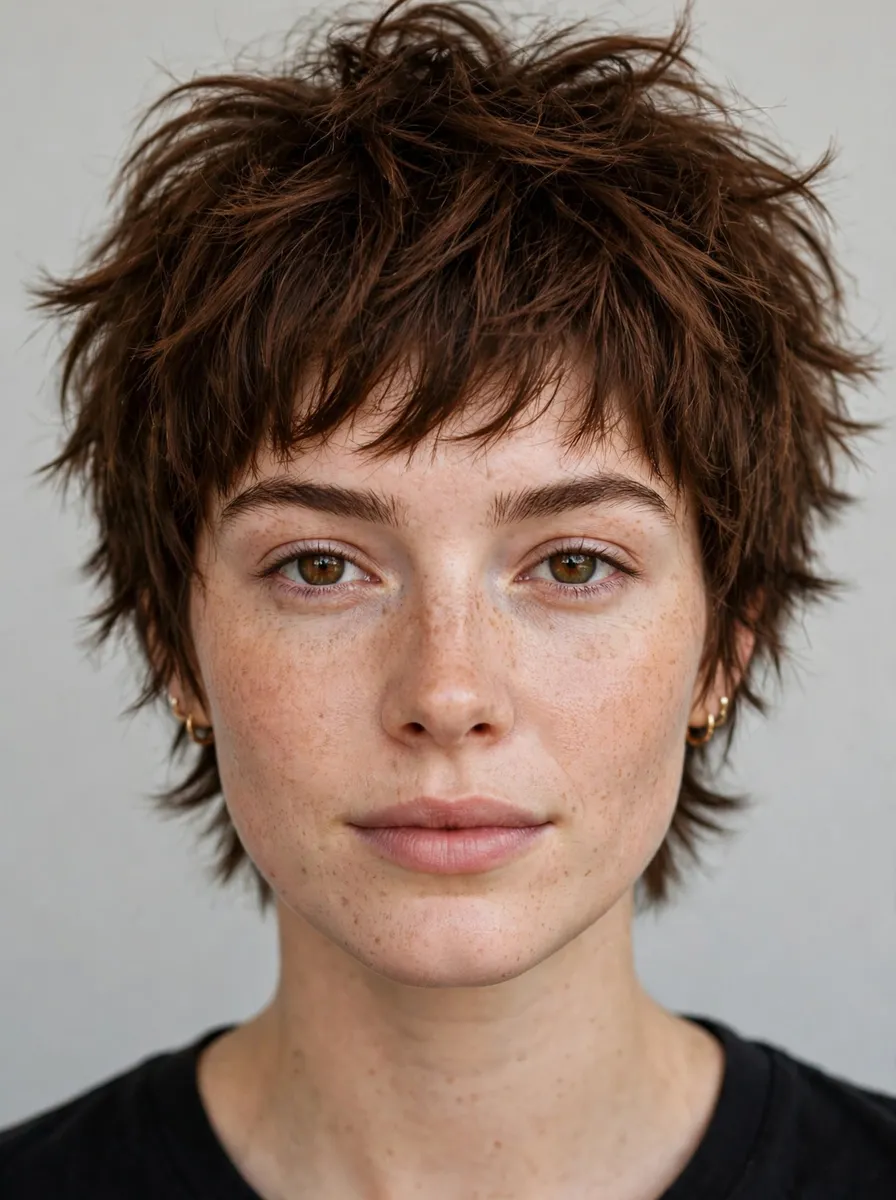
The one version where a razor is welcome: on thick hair, razored ends remove weight and add the shaggy separation that stops the cut reading as a solid block. Lots of internal texture, flicked ends, deliberate mess. It needs the least daily styling of any style here and the most frequent trims to keep the shape from collapsing into bulk — every four to five weeks.
9. Asymmetrical Pixie
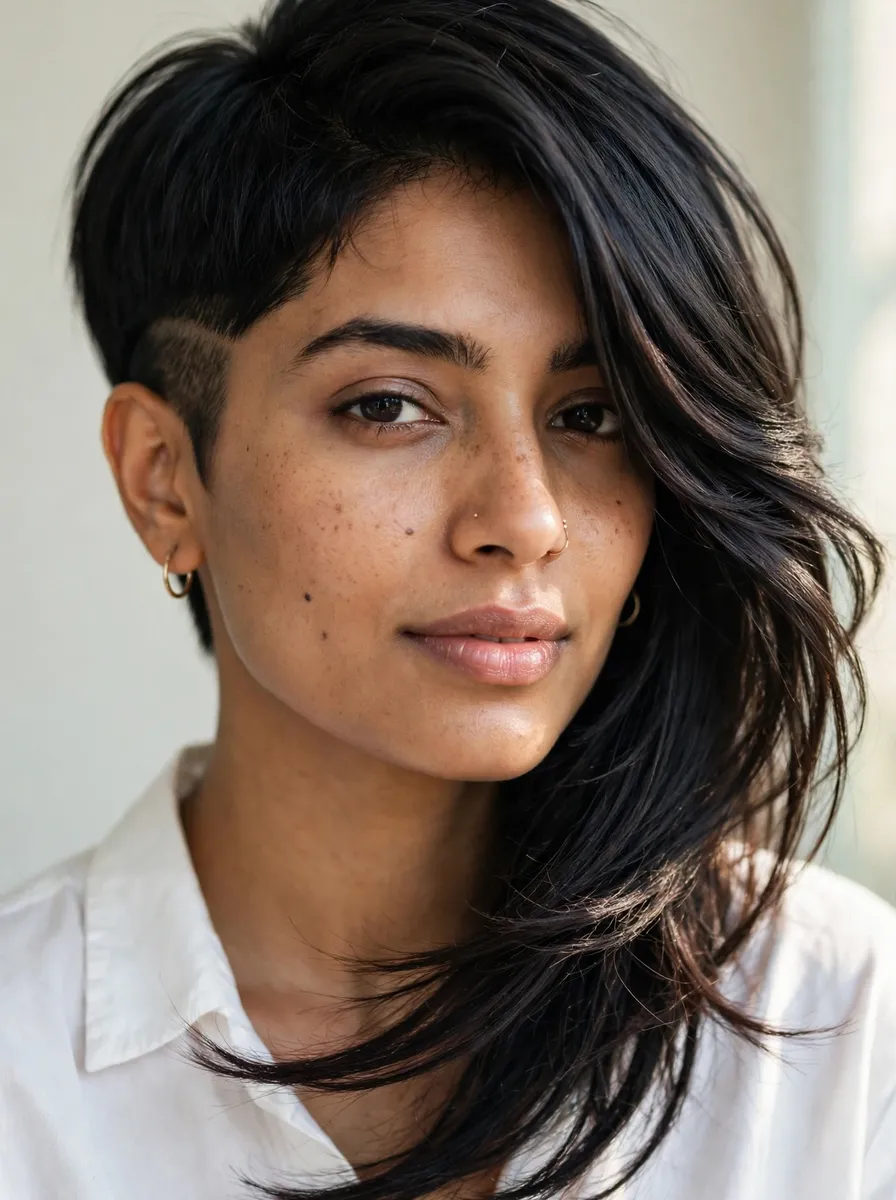
One side cropped close, the other left long and sweeping. Asymmetry is a genuine debulking strategy: the short side removes a third of the hair’s mass outright, and the long side gets to keep the drama. Thick hair holds the long side’s sweep without product heroics. It is the boldest cut here and, for dense hair, one of the most practical.
10. Soft Grown-Out Pixie

For anyone leaving a pixie behind, or who wants the softest possible version: edges feathered, no undercut, length through the nape and around the ears. On thick hair this only works with weight removed internally — ask for sliced-out bulk rather than surface layers — otherwise the grow-out phase is a triangle. Cut this way, it transitions gracefully toward a bob.
The Debulking Techniques to Ask For by Name
Thick-hair pixies succeed or fail on technique, so ask precisely. Point cutting the ends removes weight while keeping the outline defined. Internal (invisible) layers take bulk from the mid-lengths without shortening the surface. Slide cutting along the sides stops them kicking out. Thinning shears have a place — in the interior, never at the hairline or fringe ends, where they create fuzz. And the rule that protects everything else: never let anyone remove bulk by cutting the top shorter — that is how the mushroom starts.
Frequently Asked Questions
Is a pixie cut good for thick hair?
Yes — thick hair is arguably the ideal density for a pixie. The shape holds itself up without product, the outline stays defined, and the cut grows out with structure. The one condition is debulking: the stylist must remove weight deliberately with point cutting, internal layers or an undercut. A thick pixie cut blunt and left alone will expand sideways as it grows.
How do I stop a thick pixie from looking puffy or like a mushroom?
The mushroom shape comes from bulk at the sides combined with a short top. Prevent it by removing weight where it forms: taper or undercut the sides, keep the top a little longer so its weight holds the silhouette down, and get the ends point-cut rather than blunt. At home, style the sides flat against the head and put any volume at the crown, never at the temples.
Should thick hair get an undercut with a pixie?
If your hair is genuinely dense, an undercut is the single most effective debulking move — it removes the widest part of the silhouette entirely. A soft, blended undercut suits almost everyone; a disconnected undercut is a stronger statement and shows a hard line as it grows. If you are unsure, start blended: it can always be taken shorter at the next appointment.
How often does a thick-hair pixie need trimming?
Every 4 to 6 weeks. Thick hair does not just get longer, it gets wider, so the silhouette changes faster than fine-hair pixies do. Undercuts and tapers need the tighter end of that range to stay clean; longer and shaggier versions can stretch to 6 or even 7 weeks if the debulking was thorough.
What products work best on a thick pixie?
Less than you think, and matte rather than shiny. A pea-sized amount of matte paste or clay for separation and control is the daily driver. Avoid heavy oils and high-shine gels, which make dense hair look greasy and clumped. For curly thick pixies, a light curl cream scrunched in damp is enough — the hair supplies its own volume.
Will a pixie make thick hair easier to manage?
Day to day, dramatically: washing, drying and styling all shrink to minutes because there is simply less hair and it dries fast. The trade-off is appointment frequency — you exchange daily effort for a standing 4-to-6-week trim. Most thick-haired pixie wearers consider that an excellent deal, since long thick hair was costing them time every single day instead.
If daily ease is the goal and you want the side and nape bulk gone entirely, an undercut pixie removes that weight altogether — the thick-hair version is covered in our undercut guide.