Curly Pixie Cuts: 10 Shapes That Work With Your Curls
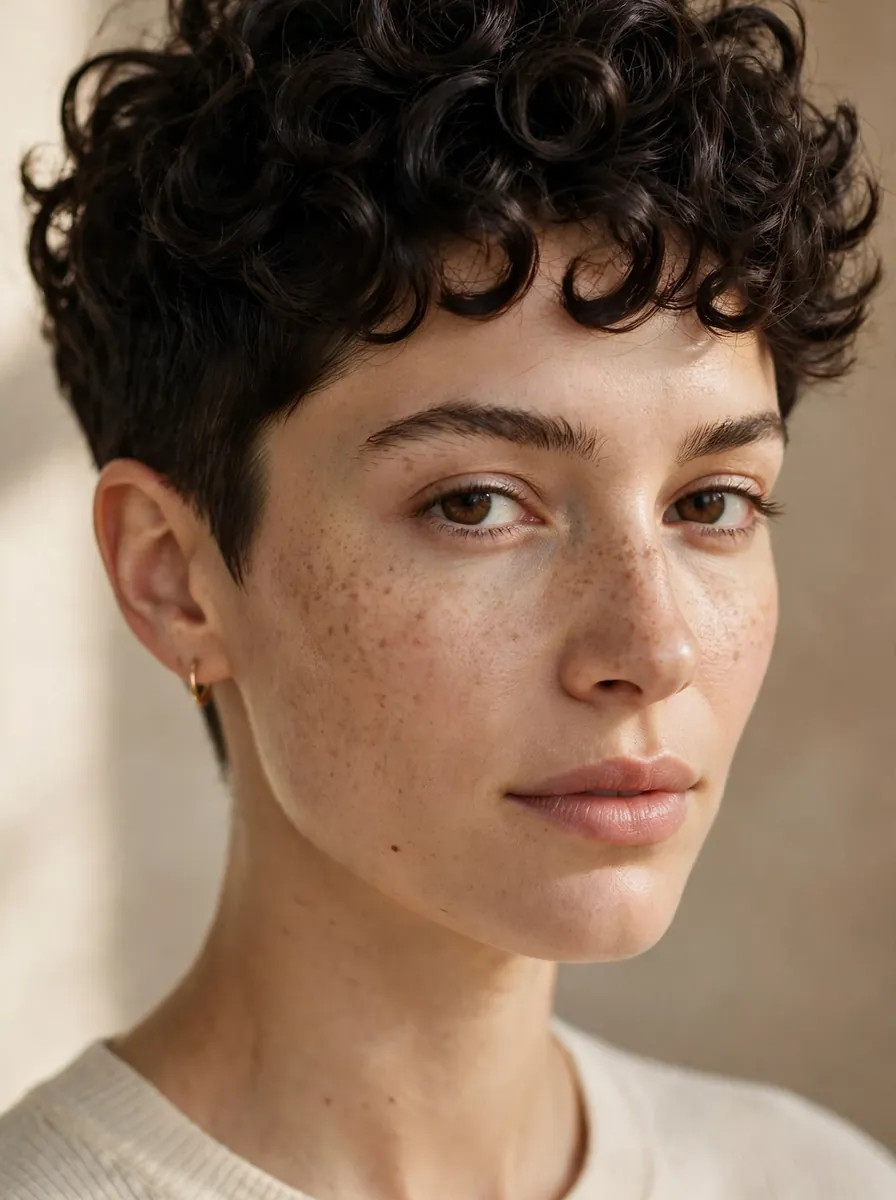
A curly pixie cut is one of the most striking short hairstyles there is — curls give a pixie built-in volume, texture, and movement that straight hair has to fake with product. It is also the pixie that goes wrong most often, because a curly pixie is not a straight pixie that happens to be curly. Curls shrink, spring, and change shape as they dry, and the cut has to be planned around that from the first snip.
The reassuring news: your curls are an advantage here. Where a straight pixie needs daily styling to avoid looking flat, a curly pixie mostly needs the right shape cut in, then a simple routine. Our feminine pixie cuts guide includes a short curly section; this guide goes all in on curls — 10 shapes, plus the cutting and styling rules that make them work.
1. Classic Curly Pixie
The reference curly pixie: curls left long enough on top to form complete, visible ringlets, with the sides and nape cut shorter and close. The proportions matter more than the exact length — the top needs at least one full curl rotation, or the hair reads as fuzz rather than curl.
2. Wavy Pixie with Loose Texture
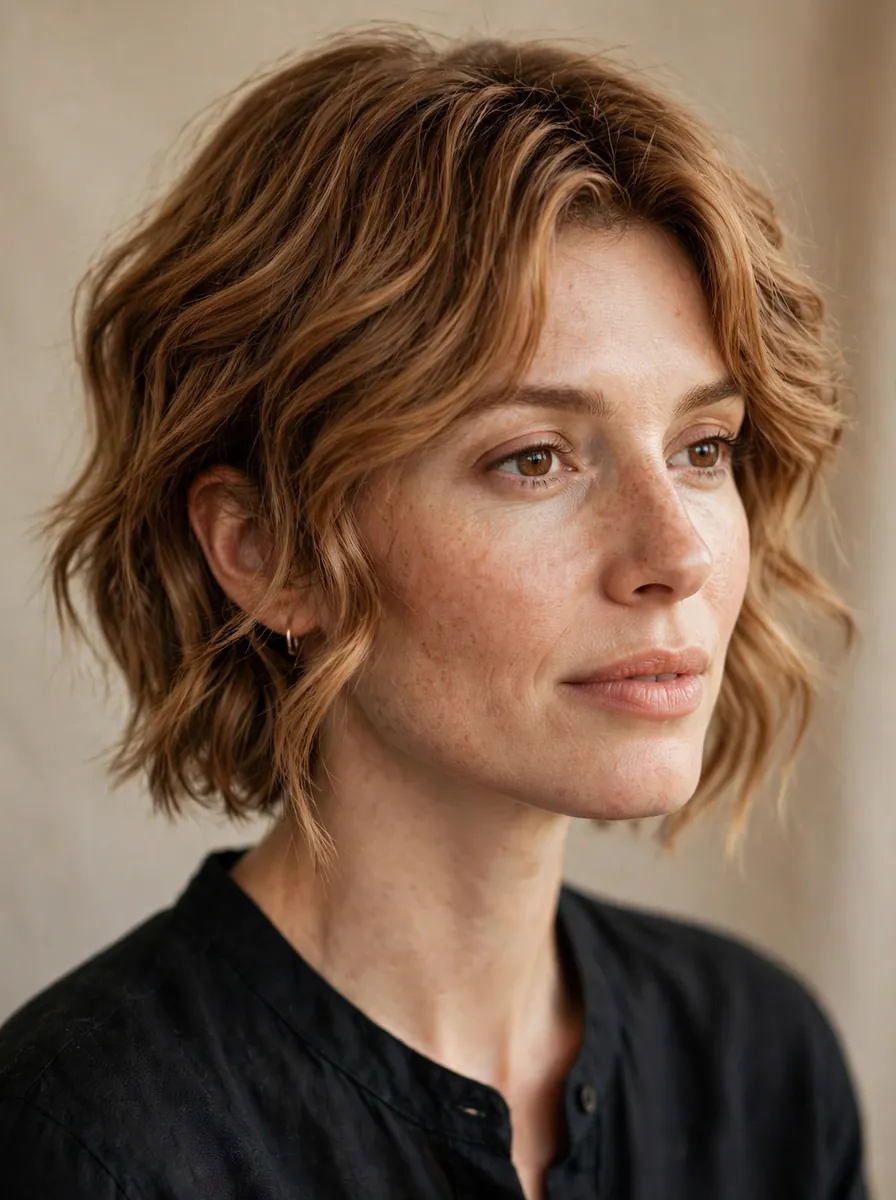
For loose curls and waves (type 2 to early type 3), a wavy pixie keeps more length everywhere and lets the bend in the hair create the shape. It is the most forgiving curly pixie to grow out, because the softer pattern hides uneven stages well.
3. Long Curly Pixie
Leave the top long — fringe brushing the eyebrows or falling toward the cheekbones — and the cut gains drama and versatility. A long curly pixie can be pushed back, parted, or worn forward as a full curly fringe. It connects naturally to the straighter versions in our long pixie cuts guide, with the same shapes adjusted for shrinkage.
4. Curly Pixie with a Curly Fringe
A fringe cut from your own curls, worn forward, is the signature detail of the moment. The fringe must be cut dry, curl by curl, and left longer than looks right in the chair — it will spring up. Worn well, it softens the forehead and makes the whole cut feel intentional rather than accidental.
5. Tapered Curly Pixie
The sides and back are tapered very close — sometimes faded — while the top keeps full curly length. The contrast shows off the curl pattern at its most dramatic and removes bulk where curly hair tends to widen. A strong choice for round faces, because the close sides keep the silhouette narrow while the top adds height.
6. Curly Pixie for Thick Hair
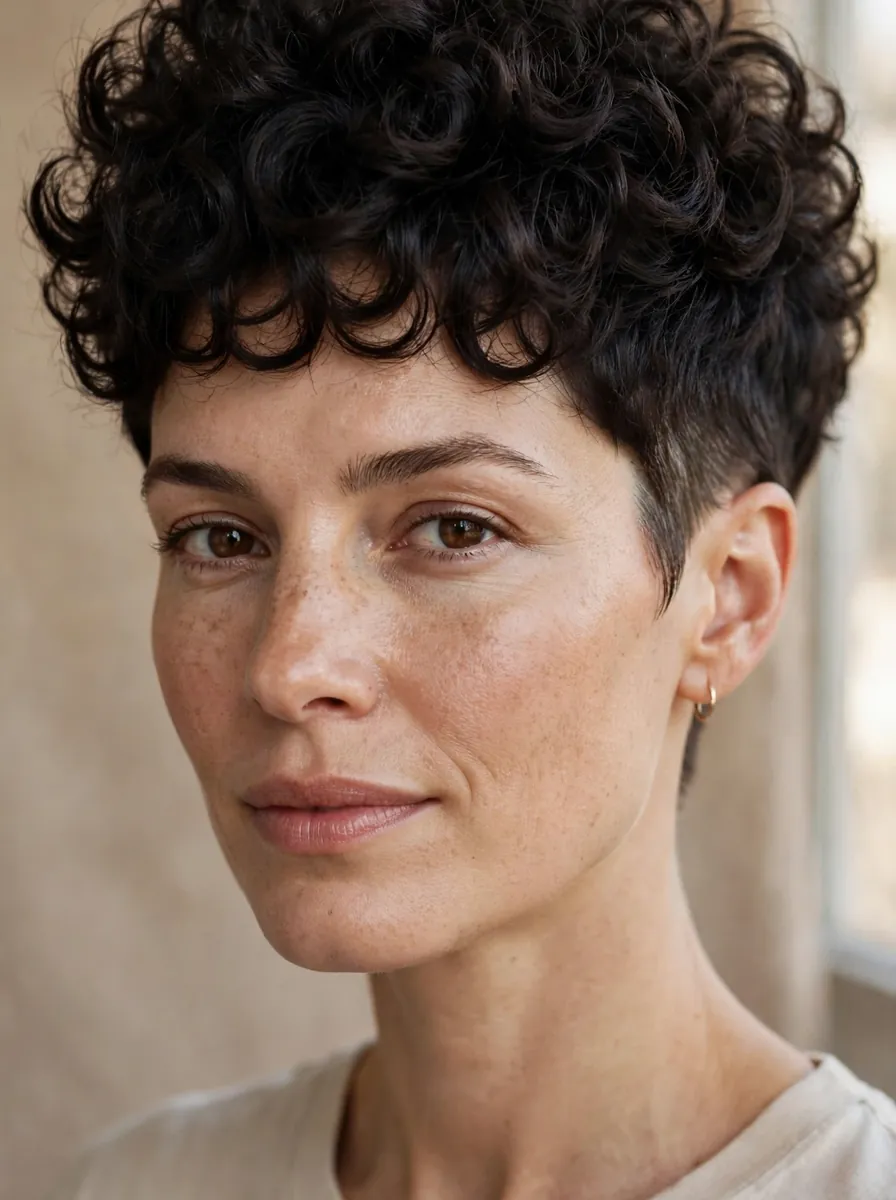
Thick curly hair is where pixies shine and struggle at once: the volume is glorious, but unshaped it turns triangular — wide at the sides, flat on top. The fix is internal layering and a tapered outline, removing weight from the sides so the curls stack upward instead of outward.
7. Textured Curly Pixie with Piecey Definition
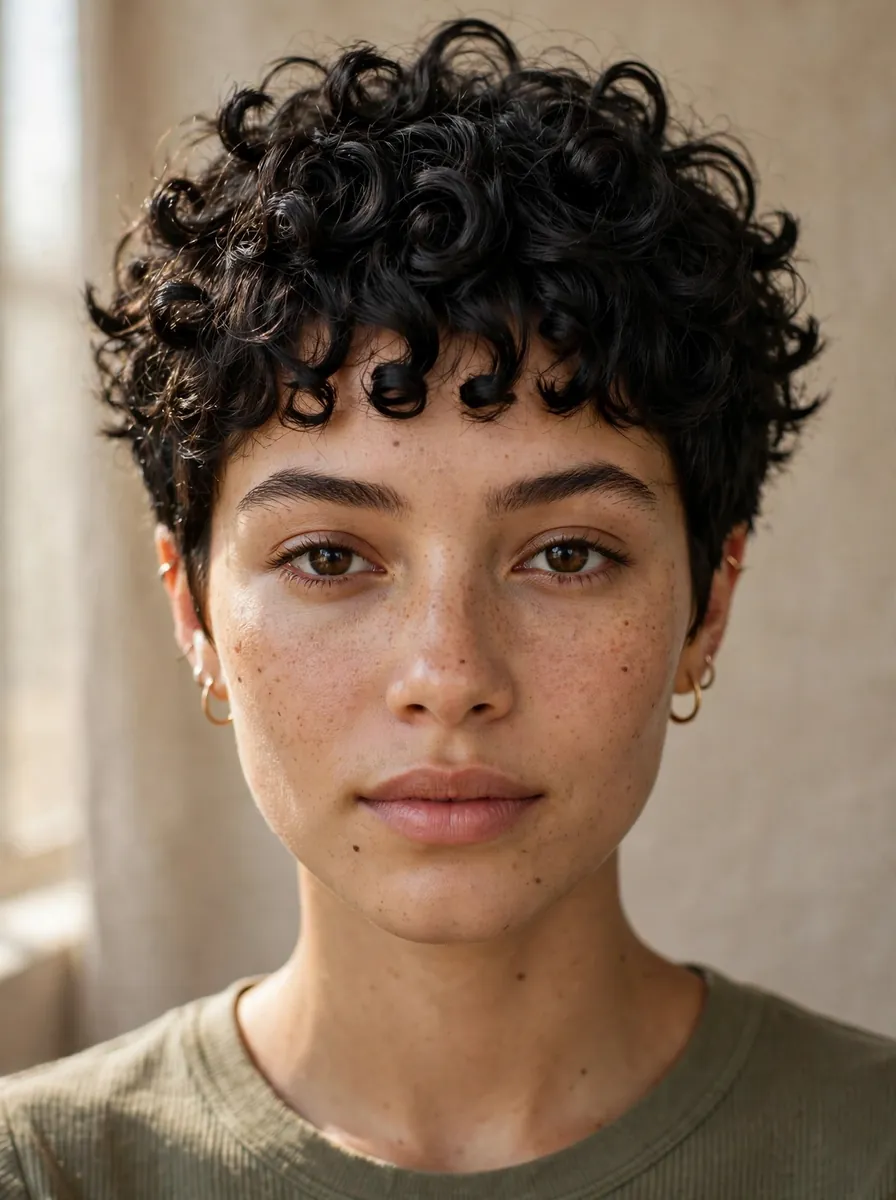
For curls that prefer clumps and pieces over uniform ringlets, a textured pixie leans in: uneven lengths, defined pieces at the front, and a deliberately undone finish. This style is styled by separating and twisting individual curl clumps with cream rather than brushing anything into uniformity.
8. Curly Pixie Bob
Let the front grow toward bob length while the nape stays pixie-short, and curly hair gets a shape with swing. The weight of the longer front stretches the curl slightly, so this version reads a touch looser and more polished than a true pixie. Compare the straighter shapes in our pixie bob haircuts guide.
9. Very Short Curly Crop
Cut close all over, with just enough length on top for the curl to declare itself. This is the lowest-maintenance curly short cut — no fringe to manage, no styling beyond moisture — and it puts the focus entirely on your face and bone structure. It also grows into every other style on this list, in order.
10. Curly Pixie with Shaved or Undercut Detail
A small undercut at the nape or above one ear removes the bulkiest part of curly hair and adds an edge that contrasts beautifully with soft curls on top. Start with the nape only if you are unsure — it is invisible when the top is worn down and easy to grow back.
The Golden Rule: A Curly Pixie Must Be Cut Dry
Straight-hair cutting assumes hair falls where it is combed. Curly hair does not. Cut wet and stretched, a fringe measured to the eyebrows can dry at the hairline. A proper curly pixie is cut mostly or entirely dry, in its natural state, curl by curl — the stylist shapes the silhouette they can actually see. When booking, ask directly: “Do you cut curly hair dry?” The answer tells you most of what you need to know. The same dry-cutting logic applies to longer curly cuts like the curly butterfly cut.
Shrinkage: Plan Length Backwards
Curly hair can dry 5–10 cm shorter than its stretched length, depending on how tight the pattern is. That means:
- a “long” curly pixie is cut at lengths that would look medium-long on straight hair
- fringes are left eyebrow-skimming in the chair to sit at the brow bone in life
- the first cut should always err long — you can take more off at the same appointment once you see it dry
How to Style a Curly Pixie
Short curly hair follows the same principles as long curly hair, with less margin for error:
- Apply product to soaking-wet hair. A leave-in conditioner plus a light gel or curl cream, scrunched in, sets the clumps before frizz can form.
- Diffuse or air-dry without touching. Every touch while drying separates clumps into frizz. Our diffuser guide for natural waves and curls covers the low-heat technique in detail.
- Refresh, don’t rewash. On day two and three, mist with water (a little leave-in mixed in helps), re-scrunch the flat sections, and let them reset. A pixie needs far less refreshing than long curls — the top is usually the only zone that flattens overnight.
- Sleep on satin. A satin pillowcase or bonnet keeps short curls from matting flat on one side.
What to Tell Your Stylist
Bring photos of curly pixies on hair that resembles yours — similar curl tightness matters more than similar faces. Then say three things explicitly: that you want the cut shaped dry, that the top must keep at least one full curl rotation of length, and where you want the shortest point to be (nape, sides, or nowhere). Those three sentences prevent most curly pixie disappointments.
For a bolder take on short curls, undercut pixie cuts shave the sides and leave the curl on top, while pixie cuts for round faces balance softer features with height and texture.
Frequently Asked Questions
Is a pixie cut good for curly hair?
Yes — curls give a pixie natural volume and texture, and short curly hair is often healthier and easier than long curly hair because the oldest, driest ends are removed. The condition is that the cut is shaped around the curl pattern, ideally cut dry, rather than copied from a straight-hair pixie.
How short is too short for a curly pixie?
The top should keep enough length for at least one complete curl rotation; below that, curls read as texture rather than curl and can look fuzzy. How many centimetres that means depends entirely on your pattern — tight coils reach one rotation in a few centimetres, loose waves need considerably more.
Will a curly pixie suit a round face?
A tapered version usually suits it very well. Close or faded sides keep the silhouette narrow, while height and volume on top lengthen the face. Avoid round, wide shapes with equal volume at the sides, which echo the face shape instead of balancing it.
How do I stop a curly pixie going frizzy?
Frizz on short curls is almost always a drying problem: product applied too late, hair touched while drying, or cotton pillowcases roughing the cuticle overnight. Apply leave-in and gel to soaking-wet hair, diffuse or air-dry hands-off, and sleep on satin. More technique is in our diffuser guide.
How often does a curly pixie need trimming?
Every 5–8 weeks. Curly hair hides regrowth better than straight hair, so the cut softens gracefully rather than collapsing — but the shape eventually widens at the sides, which is the signal to book. Tapered and faded versions need the shorter parts refreshed closer to every 4–5 weeks.
Can I straighten a curly pixie sometimes?
Occasionally, yes, with heat protectant and moderate temperatures — the short length means heat passes are quick. Just know the cut was shaped for curls, so straightened it will look longer, flatter, and slightly uneven by design. If you plan to wear it straight half the time, tell your stylist before they cut.
Final Thoughts
A curly pixie rewards the wearer who works with their pattern instead of against it: cut dry, planned around shrinkage, styled wet and left alone. Get those three things right and it is one of the lowest-effort, highest-impact short cuts there is — the curls do the styling work for you.