Layered Haircuts with Bangs: 10 Combinations That Work
Bangs and layers are natural partners: the layers give the haircut movement, and the bangs give it a focal point. But the combination only works when the two are cut to blend — a fringe that ends abruptly where the layers begin looks like two different haircuts sharing one head. Every combination in this guide is chosen because the bangs and the layers are designed to melt into each other.
If you are still deciding on the layers themselves, start with our layered haircuts guide for the base shapes, then come back here for the fringe. And if your main question is face shape, the layered haircuts for round faces guide covers which of these combinations slim and lengthen.
1. Curtain Bangs with Long Layers
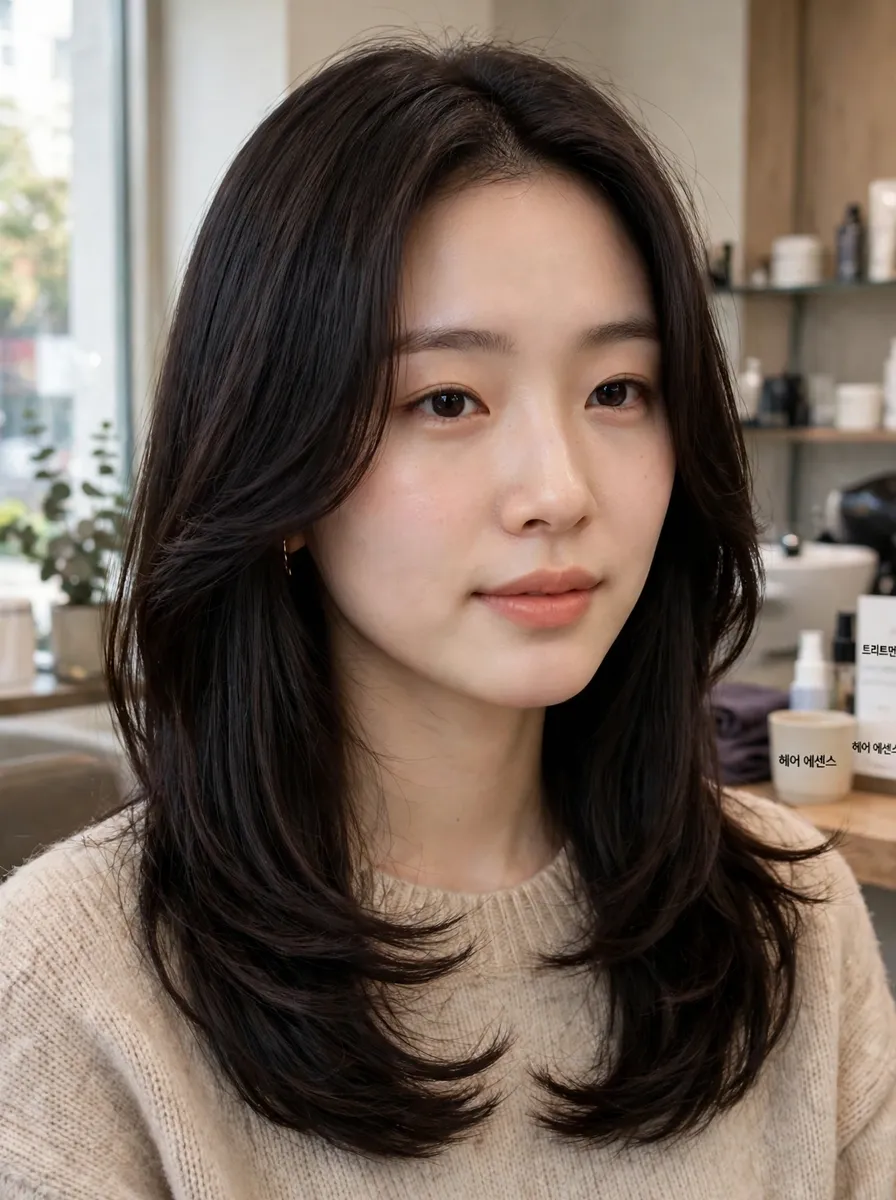
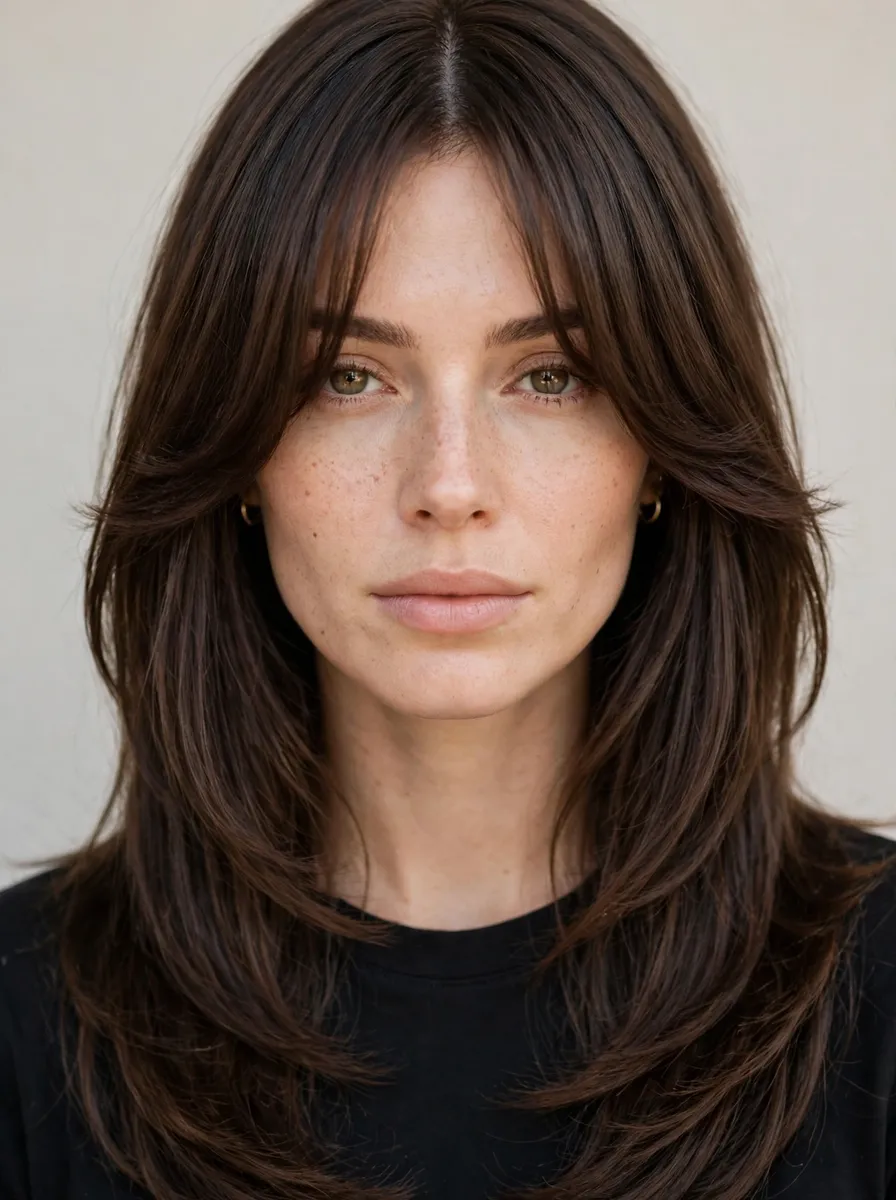
The most requested combination of the last few years, and the easiest to live with. The curtain fringe parts in the middle, sweeps out to the cheekbones, and continues directly into the first long layer — there is no visible seam anywhere. It suits nearly every face shape, grows out gracefully into face-framing layers, and can be pinned back entirely on days you want it gone. If you only try one bang style in your life, the statistics favour this one.
2. Wispy Bangs with Medium Layers
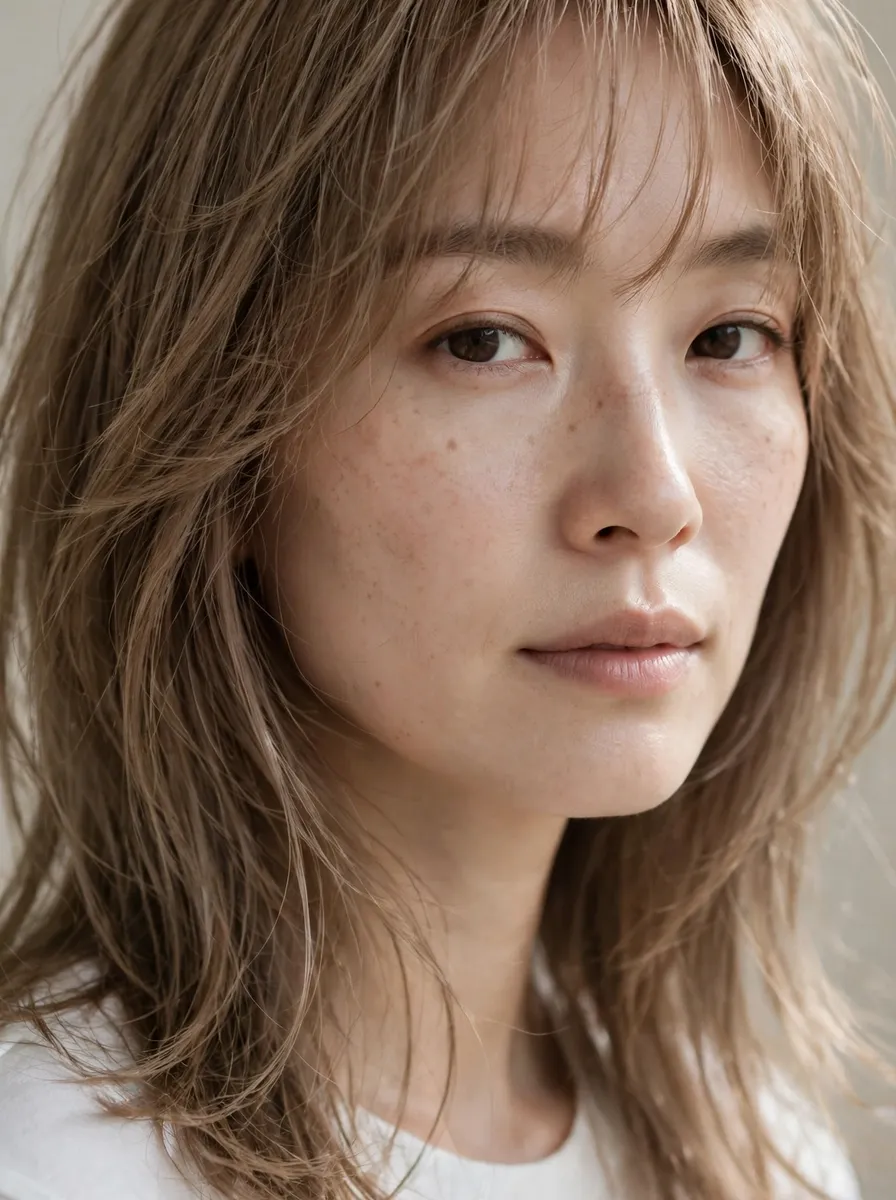
Wispy bangs are cut thin and feathered at the ends, so you see forehead through them. Paired with shoulder-length layers, the whole haircut stays light and airy — a good match for fine hair, which can be overwhelmed by a heavy fringe and heavy layering at the same time. The softness also makes this the most forgiving option for a first fringe: the commitment is small and the grow-out is painless.
3. Blunt Bangs with Long Layers
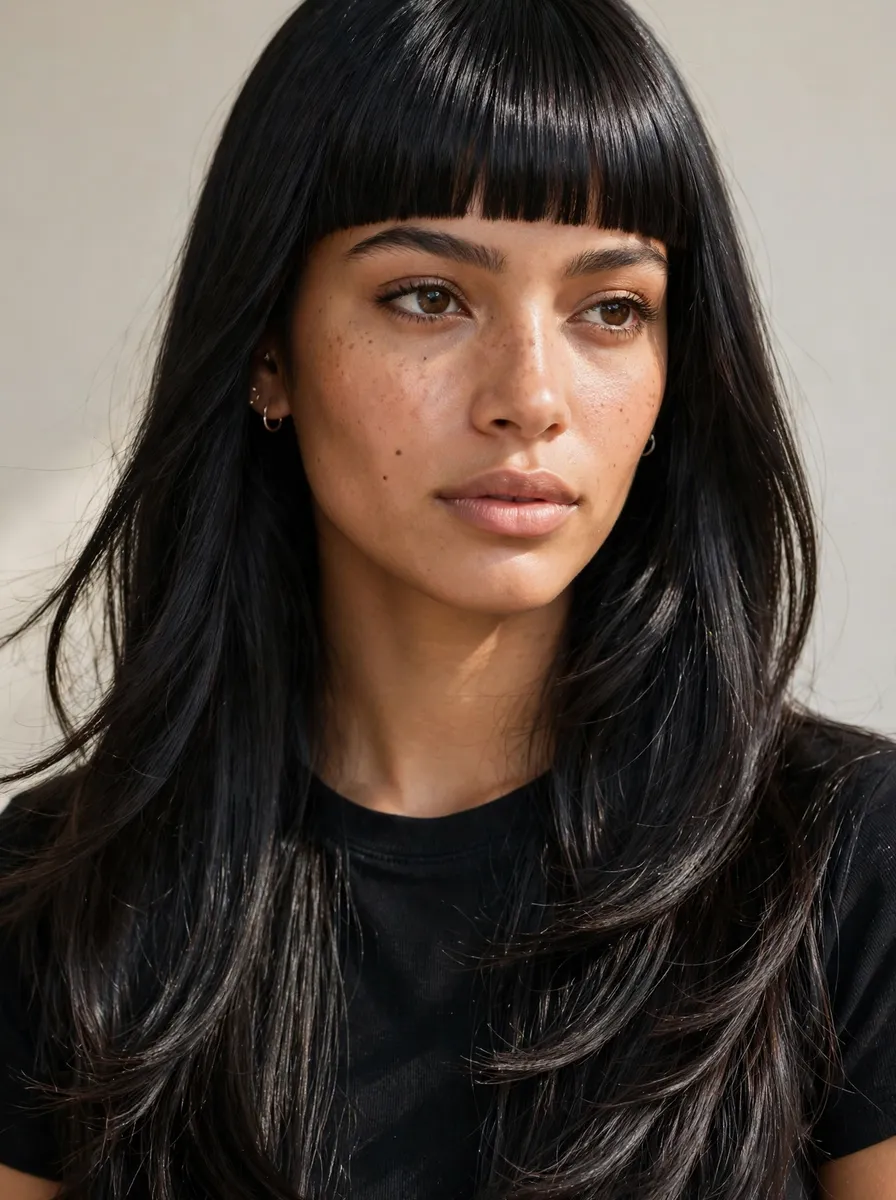
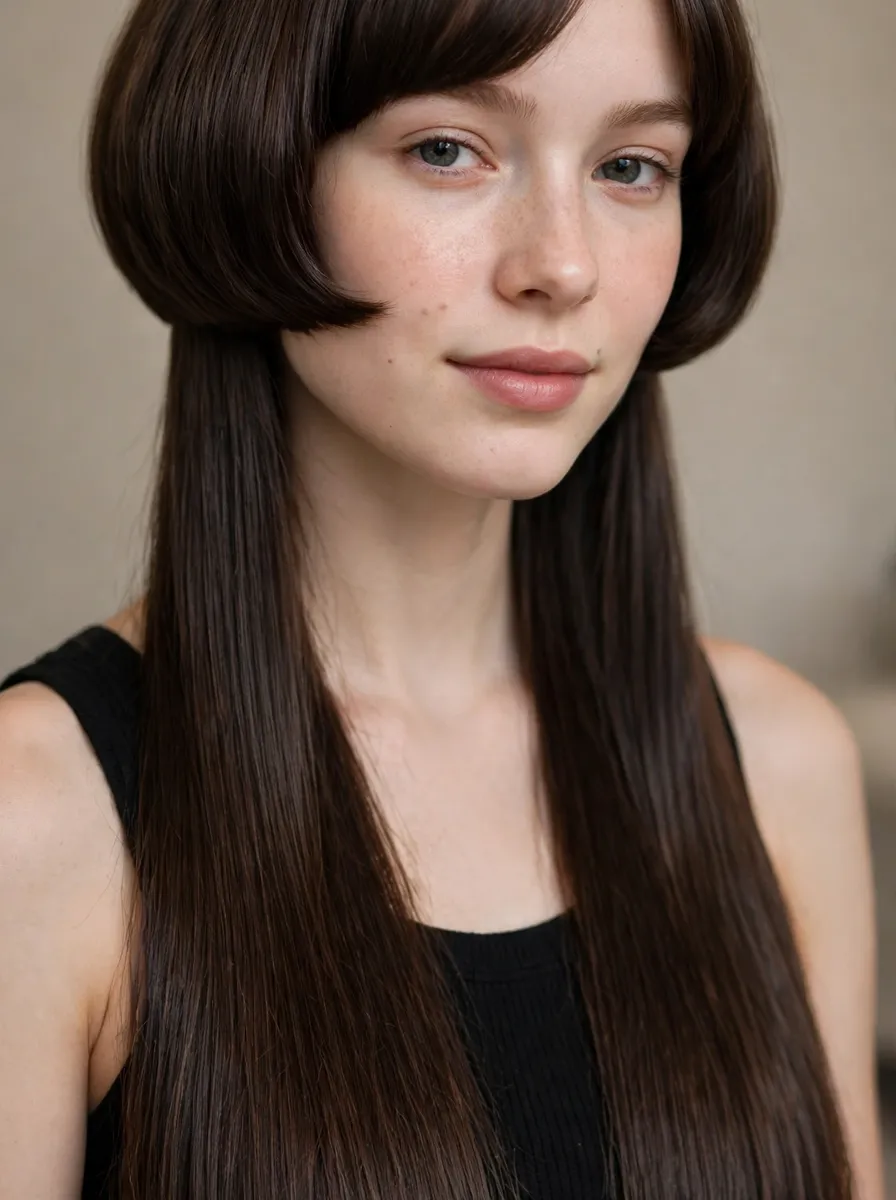
The high-contrast option: a straight, dense fringe cut cleanly across, with long flowing layers beneath it. The geometry works because the layers stay long — the horizontal line of the bangs needs the vertical lines of the length to balance it. It suits oval and longer face shapes best, and thick hair that can supply a substantial fringe without borrowing density from the sides. This one needs a trim every three to four weeks to keep the line sharp.
4. Side-Swept Bangs with Shoulder-Length Layers
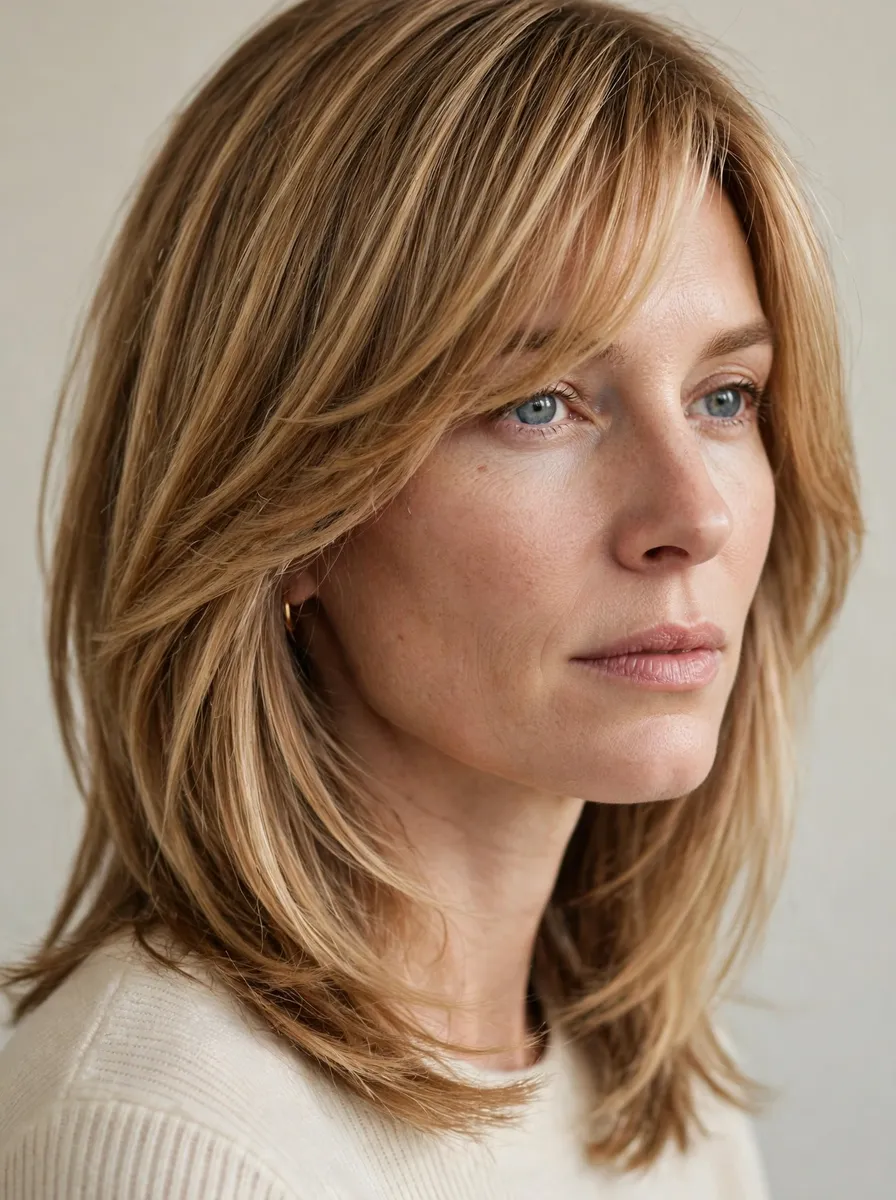
A diagonal fringe is the most universally forgiving shape there is: it softens a strong forehead, breaks up roundness, and blends into the layers on the longer side so naturally that the join is invisible. Worn with collarbone layers, this is the combination stylists reach for when a client says “something different, but safe”. It also behaves on wavy hair, where a straight-across fringe would fight the texture daily.
5. Bottleneck Bangs with Butterfly-Style Layers

Bottleneck bangs start narrow at the center of the forehead and curve outward into longer cheekbone pieces — shaped, as the name says, like the neck of a bottle. They are the natural partner for butterfly-style layering, where short front layers flip outward over longer ones beneath. Together they create the most movement of any combination here, and the most styling: this pairing rewards a round brush and five minutes each morning.
6. French Bangs with a Layered Bob
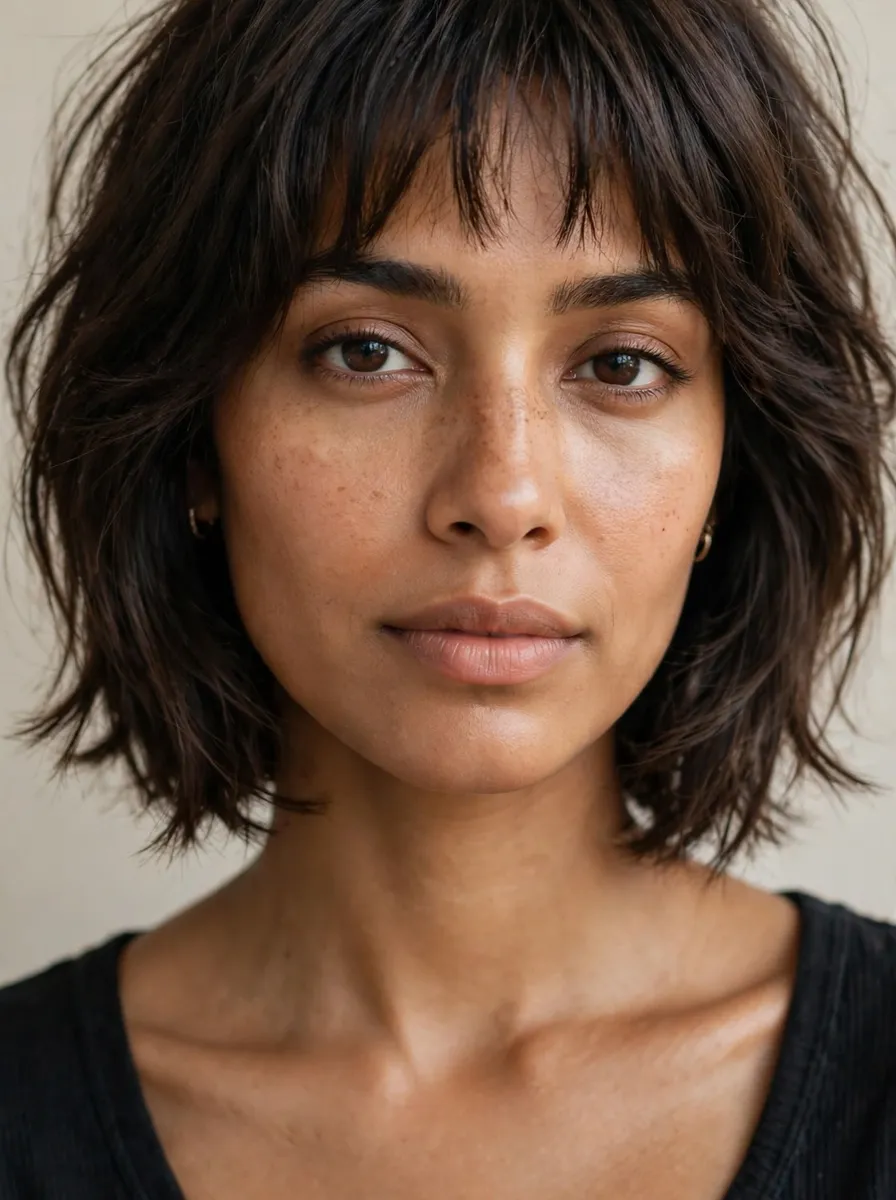
French bangs are shorter in the center, longer and wispier at the edges, and always slightly undone. With a chin-to-jaw-length layered bob they produce that deliberately effortless look — the layers keep the bob from going round or helmet-like, and the fringe keeps it from going plain. Best on straight to slightly wavy hair with enough natural texture to look lived-in rather than messy.
7. Micro Bangs with a Short Layered Shag

The editorial option. Micro bangs sit well above the eyebrows, and a choppy layered shag gives the rest of the cut enough texture to match that energy. It is a deliberate, fashion-first combination that suits confident wearers, strong brows and straighter hair types. The honest warning: micro bangs show every millimetre of growth, so you are signing up for trims every two to three weeks — or a very committed grow-out later.
8. Curly Bangs with Curly Layers
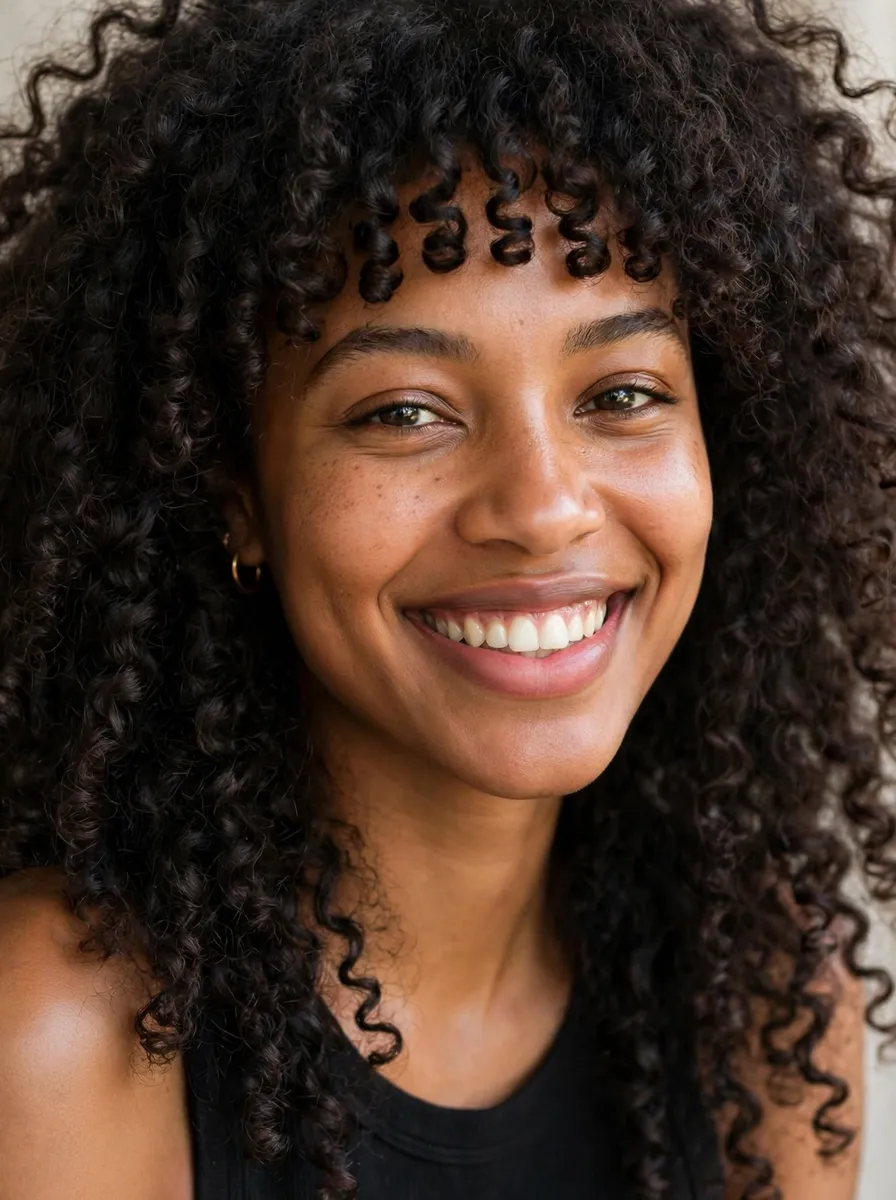
For years curly hair was told to avoid bangs; the modern answer is to cut them dry, curl by curl, and let them spring where they want. Curly bangs with rounded curly layers keep the silhouette balanced — volume distributed through the whole cut rather than piled on the sides. Ask for a stylist who cuts curls dry, and expect the fringe to sit shorter than it looks in the chair once it springs up. Our curly butterfly cut guide shows how front layering behaves on curls in more detail.
9. Airy See-Through Bangs with Soft Layers
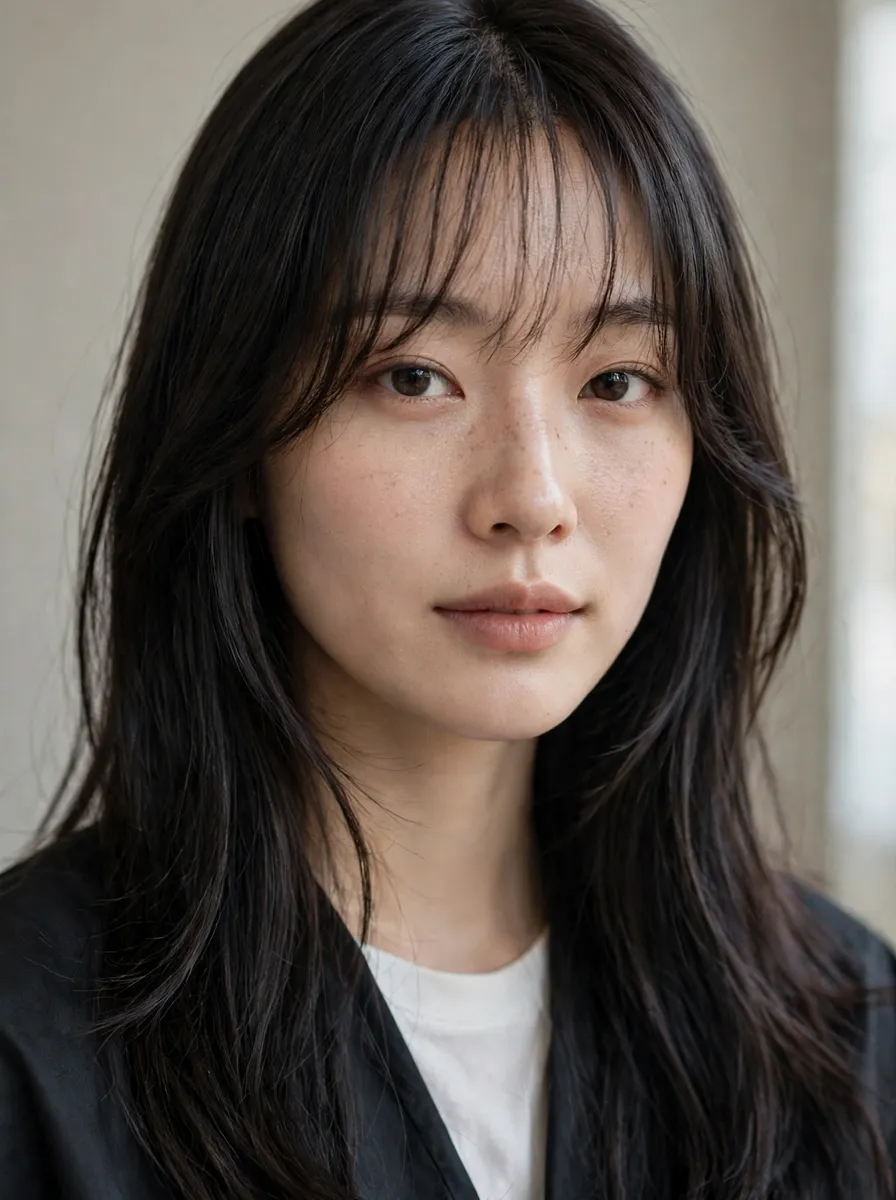
Popularised by Korean salons, see-through bangs use very little hair — a thin veil across the forehead with two longer strands at the sides. With soft, barely-there layers, the effect is gentle definition rather than a statement. It is the lowest-commitment fringe in this guide: it grows into face-framing pieces within weeks, which makes it the perfect trial run before committing to curtain bangs.
10. Grown-Out Bangs Blended into Face-Framing Layers
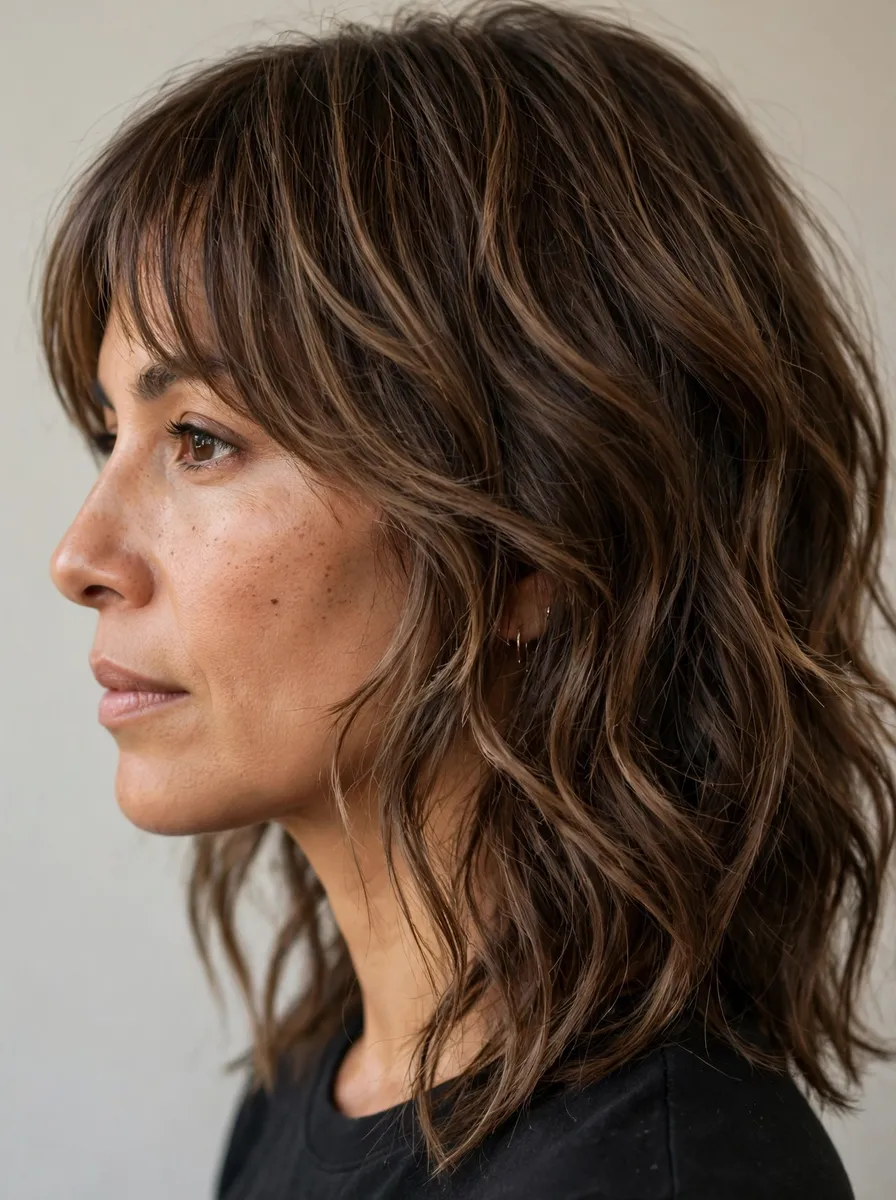
Not a fringe you cut, but the one you already have three months later — styled as a feature rather than a phase. When a stylist reshapes grown-out bangs into graduated face-framing layers, the awkward in-between stage becomes a soft, swooping front that many people keep permanently. It is also the destination every other fringe on this list grows into, which is worth knowing before you choose how much maintenance you want. The face-framing layers guide is dedicated to exactly this front-section shaping.
Matching Bangs to Layers: The Two Rules
Rule one: weights must match. A heavy, blunt fringe needs long, substantial layers beneath it; a wispy fringe needs light layering. Mismatched weights are what make a bangs-and-layers cut look accidental.
Rule two: the blend point is everything. Whatever the style, the ends of the bangs should connect to the first layer without a step. When you look at inspiration photos, study the side view — that is where good and bad versions separate.
Maintenance reality check: fringes need trimming every 2–4 weeks (many salons do bang trims free or cheap between cuts), while the layers themselves can usually stretch to 8–12 weeks. Choose the combination whose fringe schedule fits your actual life, not your aspirational one.
If your layers sit at shoulder length, medium length layered haircuts is the fuller guide to shapes, layer spacing and styling at that length.
Frequently Asked Questions
Do bangs and layers work well together?
Yes — they are one of the most natural pairings in haircutting, because the bangs create a focal point at the front while the layers create movement through the rest of the hair. The condition is blending: the ends of the fringe should graduate into the first layer. When the two are cut as one design rather than two separate features, the combination suits almost everyone.
Which bangs are best with layered hair?
Curtain bangs are the most versatile match — they blend into layers of any length and grow out without an awkward stage. Wispy bangs suit fine hair and lighter layering, blunt bangs need long layers and thicker hair, and side-swept bangs are the safest all-rounder for a first attempt. Curly hair does best with dry-cut curly bangs shaped to the curl pattern.
How often do bangs need trimming compared to layers?
Much more often. Most bangs need a tidy every two to four weeks to keep their intended length and shape, while layered lengths typically need a full trim every eight to twelve weeks. Bottleneck, blunt and micro bangs sit at the high-maintenance end; curtain and side-swept styles are the most forgiving between appointments.
What face shape suits layered haircuts with bangs?
All of them, with the right fringe choice. Round faces do best with curtain or side-swept bangs that create diagonal lines; square faces soften with wispy or airy fringes; long faces gain balance from blunt or French bangs that add a horizontal line; heart-shaped faces suit side-swept and bottleneck styles that leave the forehead partly open.
Can I get bangs with layers if my hair is fine?
Yes — fine hair often looks thicker with the right combination, because a fringe adds the appearance of density at the front where hair is most visible. Choose wispy or airy see-through bangs rather than a blunt fringe that borrows too much hair, and keep the layers long and minimal so the ends do not thin out. Ask your stylist to avoid razoring, which can make fine ends look stringy.
How do I grow out bangs into layers?
Ask your stylist to start blending the fringe into face-framing layers as soon as it reaches cheekbone length: the bangs get graduated into the front sections at each trim instead of being cut back. In the meantime, a center or deep side part disguises the in-between length, and curtain styling — sweeping the growing fringe outward with a round brush — turns the awkward stage into a deliberate look.