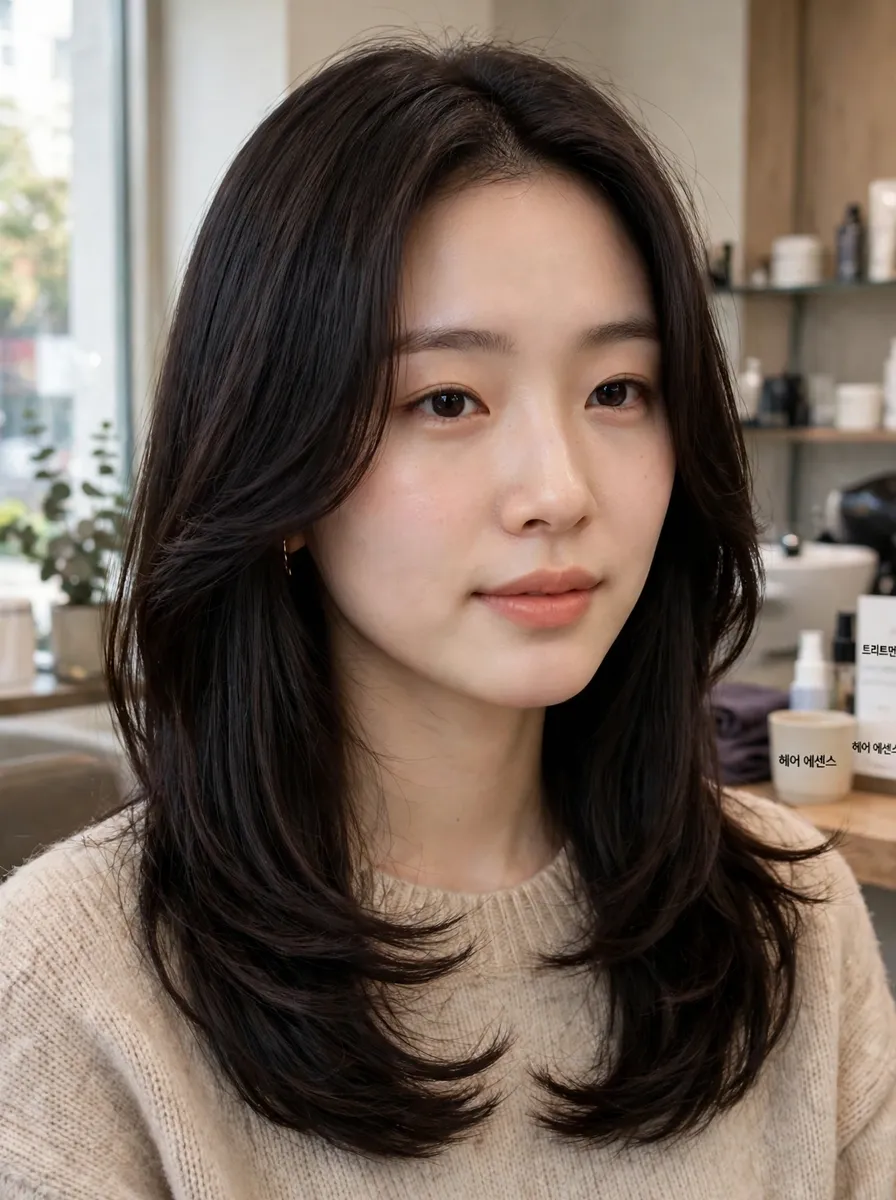
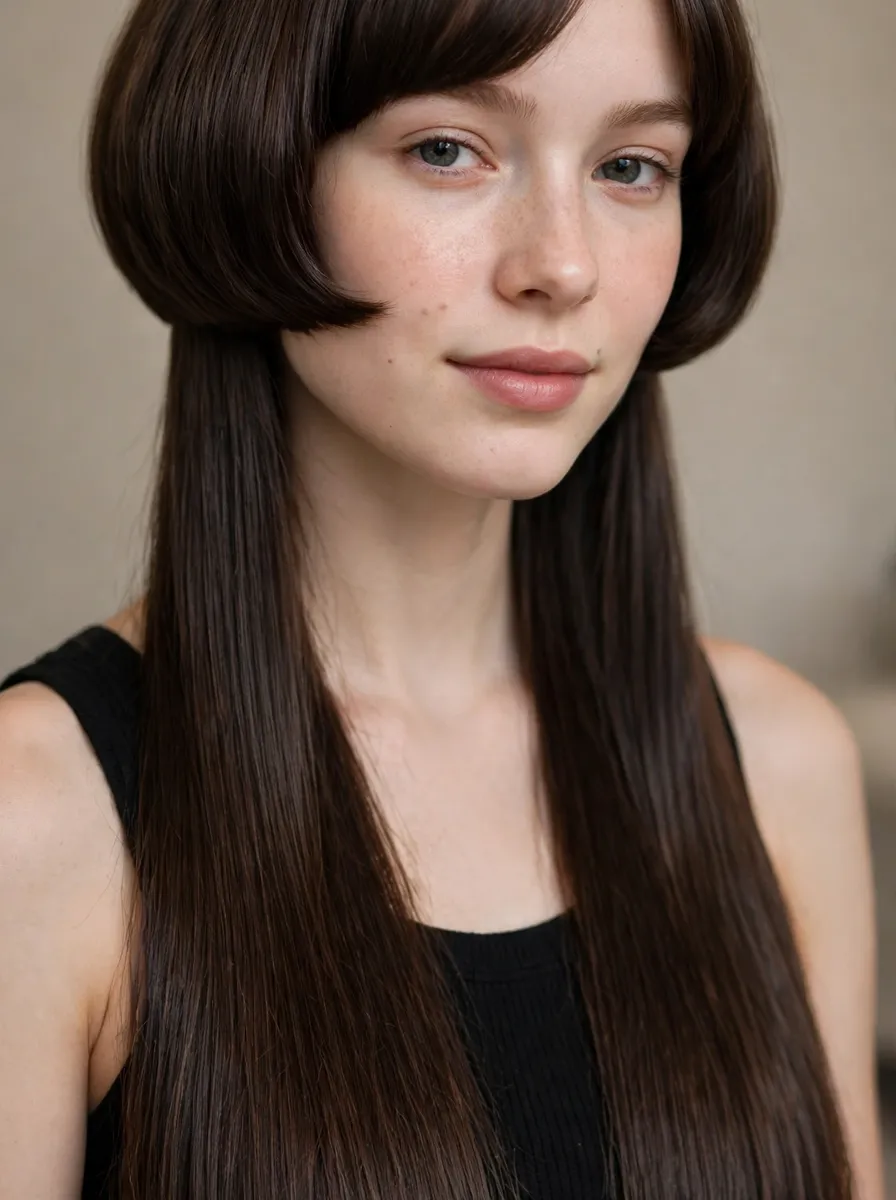
Layered Haircuts for Round Faces: 10 Flattering Styles
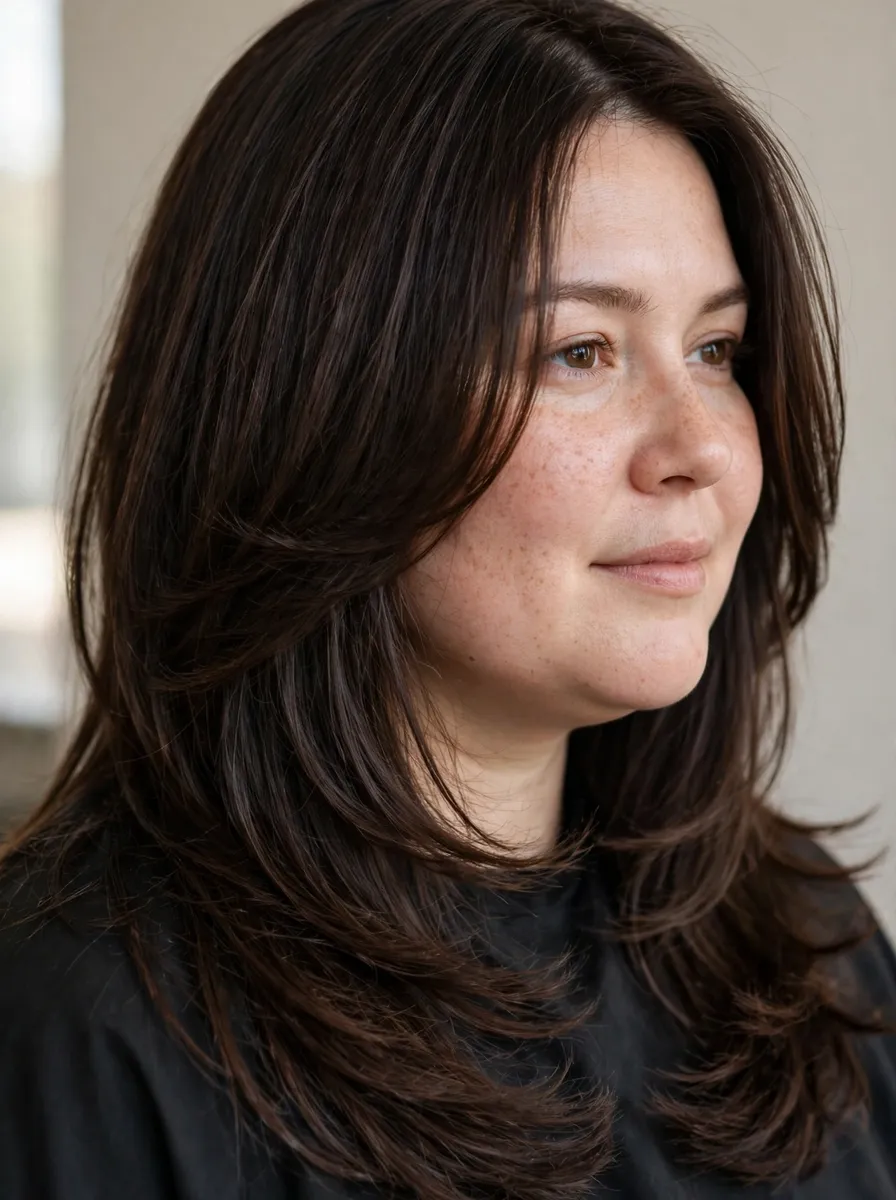
Layers are one of the most flattering tools a round face can use — but only when the placement is right. The goal is not to hide your face; it is to give the eye vertical lines and angles to travel along, so the face reads longer and more defined. Done well, a layered cut adds movement everywhere except the one place a round face does not need it: width at the cheeks.
One rule runs through every style in this guide: the shortest layer should start at or below the chin. Layers that begin at cheek height puff outward exactly where a round face is fullest. Layers that begin lower draw the eye down instead.
If you are comparing layering in general before narrowing to face shape, our layered haircuts guide shows 17 cuts across all lengths, and the medium length layered haircuts guide covers the shoulder-length versions in depth. This guide is the round-face edit — here are 10 styles that genuinely flatter.
1. Long Layers with a Center Part
The benchmark round-face cut. Hair falls well past the shoulders, the center part creates a straight vertical line down the middle of the face, and the first layer starts below the chin. The two front sections act like curtains that narrow the face visually while the length does the elongating. It works on straight, wavy and relaxed hair, and it is the easiest layered cut to grow out if you change your mind.
2. Shoulder-Length Layers with a Side-Swept Front
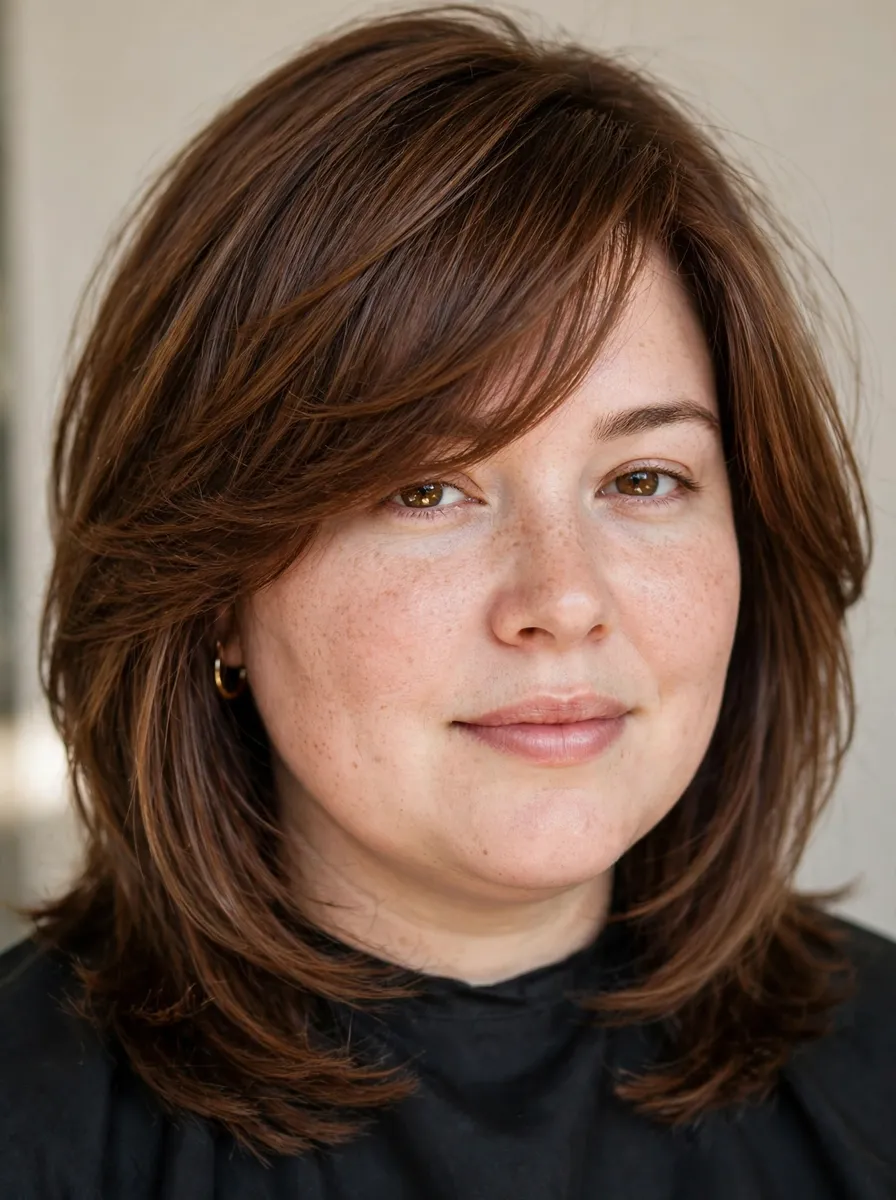
A deep side part is a quiet optical trick: it breaks the face’s symmetry, and asymmetry is slimming. Here the longer front section sweeps diagonally across the forehead while collarbone-length layers keep the vertical line going. Choose this if a center part feels too severe or your hair naturally falls to one side anyway — the cut works with your growth pattern instead of against it.
3. Layered Lob with Angled Front Pieces
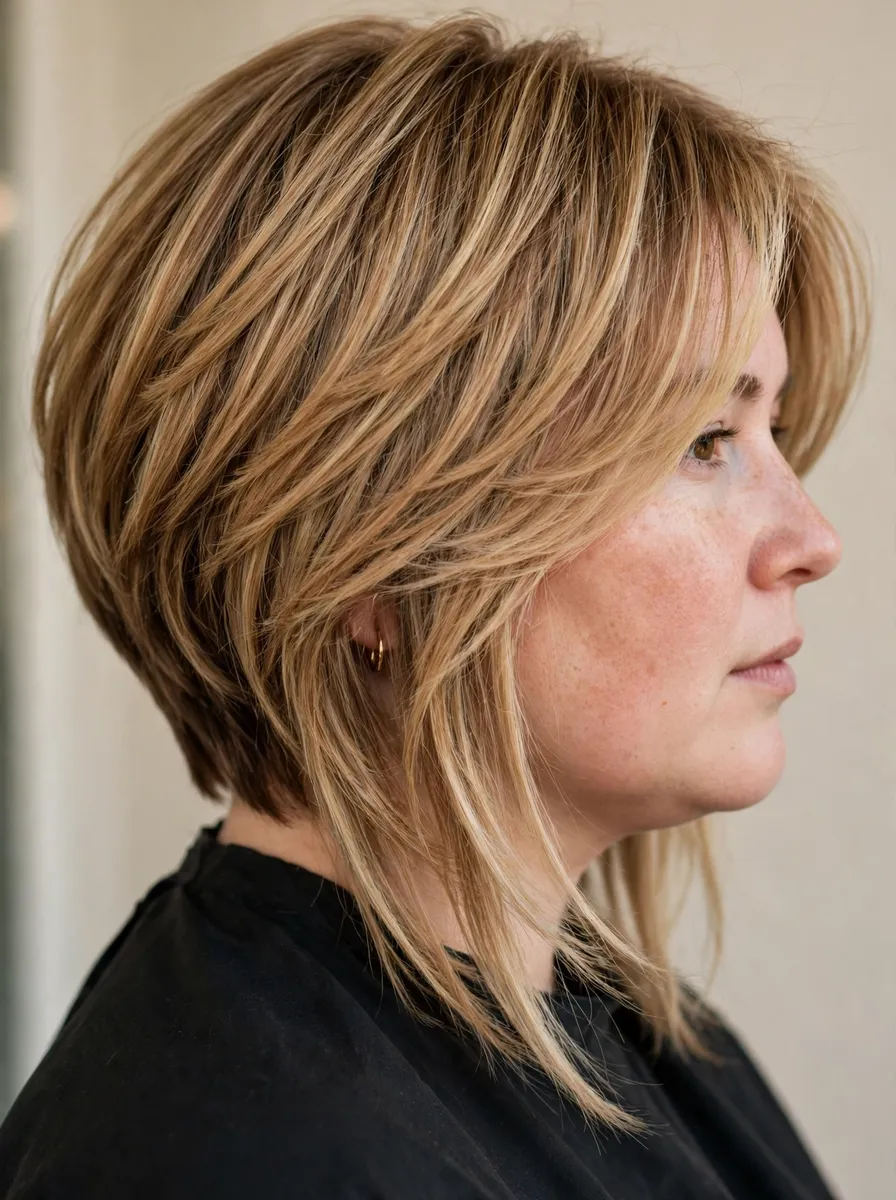
The lob (long bob) earns its place here when it is cut longer in front and slightly shorter at the back. That forward angle creates a diagonal line along the jaw, which is exactly the kind of line a round face benefits from. Keep the length at or below the chin — a lob that ends right at the jawline widens it. Light layering through the ends stops the shape from looking like a helmet.
4. Long Shaggy Layers with Curtain Bangs
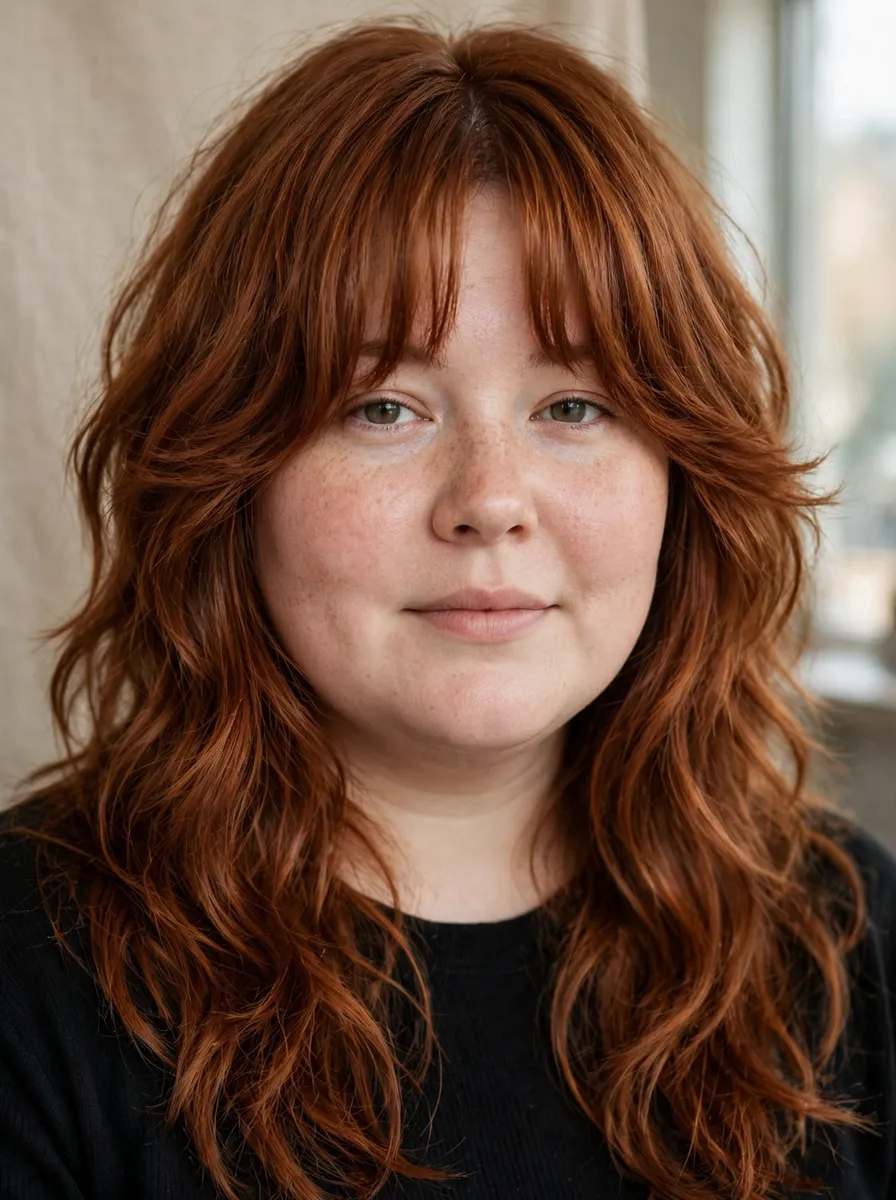
Curtain bangs are the exception to the “no volume at the cheeks” rule, because they are cut to open outward rather than sit flat across the forehead. Parted in the middle, they frame the face in two diagonal lines and blend into shaggy layers that carry texture downward. This is the most relaxed option on the list — it suits wavy hair especially well and hides a growing-out fringe gracefully. Our face-framing layers guide explains how the front pieces do the framing work.
5. Layers That Start Below the Chin
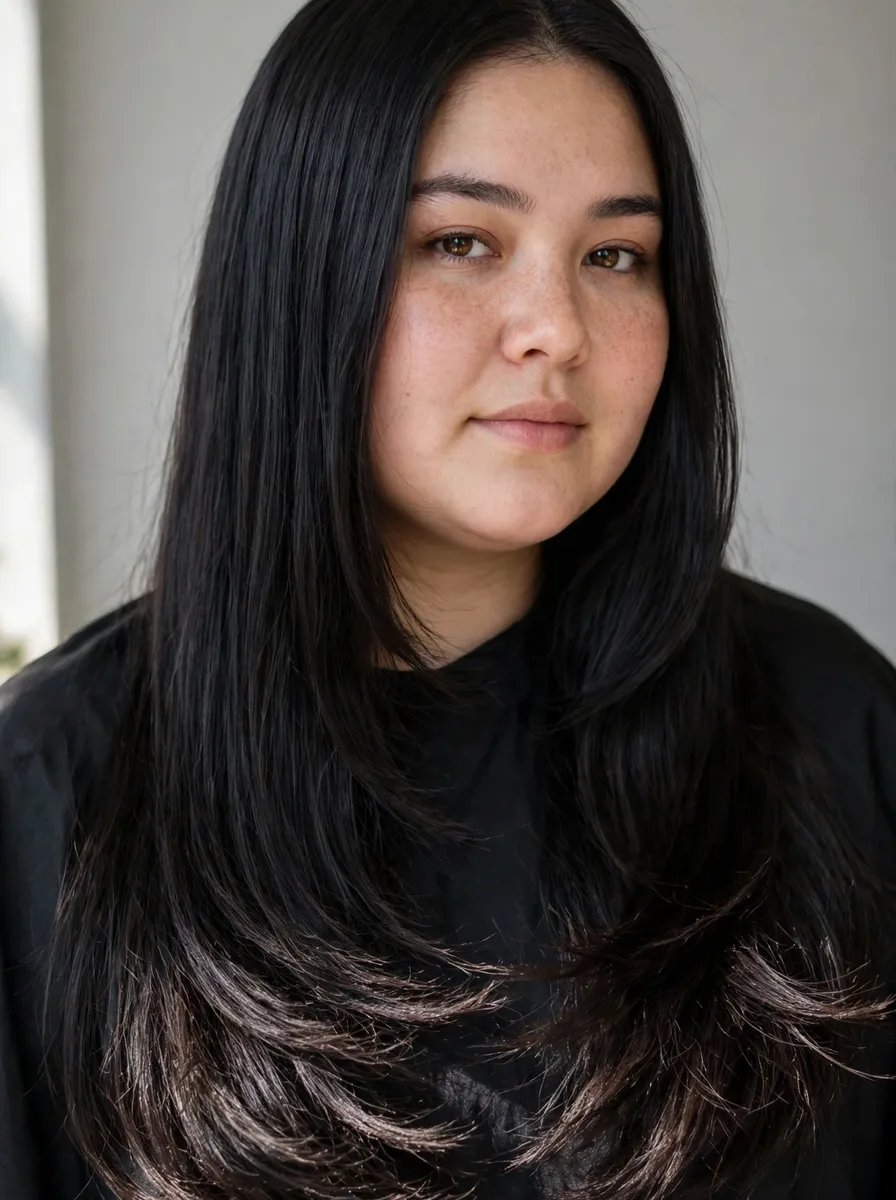
Less a single style than the technique behind half this list: the entire layer pattern sits below the chin, leaving the hair around the cheeks smooth and close to the head. The movement lives in the lower third of the hair, where it can swing freely without adding width. Ask for this placement explicitly — “long layers, first layer below the chin” — because a stylist’s default layered cut often starts at the cheekbone.
6. Asymmetrical Layered Bob
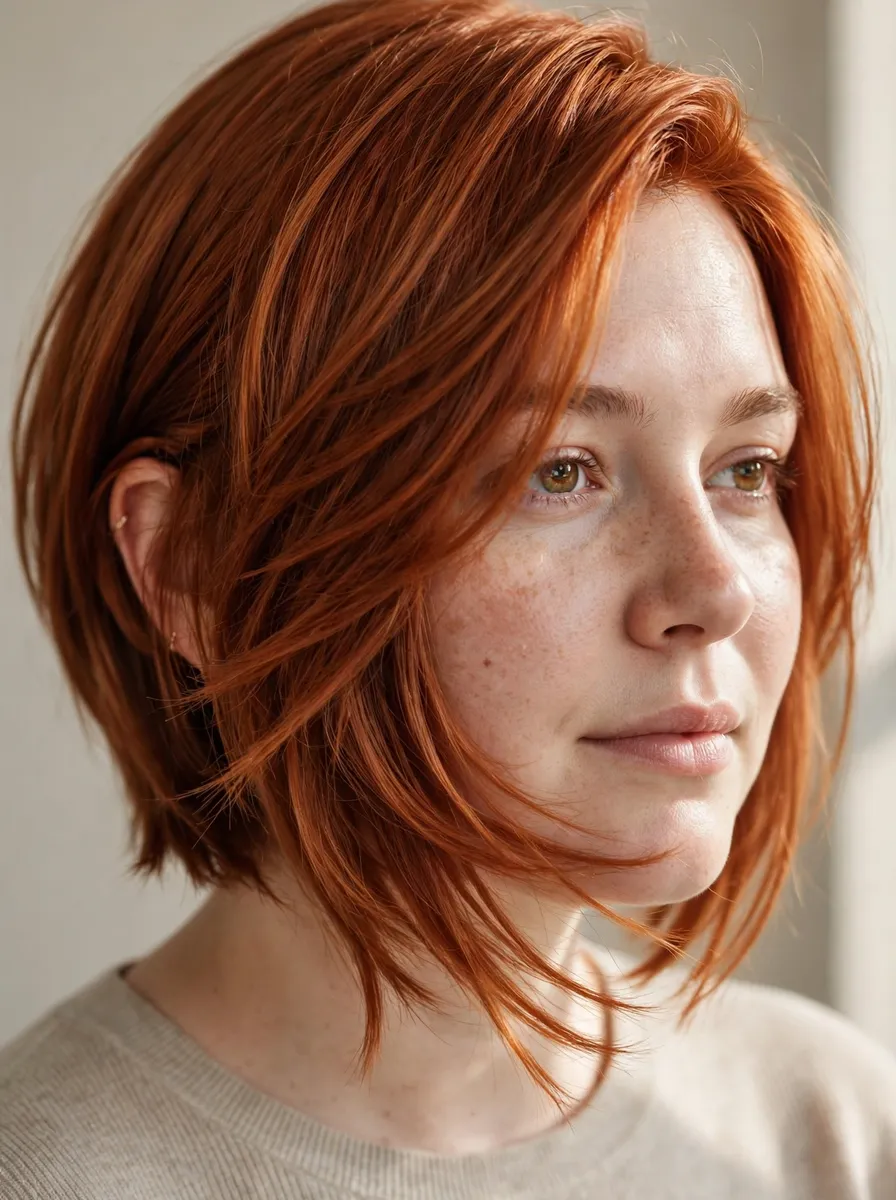
One side longer than the other sounds dramatic, but even a subtle two-centimetre difference breaks the circular outline a round face plus a standard bob can create together. The longer side usually sits at jaw-to-chin length, the shorter side tucks behind the ear. It is the boldest short option here, and the one that gets the most compliments per inch of hair.
7. Layered Cut with a Deep Side Part
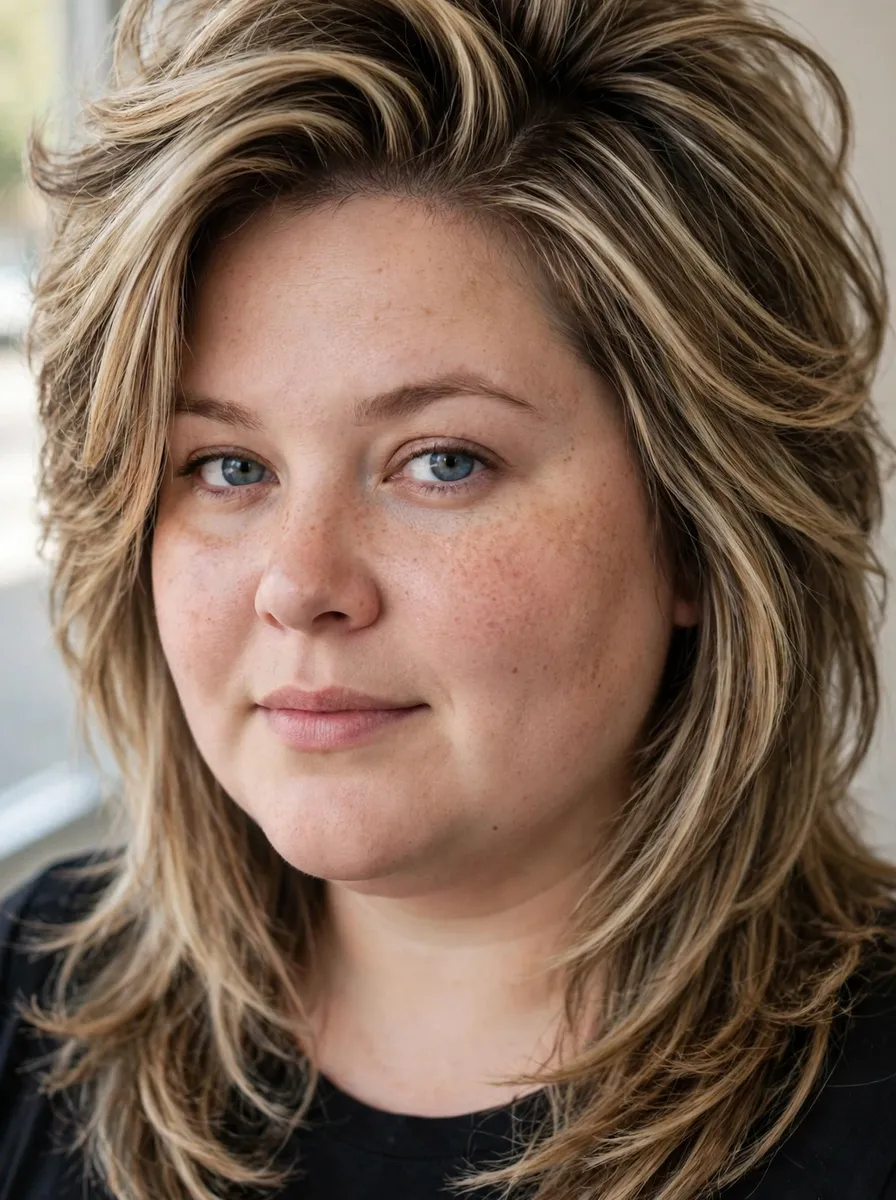
Parting your hair far to one side lifts the roots on the heavy side, adding height at the crown — and height is length, visually. The layers underneath keep the longer side from collapsing flat against the cheek. This works at almost any length from a lob down to long hair, and it is the fastest transformation on the list because the part does half the work before the scissors even start.
8. Wavy Layers with Vertical Styling
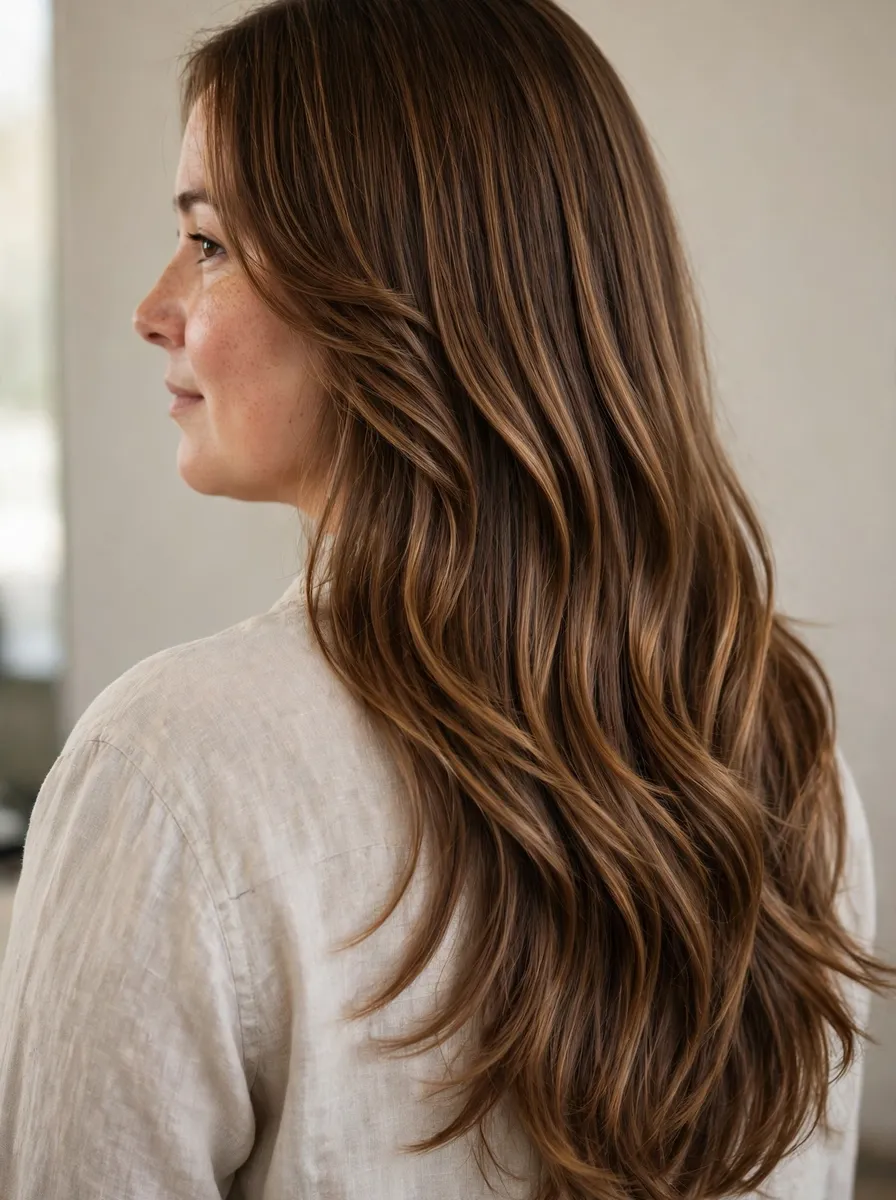
Waves can go either way on a round face: styled outward they add width, styled downward they add length. These layers are cut to encourage the downward path — loose, elongated waves that fall in vertical ribbons rather than round, bouncy curls. If your hair is naturally wavy, this is mostly a styling brief (stretch waves out with a brush while drying) rather than a dramatic new cut.
9. High-Crown Layered Cut
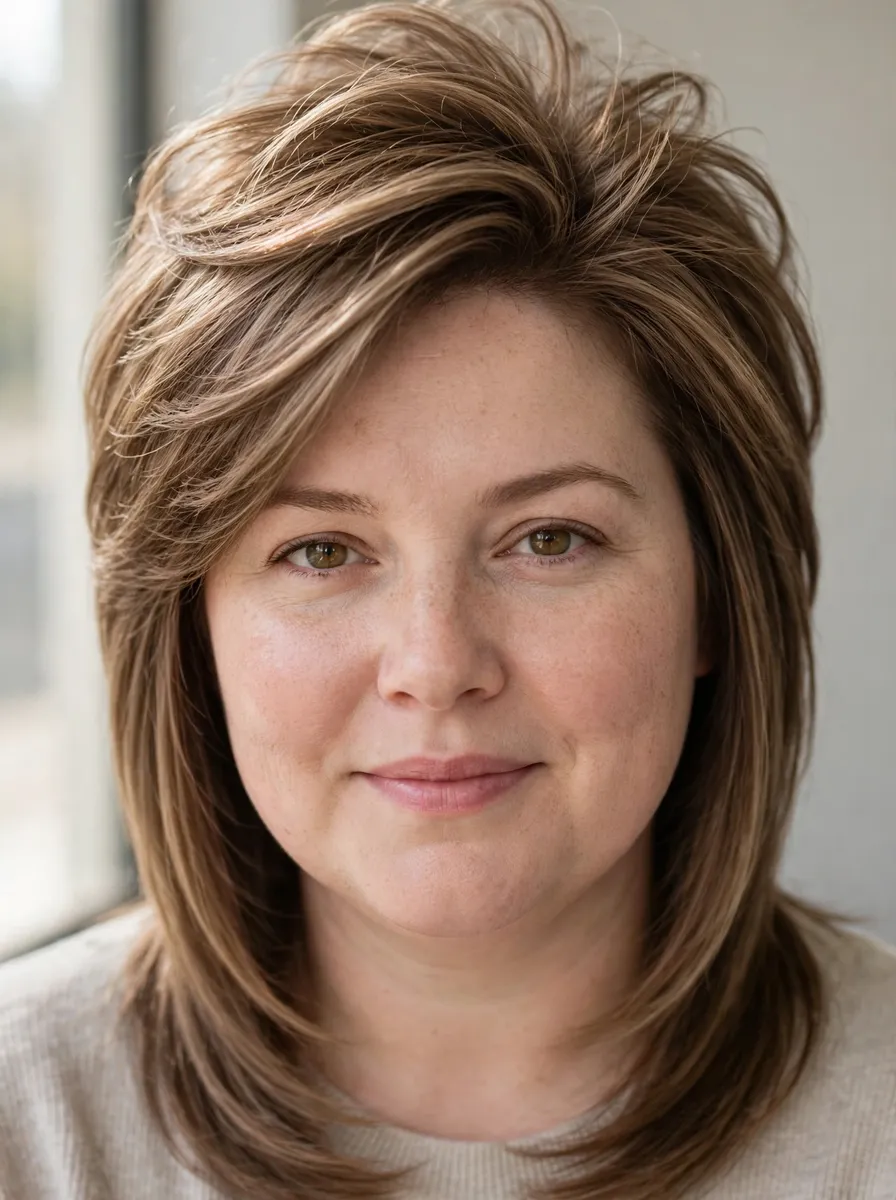
Volume has an address, and for a round face it should live at the crown, not the sides. Shorter layers through the top create lift where it lengthens the face, while the sides stay sleeker and longer. It is a strong choice for fine hair, which often goes flat on top and wide at the ends — this cut reverses both tendencies at once.
10. Long Layers with Feathered Ends
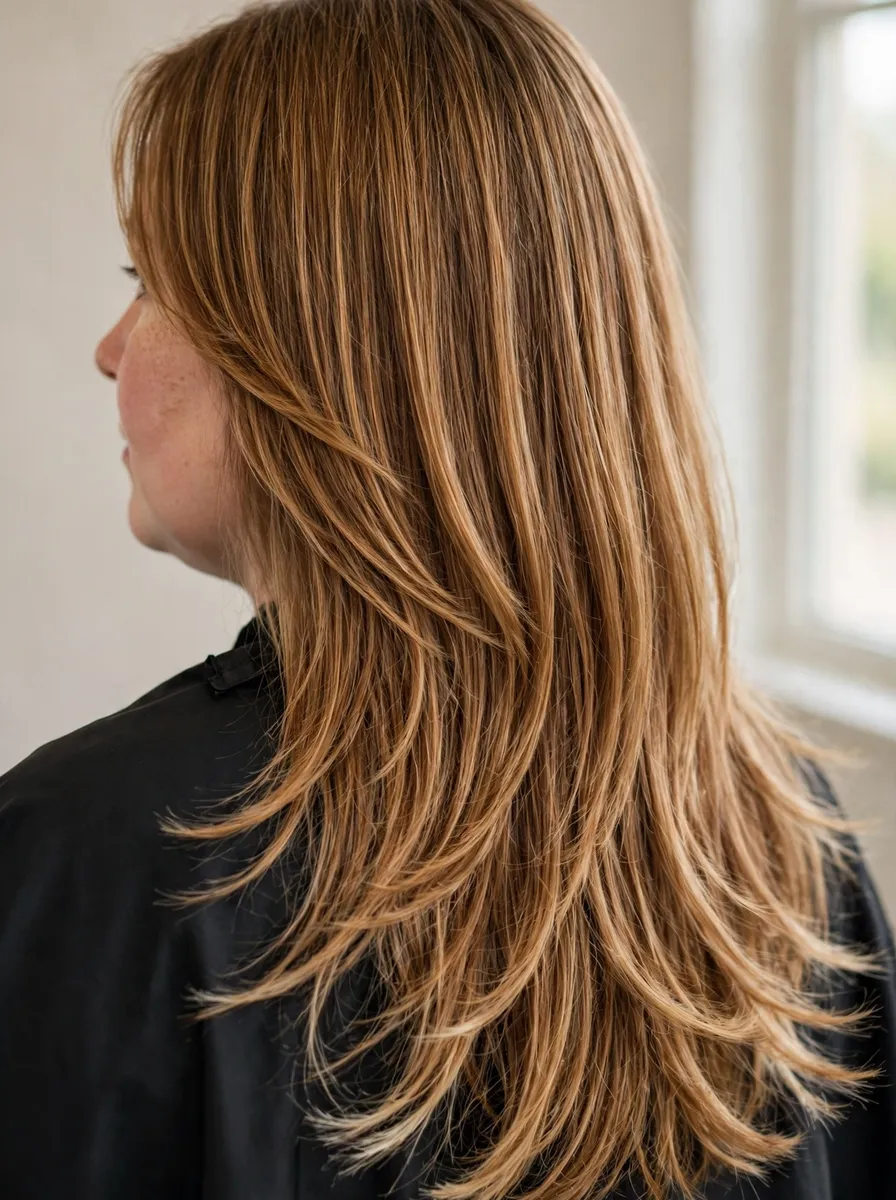
Feathering tapers the ends into soft, flicked points, which keeps long hair from forming a solid triangle beside the face. The movement at the bottom third draws the eye down and out of the round silhouette. It is the lowest-maintenance long option here: the feathered ends disguise grow-out, so trims can stretch to three or four months.
How to Ask Your Stylist for a Round-Face Layered Cut
Bring two things: a photo of the placement (where the first layer starts) rather than just the overall style, and the sentence “no volume at the cheeks”. Then confirm three decisions before cutting starts:
- First layer point — at or below the chin for the most flattering result.
- Parting — commit to your real part (center or side); the cut should be built around it.
- Length — at least two to three inches below the chin gives the elongating effect room to work; if you want to go shorter, the angled lob (style 3) is the safest route.
If bangs are on your mind as well, the layered haircuts with bangs guide covers which fringe styles keep the slimming lines intact — curtain and side-swept shapes yes, straight-across blunt fringes only with long layers below them.
Frequently Asked Questions
Do layered haircuts slim a round face?
They can, when the layers are placed to create vertical lines: first layer at or below the chin, length past the shoulders or an angled front, and volume concentrated at the crown rather than the sides. Layers placed at cheek height do the opposite and can make a round face look wider, which is why placement matters more than the number of layers.
Where should layers start on a round face?
At or below the chin is the reliable rule. That keeps the hair beside the cheeks smooth and close, and puts the movement and texture in the lower part of the hair where it draws the eye downward. If you love shorter layers, keep them on top of the head for crown lift rather than around the face.
Is a bob haircut good for a round face?
Yes, with two conditions: it should sit at or below the chin rather than ending at the jawline, and it benefits from an angled front or asymmetry that breaks the circular outline. A layered lob that is slightly longer in front is the most forgiving version. Chin-length blunt bobs with no layers are the hardest style for a round face to carry.
What is the best hair length for a round face with layers?
Long and medium lengths are the most naturally flattering because the vertical fall elongates the face. Shoulder length and below is the sweet spot for most people. Shorter cuts can absolutely work — the angled lob and asymmetrical bob in this guide are proof — but they need deliberate angles rather than rounded shapes. Go shorter still and the same rules apply: our pixie cuts for round faces guide applies them to cropped cuts.
Do curtain bangs suit a round face?
Yes, better than most bangs. Because curtain bangs part in the middle and sweep diagonally outward, they create two angled lines that frame and narrow the face instead of a horizontal line that widens it. Keep them long enough to reach the cheekbones and blend them into your layers so there is no hard edge.
How often do layered cuts for round faces need trimming?
Every 8 to 12 weeks is typical for long layers; shorter angled cuts need attention every 6 to 8 weeks to keep the front angle where it belongs. The shapes in this guide are forgiving as they grow, because the slimming effect comes from placement and proportion, not from a precise outline that collapses in a month.