Jellyfish Haircut: 12 Ways to Wear the Two-Tier Cut
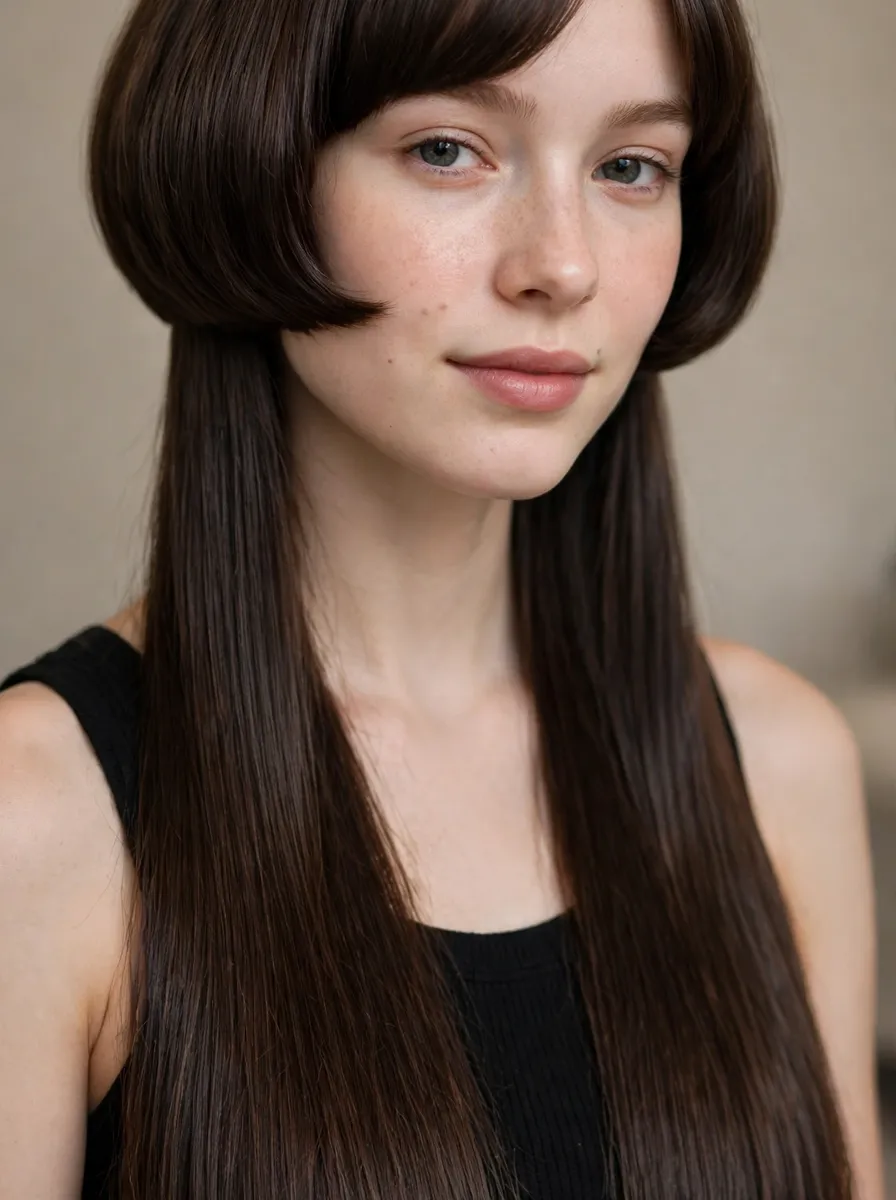
A jellyfish haircut is built from two silhouettes stacked on one head: a short, rounded, bob-like top layer that caps the crown and frames the face, and long, straight lengths that fall from underneath it. Put together, the shape reads exactly like its namesake — a rounded bell on top with long tendrils trailing below. The top layer is usually cut somewhere between the ears and the jaw, while the lengths underneath keep as much of your existing length as you want to give them.
The cut travelled from anime and Japanese street style into K-beauty salons, then onto social media everywhere else: it offers the freshness of a bob without surrendering long hair. It is often confused with a wolf cut, but the two are built differently — a wolf cut blends choppy layers through the whole head, whereas a jellyfish cut keeps the two tiers deliberately separate, with a visible step between them. The twelve versions below run from the full statement to a softened take.
1. Classic Long Jellyfish Cut
The reference version: a rounded top layer ending around the jaw, worn over straight lengths that fall well past the chest. The step between the tiers is clean and unapologetic — nothing is blended away. Worn glass-straight, the silhouette is at its sharpest, which is why this version suits naturally straight or relaxed hair best. If your hair has a wave, expect to straighten the lengths to keep the two shapes reading as separate. Bring this one as your reference photo — every other version here is a variation on its proportions.
2. Jellyfish Cut with a Bob Top Layer
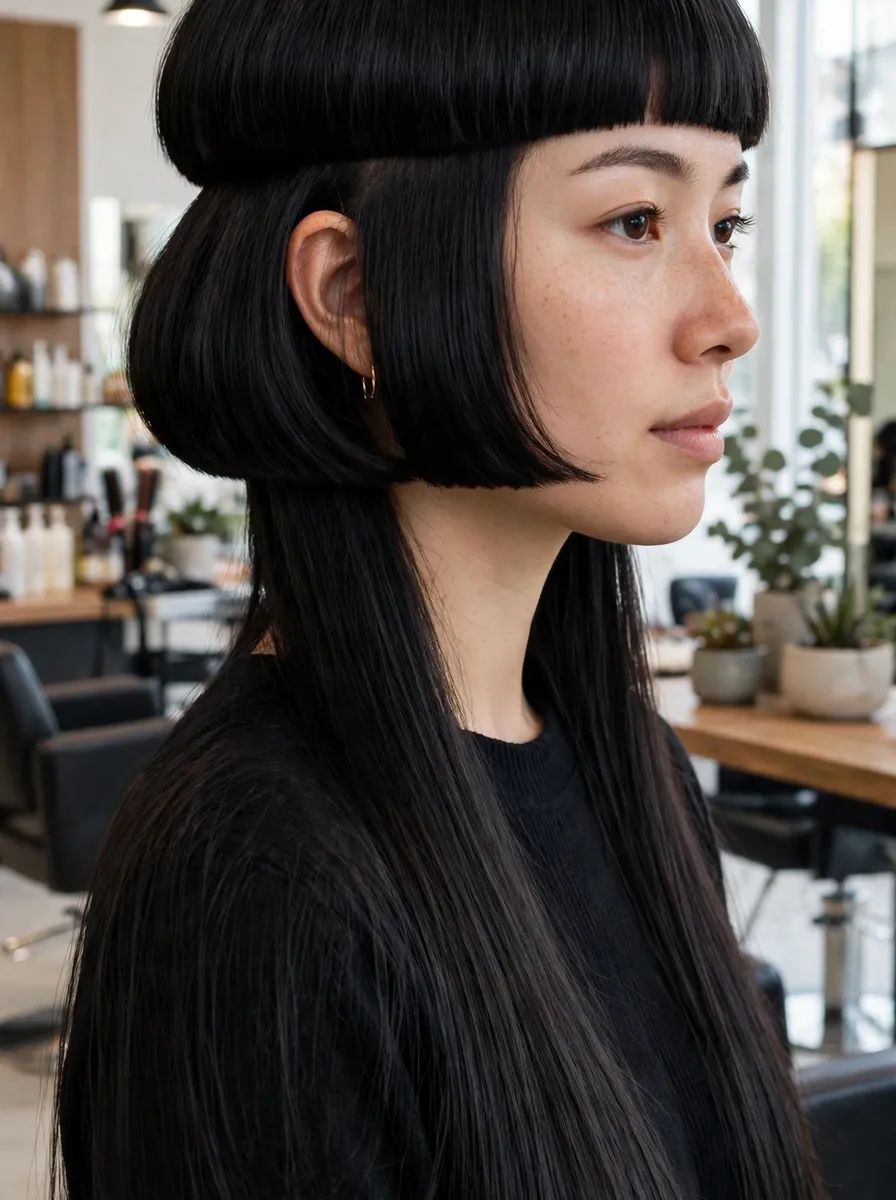
Here the top tier is cut as a true blunt bob — chin-length, one clean line, no layering through it — while the long lengths slip out from underneath. The bluntness makes the contrast between the tiers stronger than in the classic version, and it gives thick hair a graphic, almost architectural finish. It also makes the cut easier to read as intentional: nobody mistakes this for grown-out layers. Style the bob tier smooth and tucked or flicked under, and keep the lengths straight so the two lines stay distinct rather than merging into one long shape.
3. Short Jellyfish Cut
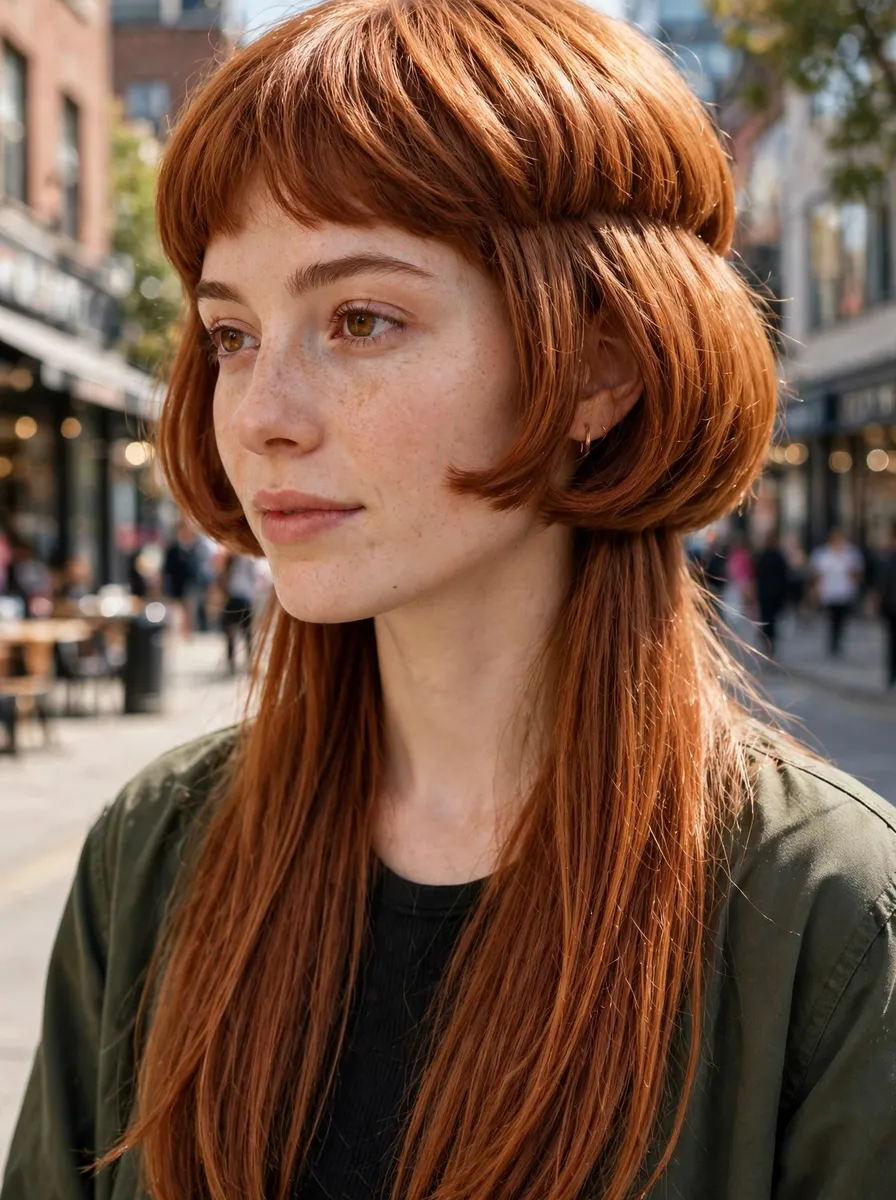
The short version keeps the same two-tier logic but pulls the lengths up to mid-chest or just past the shoulders. It is the most wearable entry point: you still get the rounded cap and the trailing tendrils, but with far less hair to wash, dry and keep tangle-free. It also suits finer lengths, which can look stringy at extreme length but hold their own when shorter. For anyone leaving a bob behind and growing toward long hair, this is the natural halfway house — the top layer simply continues its journey down while the lengths catch up.
4. Jellyfish Cut with Curtain Bangs

Curtain bangs soften the jellyfish cut’s geometry without dismantling it. Parted in the middle and sweeping out to the cheekbones, they flow into the rounded top layer so the face-framing looks continuous rather than cut in. This is the version to choose if you like the silhouette but find the blunt cap severe, or if you are fringe-curious and want one that grows out gracefully. Styling stays simple: blow-dry the fringe away from the face with a round brush, or let it air-dry with a slight natural part if your hair falls that way on its own.
5. Jellyfish Cut with Wispy Bangs
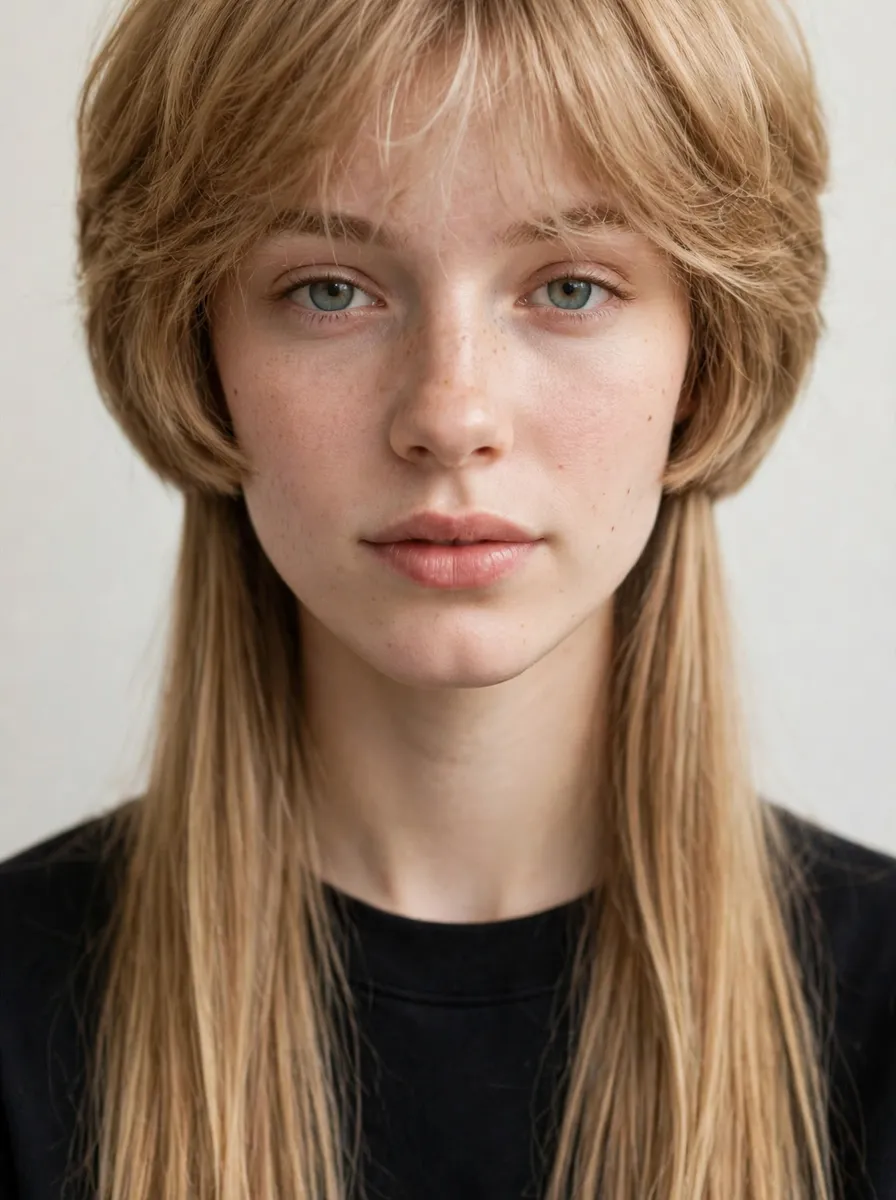
A wispy, see-through fringe gives the jellyfish cut its most K-beauty finish: light across the forehead, a few longer strands at the temples, and the rounded tier curving in behind it. Because the fringe is feathered rather than blunt, it is forgiving on fine hair and on anyone whose forehead fringe tends to separate by midday. It is also the lowest-commitment fringe here — wispy bangs soften into face-framing pieces within a few weeks if you change your mind. Ask your stylist to point-cut the fringe and leave the centre slightly longer than blunt bangs would be.
6. Curly Jellyfish Cut
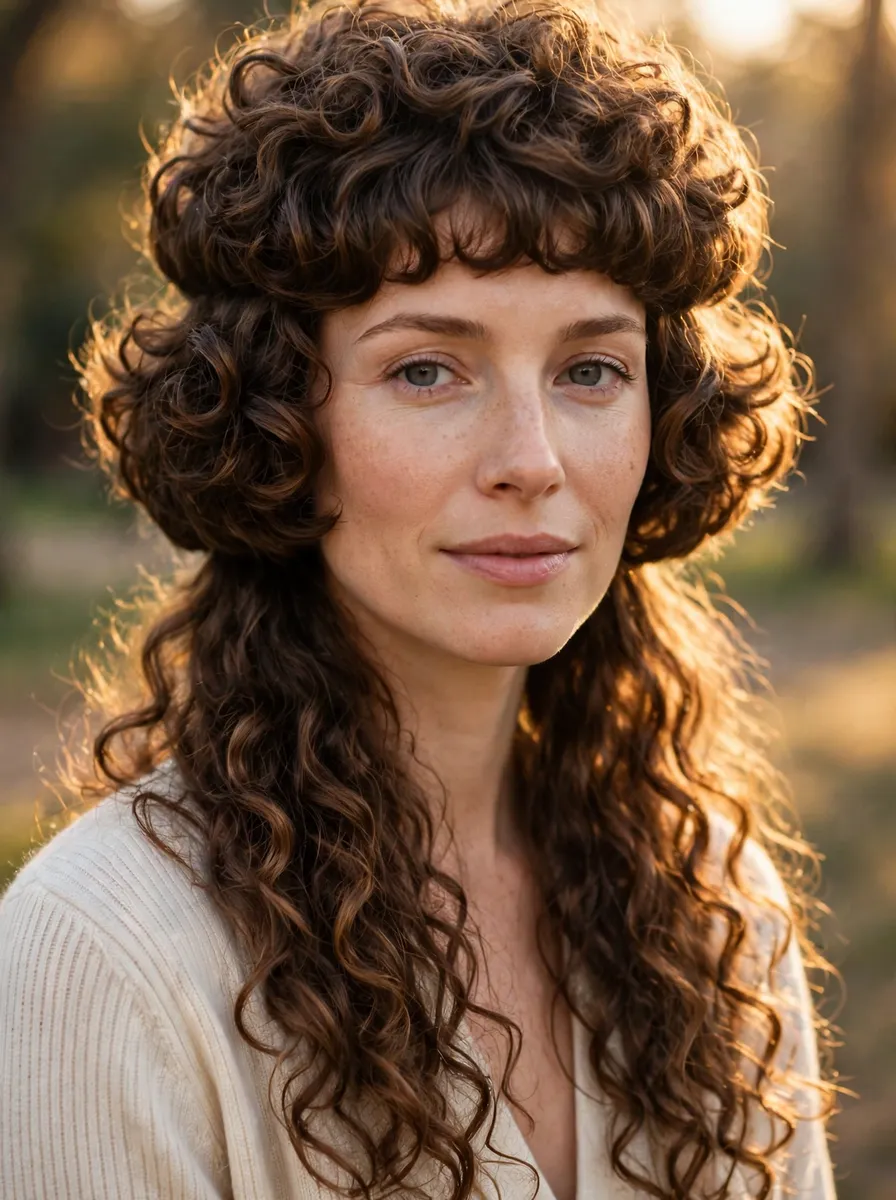
Curls change the reading of the cut in the best way: the top tier becomes a rounded curly bob with real volume, and the lengths below fall in looser, longer spirals. The two tiers are easier to distinguish on straight hair, so on curls the step needs to be cut slightly more dramatically to survive the shrinkage and spring. Always have it cut dry, curl by curl — wet, stretched hair hides where each tier will actually sit. Keep the top layer moisturised and defined, because frizz blurs the rounded shape that makes this version work.
7. Jellyfish Cut with an Undercut
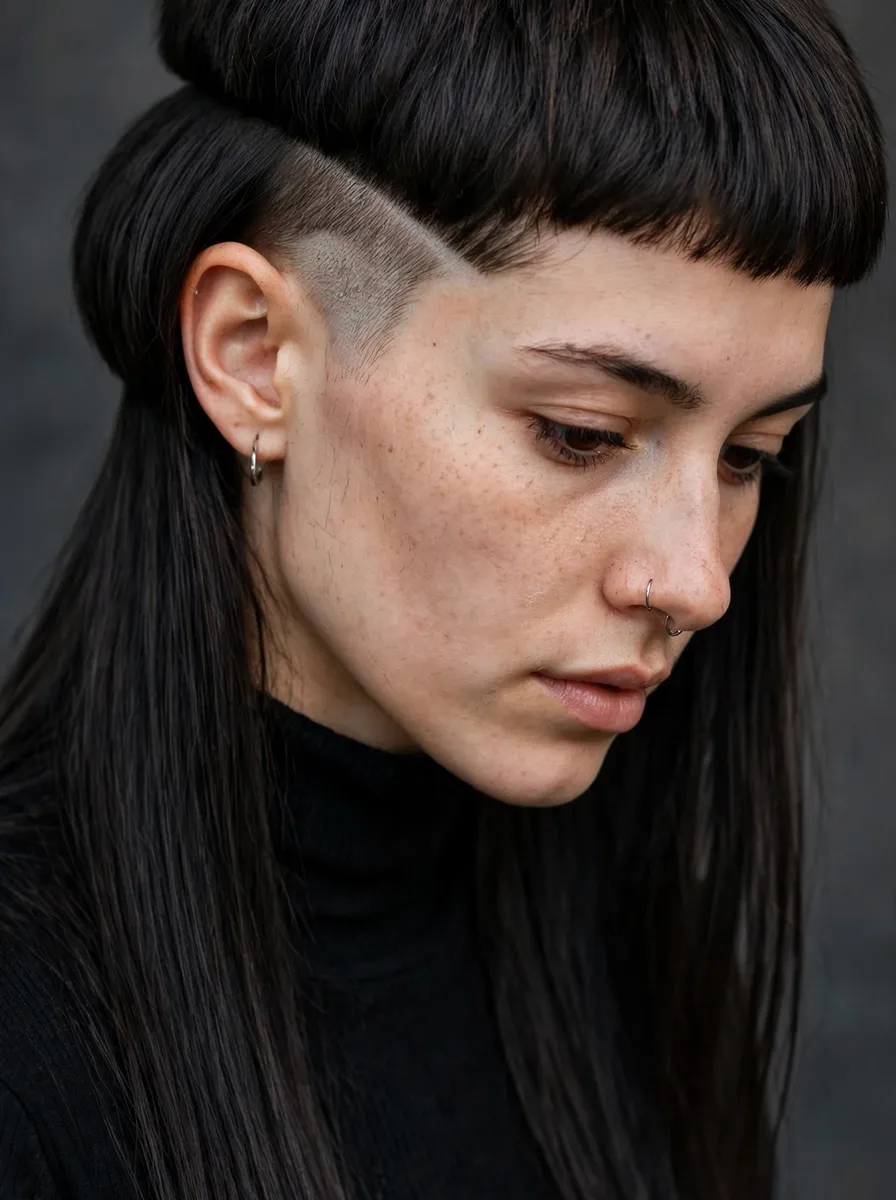
Adding an undercut underneath takes hidden weight out of the cut and adds a third, secret layer to it. With the hair down, you see the standard two tiers; tie the lengths up and the shaved nape or sides appear. It is a practical choice as much as an edgy one — thick hair sits flatter and feels cooler with the underlayer removed, and the long tier hangs straighter. The trade-off is upkeep: the undercut needs re-clippering every few weeks to stay crisp, and growing it out later takes patience. Start with a small nape undercut if you are unsure.
8. Soft, Subtle Jellyfish Cut
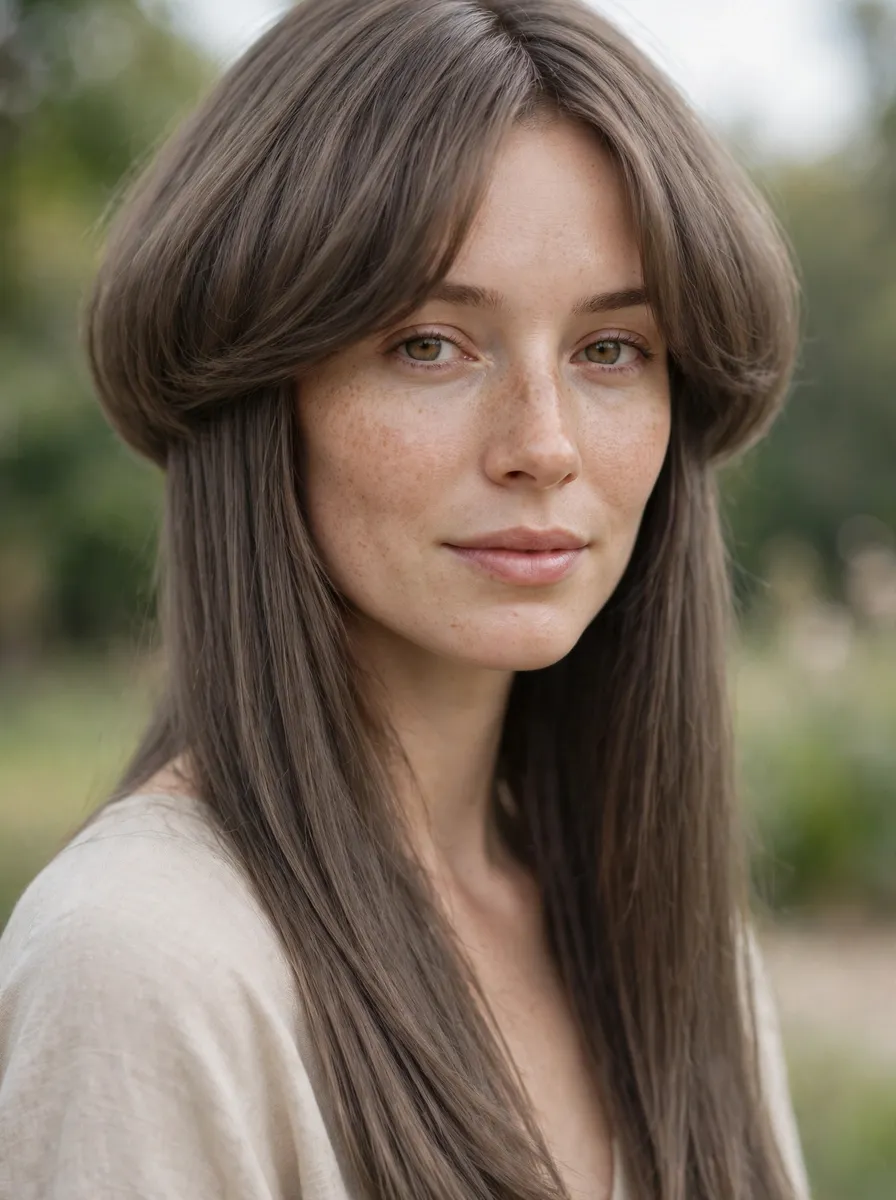
The soft version keeps the idea and loses the drama: the top layer is cut longer, closer to the collarbones, and the step down to the lengths is lightly blended rather than left as a hard line. From most angles it reads as a face-framing layered cut — it connects naturally to the shapes in our layered haircuts guide — but in profile the two-tier origin still shows. This is the office-safe, parent-approved, first-time version, and it is also the easiest to abandon: one reshaping appointment can blend it into a conventional layered cut entirely.
9. Jellyfish Cut for Thick Hair
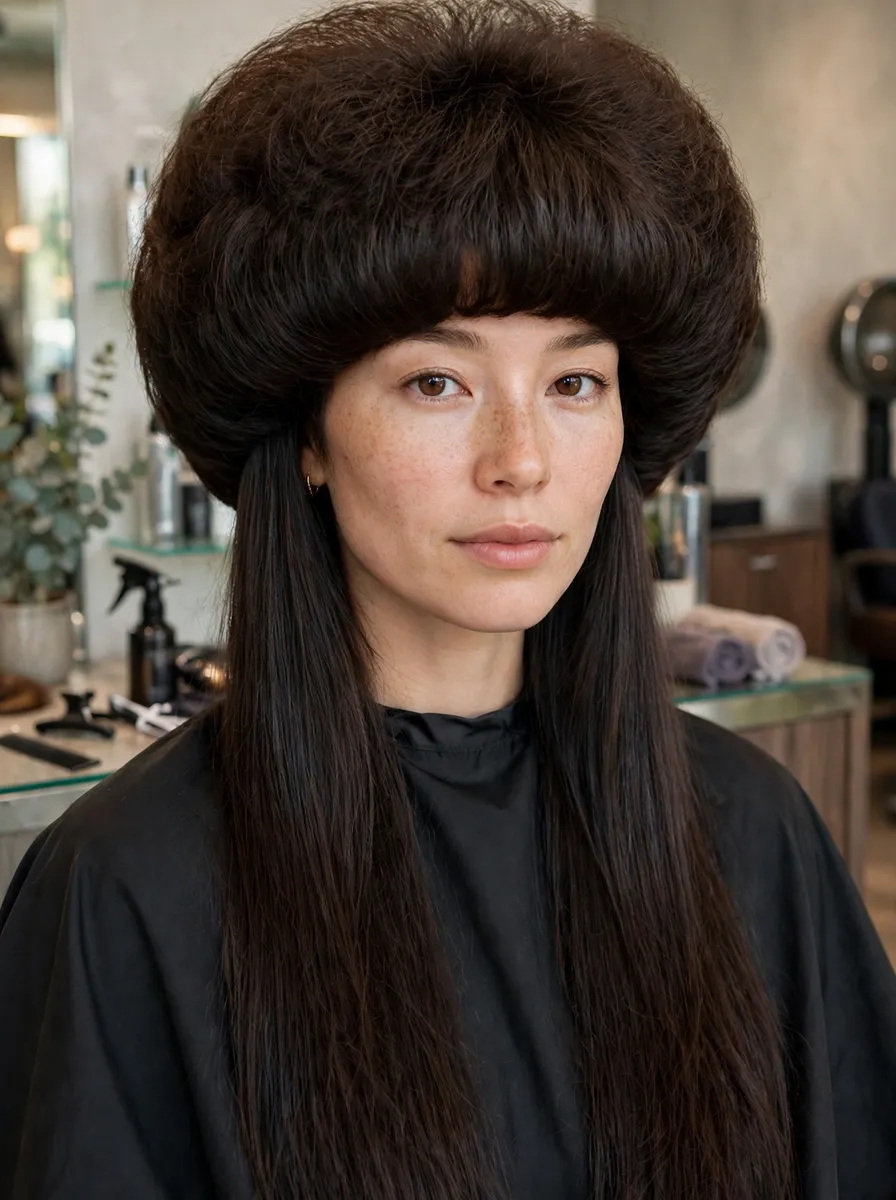
Thick hair is what this cut was quietly designed for. The top layer gets to be full and rounded, while the lengths underneath can be debulked — thinned internally or paired with a hidden undercut — so the hair hangs straight instead of flaring into a triangle. Without that weight removal, the long tier swells and the silhouette is lost. Ask your stylist to keep the top layer’s outline intact while taking the bulk out from inside the lengths. Done well, thick hair ends up lighter, cooler and faster to dry than it was in a one-length cut.
10. Jellyfish Cut for Fine Hair
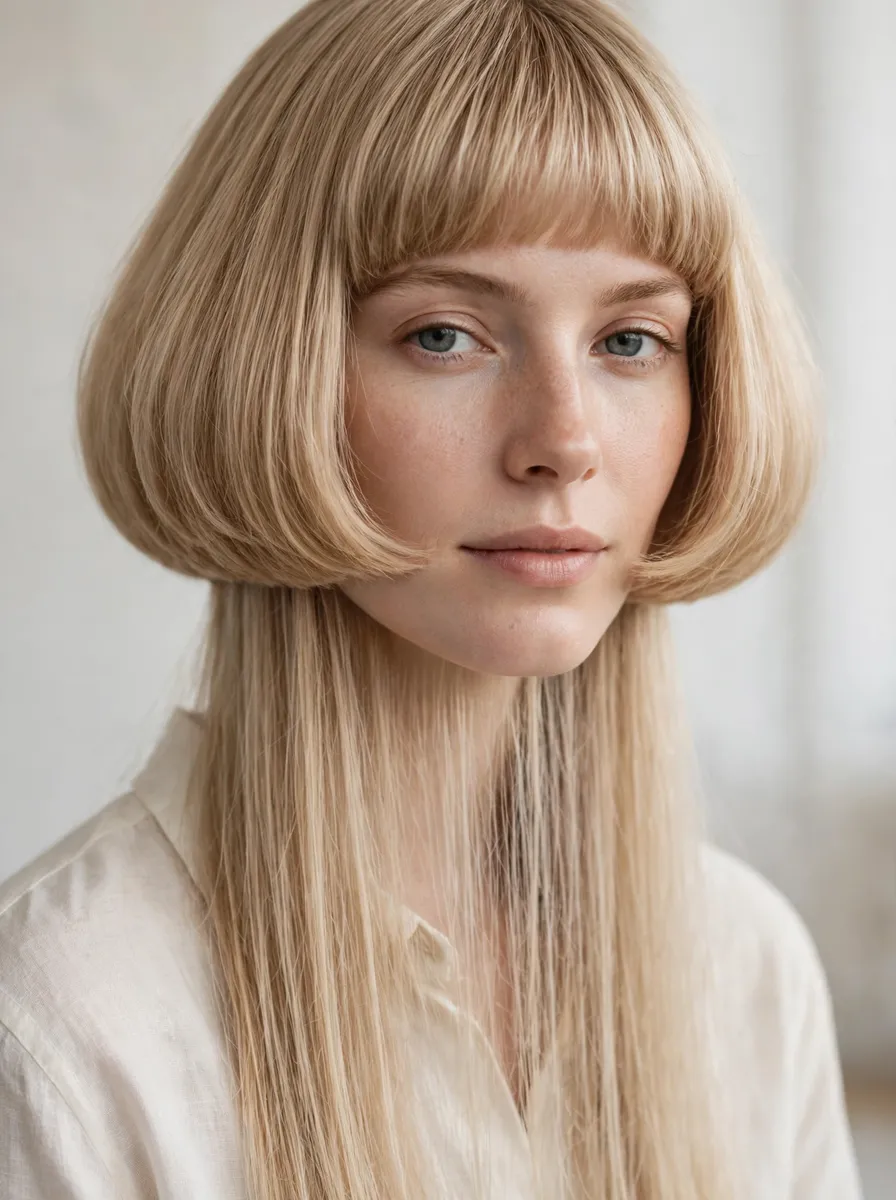
Fine hair needs the cautious edit. The top layer is actually a gift — a rounded jaw-length tier makes fine hair look thicker around the face than any one-length style does — but the lengths must be protected. Keep them on the shorter side of this cut (style 3 proportions), leave the ends blunt rather than feathered, and skip texturising through the long tier. A blunt edge is density you cannot afford to lose. Volumising mousse at the roots, dried with the head tipped forward, gives the top layer its lift.
11. Two-Tone Jellyfish Cut
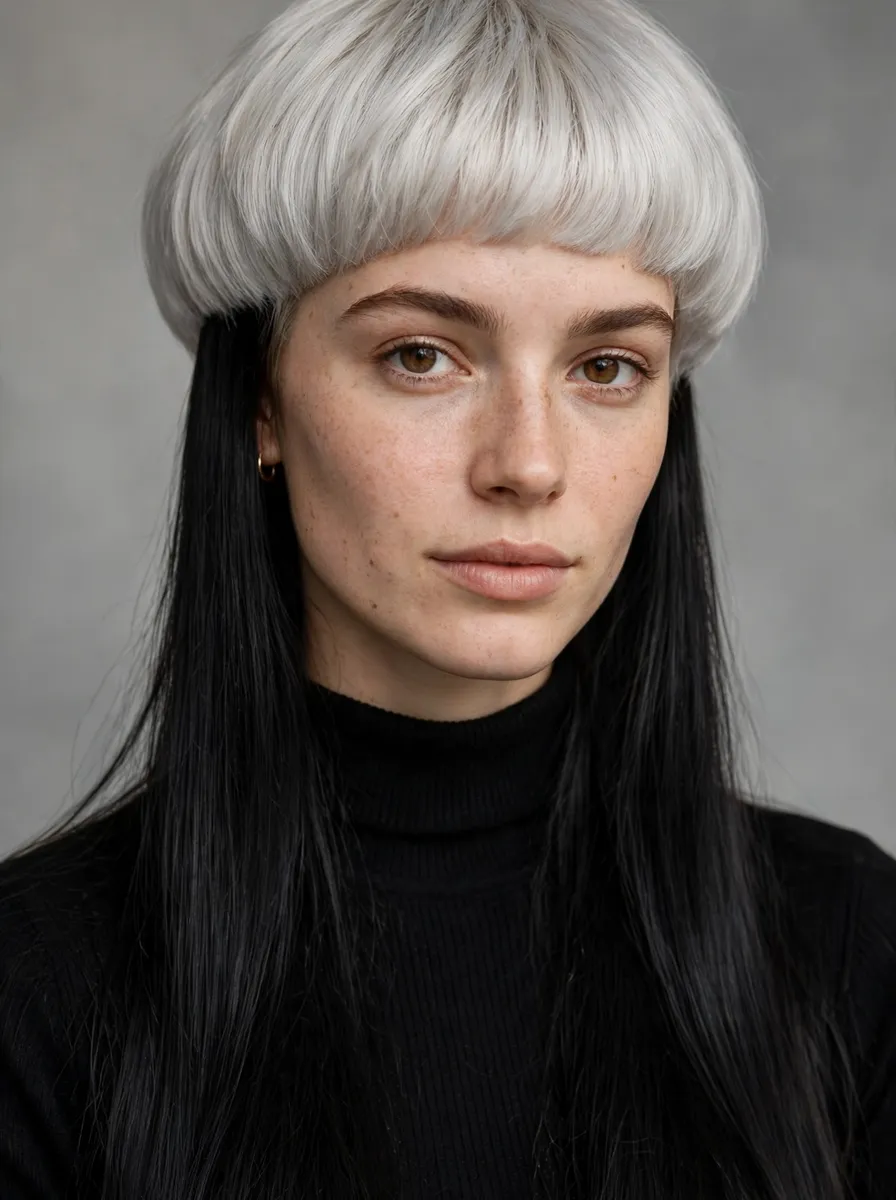
Colour can do the emphasising instead of the scissors. Dyeing the top tier and the lengths in contrasting shades — platinum over black, copper over chocolate, pastel over natural brown — draws the eye straight to the step between them and makes even a soft version read as unmistakably two-tier. It works in reverse too: a natural top with vivid lengths underneath that flash as you move. The honest cost is maintenance — a statement cut and a two-process colour — so budget for root touch-ups on the top tier every four to six weeks.
12. Grown-Out Jellyfish Cut

Every jellyfish cut becomes this eventually, and some people book it directly. After a few months the top tier drops toward the shoulders, the step softens, and the whole thing settles into something close to a butterfly haircut with longer face-framing. There is no awkward phase — the shape just relaxes. If you loved the sharp version, a fifteen-minute tidy restores the tier line without touching your length; if you are done with the cut, this is the stage from which a stylist can blend it out in one appointment.
What to Ask Your Stylist For
Bring photos — ideally one of the exact version you want and one showing the step between the tiers in profile, because that step is the whole cut. The specifics to name: a rounded, bob-like top layer ending where you want it (ear, jaw or chin are the usual choices); long lengths kept underneath with no blending between the two; and the lengths worn straight. Say how sharp you want the contrast, since that separates the soft version (style 8) from the bob-top statement (style 2).
How a Jellyfish Cut Grows Out
Gently, by statement-cut standards. The top layer lengthens first and the step between the tiers softens month by month, passing through the subtle version (style 8) and ending near a long layered cut — style 12 is simply this process photographed. There is no shelf or mullet stage to endure. Expect the top tier to want a reshaping trim around three to four months if you are keeping the cut. Growing it out fully is a blending exercise, not a chop.
Frequently Asked Questions
What is the difference between a jellyfish cut and a wolf cut?
The structure. A wolf cut blends short, choppy layers through the whole head so the texture is continuous from crown to ends. A jellyfish cut keeps two separate tiers — a rounded bob-like top layer and long lengths beneath — with a visible step between them and no blending across it.
Does a jellyfish haircut suit round faces?
Yes, and it can be genuinely flattering: the rounded top layer adds height at the crown, which lengthens the face visually, while the long straight lengths draw the eye downward rather than outward. Keep the top tier at jaw level or just below rather than at the ears, which can add width.
How long does your hair need to be for a jellyfish cut?
You need enough length underneath for the contrast to read — lengths at least to the shoulders, and ideally past the collarbones, with the top tier cut between the ears and the chin. The bigger the gap between the two tiers, the clearer the silhouette.
Is a jellyfish cut high maintenance?
Day to day, moderate: the lengths look best straight, so wavy hair needs heat or a smoothing routine to keep the tiers distinct. Salon maintenance is light — a tier tidy every three to four months — unless you add an undercut or two-tone colour, which need their own upkeep.
Can fine hair pull off a jellyfish cut?
Yes, in its careful form: a blunt, rounded top layer for the impression of thickness, shorter and blunter lengths, and no thinning through the long tier. The fine-hair version (style 10) is about protecting density, because fine lengths cannot spare what aggressive texturising removes.
Can you tie a jellyfish cut up?
Mostly, yes. The long lengths go into a ponytail or bun as usual; the short top tier will not reach, so it stays down as a face-framing cap — which many wearers treat as a feature, since the updo keeps its shape and softness around the face. A half-up style that takes only the lengths is the neatest option.
Final Thoughts
The jellyfish cut is really a negotiation between two haircuts — the bob you fancy and the length you refuse to give up — and its twelve versions are different settlements of that negotiation. Decide how sharp you want the step, match the version to your hair type, and bring profile photos so your stylist can see the tier line you mean. If the full contrast feels like too much, start with the soft version and sharpen it later; if even that is too bold, the butterfly haircut offers the layered drama in a smoother form.