Shag Haircut for Women: 12 Soft, Layered Styles to Try
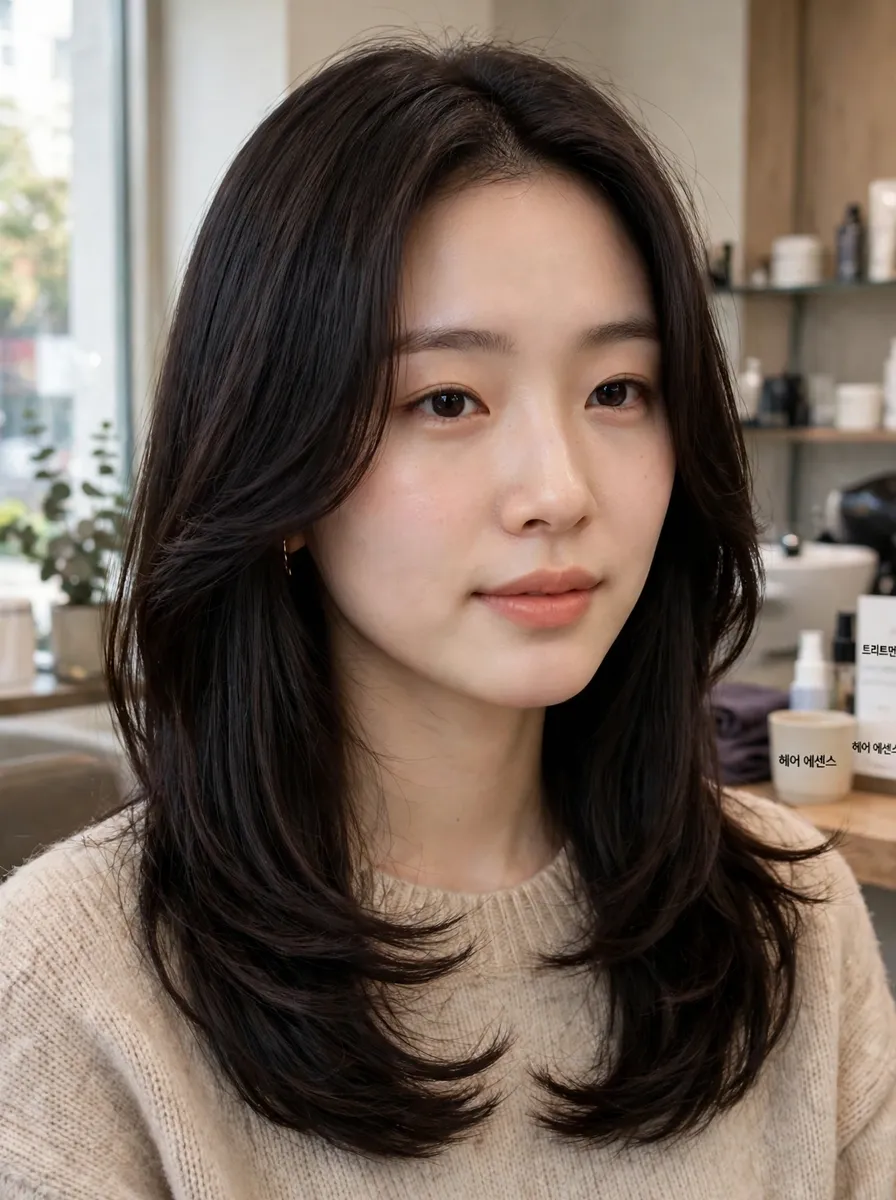
A shag is the layered cut that never really leaves: feathered layers worked through the whole head, ends left textured and piecey, and a fringe that feathers into the layers around the face rather than sitting on top of them. It arrived in the seventies with flicked-out ends and a rock-and-roll attitude, but the modern version is considerably softer — the layers are blended rather than chopped, and the silhouette is movement and texture all over instead of one dramatic contrast.
That evenness is what makes the shag so wearable. Because the layering is distributed, it can be tuned to almost any length, texture and face shape: shorter and flickier for fine hair, longer and looser for thick hair, rounded for curls. The twelve cuts below cover that range. If you want the full map of layering options before you commit, our layered haircuts guide shows where the shag sits among its smoother relatives.
1. Short Shag
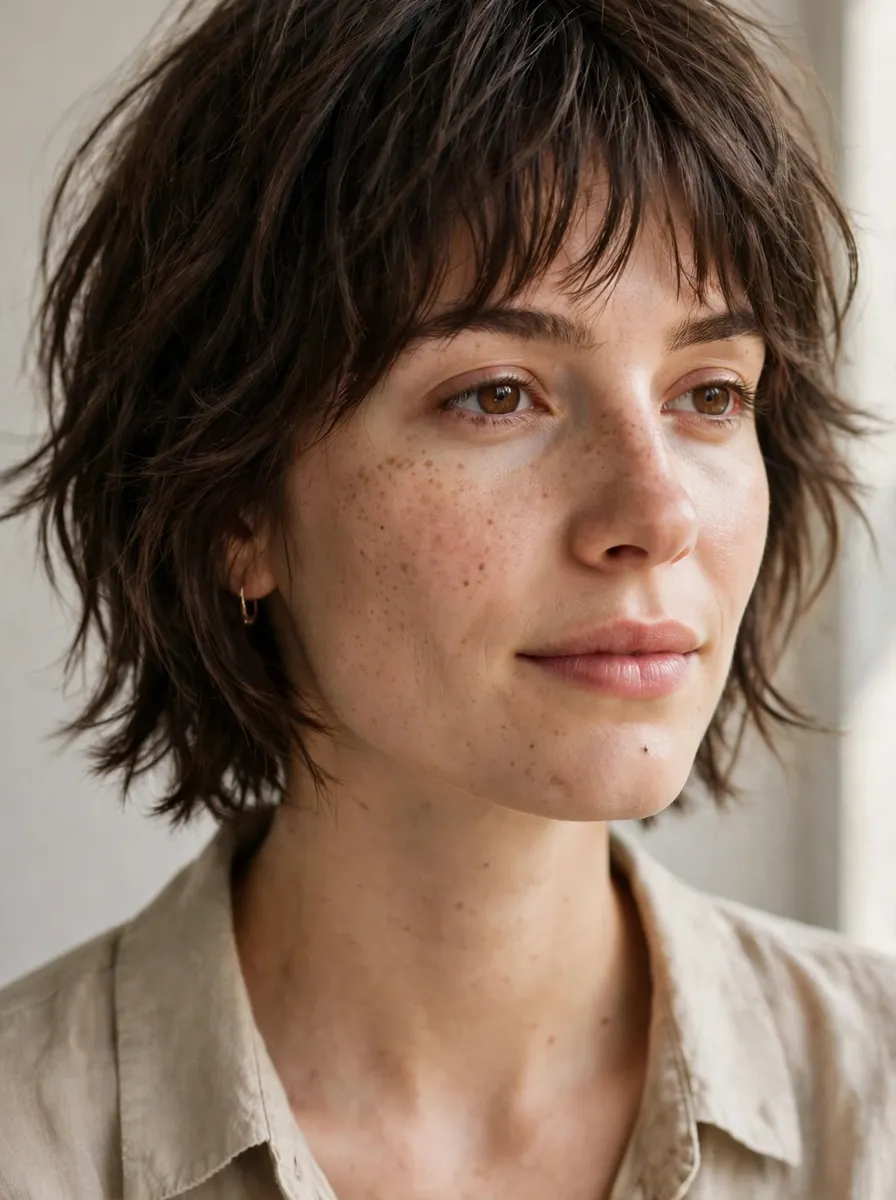
The short shag sits between chin and jaw, with feathered layers short enough to flick out at the ends and a wispy fringe that breaks up the forehead. At this length the texture does all the work — there is no weight pulling the layers flat — so it suits fine-to-medium hair that struggles to hold volume in longer cuts. Styling is a few minutes with a pea-sized amount of texture cream, and it is the easiest shag to grow out of if you change your mind.
2. Medium Shag
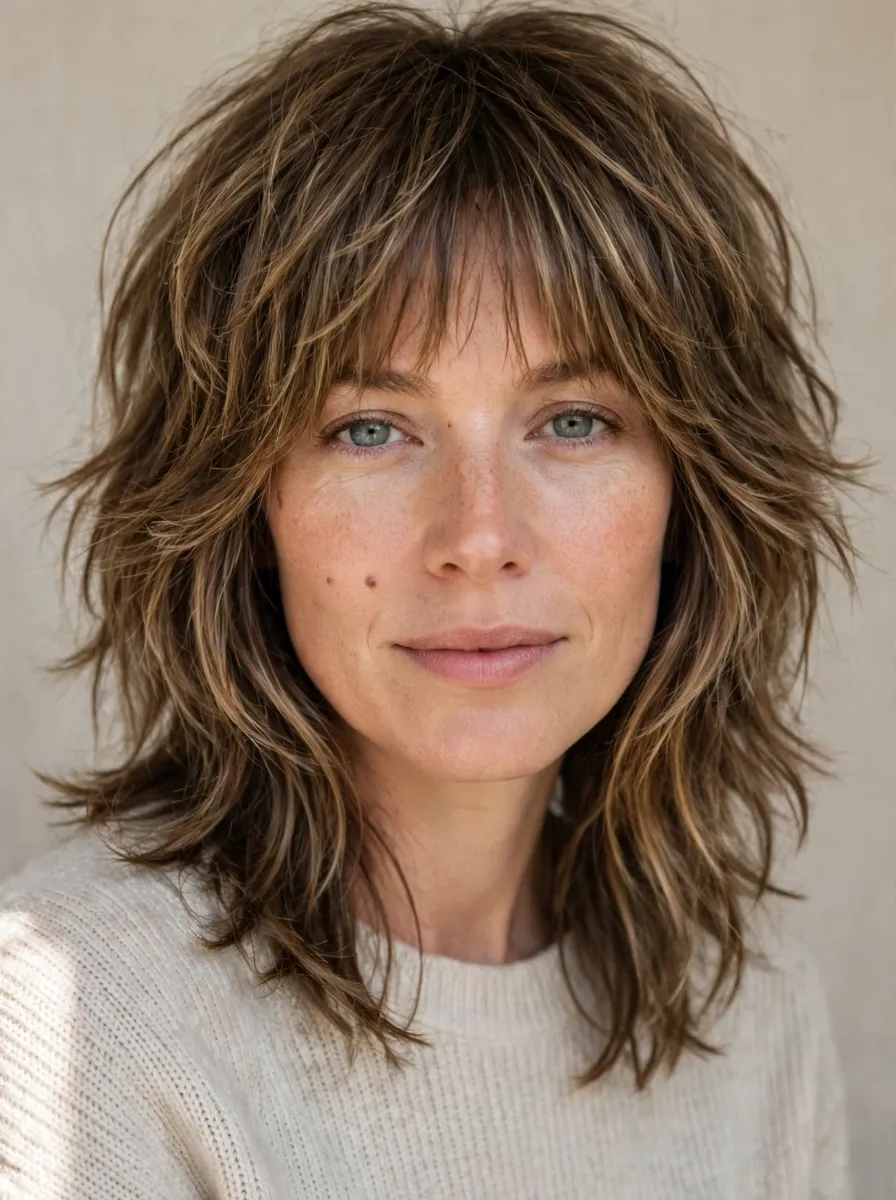
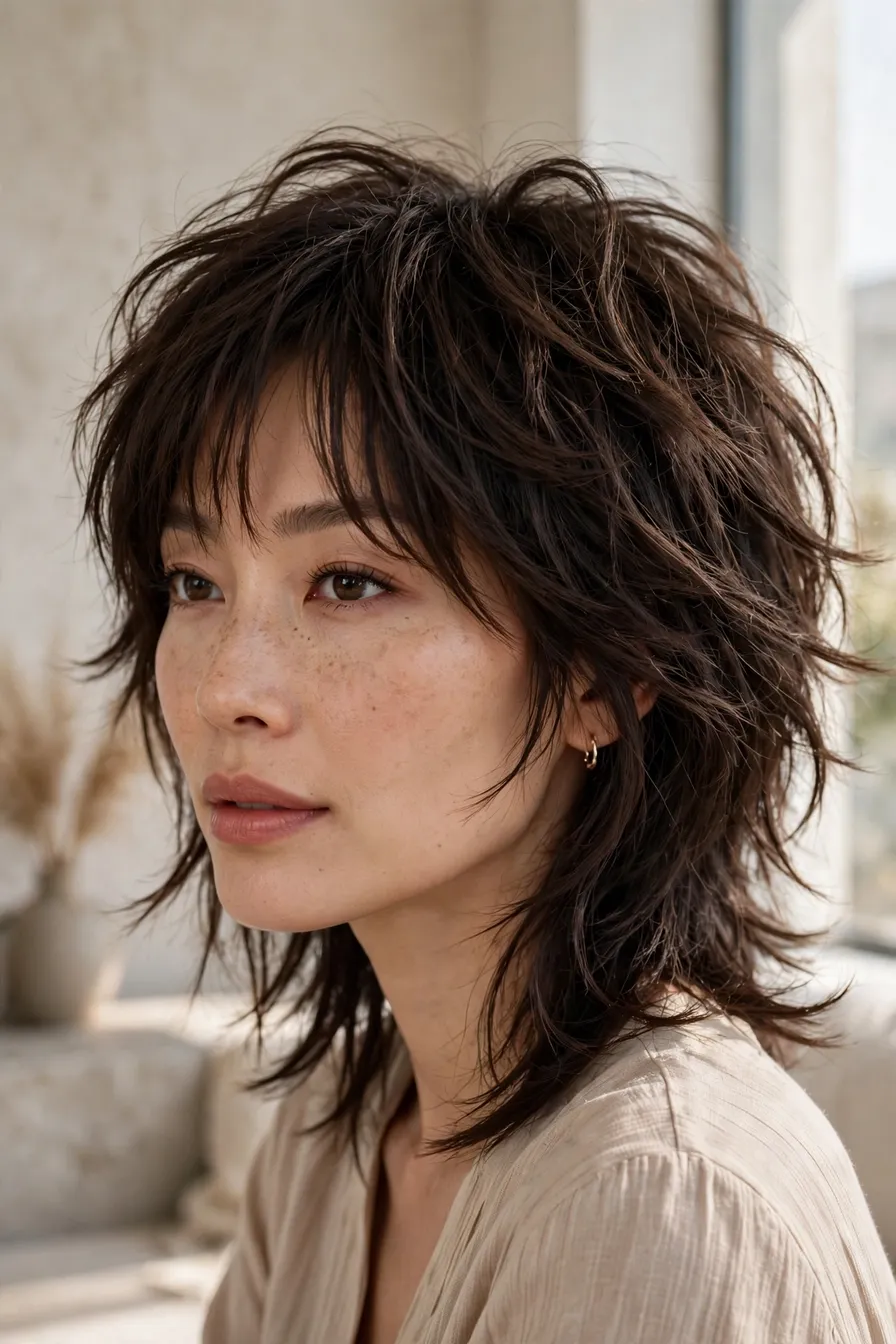
Shoulder length is the shag’s home turf: long enough for the layers to graduate visibly, short enough that the ends stay lively. The layers start around the cheekbones and step down through the lengths, with the ends point-cut so they separate rather than clump. This is the version to choose if you are growing out a bob or shortening long hair and want one cut that works through both transitions — it reads as intentional at every stage.
3. Long Shag
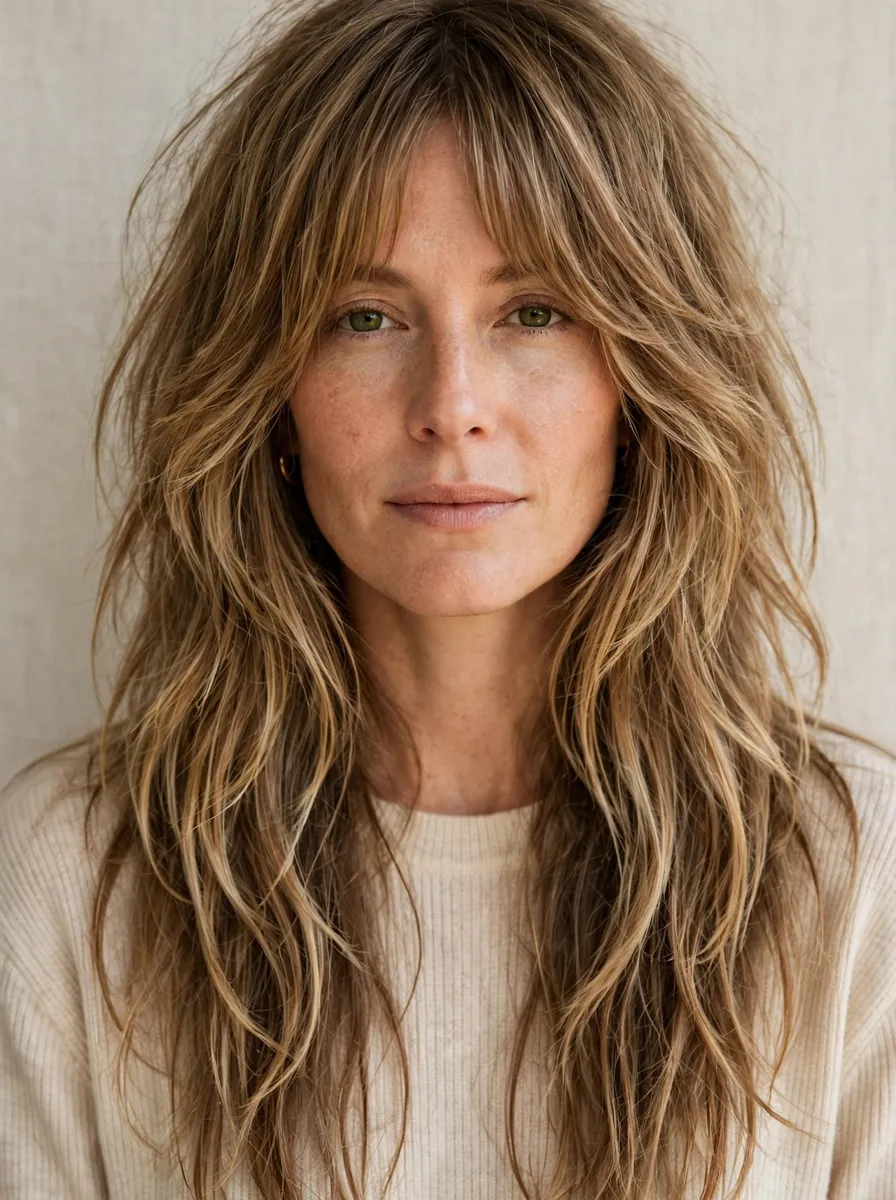
A long shag keeps the length and spends the layering where it shows: shorter feathered pieces around the face, graduating into long, textured lengths. It is the answer for anyone whose long hair hangs in one heavy sheet — the face-framing layers break up the curtain effect and the textured ends stop the bottom third looking blunt and tired. Keep the shortest layers at or below the cheekbones; higher than that and long hair can separate into two distinct haircuts.
4. Curly Shag
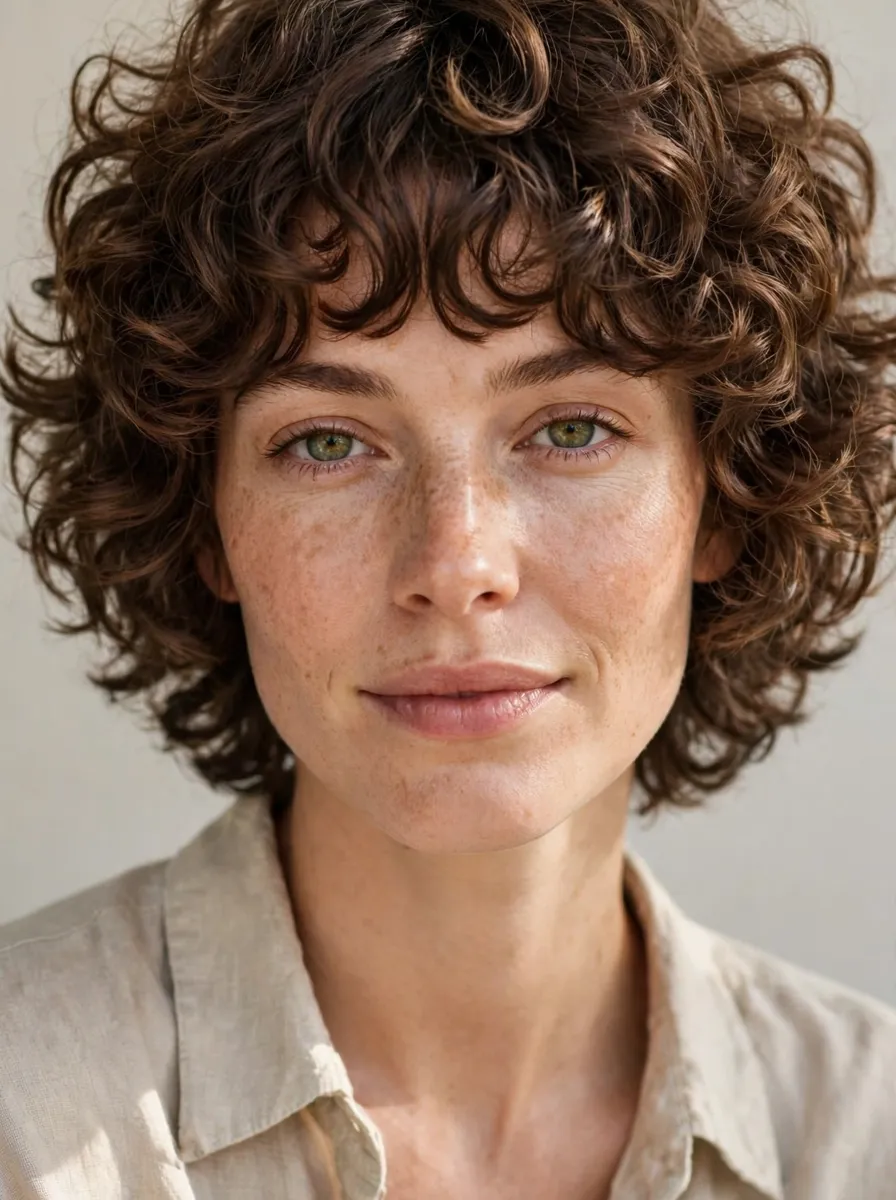
Curls and shags belong together: the rounded layers give curls a deliberate shape instead of a triangle, and a curly fringe finishes the silhouette. As with any layered cut on curls, it should be cut dry, curl by curl, so the layers land where the curls actually sit. If you love layers on curls but want a smoother, more polished outline, the curly butterfly cut concentrates the layering around the face instead of spreading it through the whole head.
5. Shag with Curtain Bangs
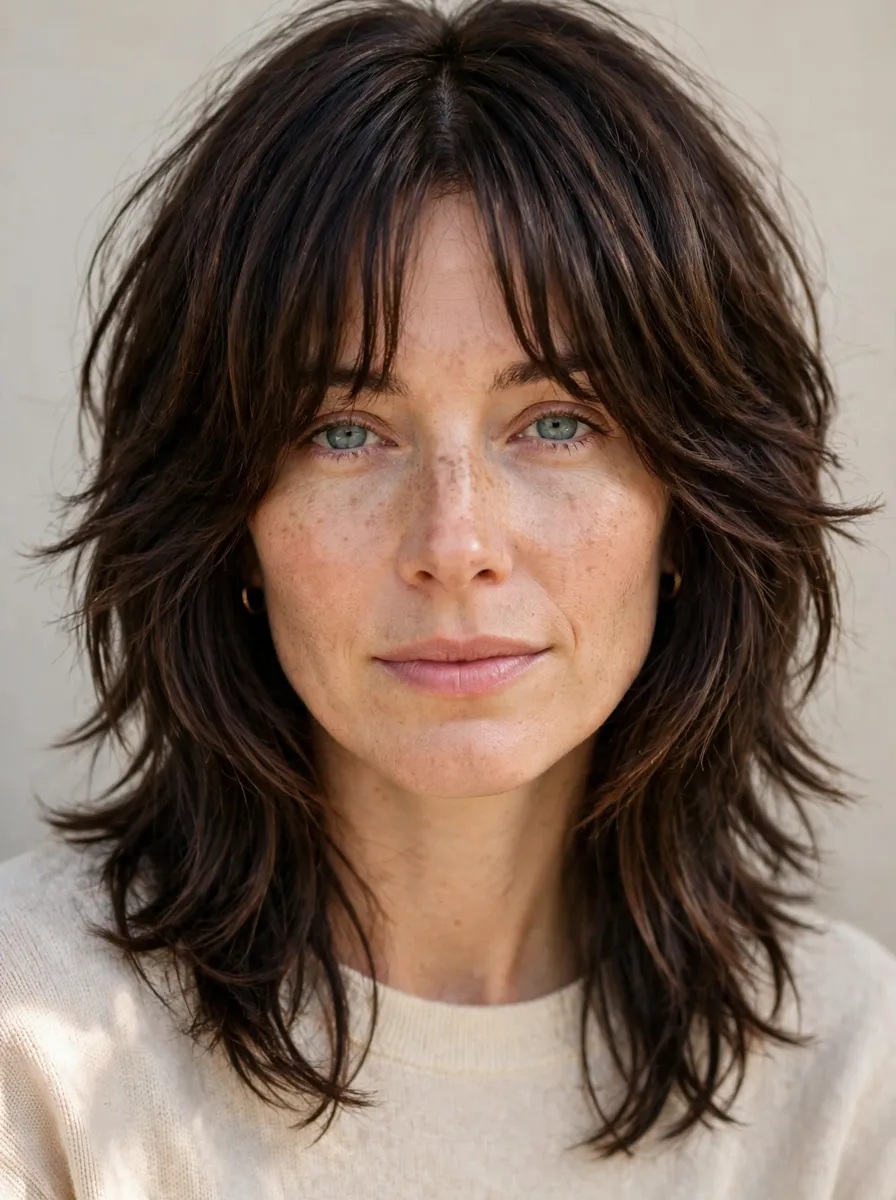
Curtain bangs are the shag’s most natural fringe: parted in the middle, longer at the edges, and blended straight into the cheekbone layers so there is no hard line where fringe ends and cut begins. They soften the whole face and make the shag workable in more conservative settings. They are also the lowest-commitment fringe to grow out — within a few weeks they simply become the shortest face-framing layer.
6. Shaggy Bob

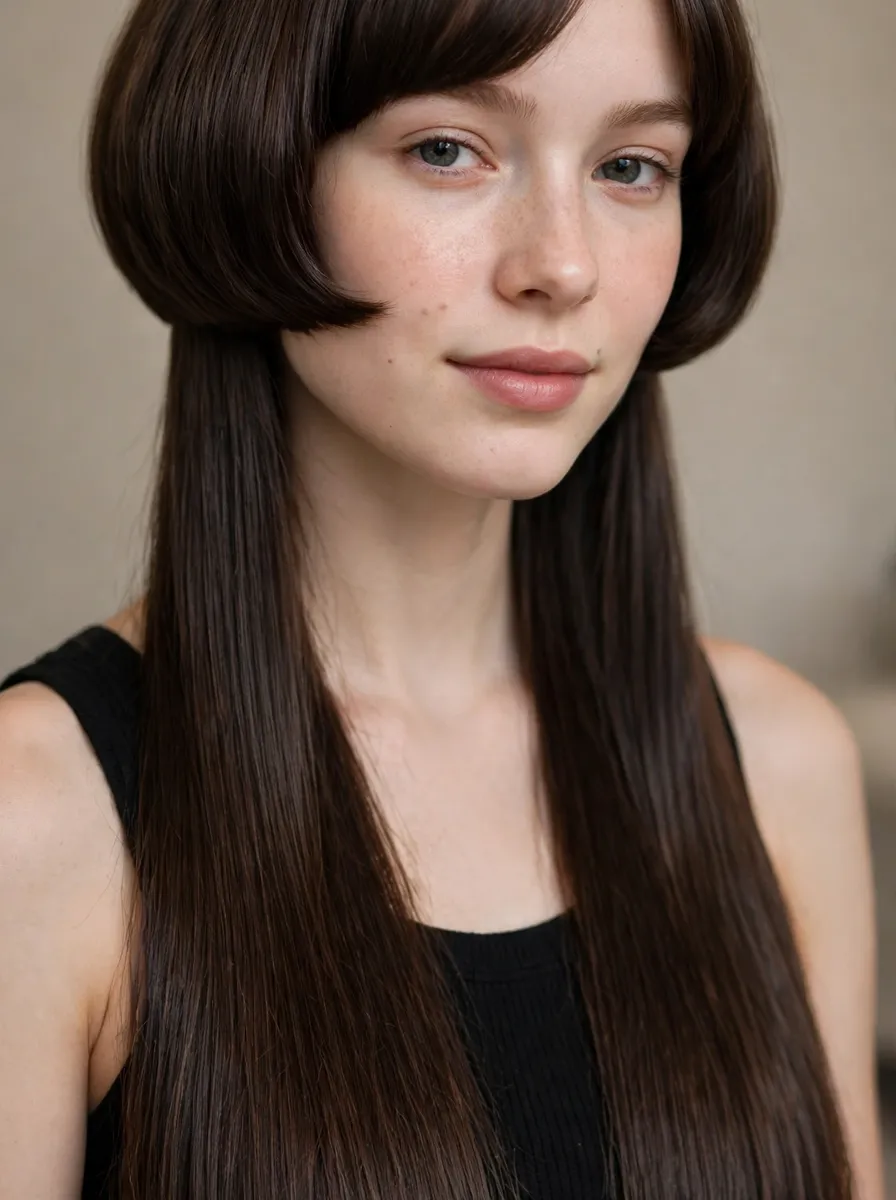
Take a jaw-length bob outline and cut shag texture into it: choppy layers through the crown, ends thinned and separated, a soft fringe on top. The shaggy bob keeps the bob’s tidy perimeter but loses its helmet-like smoothness, which makes it a good halfway house if you like a bob’s shape but not its precision. It needs the ends re-textured every six to eight weeks to stop it rounding back into a standard bob.
7. Shag for Fine Hair

Fine hair gets the cautious edit of the shag: layers kept longer and fewer, ends left relatively blunt, and no razor work, which shreds fine ends. What remains is enough layering to lift the crown and suggest movement without spending density fine hair cannot spare. A wispy fringe suits this version better than a curtain, which can look sparse on fine hair. The difference between this and a failed shag is entirely in restraint — choose a stylist who works with fine hair often.
8. Shag for Thick Hair
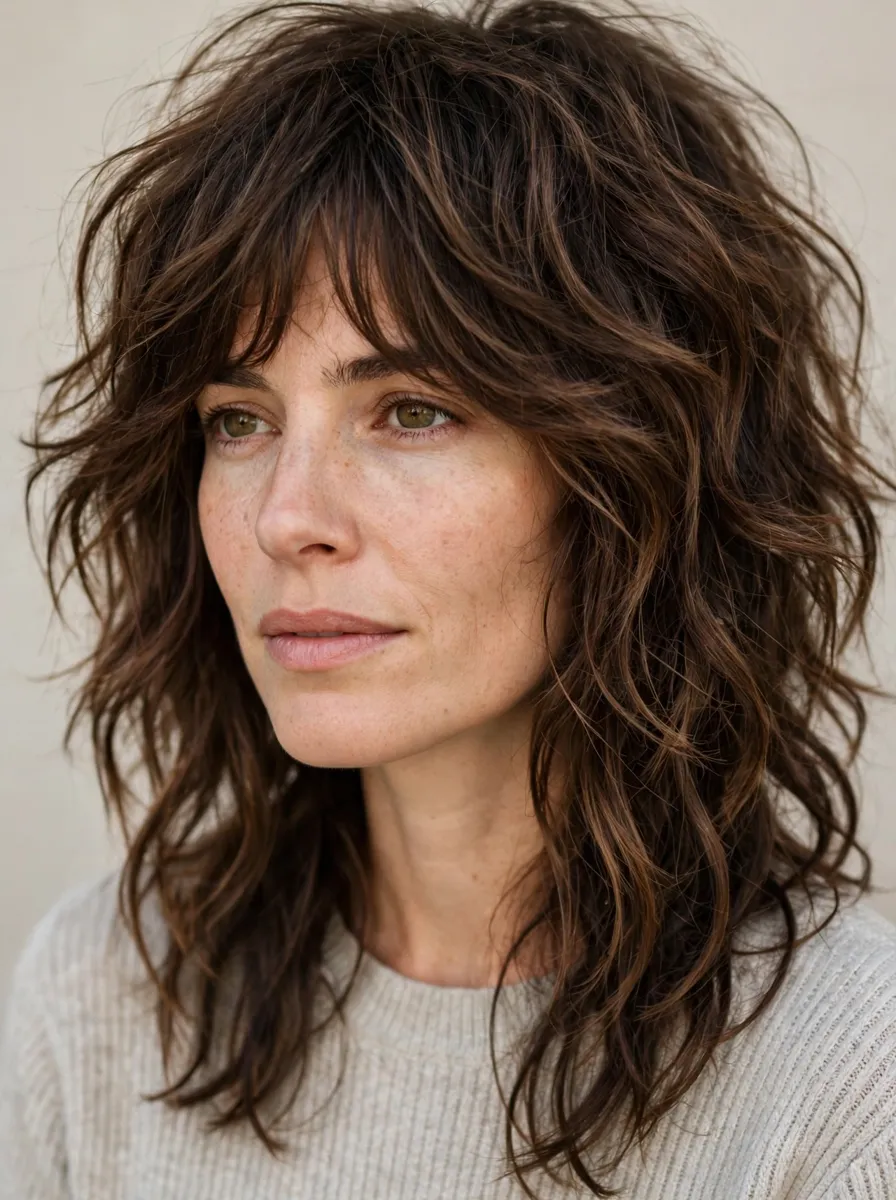
Thick hair is where the shag earns its keep. Generous layering and internal weight removal take the bulk out of the mid-lengths and ends, so the hair moves instead of sitting in one heavy mass. The risk is the opposite of fine hair’s: too much enthusiasm at the crown creates a mushroom of volume on top of narrow ends. Ask for the weight to come out of the bottom two-thirds and the top layers to stay comparatively long.
9. Seventies Shag
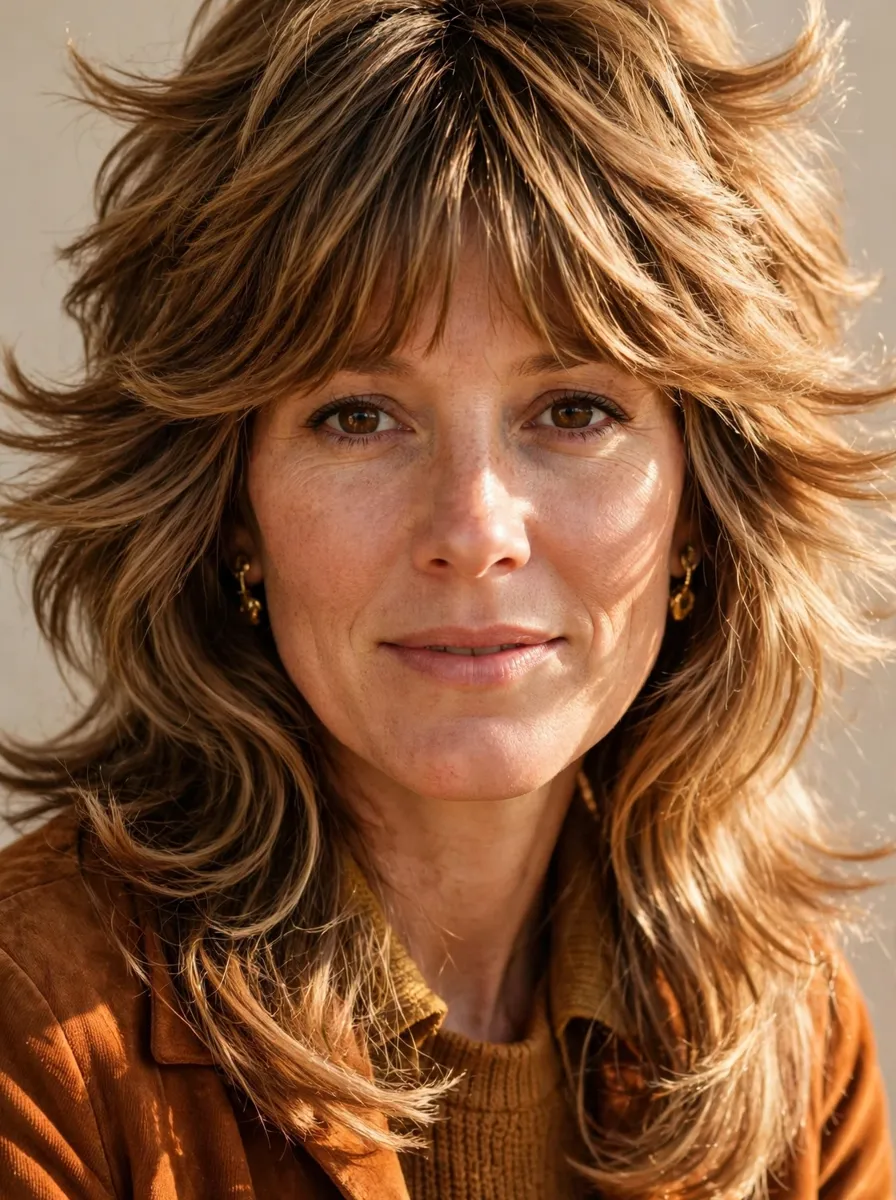
The original: layers feathered and flicked away from the face, a full feathered fringe, and volume brushed up and out rather than smoothed down. The modern way to wear it is to keep the shape but drop the stiffness — blow-dry with a round brush to set the flicks, then break everything up with your fingers so it moves. It suits straight-to-wavy hair best; the flicks are a styling effect as much as a cutting one.
10. Modern Soft Shag
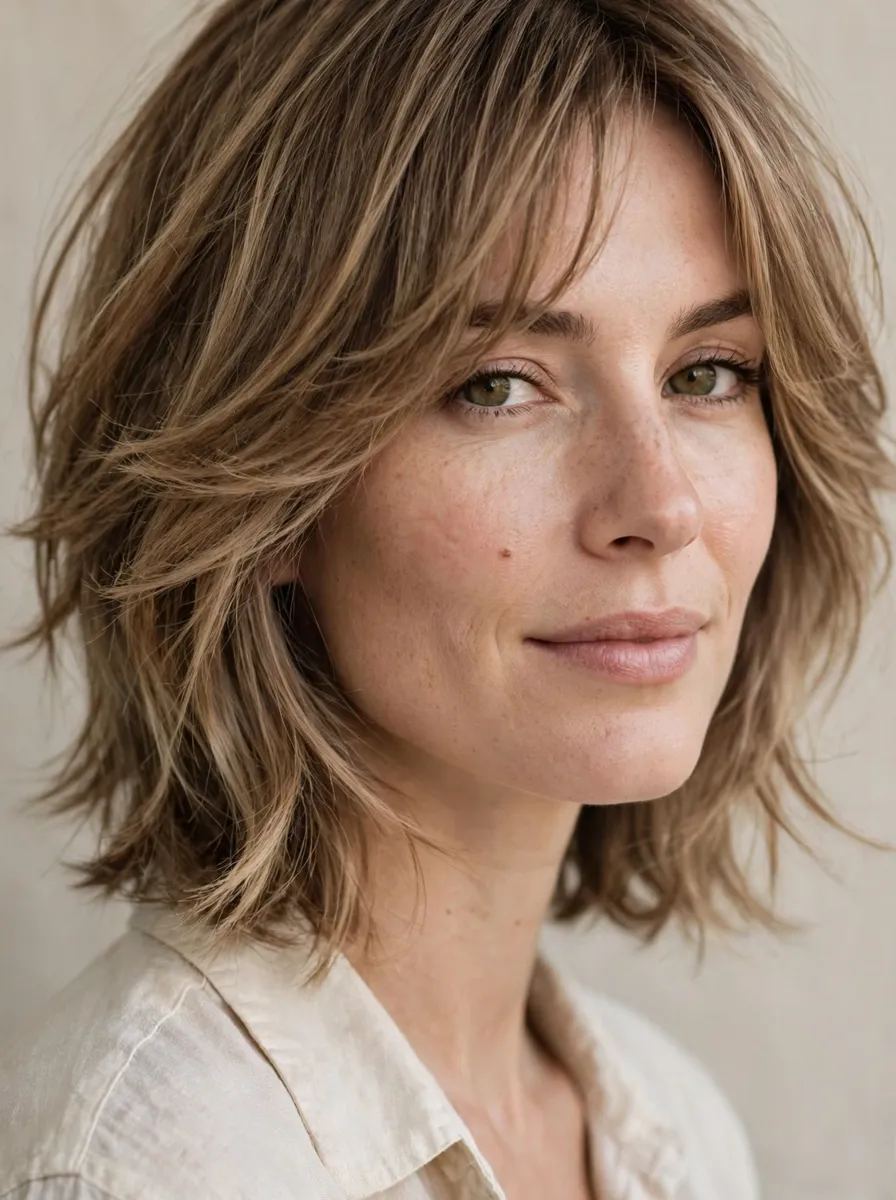
The shag with the volume turned down: layers longer, blending subtler, ends textured just enough to move. From a distance it reads as a well-cut layered style; up close the feathering around the face gives it away. This is the version for anyone who likes the idea of a shag but works somewhere a seventies silhouette would raise eyebrows — and it is the easiest of all twelve to grow out into a standard layered cut.
11. Shag with a Full Fringe
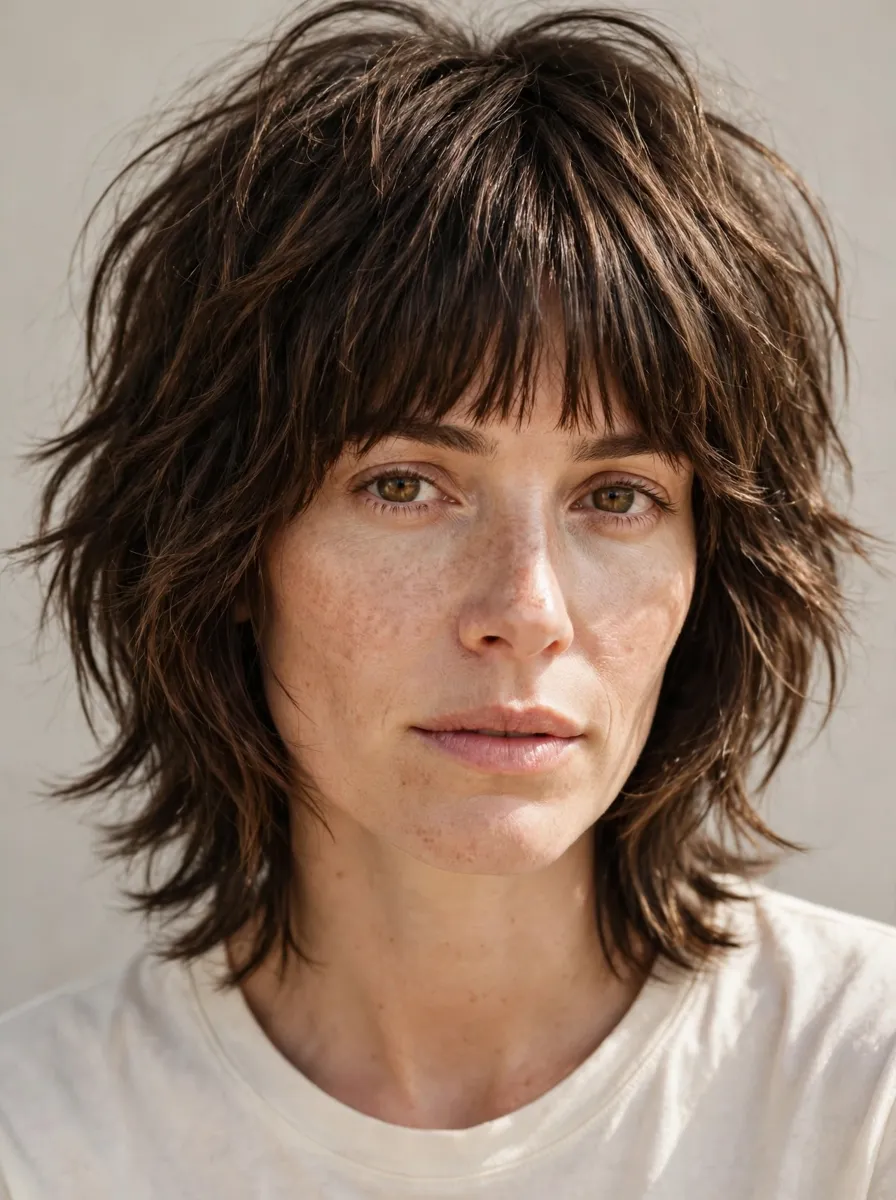
Swap the feathered fringe for a full, blunt one and the shag gains a deliberate contrast: one precise line across the forehead against all that soft texture below. It frames the eyes, shortens a longer forehead visually, and gives the cut a stronger identity. The trade-off is upkeep — a full fringe needs a trim every three to four weeks and a minute with the dryer each morning to sit flat.
12. Grown-Out Shag
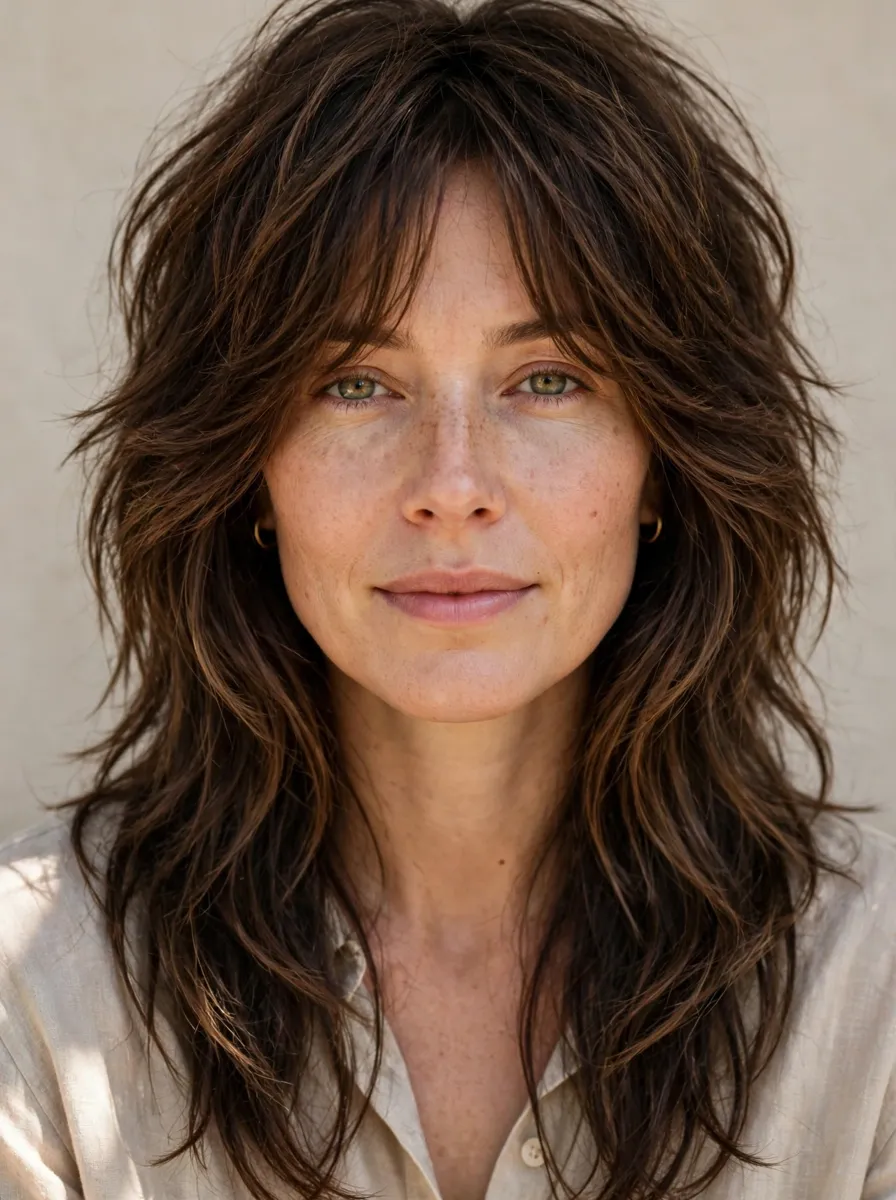
Six months on, a shag becomes this: layers lengthened and blended into the lengths, the fringe merged into face-framing pieces, the texture softened but still present. Some people book it directly as a low-maintenance layered cut with a shag’s face-framing; others arrive here by simply skipping appointments, which the shag forgives better than almost any other cut. A single reshaping appointment a year is enough to keep it reading as a style rather than an accident.
Shag vs Wolf Cut: What Is the Difference?
The two cuts are cousins, and salons sometimes use the names interchangeably, but the silhouettes are built differently. A shag spreads its feathered layers through the whole head fairly evenly: texture at the crown, texture at the ends, and a fringe — usually a soft curtain fringe — that feathers into the layers around the face. The result is movement everywhere and no single dramatic contrast.
A wolf cut concentrates its short, choppy layers at the crown and keeps noticeably more length at the back, borrowing the mullet’s top-heavy shape. The contrast is the point, and it reads edgier, heavier and more deliberate. Our wolf cut for women guide shows that end of the family in full.
The practical rule: choose a shag if you want softness, movement and a cut that behaves in conservative settings and grows out gracefully. Choose a wolf cut if you want the crown volume and the attitude, and you are happy to keep up the salon visits its contrast needs. If you are torn, ask for a soft shag first — it is far easier to chop more layers into a shag later than to soften a wolf cut down.
What to Ask Your Stylist For
Bring photos, and be specific about the two choices that define your shag: how feathered you want the layers (subtle and blended, as in style 10, or visibly flicked, as in style 9) and which fringe you are committing to. Use the words “feathered layers through the whole head” rather than “choppy”, which pushes the cut toward wolf territory. If your hair is fine, say the ends must stay blunt-ish and razor-free; if it is thick, ask where the weight will come out. And if your hair is curly, confirm they will cut it dry.
How a Shag Grows Out
Gracefully — this is one of the shag’s genuine advantages. The layers lengthen evenly, the fringe becomes face-framing, and at no point is there an awkward shelf or a hard line to disguise; style 12 above is simply a shag left alone. Expect to tidy the fringe at four to six weeks if you wear a full one, and to reshape the layers around ten to twelve weeks if you want to keep the texture distinct rather than let it soften.
Frequently Asked Questions
What is a shag haircut?
A shag is a layered haircut built on feathered layers distributed through the whole head, textured ends and a fringe that blends into the face-framing layers. It began in the seventies with flicked-out, voluminous styling; the modern version keeps the layering but blends it more softly, so it works at any length from a jaw-length bob to below the shoulders.
Does a shag haircut suit round faces?
Yes, provided the layers are placed thoughtfully. Length through the sides and layers that start below the cheekbones draw the eye downward and lengthen the face visually, while a curtain fringe adds angles. Avoid short, wide layers at cheek height, which add width exactly where a round face needs it least — your stylist can adjust the layer placement to your face in the chair.
Is a shag haircut high maintenance?
No — it is one of the lowest-effort layered cuts to live with. The texture is cut in, so most versions air-dry well with a single styling product, and the grow-out is forgiving enough to stretch salon visits to ten or twelve weeks. The only real upkeep is a full fringe, which needs trimming every three to four weeks; a curtain fringe asks for almost nothing.
Can you get a shag with fine hair?
Yes, in its restrained form: fewer, longer layers, ends kept relatively blunt and no razor texturising, which fine hair cannot afford. Done that way, the layering lifts the crown and suggests fullness without thinning out the ends. The fine-hair version in this list (style 7) is the one to show your stylist, and it is worth choosing someone who cuts fine hair regularly.
How do you style a shag haircut at home?
Keep it simple: the cut supplies the shape, so styling is about separation. Work a small amount of mousse or texture cream through damp hair, scrunch or twist the layers gently, and air-dry or diffuse. For the seventies version, blow-dry with a round brush to flick the ends out, then break the finish up with your fingers so it does not set into a helmet.
Does a shag haircut work on straight hair?
It does — straight hair shows the feathered layering most clearly of all, which is why the seventies original was worn straight. The one adjustment is product: straight hair has no natural texture to hold the pieces apart, so a light salt spray or texture spray keeps the layers separated through the day instead of falling flat and smooth by lunchtime.
Final Thoughts
The shag’s staying power comes from how adjustable it is: the same feathered layering can be flicked and retro, soft and office-safe, or barely there at all. Decide your fringe first, then how visible you want the layers to be, and the twelve styles above narrow quickly to two or three real options. And if, reading the comparison, you find yourself drawn to more contrast and crown volume rather than less, that is your answer too — step across to the wolf cut, the shag’s louder cousin.