Space Buns: 10 Ways to Wear Them + Step-by-Step Tutorial
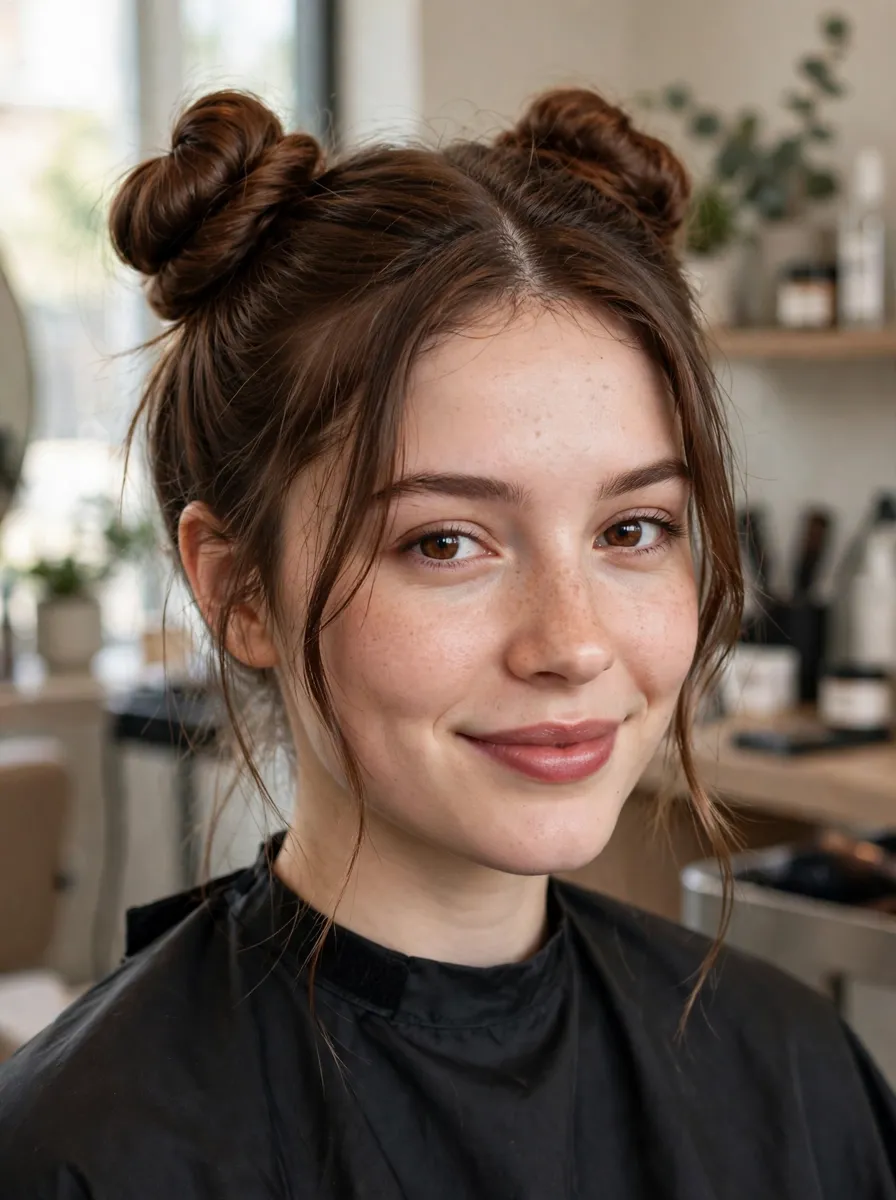
Space buns are two buns worn as a pair — one on each side of a centre parting, usually high on the head. The style has cycled through 1990s pop videos, festival fields and Y2K revivals without ever really leaving, because the basic construction never changes: part, split, twist, pin. Everything else is placement and finish. Sit the pair high and round for the classic look, drop them to the nape for something softer, spike the ends for a deliberate throwback, or wear them half-up when you want the fun without the full commitment.
If a single bun is your usual default, our guide to messy buns that hold covers the foundation tricks — grip, anchors and pin placement — that keep any bun up all day, and they apply twice over here. Prefer your playful styles elastic-based rather than woven? Bubble braids work on the same principle. Below: ten ways to wear space buns, who each suits, and a step-by-step for the classic version.
What You Need
Two small elastics, four to eight bobby pins, a brush or comb for the parting, and a mirror you can check the back with. Texture spray or dry shampoo helps slippery hair grip; a bun donut per side adds volume if your hair is fine or short. That is the whole kit — every style below uses the same tools.
1. Classic Double Buns
The reference version: a clean centre parting, two high ponytails, each twisted and coiled into a round bun sitting above and slightly behind the ears. Keep the two buns the same size and at the same height — symmetry is the whole look — and pull a couple of fine strands loose at the front if the finish feels too neat. This is the version to learn first, because the parting, ponytail placement and coiling technique transfer unchanged to every other style on this page. Best for: medium to long hair, and anyone who wants the recognisable, playful original.
2. Half-Up Space Buns
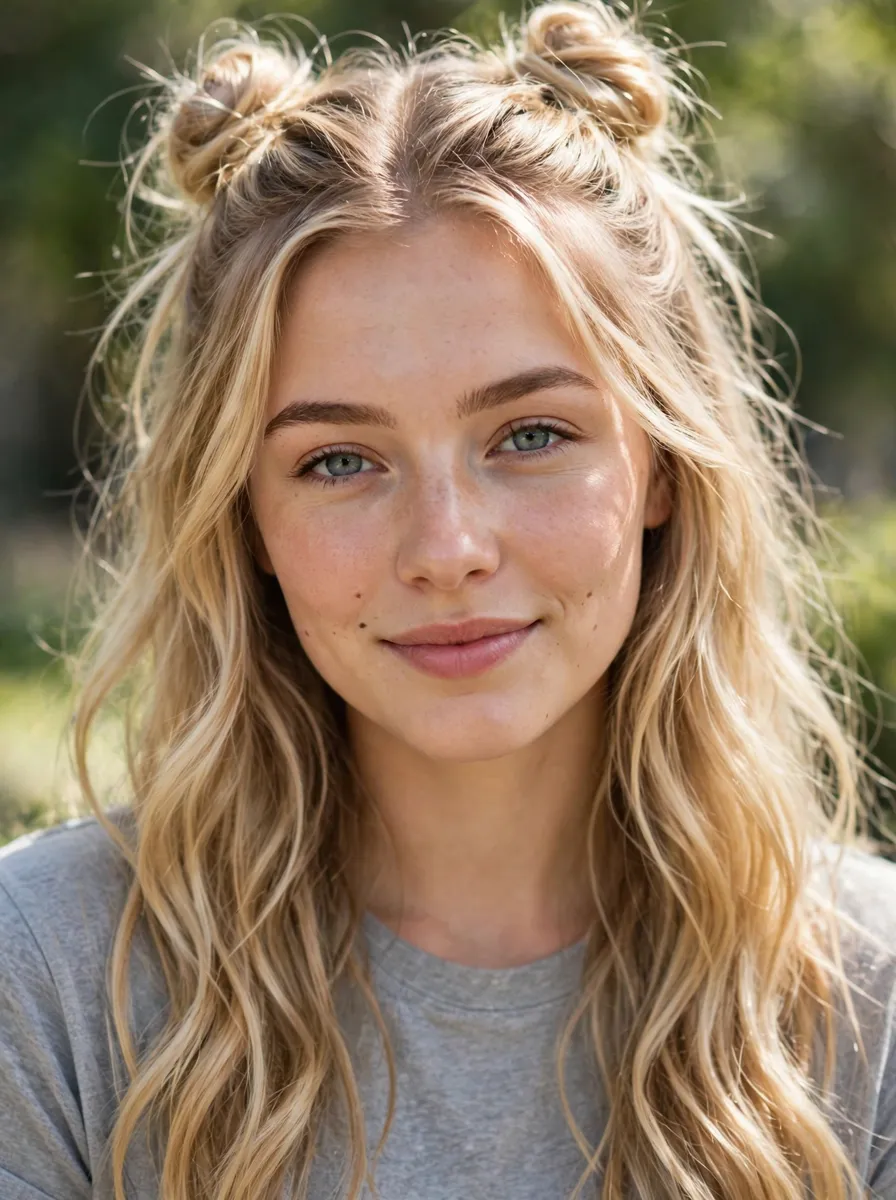
Only the top section of hair goes into the buns; the rest stays down. Section from the temples back to the crown, split that top layer in two, and bun each side as normal, leaving the lengths loose, straight or waved. Because each bun is small, this version works on shorter and finer hair that cannot fill a full double bun, and it softens the look considerably — more hairstyle, less costume. It is also the quickest route in: two minutes, no commitment, easy to take down. Best for: beginners, fine or shorter hair, and anyone who finds the full version too bold for daytime.
3. Braided Space Buns
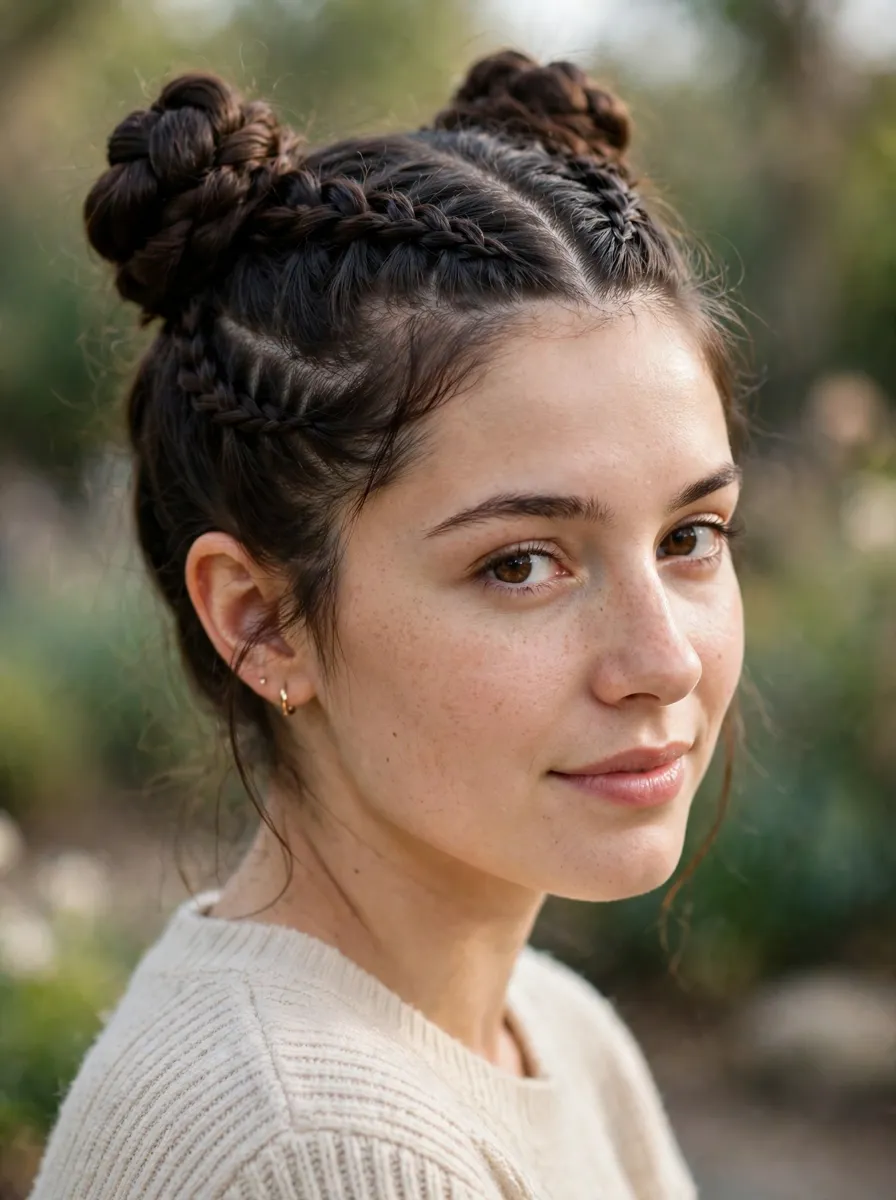
Two braids — Dutch braids show the pattern best — run from the front hairline up each side and finish in coiled buns, or each ponytail is braided first and then wrapped. Either way the braid does structural work: it locks in layers, stops flyaways escaping at the front, and holds far longer than loose hair, which is why this is the version that survives a full festival day or a dance class. It takes the longest of the ten, so practise the braid direction once before you need it to stay put. Best for: layered hair, long days, and anyone whose buns usually shed pieces.
4. Spiky Y2K Space Buns
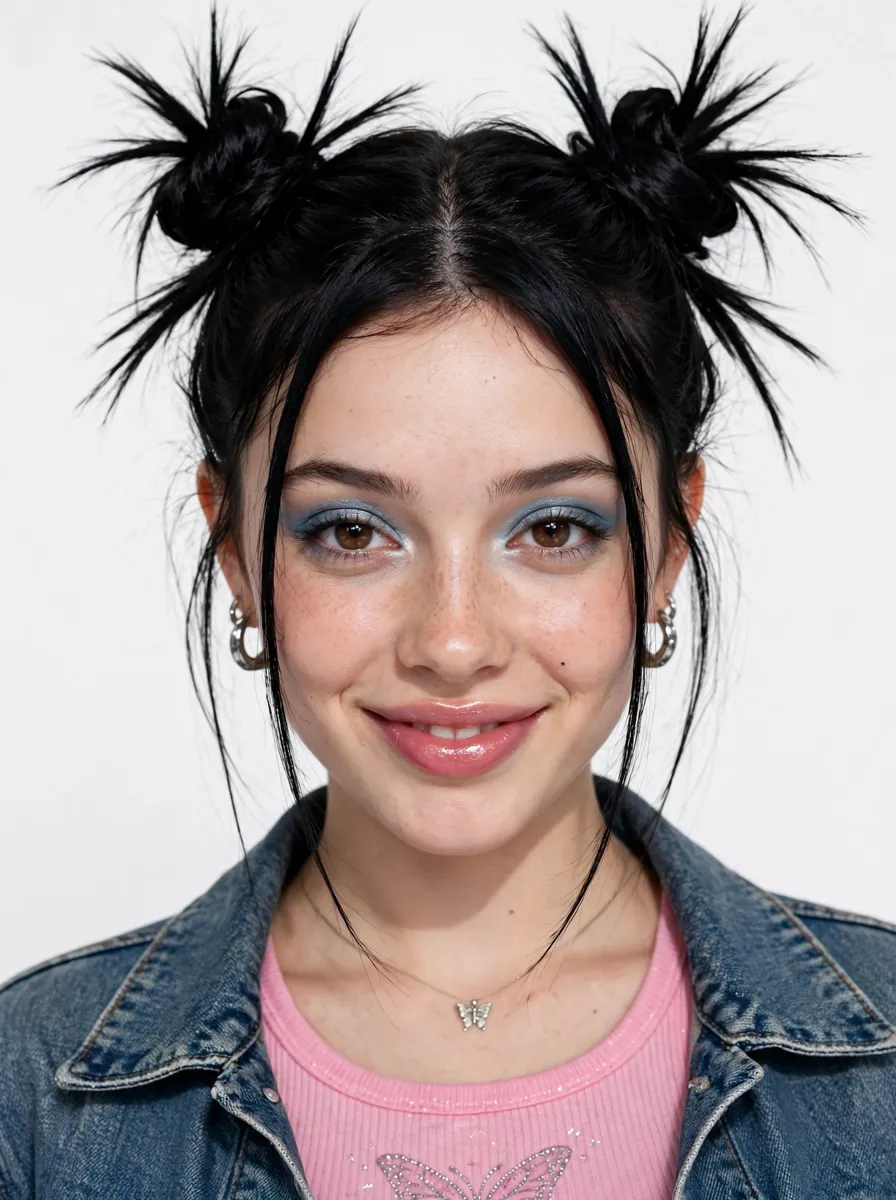
The deliberate throwback: two small, tight mini buns worn high, with the ends left sticking out in short spikes rather than tucked away, and two thin strands pulled free at the front. Make the buns smaller than feels natural — the spikes need short ends to stand up — and use a little gel or wax on the tips to separate them. This is the least forgiving version for very long or thick hair, which produces too much end to spike neatly, and the most fun on everyone else. Best for: short to medium hair, fine hair, and unapologetic 2000s styling.
5. Low Space Buns
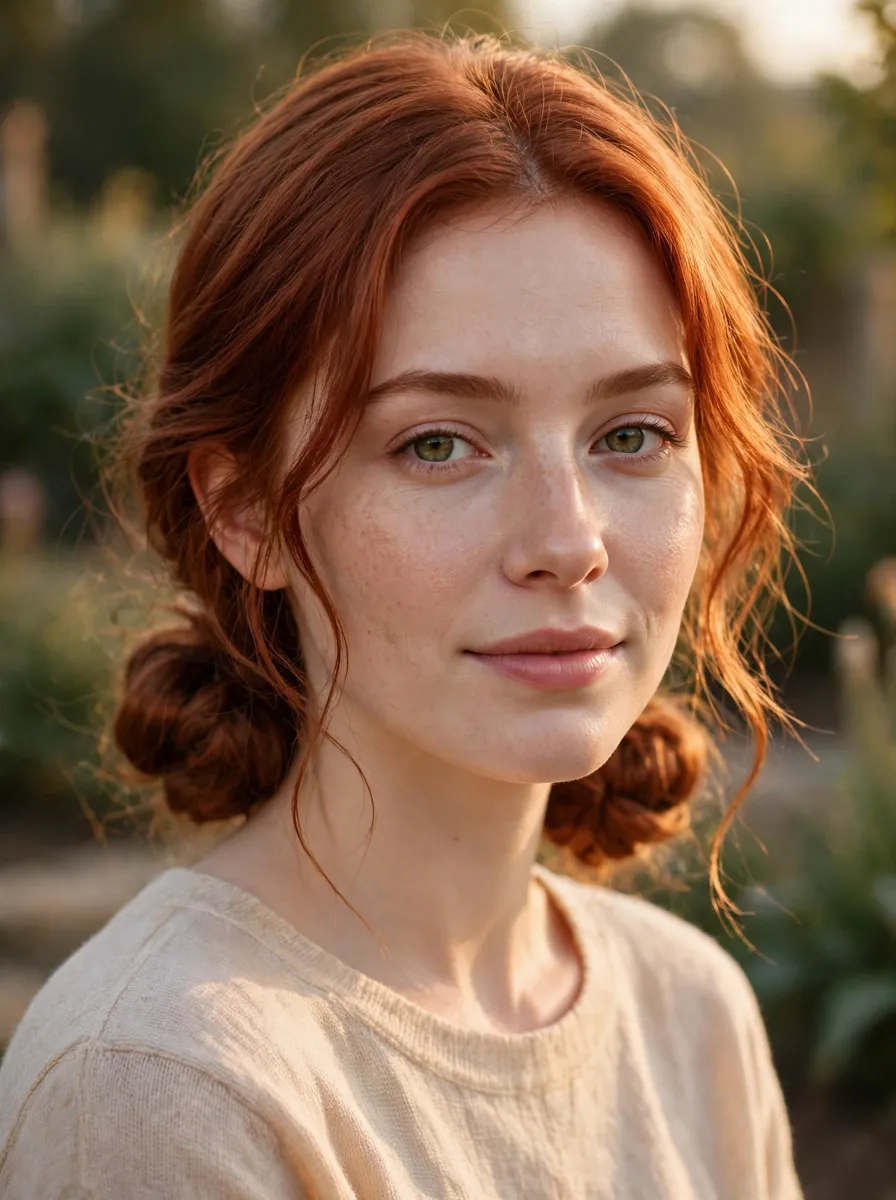
Move the pair down to the nape, just behind and below the ears, and the whole mood changes: softer, calmer, closer to a doubled chignon than a festival look. A side parting suits this version better than a centre one, and the buns can be looser and flatter — twist, coil, and let them sit wide rather than round. Low buns also hide second-day hair well and sit comfortably under a hat or hood, which the high versions do not. Best for: work-friendly wear, longer faces that high buns elongate further, and anyone easing into the style.
6. Space Buns with Bangs
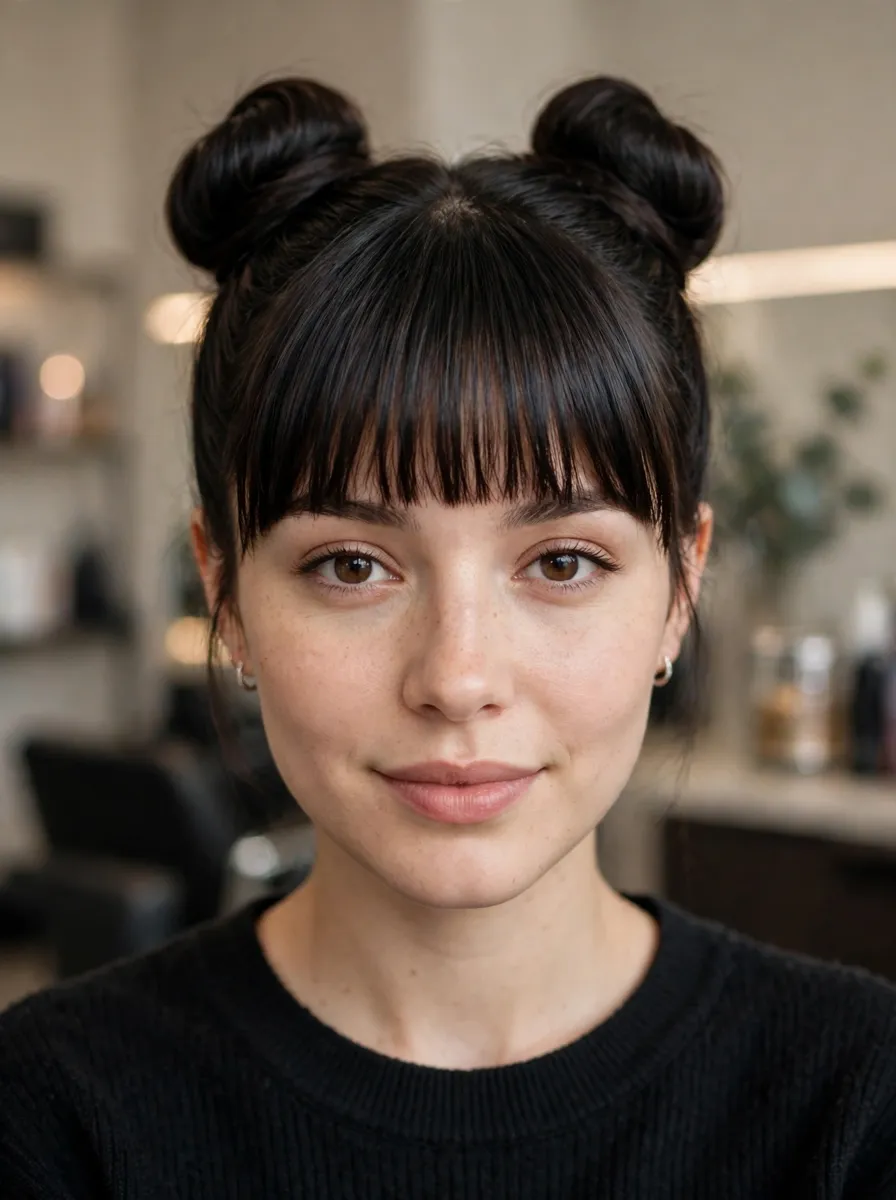
A full fringe changes the geometry: the buns sit slightly further back and higher than usual so the fringe keeps its line, and the contrast between the blunt front and the two round buns is the appeal. Keep the fringe out of the parting entirely — section it off first, bun the rest, then style the fringe last so no pins disturb it. Curtain bangs work too, parting naturally with the centre split. If your fringe is growing out, pin the longest pieces into the buns and let the shorter ones frame. Best for: anyone with a fringe who assumed space buns were not for them.
7. Space Buns for Short Hair

Short hair does mini buns, not full ones — and they are cuter for it. Work half-up: gather the top layer from the temples to the crown, split it, and twist each side into the smallest bun it will make, pinning rather than relying on elastics alone. The hair below stays loose, so a chin-length bob or lob keeps its shape while the top does something playful. Texture spray before you start is close to essential at this length, because short, silky pieces slip out of small buns faster than any other combination here. Best for: bobs, lobs and growing-out cuts from chin length up.
8. Space Buns for Curly Hair
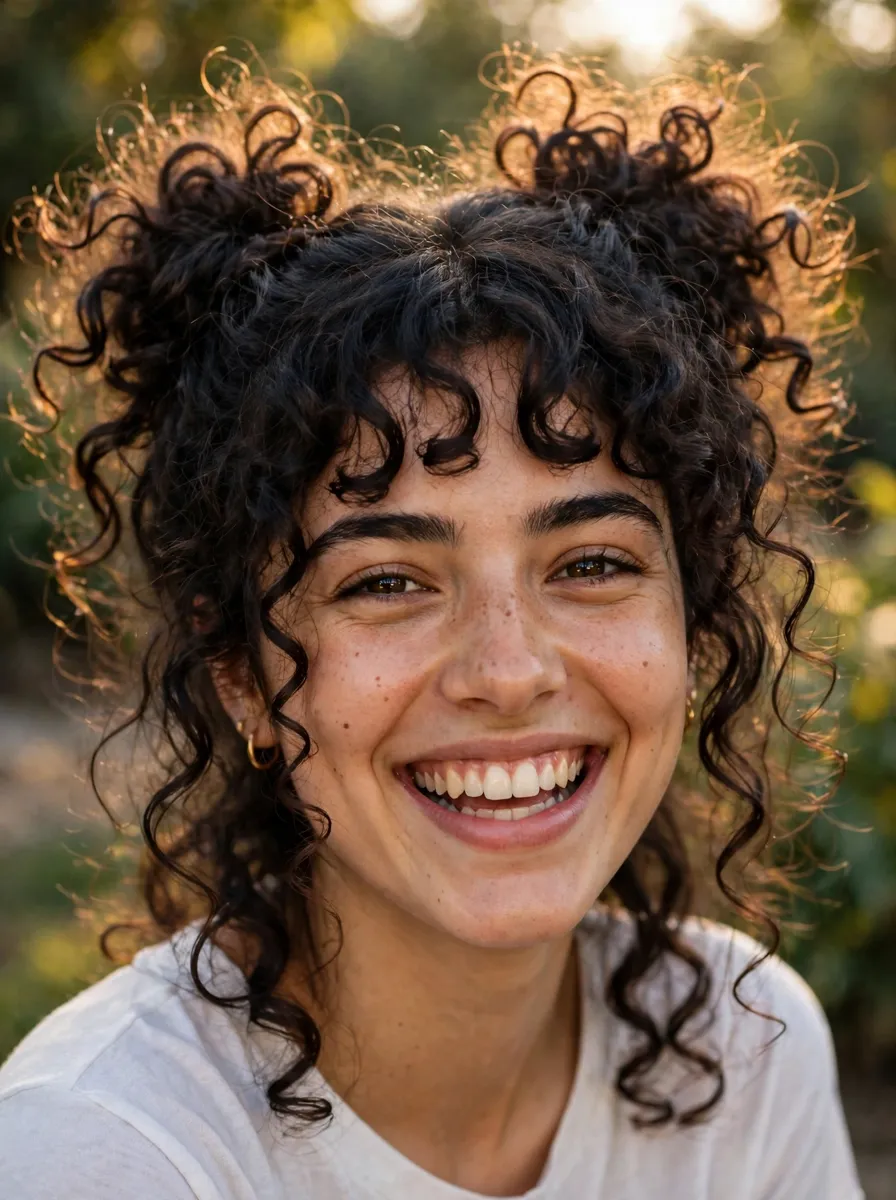
Curls make the fullest space buns with the least effort: the volume is already there. Part with your fingers rather than a comb to keep the curl pattern intact, gather each side loosely — pulling curls tight into ponytails first flattens the shape you want — and pin the curls into rough rounds instead of twisting, which stretches them. Let tendrils spring free at the front and around the buns; tidiness is not the goal. Work on dry, styled curls, not freshly washed ones, and refresh with a water-and-conditioner mist rather than re-wetting. Best for: type 2C to 4 curls, thick hair, and low-effort high-impact days.
9. Festival Space Buns with Glitter
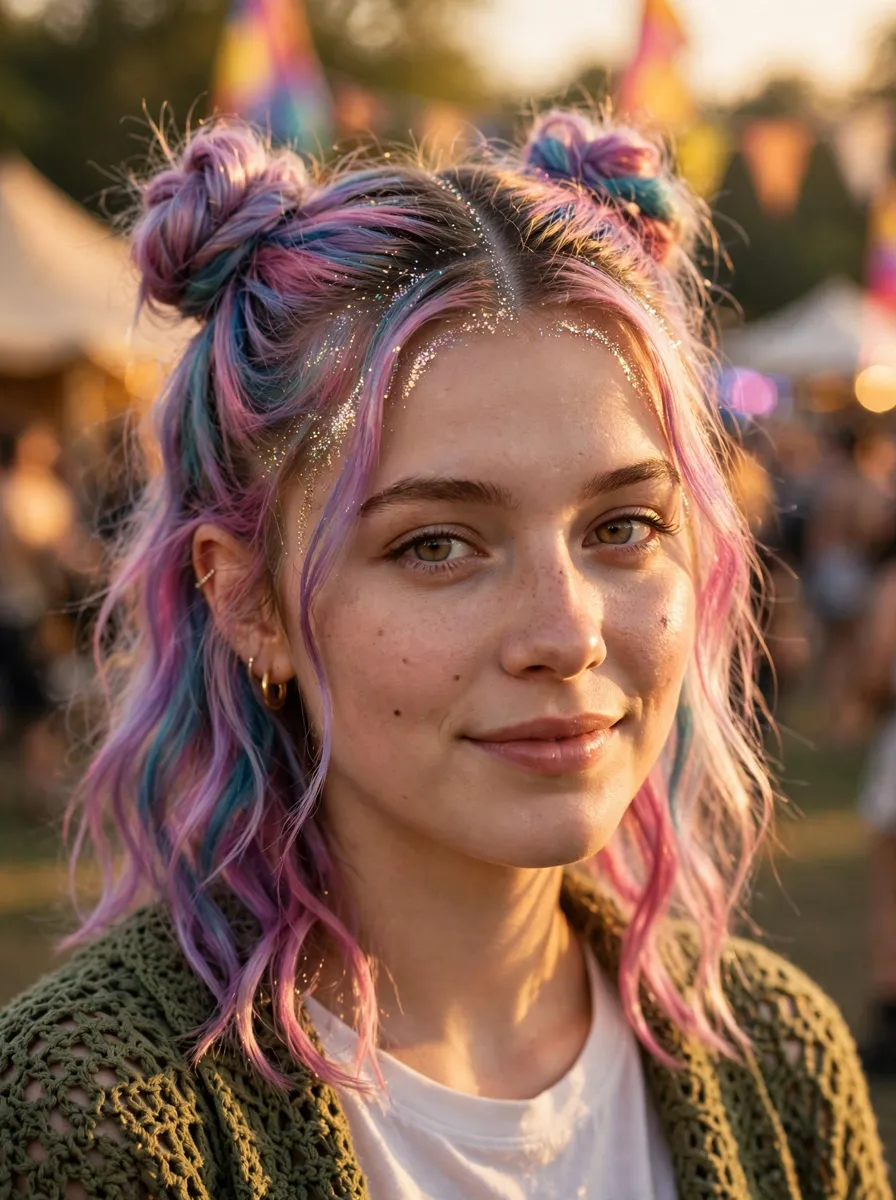
The classic or braided version, plus decoration: fine glitter pressed along the centre parting and hairline with a little gel or hairspray as the adhesive, or gems and star clips pinned at the base of each bun. Apply the glitter after the buns are pinned, working along the parting with a flat brush, so none of it ends up trapped inside the coils. Choose biodegradable glitter if you can. This version photographs brilliantly and hides dusty, third-day hair completely. Best for: festivals, parties, and any event where more is more.
10. Sleek Space Buns
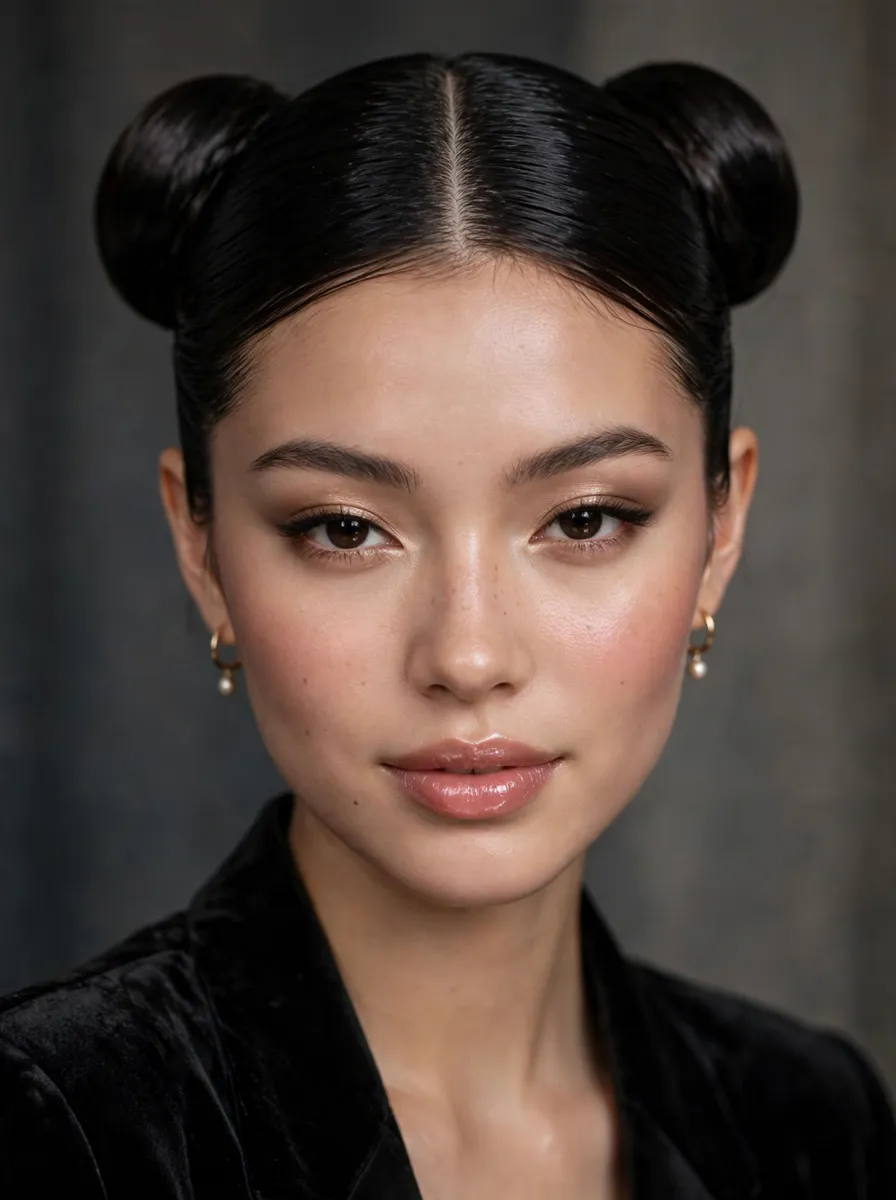
The polished opposite of the messy versions: hair brushed completely smooth with gel or a wax stick, a razor-sharp centre parting, and two tight, glossy buns with every flyaway laid down. Brush each ponytail smooth before coiling, coil tightly, and finish with strong-hold spray and a soft brush over the surface. Sleek buns read as evening styling rather than playful, pair well with statement earrings, and hold better than any other version because nothing is left loose to work free. Best for: fine or flyaway-prone hair, evenings out, and anyone who prefers their updos immaculate.
How to Do Classic Space Buns, Step by Step
- Part and split. Brush your hair smooth, find your centre parting with a comb, and split the hair into two equal halves all the way down the back of your head. Clip one side out of the way so the halves stay honest — uneven sections are the main reason one bun ends up bigger.
- Make two high ponytails. Gather the first side up to where you want the bun to sit — above and just behind the ear is the classic spot — and secure it with a small elastic. Repeat on the other side, then check in a mirror that they match in height and position.
- Twist and coil. Twist the first ponytail around itself until it starts to coil, wrap it around its elastic into a round bun, and pin the ends underneath. Four pins — top, bottom and both sides — hold most hair; add more only where it feels loose.
- Repeat and compare. Build the second bun the same way, then check the pair from the front and, with a second mirror, from the back. Adjust by pinning, not rebuilding: a bun sitting slightly low can be lifted with a pin through its base.
- Finish. Loosen two fine strands at the front for softness, or leave everything neat for the cleaner version. A light mist of hairspray sets it; second-day hair and a little texture spray beforehand will hold longer than freshly washed hair.
Which Pair Should You Try First?
Start with the classic version if your hair is medium to long — it teaches the parting, placement and pinning every other style reuses. Go half-up if you are unsure, short-haired or short on time. From there, braided is the upgrade when hold matters, low is the version for work, and sleek is the one for evenings.
Frequently Asked Questions
How do you keep space buns even on both sides?
Work in stages and compare before coiling: equal sections, then ponytails matched for height and position. Check with a second mirror or a phone camera from behind. Once the ponytails match, the buns almost always match; if one sits lower, lift it with a pin through its base rather than starting again.
Do space buns work on short hair?
Yes, as mini buns. Chin-length hair and longer can manage the half-up version, where only the top layer is bunned and the rest stays loose. Pins matter more than elastics at this length, and texture spray beforehand stops short pieces slipping out within the hour.
How do you stop space buns falling out?
Build grip first: second-day hair, or dry shampoo and texture spray on freshly washed hair. Use elastics sized to the section — a full-size tie on a small bun will slide — and pin into the elastic and the hair beneath the bun, not just into the bun itself. Braided space buns hold longest of all.
Can you do space buns on curly hair?
Curly hair makes excellent space buns, because the volume comes free. Part with your fingers, gather loosely without brushing the curls out, and pin the curls into rounds instead of twisting them smooth. Work on dry curls and let tendrils escape — the style suits a soft finish.
Are space buns suitable for work or older wearers?
The low and sleek versions are. Low space buns at the nape read as a doubled chignon, and sleek buns are simply a polished updo worn as a pair. The high, round, deliberately playful versions are a choice rather than a rule — placement and finish decide the formality, not the style itself.
How long does hair need to be for space buns?
Roughly chin length for half-up mini buns, and shoulder length or beyond for the full classic version, because the hair has to form a ponytail and then coil around its own base. Fine hair needs less length than thick hair for the same size of bun, since it compresses more as it coils.