Long Pixie Cut: 12 Flattering Styles That Grow Out Gracefully
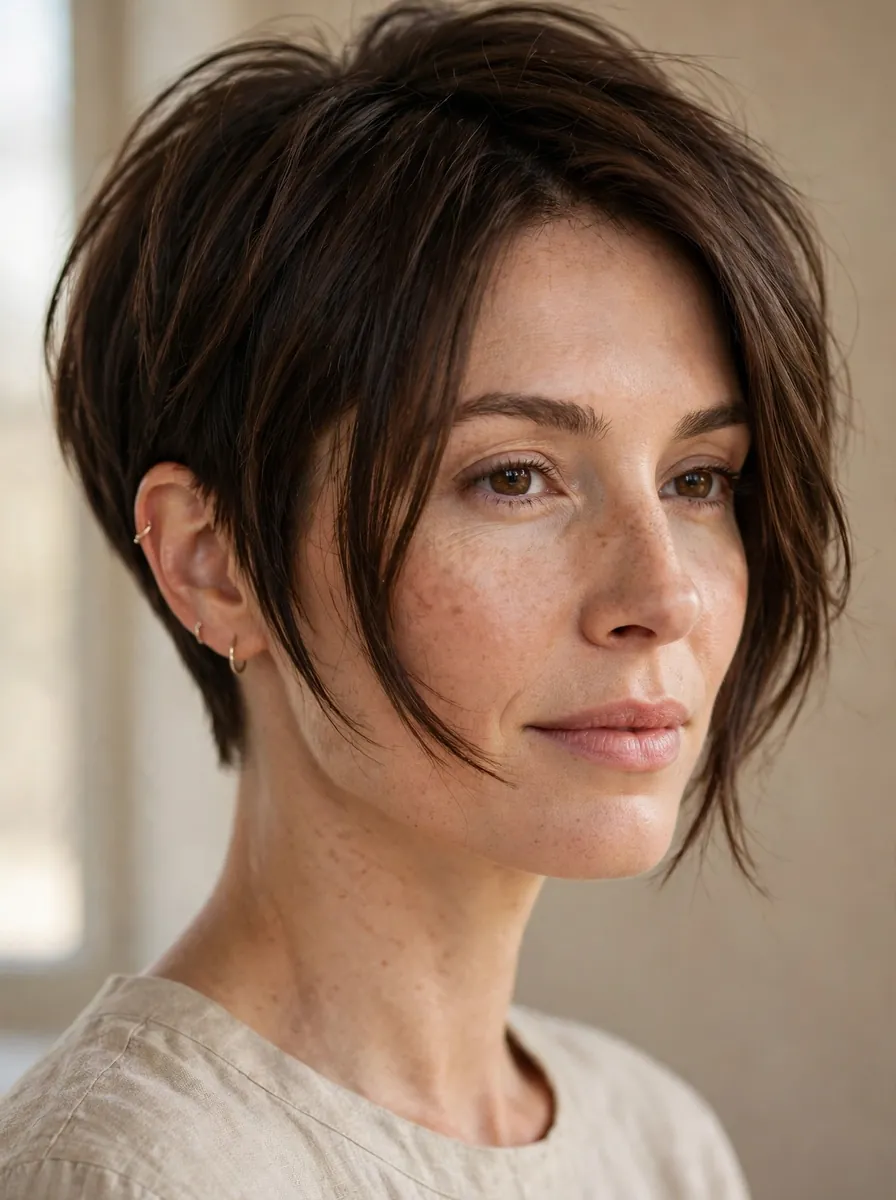
A long pixie cut keeps the easy shape of a pixie — short back, short nape, cropped silhouette — while leaving enough length on top and around the face to actually style. The longest pieces usually fall somewhere between the cheekbones and the jaw, which is why this cut is sometimes called a “lop”: a long pixie that borrows a little of the bob’s softness.
It is the version of the pixie most people choose first, because it offers:
- a fringe you can sweep, part, or tuck
- enough length to hide a grow-out stage
- softer edges around the ears and hairline
- a much gentler transition if you are cutting long hair short
If the softer end of the pixie family appeals to you generally, our feminine pixie cuts guide covers the classic short versions. This guide is specifically about the longer ones — here are 12 ways to wear them.
1. Long Pixie with Face-Framing Pieces
The defining long pixie: the front sections stay long enough to brush the cheekbones while the back is cropped close. The face-framing pieces do the softening work, so the cut reads elegant rather than severe. It suits almost every face shape because the front length can be adjusted to fall exactly where you want attention.
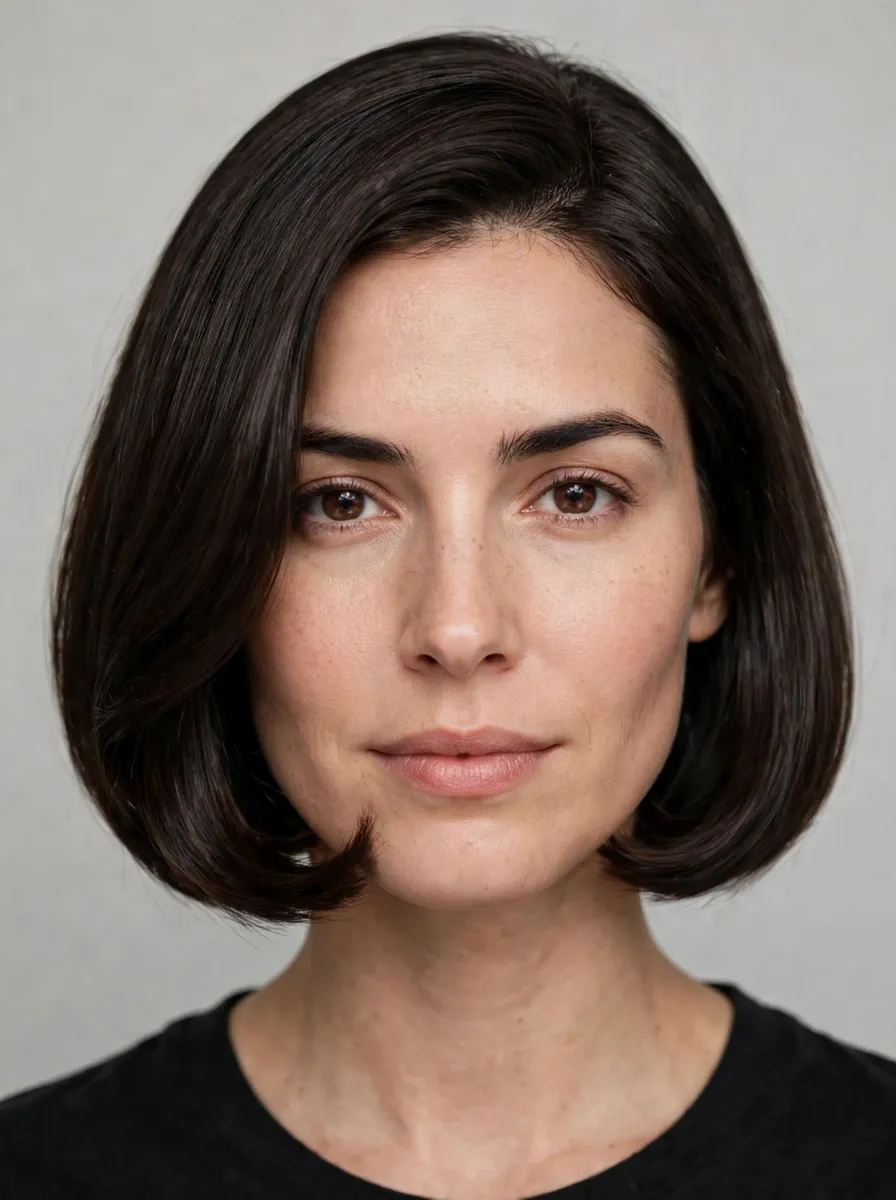
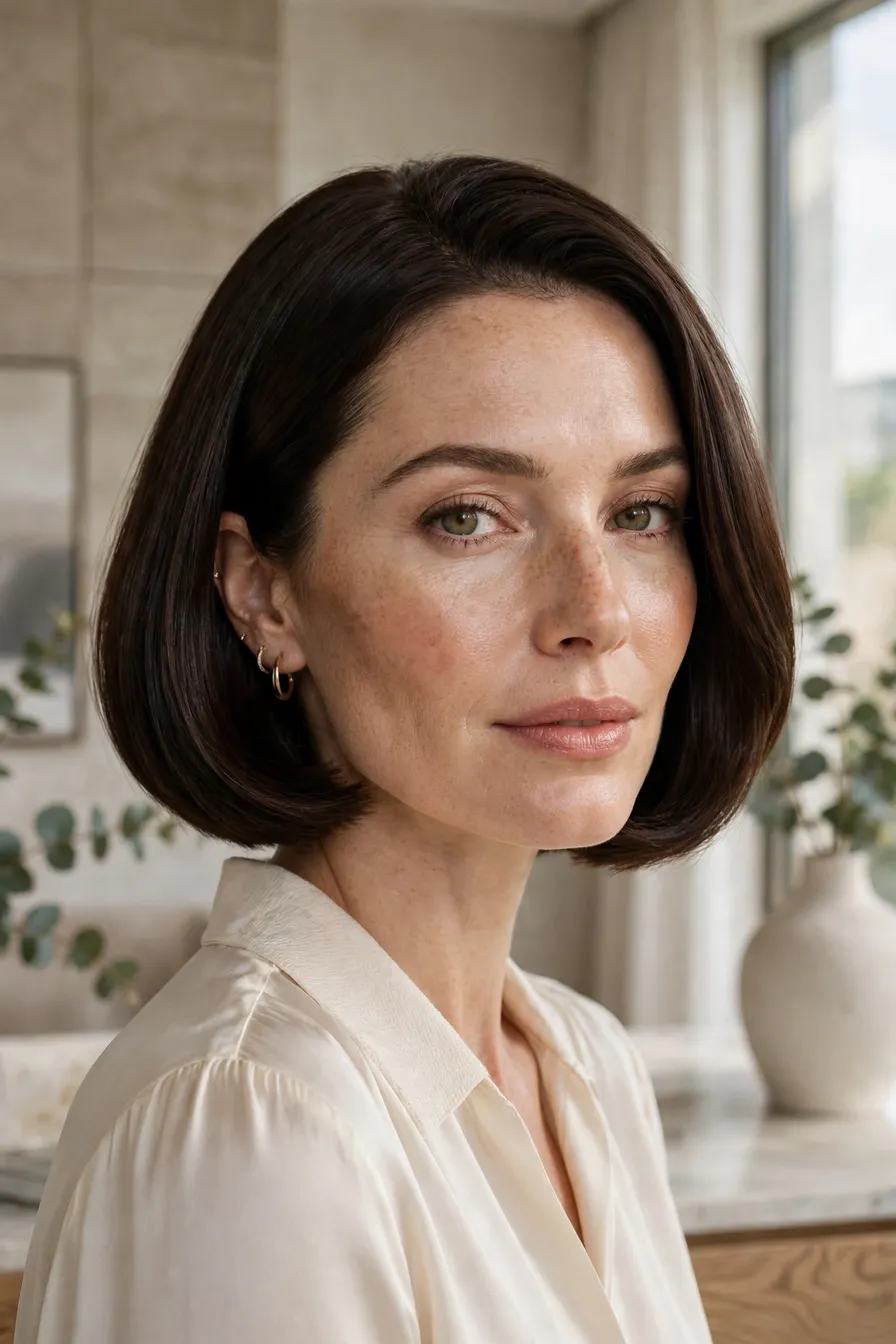
2. Long Pixie Bob
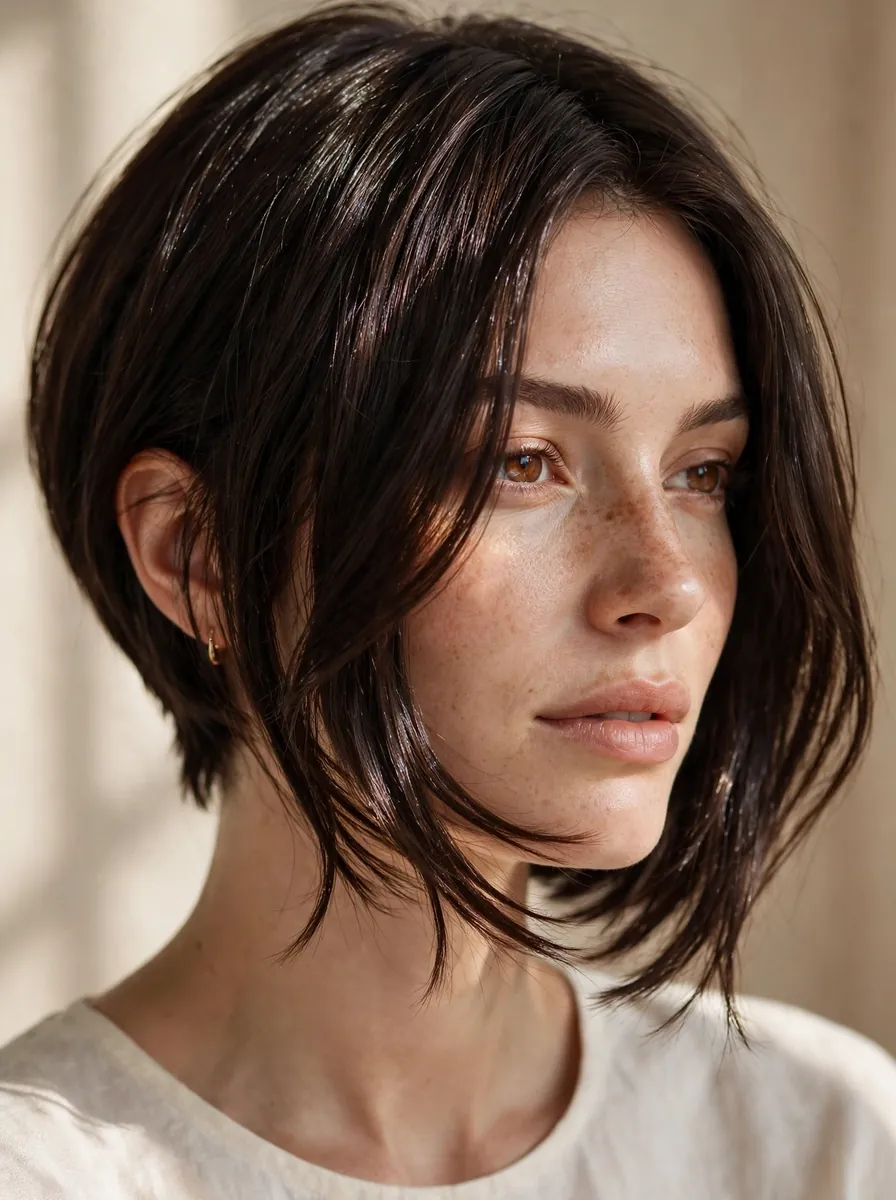
A long pixie bob pushes the length furthest — the front can approach chin level while the nape stays stacked and short. It is the right choice if you want a pixie but are nervous about losing the feeling of hair around your face. Our pixie bob haircuts guide compares this hybrid shape in more depth.
3. Classic Long Pixie Cut
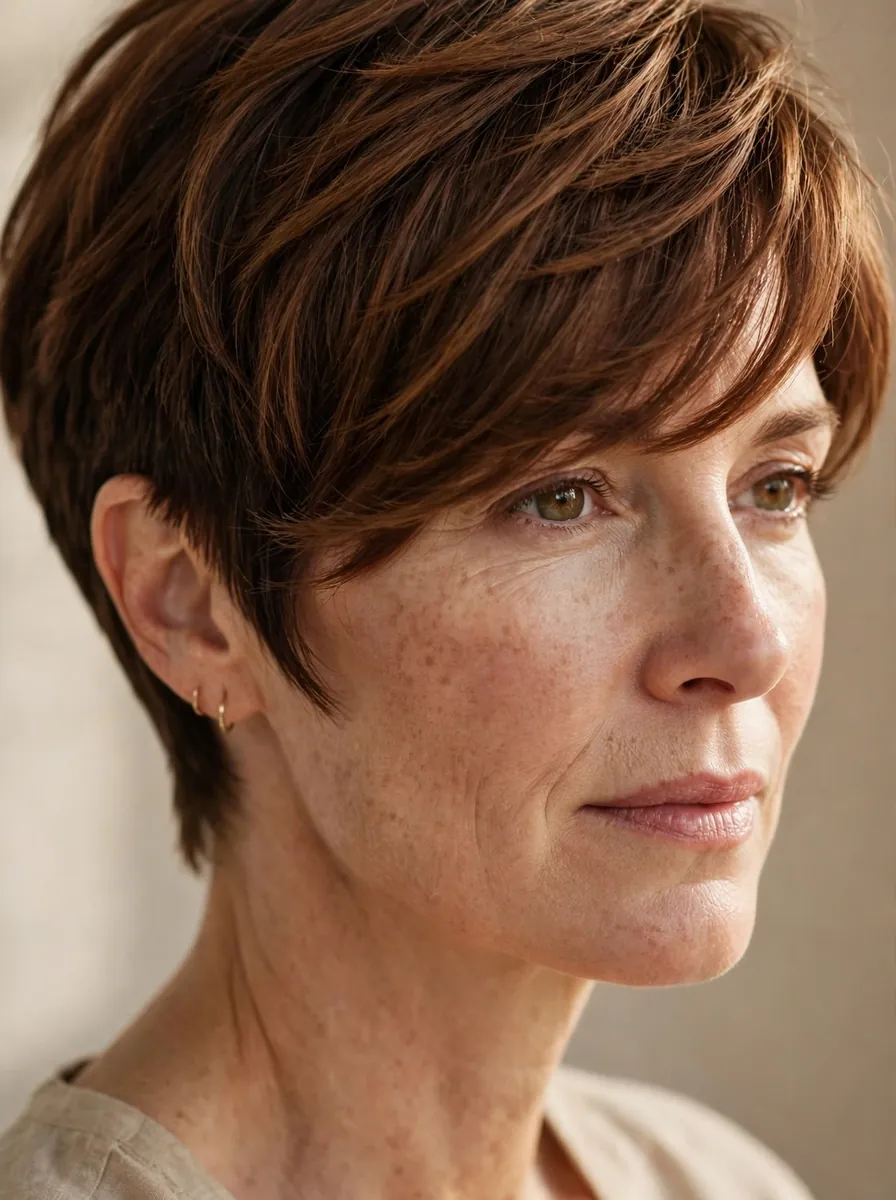
The textbook version: scissor-cut sides, a longer layered top, and a fringe that can be worn forward or swept aside. Nothing is undercut or disconnected, so it grows out evenly and stays low-fuss. This is the reference photo to show a stylist if you want “long pixie” without further qualifiers.
4. Layered Long Pixie
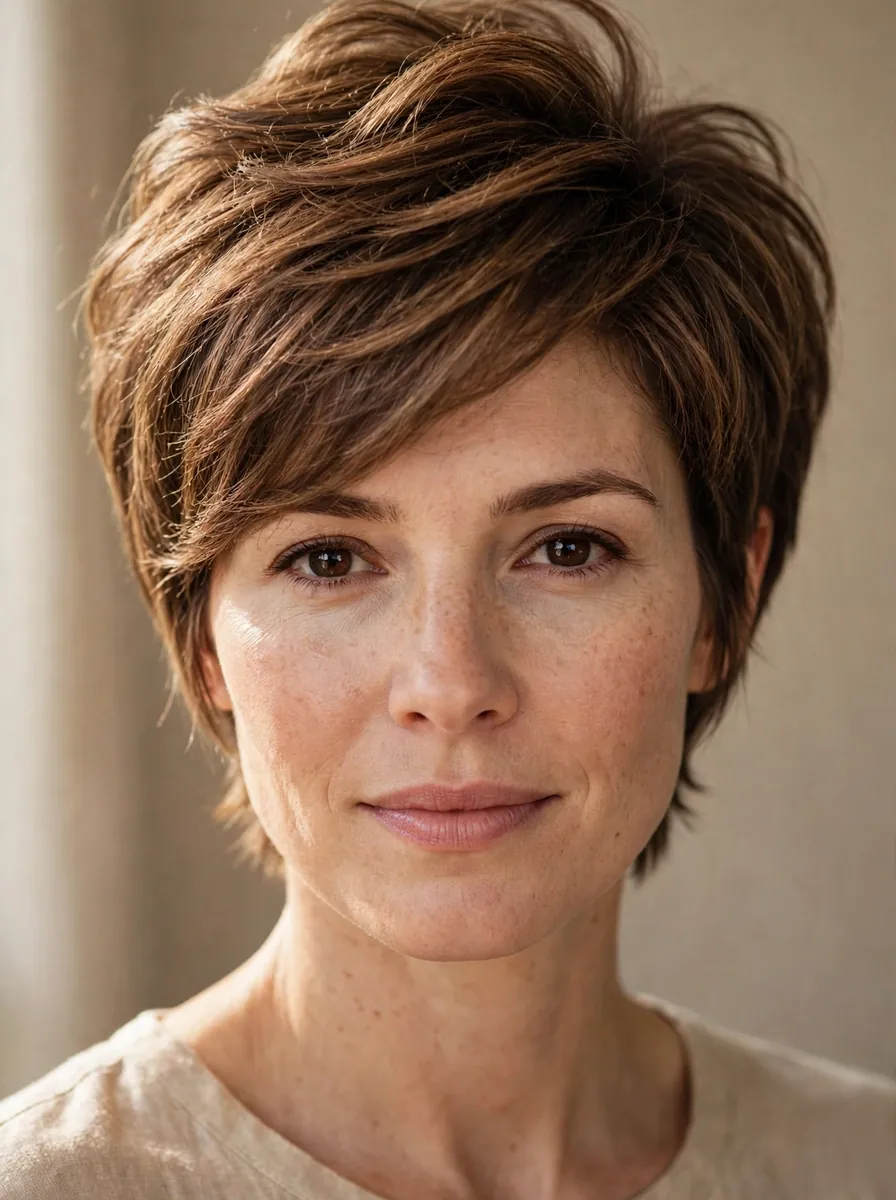
Layers through the top stop a long pixie from sitting like a helmet. Shorter internal layers create lift at the crown while the outline stays long and soft. Layering matters most on thick hair, where an unlayered long pixie can look heavy and triangular.
5. Wavy Long Pixie
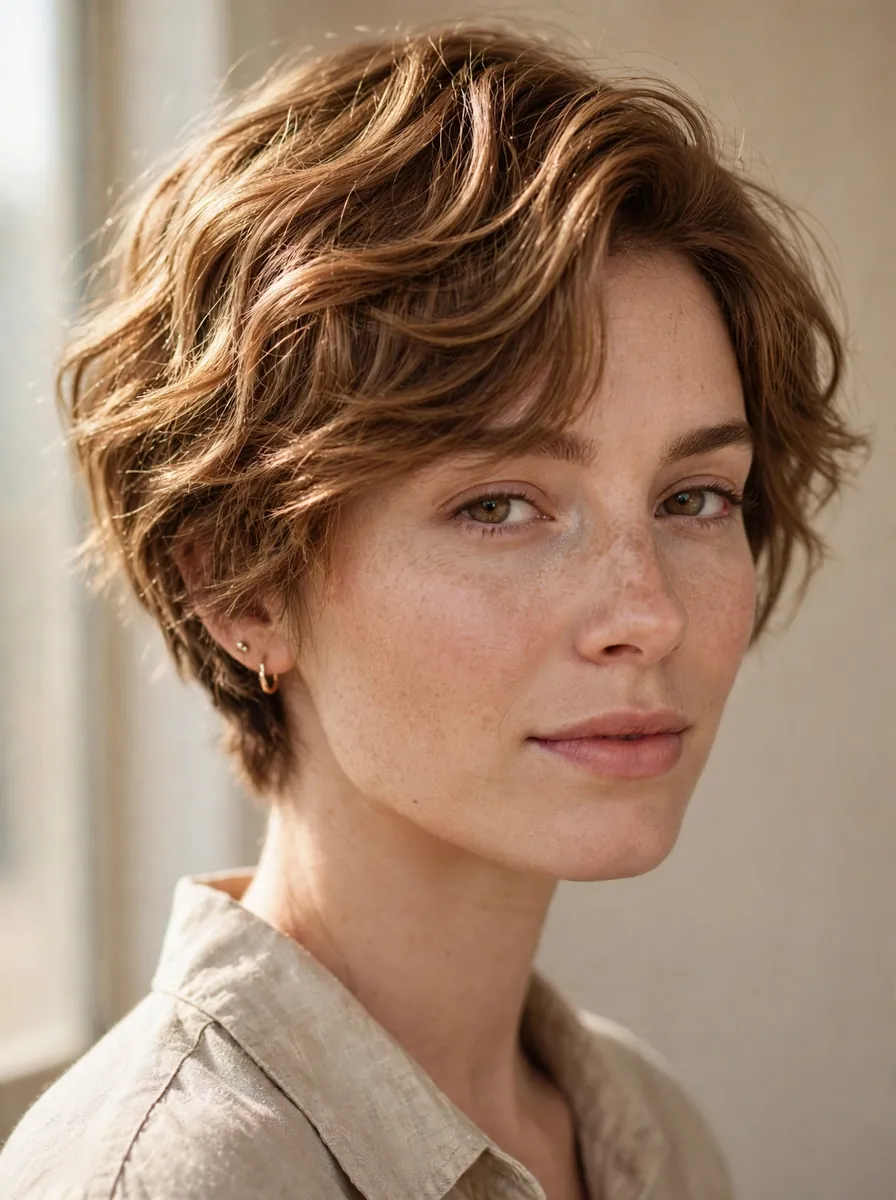
Natural waves make a long pixie look effortless, because the length on top is exactly where wave pattern shows best. Ask for the cut to be done with your wave pattern in mind — cut dry or with minimal tension — so the front pieces land where you expect once the hair springs back.
6. Long Pixie with a Long Side Fringe
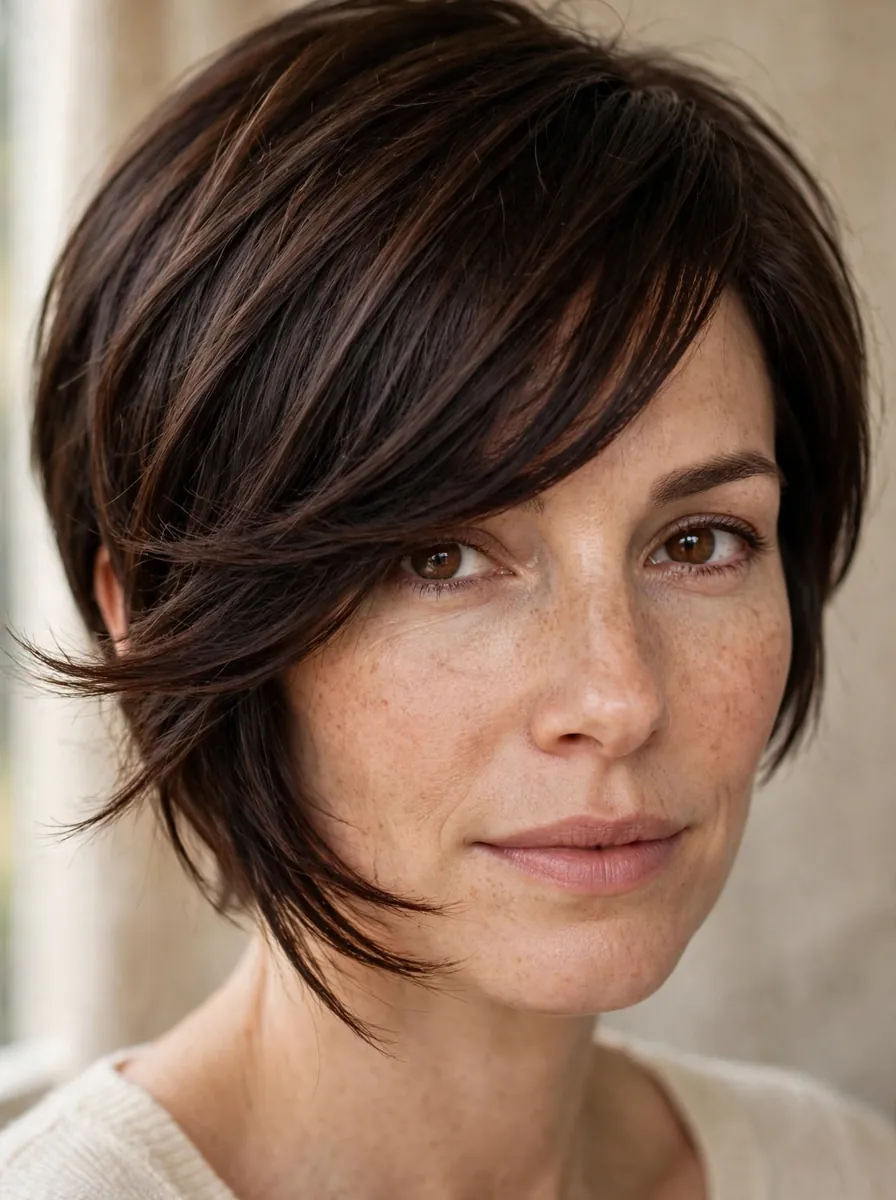
One long, sweeping fringe piece changes the whole mood of the cut. It adds asymmetry, softens a strong jaw or high forehead, and gives you something to play with — swept across, tucked behind the ear, or pinned back for a cleaner look.
7. Long Pixie with Curtain Bangs
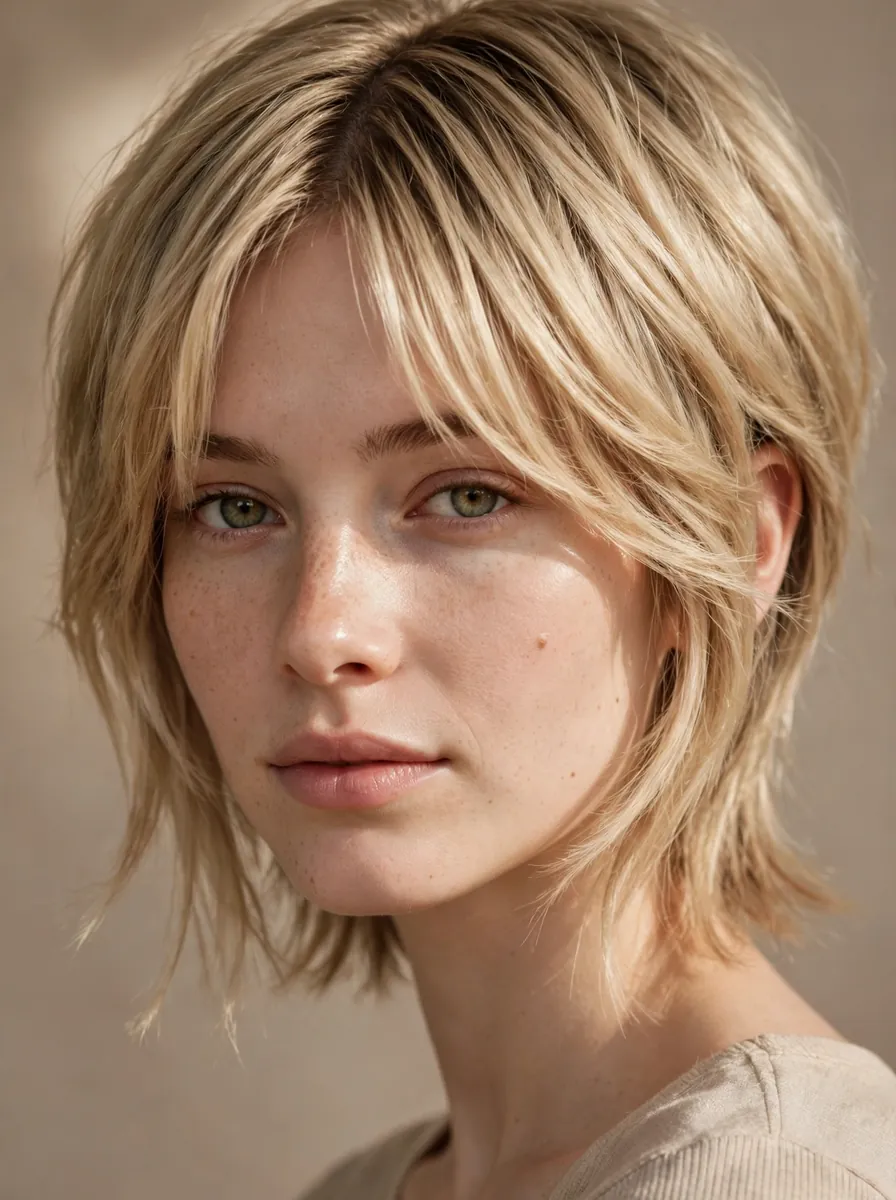
Curtain bangs need length at the front, which is exactly what a long pixie provides. The center-parted fringe blends into the longer sides for a soft, seventies-leaning frame. If you are weighing up the fringe on its own, our curtain bangs guide covers who it suits and how it grows out.
8. Asymmetrical Long Pixie
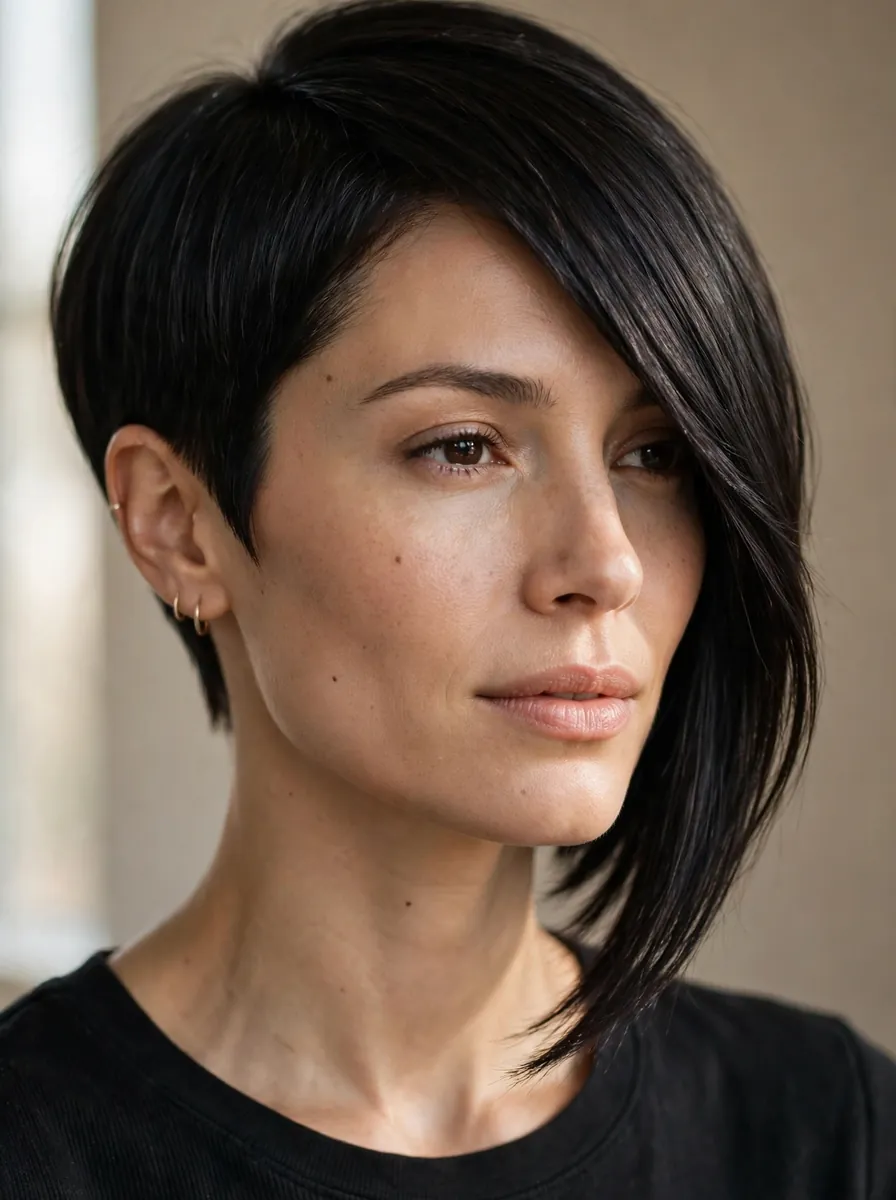
One side longer than the other gives a long pixie an editorial edge without any extreme shaving. The longer side keeps the softness; the shorter side keeps the shape sharp. It is also a practical grow-out style, because the asymmetry looks intentional at every stage.
9. Long Pixie with Soft Layers for Brunettes
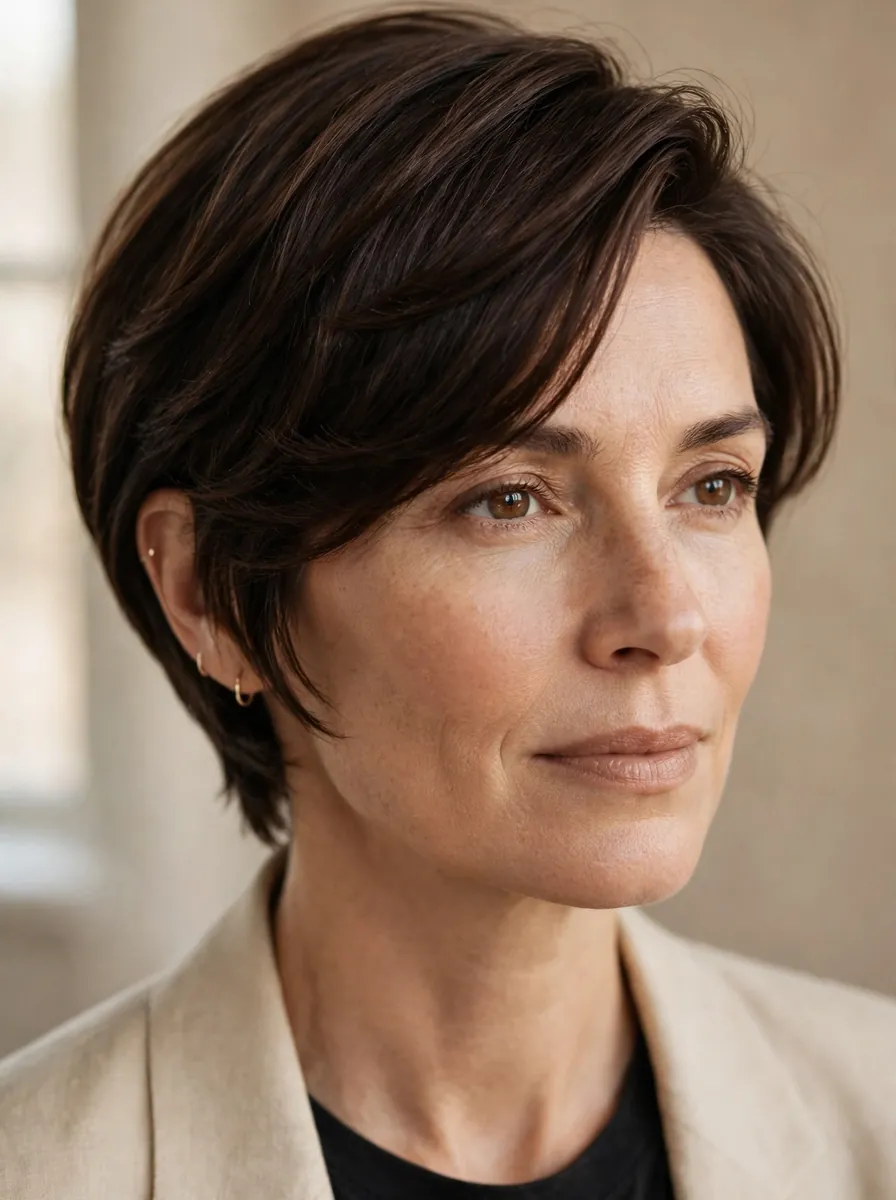
On dark hair, a long pixie reads through silhouette rather than texture, so soft layering is what stops it looking blocky. A little gloss or a few barely-lighter pieces around the face keep the shape dimensional in photos.
10. Blonde Long Pixie
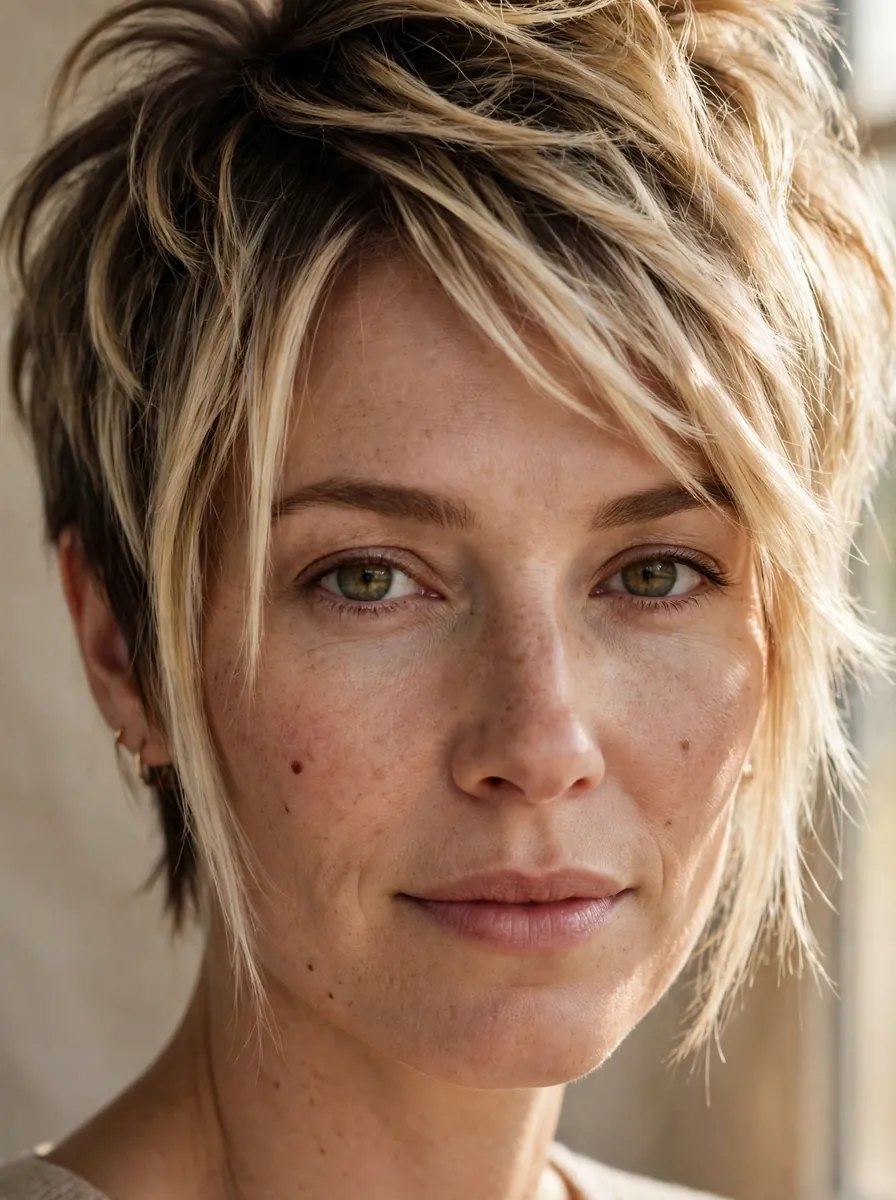
Blonde and lightened hair shows every layer and texture change, which makes a long pixie look particularly detailed. Keep some depth at the roots — a shadow root stops the longer top from looking washed out and makes regrowth far less obvious.
11. Long Pixie for Fine Hair
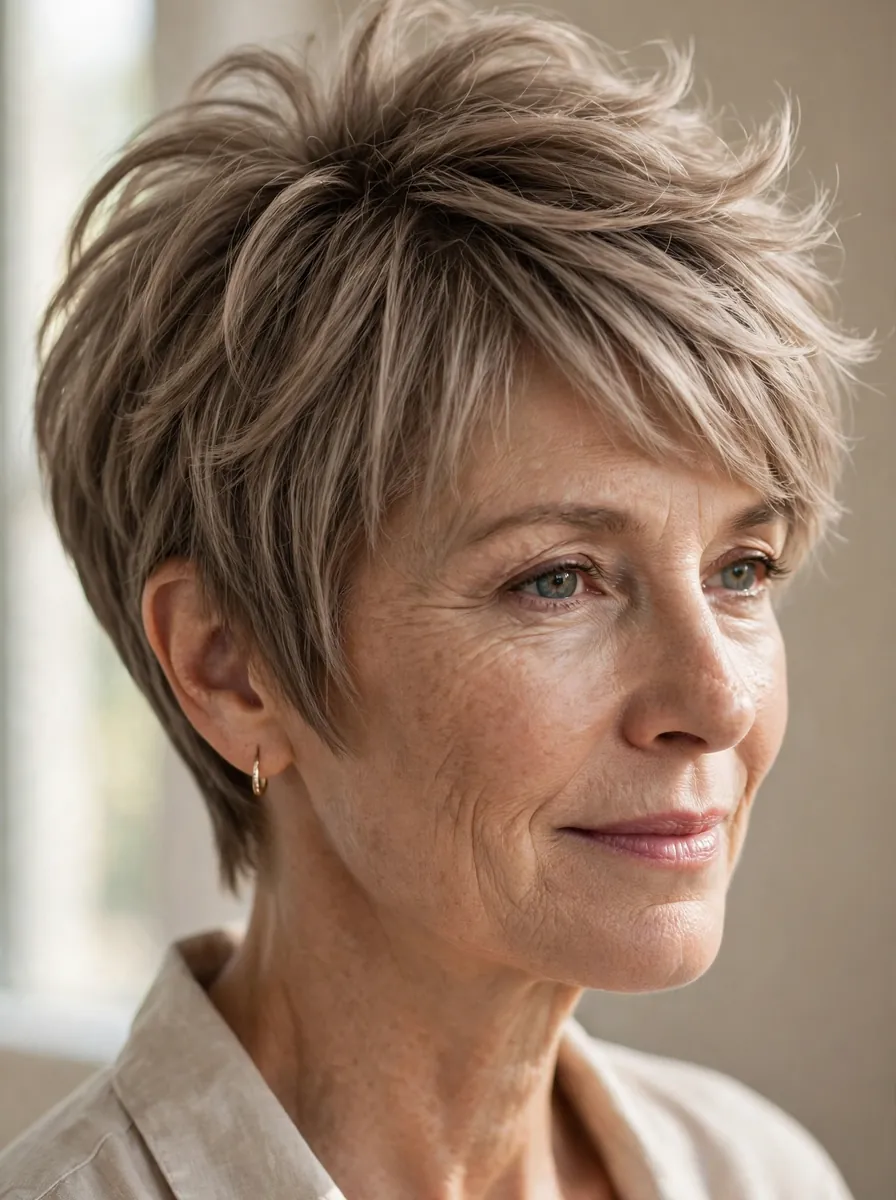
Fine hair often suits a long pixie better than a very short one, because the extra length on top can be layered for the illusion of thickness at the crown. Keep the ends blunt rather than wispy, and avoid heavy razoring — fine hair needs its density protected. More fine-hair short options are in our short haircuts for women guide.
12. Side-Parted Long Pixie
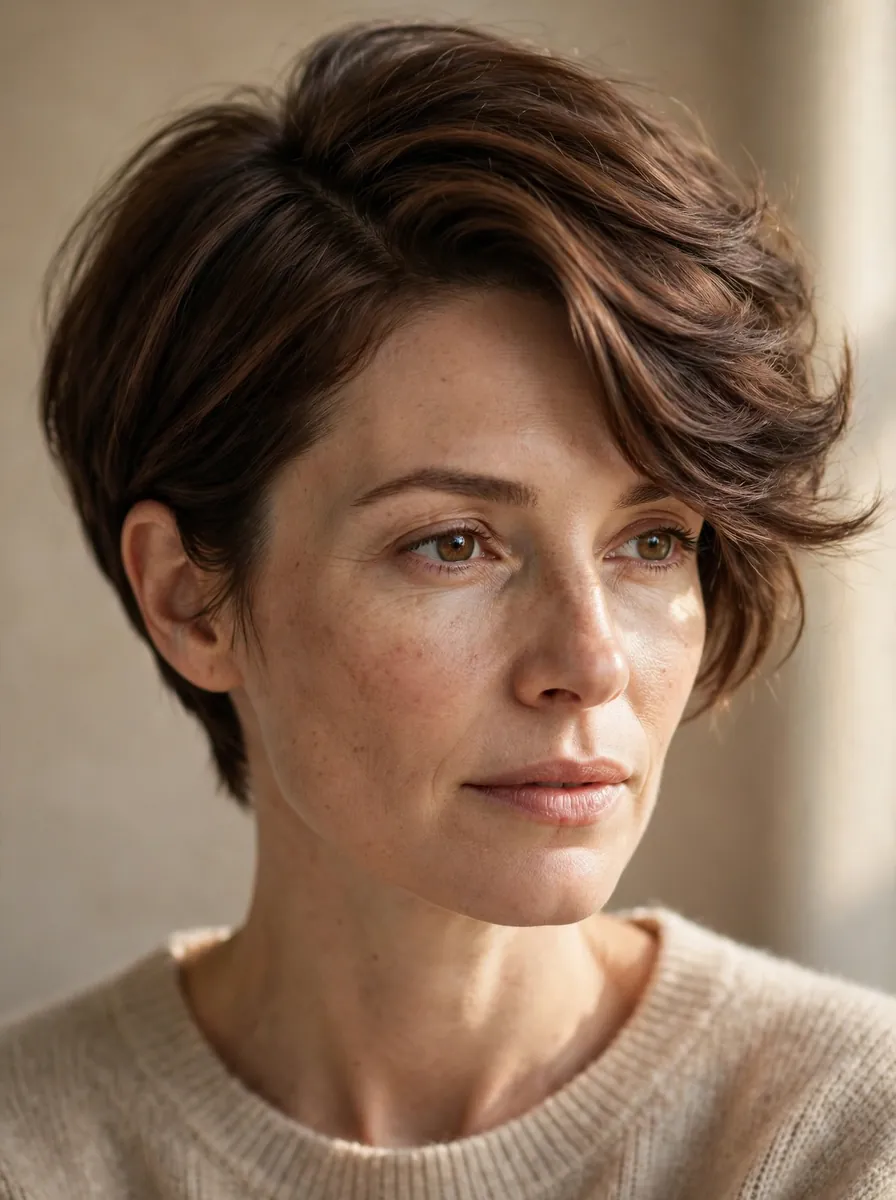
A deep side part is the fastest styling change a long pixie offers: it creates instant volume on the heavy side and a sleek sweep on the other. If your hair has a natural part it falls back to, have the cut shaped around it rather than fighting it daily.
What Is a Long Pixie Cut?
A long pixie is a pixie haircut where the top and front sections are left noticeably longer than a classic pixie — typically long enough to form a fringe, tuck behind the ears, or reach toward the jaw at the front — while the back and nape stay cropped. It sits between a pixie and a bob: shorter and lighter than a bob, softer and more flexible than a traditional pixie.
Long Pixie vs Pixie Bob vs Bixie
The three overlap, and stylists use the names loosely, but the usual distinctions help when you are booking:
- Long pixie: unmistakably a pixie from the back — short nape, exposed ears — with length concentrated on top and at the front.
- Pixie bob: the front reaches bob territory (chin or near it) and the outline reads more like a bob from the front, pixie from the back.
- Bixie: roughly half bob, half pixie all over, with more length retained at the sides than either of the above.
If in doubt, bring photos. The names matter less than agreeing on where the longest and shortest pieces should sit.
Who Does a Long Pixie Suit?
Almost everyone, with adjustments. It is a particularly good choice if you:
- are cutting long hair short for the first time and want a safety net
- have a round face and want length at the front to balance it — see the face-shape notes in our feminine pixie guide
- have fine hair that goes flat in a bob but lifts in a layered pixie
- have wavy or curly texture — although curls shrink the length significantly, which is why our dedicated curly pixie cuts guide covers the curly-specific version
- are growing out a short pixie and want the in-between stage to look deliberate — a common route for women in our pixie cuts for women over 60 guide as well
How to Style a Long Pixie
The longer top is the styling playground:
- Sleek and tucked: smooth the top down with a light cream and tuck one side behind the ear for a polished finish.
- Textured and undone: work a pea-sized amount of matte paste through dry hair, pushing the front pieces in different directions.
- Wavy: enhance natural wave with a diffuser on low heat, or add bends with a small flat iron through the front sections only.
- Volume at the crown: blow-dry the top forward first, then flip it back — the roots set with lift instead of lying flat.
How Fast Does a Long Pixie Grow Out?
Hair grows roughly a centimetre a month, so a long pixie starts to lose its shape around weeks six to eight, when the nape softens and the fringe reaches the eyes. Most wearers book a tidy-up every 6–8 weeks — cheaper and quicker than a full short-pixie maintenance cycle, because only the back and edges usually need reshaping while the top keeps growing toward a pixie bob or bixie-length style.
Frequently Asked Questions
What is the difference between a long pixie and a short bob?
Length at the back. A long pixie is cropped close at the nape with the neck exposed, even when the front is long. A short bob keeps a continuous outline of hair around the head, usually covering the nape. From the front the two can look similar; from the back they are unmistakably different cuts.
Is a long pixie cut good for fine hair?
Yes — often better than a very short pixie. The longer, layered top can be styled for crown volume, and blunt ends keep fine hair looking as thick as possible. Ask your stylist to avoid heavy texturizing or razor work, which removes the density fine hair cannot spare.
Will a long pixie suit a round face?
Usually, yes. Keep the top long enough to add height, wear the fringe swept to one side rather than straight across, and let the front pieces fall past the cheekbones. These three details add angles and length to the face instead of framing its width.
How often does a long pixie need trimming?
Every 6–8 weeks for a tidy-up of the nape and edges. Because the top is meant to be long, this cut is more forgiving than a classic pixie — skipping a few weeks softens the shape rather than ruining it, and it grows gracefully toward a pixie bob.
Can I get a long pixie if my hair is curly?
Yes, but the length needs to be planned around shrinkage: curly hair can spring up several centimetres when dry, so the cut should be done dry or with the curl pattern visible. Our curly pixie cuts guide goes through the curly-specific shapes and styling in detail.
Is a long pixie high maintenance?
Day to day, no — most styles take under five minutes because there is simply less hair to arrange. The maintenance is in the salon visits rather than the mornings: regular nape tidy-ups keep the shape reading as a deliberate cut instead of a grow-out.
Final Thoughts
A long pixie is the confidence-friendly end of short hair: cropped and easy at the back, with enough length up front to frame your face, change your part, and style three different ways in one week. Start from the version closest to your hair type above, and remember the shape is adjustable at every appointment — shorter is always available later; longer is just a few patient weeks away.