Pixie Cuts for Women Over 60: 12 Elegant, Easy-Care Styles
A pixie cut after 60 is not about looking younger. It is about a shape that is sharp, deliberate, and easy to live with — hair that takes minutes in the morning, lifts the face instead of dragging on it, and works with the hair you actually have now: its texture, its colour, and its density.
Hair changes with age. It often becomes finer, drier, and more fragile, and grey hair grows in with a wirier texture of its own. The pixie styles below are chosen with those realities in mind — softness around the face, volume where fine hair needs it, and nothing that depends on heavy daily styling. If you are comparing across the whole family first, our feminine pixie cuts guide shows the softer classic shapes, including its over-50 section. For the wider short-hair menu a decade earlier — bobs, crops and shags included — see short haircuts for women over 50.
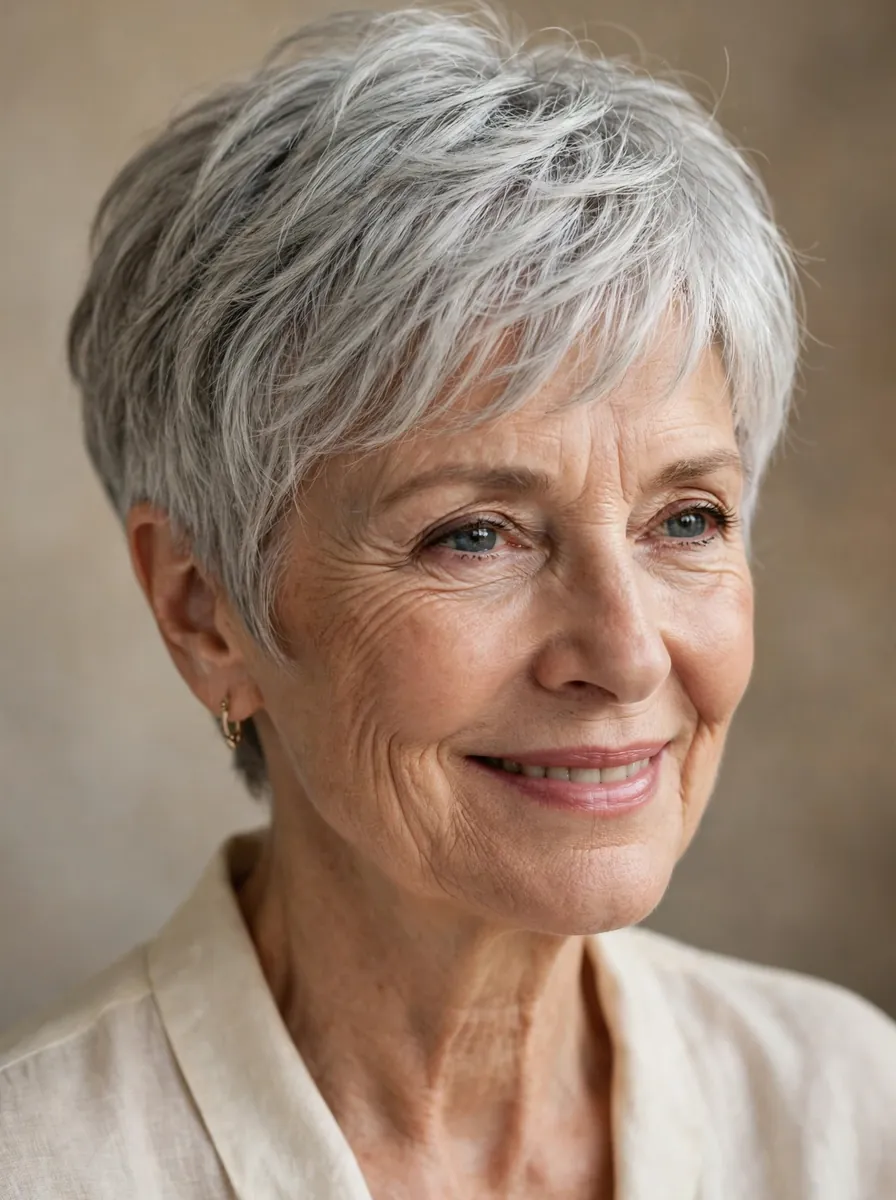
1. The Classic Silver Pixie
The reference style: a neat pixie with a soft fringe and gentle length on top, worn in natural silver or grey. Embracing the grey is what makes this cut look expensive — the colour and the cut are designed together. Keep the edges soft rather than blunt; wispy outlines flatter mature features far more than hard lines.
2. Pixie Bob Over 60
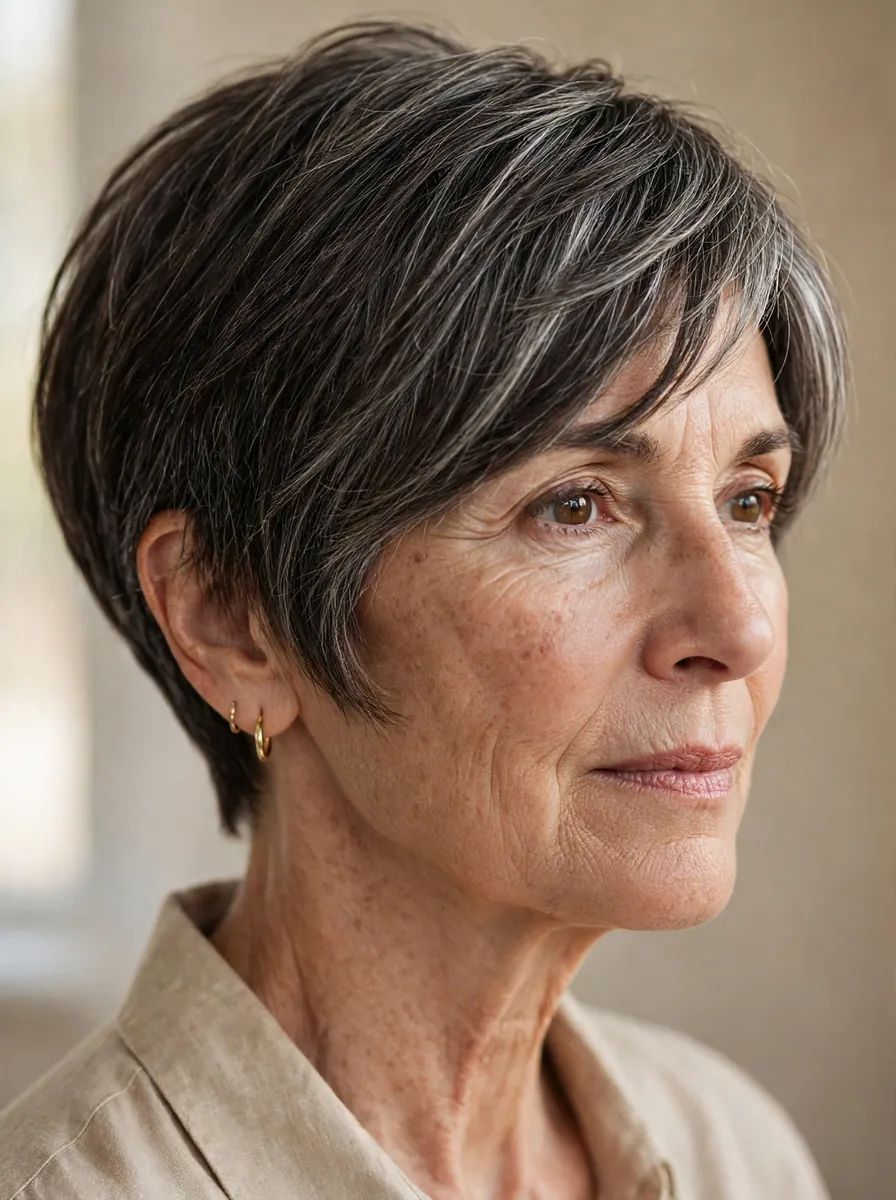
A pixie bob keeps a little more length at the front and sides, which many women prefer to a true pixie — it frames the jaw and feels less exposed. The nape is still short and tidy, so the easy care remains. Our pixie bob haircuts guide shows more variations of this hybrid.
3. Pixie with Glasses
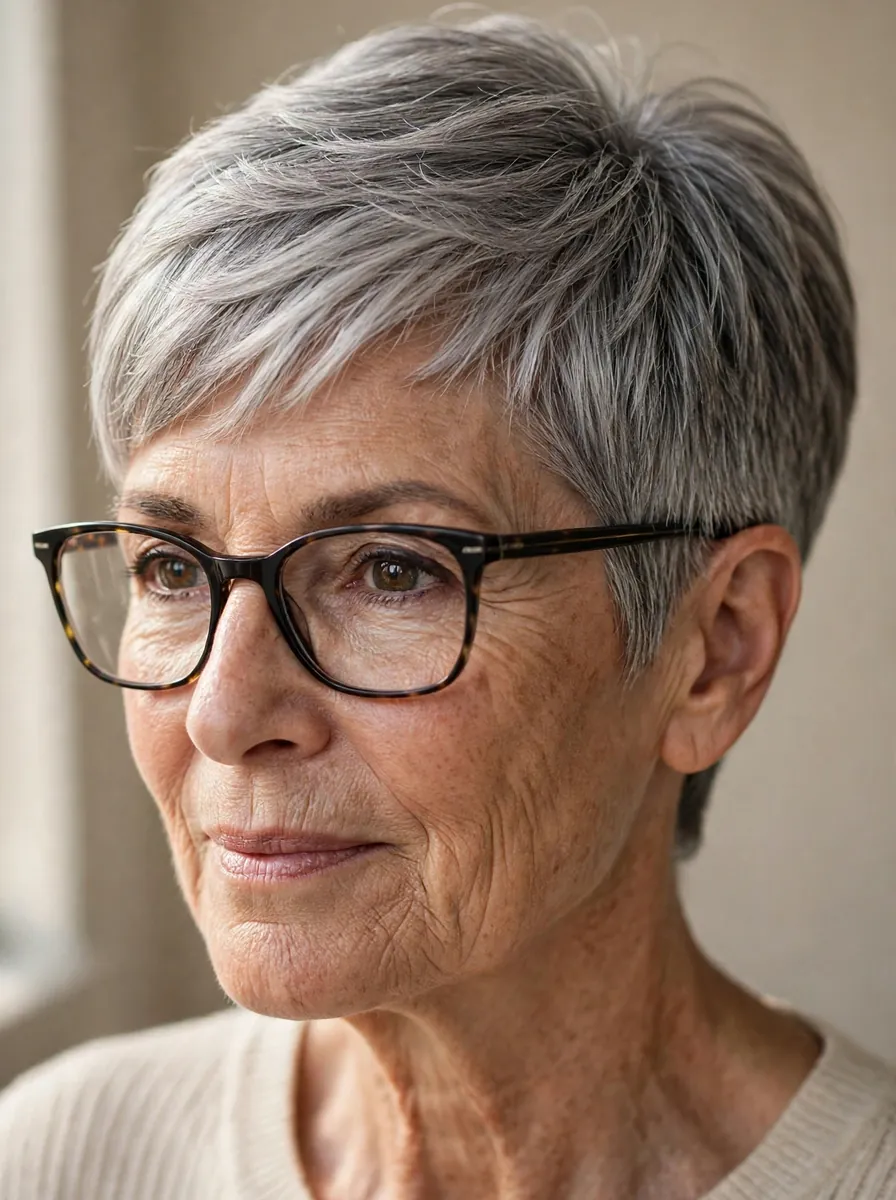
Glasses and a pixie are natural partners — the short shape stops hair competing with your frames. Two details matter: keep the fringe either clearly above the frames or long enough to sweep past them (a fringe that ends exactly at frame level fights them all day), and keep the sides neat around the arms of the glasses so nothing gets trapped and bent.
4. Soft Blonde Pixie
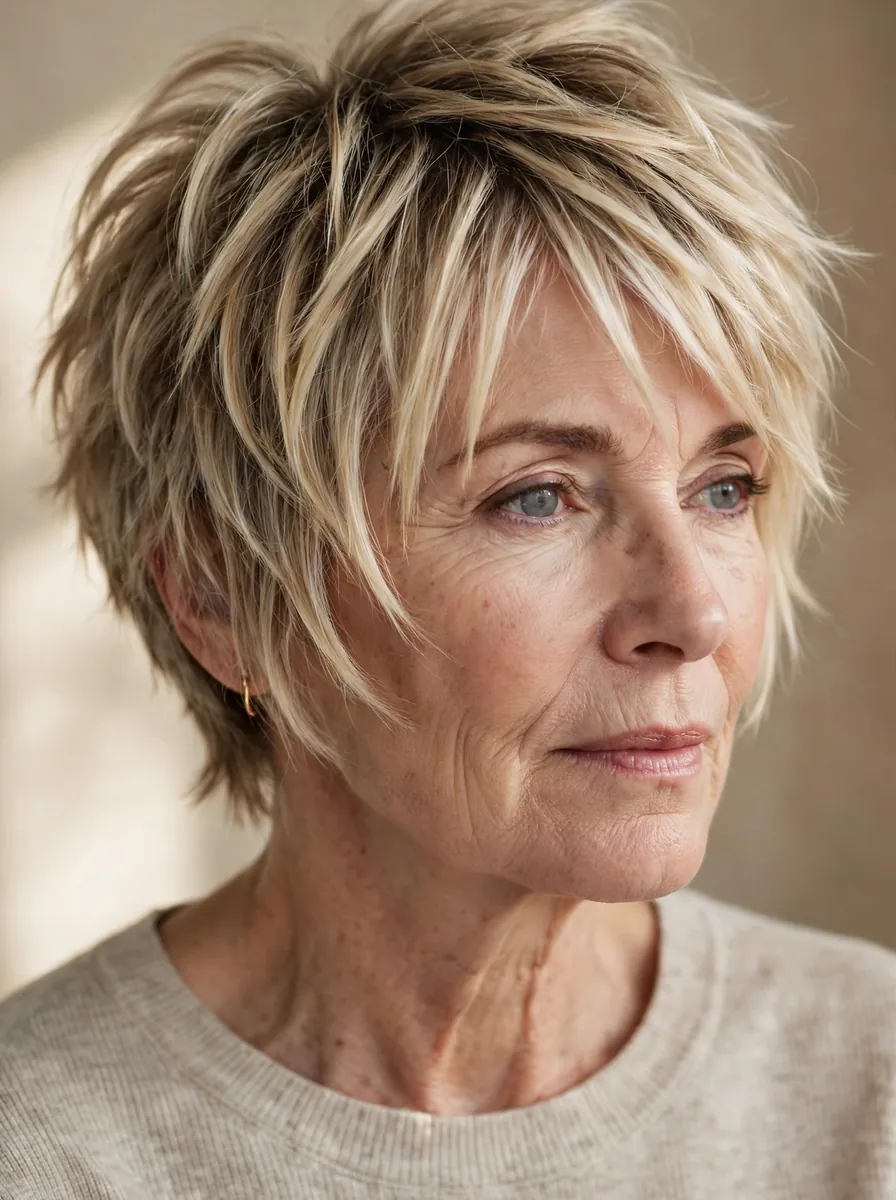
If you colour your hair, a soft blonde pixie is forgiving: the light colour blends regrowth, including incoming grey, better than any dark shade. Multi-tonal blonde — slightly deeper at the roots, brighter around the face — also adds the appearance of thickness, which fine hair appreciates.
5. Sleek Polished Pixie
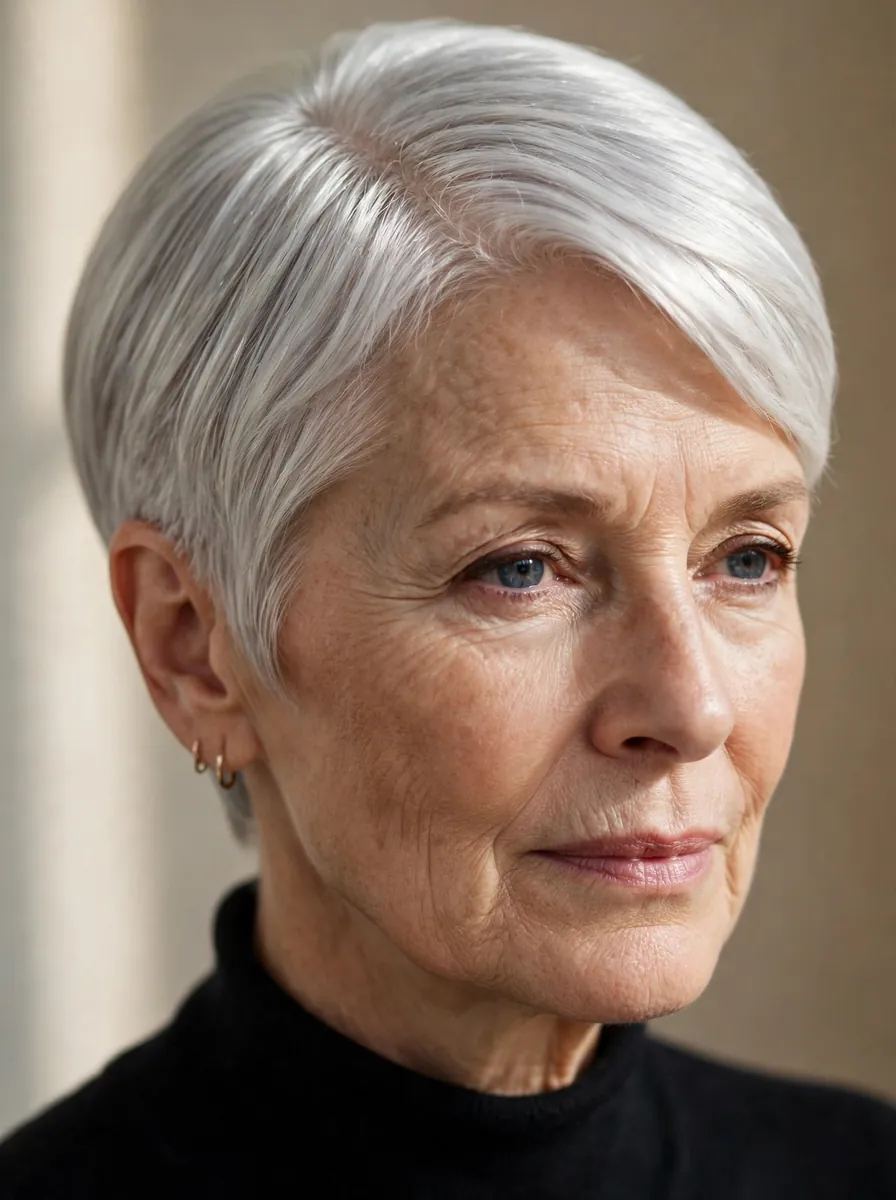
A sleek pixie, smoothed close with a side part, is the most formal version — the one that reads “put together” with zero visible effort. It works best on naturally straight or relaxed hair. A drop of shine serum is the entire styling routine.
6. Pixie with Crown Volume
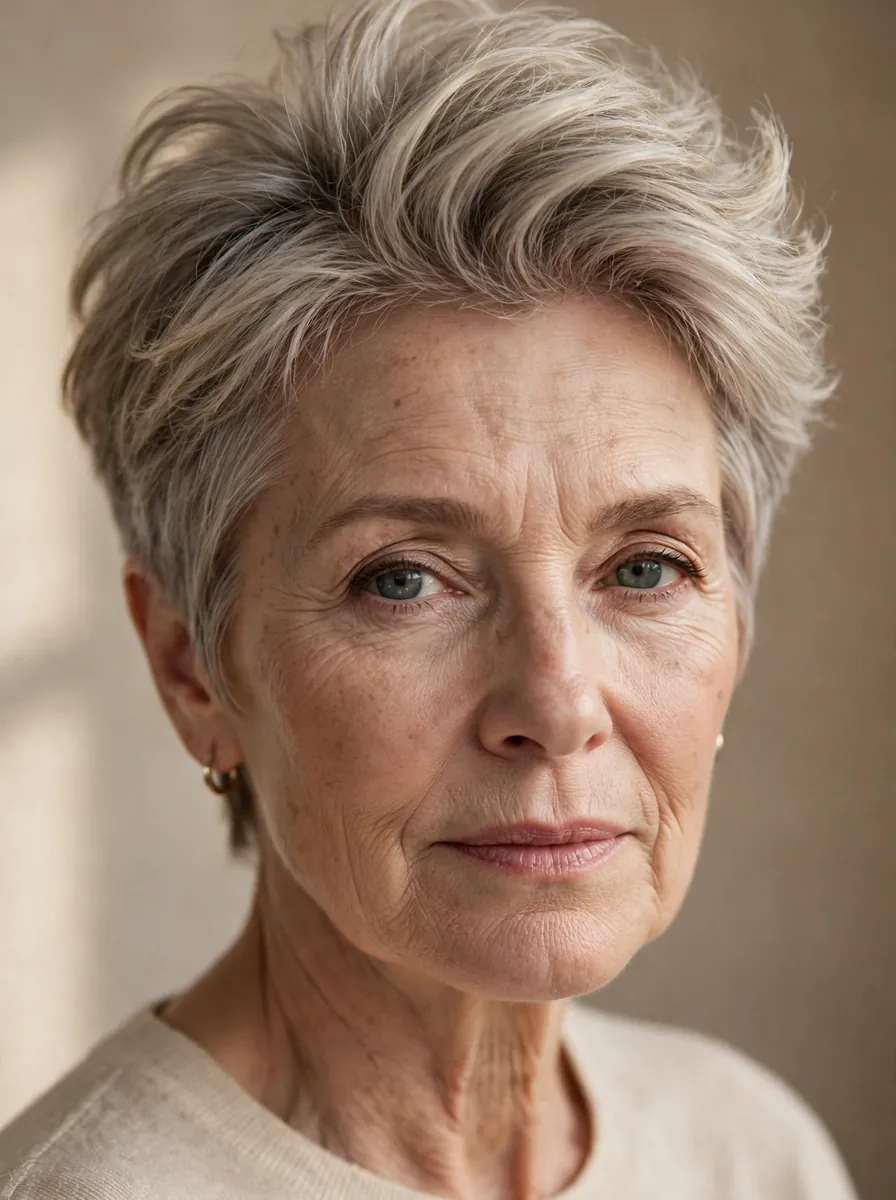
Height at the crown is the single most flattering trick for fine or thinning hair: it lifts the eye upward and makes the hair itself look denser. Ask for longer layers on top that can be directed up and back, and dry them with the roots lifted — the shape is cut in, not sprayed in.
7. Wispy Pixie for Fine Hair
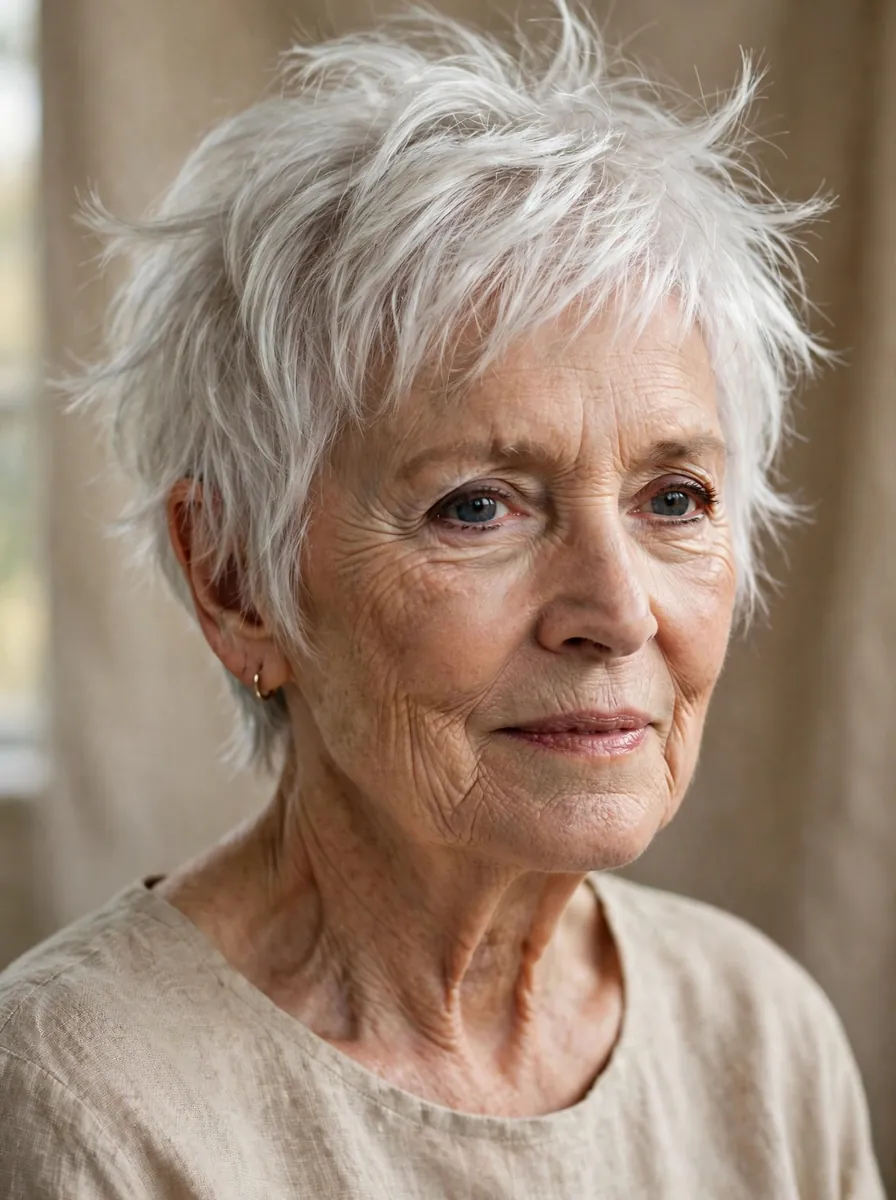
A wispy pixie uses feathered, separated ends to make fine hair look light and airy instead of sparse. The caution: wispy must not become thin. Keep the interior density and let only the very ends soften — a good stylist will point-cut the outline rather than razor the whole cut. More fine-hair strategy is in our bob haircuts for fine hair guide.
8. Classic Pixie Bob, Chin-Skimming Front
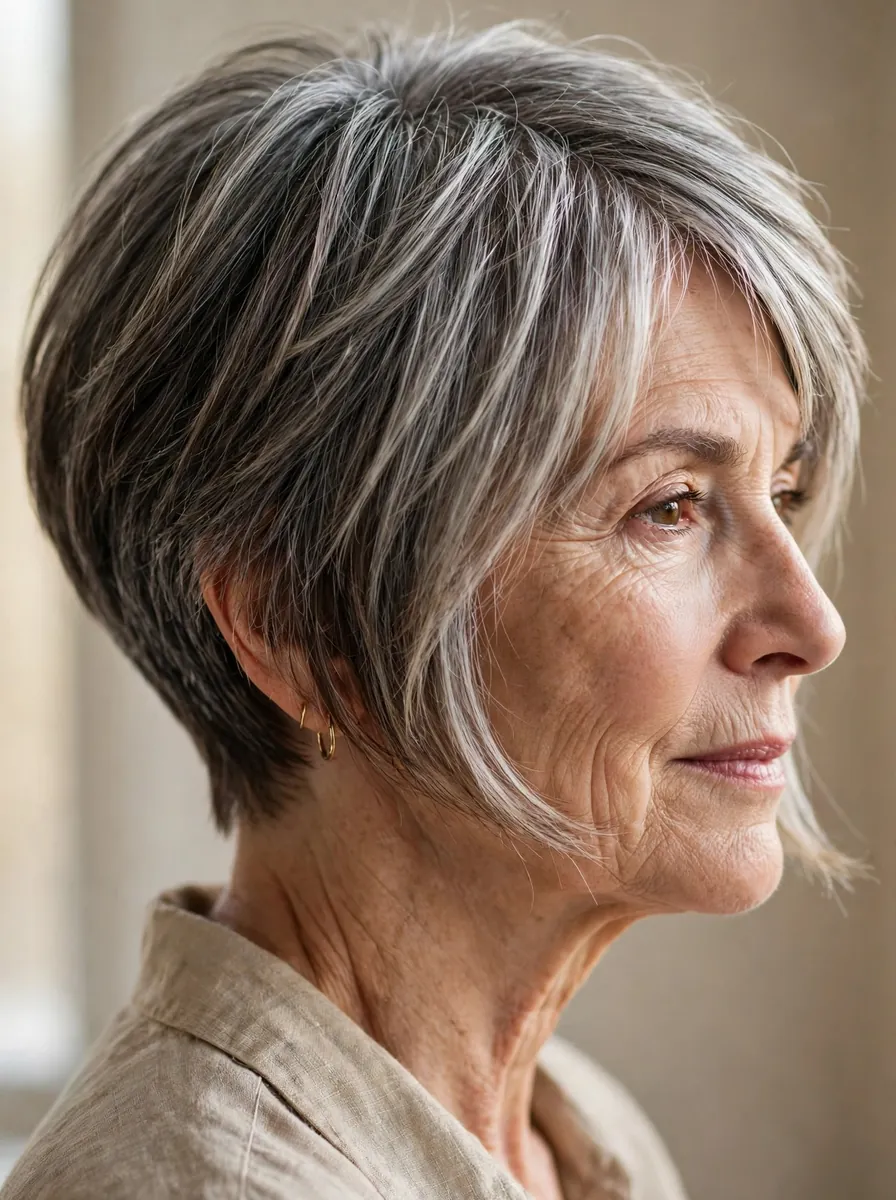
For women who wore bobs for years, this is the gentle step across: bob-length at the front, pixie-short at the back. It keeps the familiar frame around the face while removing the weight and drying time of a full bob — a transition our long pixie cuts guide also explores from the other direction.
9. Pixie for Fine Hair with a Fringe
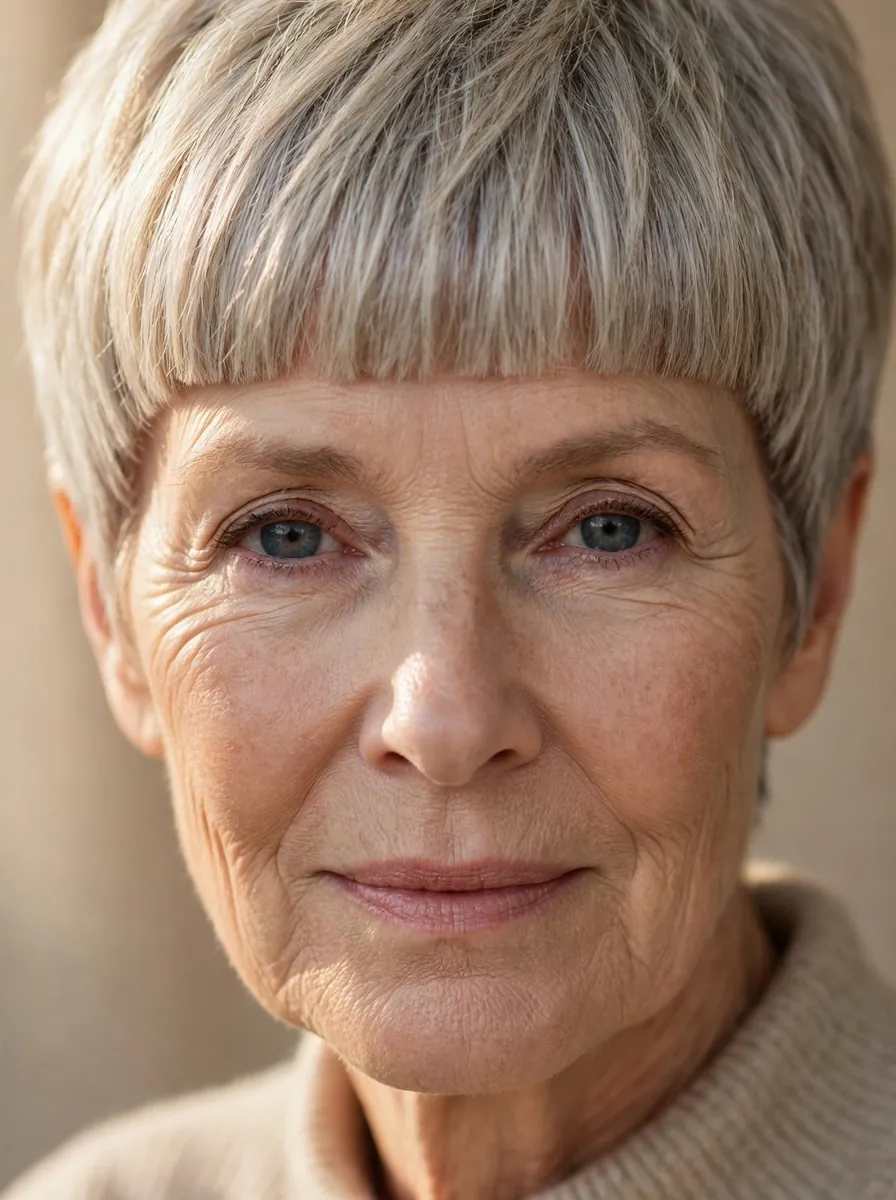
A fringe is fine hair’s friend: it creates a strong front edge that makes the whole cut look fuller, and it softens the forehead in the bargain. Keep it blunt-ish and full rather than see-through — a thicker fringe section taken from further back looks denser than a thin one taken from the hairline.
10. Long Pixie with Face Framing
The longer pixie — fringe and front pieces kept at cheekbone length — is the least drastic short cut and a kind one to mature features, because soft length near the face blurs and flatters. It is covered in full, with a dozen variations, in our long pixie cuts guide.
11. Textured Crop with a Soft Fringe
Short all over with choppy texture on top and a short, soft fringe: this is the lowest-maintenance option on the list. It suits wiry grey hair particularly well, because the texture works with the wiry quality instead of trying to smooth it away. Style by pushing the top in different directions with a fingertip of matte cream.
12. Curly or Wavy Pixie After 60
Natural waves and curls add the volume fine mature hair often lacks, and a pixie releases them beautifully. The cut must be shaped dry around the curl pattern — the full method, including shrinkage planning, is in our curly pixie cuts guide.
What Changes After 60 — and How the Cut Answers
- Finer, thinner hair: answered by crown length, blunt fringes, and avoiding heavy razoring that strips density.
- Wirier grey texture: answered by slightly longer, softer shapes that move with the texture, plus moisture-focused products — grey hair is thirstier hair.
- A softer jawline and features: answered by volume on top and softness at the front, which lift the eye; and by keeping length away from the jaw, where it can drag the face down.
- Less patience for styling: answered honestly — every style above is a wash-and-shape or five-minute style. Anything more elaborate stops being worn within a month.
Styling a Pixie Over 60: The Five-Minute Version
Most days need three things: dry the top in the direction you want it to sit (roots lifted for volume), a pea-sized amount of product matched to your texture — mousse for fine hair, cream for coarse or grey hair — and a final fingertip arrangement rather than a brushed finish. Heat tools are optional at this length; if you use them, keep temperatures moderate, as mature hair is more fragile.
Growing It Out or Going Shorter
A pixie at any age is adjustable. If you are coming down from a bob, the long pixie and pixie bob come first; the classic and cropped versions can follow at later appointments once you know you enjoy short hair. If you are growing out, the same sequence runs in reverse — our short haircuts for women guide maps the shapes you pass through on the way back to bob length.
Frequently Asked Questions
What is the best pixie cut for a woman over 60?
The one matched to your hair’s current texture and density. For most women that means a soft classic pixie or pixie bob with a fringe and crown length for volume, edges kept wispy rather than blunt, and no element that needs more than five minutes of styling. Fine hair usually does best with blunt-cut density; coarse or grey hair with slightly longer, softer shapes.
Does a pixie cut make you look older or younger?
Neither, inherently — it makes you look more deliberate. A well-shaped pixie lifts the face, shows bone structure, and reads as a choice, which is what people actually perceive as vibrant. The versions that age a wearer are shapeless grow-outs and hard, helmet-like outlines, not shortness itself.
Is a pixie cut good for thinning hair?
Often it is the best option. Short hair cannot be weighed down by its own length, crown layers can be directed for maximum coverage and lift, and a fringe creates a strong front that makes the whole cut look fuller. Ask for blunt ends and minimal razoring, and consider a slightly multi-tonal colour, which visually deepens thin areas.
How do I style a pixie cut with glasses?
Keep the fringe decisive — clearly above the frames or long enough to sweep to the side — and keep the sides over the ears neat so the arms of your glasses sit cleanly. A side part usually works better than a center part with strong frames, because the asymmetry balances the horizontal line of the glasses.
How often does a pixie need cutting after 60?
Every 4–6 weeks keeps a classic pixie crisp; longer pixies and pixie bobs stretch to 6–8 weeks. Grey and wiry textures can show regrowth lines in coloured hair faster than the shape itself grows out, so colour appointments, when relevant, usually set the schedule.
Should I let my pixie go grey?
That is purely personal, but the pixie makes the transition easier than almost any cut: the short length means the old colour grows out and is cut away within a few months, and silver hair in a sharp pixie shape is a genuinely striking combination. A few lowlights during transition can blend the line while it passes.
Final Thoughts
The right pixie after 60 is not a compromise — for fine, greying, or simply low-patience hair, it is frequently the best-engineered option available: volume where you want it, softness where it flatters, and mornings back in your own hands. Start longer if you are unsure, keep the edges soft, and let the shape do the work.