Pixie Cuts with Bangs: 10 Fringe Styles for Every Face
A fringe is the hardest-working part of a pixie cut. The crop itself is simple; the bangs decide the entire character — soft or sharp, classic or edgy — and they do the face-shaping work: shortening a long forehead, softening a strong jaw, framing the eyes. They are also the part people hesitate over, usually because of one bad fringe in their past that was the wrong type for their face.
The ten combinations below are organised by fringe type, with the face shapes, hair types and glasses situations each one actually suits. The short version of the whole guide: diagonal fringes (side-swept, curtain) flatter almost everyone; horizontal fringes (blunt, baby) are the statement-makers that need the right canvas. For fringe care and styling in general, the curtain bangs guide goes deeper on the most popular shape.
1. Pixie with Curtain Bangs
The softest entry point: a centre-parted fringe that sweeps open like curtains and blends into longer sides. On a pixie it keeps a whisper of length around the face, which makes it the least drastic “short hair with bangs” combination there is. It suits nearly every face shape, grows out invisibly, and styles with a five-second brush-through of a blow-dry brush. Start here if you are fringe-nervous.
2. Pixie with Side-Swept Bangs
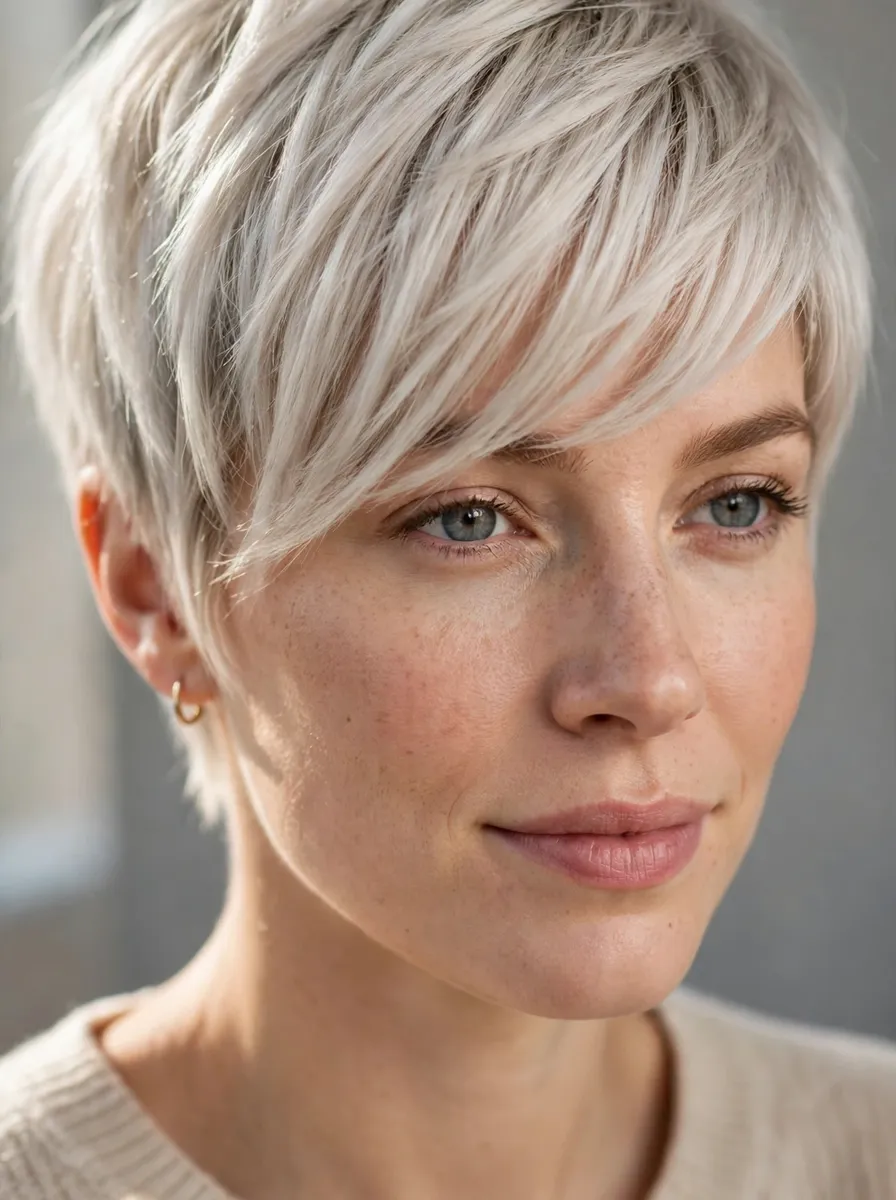
The long diagonal fringe is the most flattering line in short hair: it creates asymmetry that draws the eye across the face, slims a round face, and softens a square jaw. It is also practical — it can be tucked, pinned or swept back on days you want it gone. On the feminine pixie cuts page this is the shape that appears again and again, because it works on almost everyone.
3. Pixie with Baby Bangs
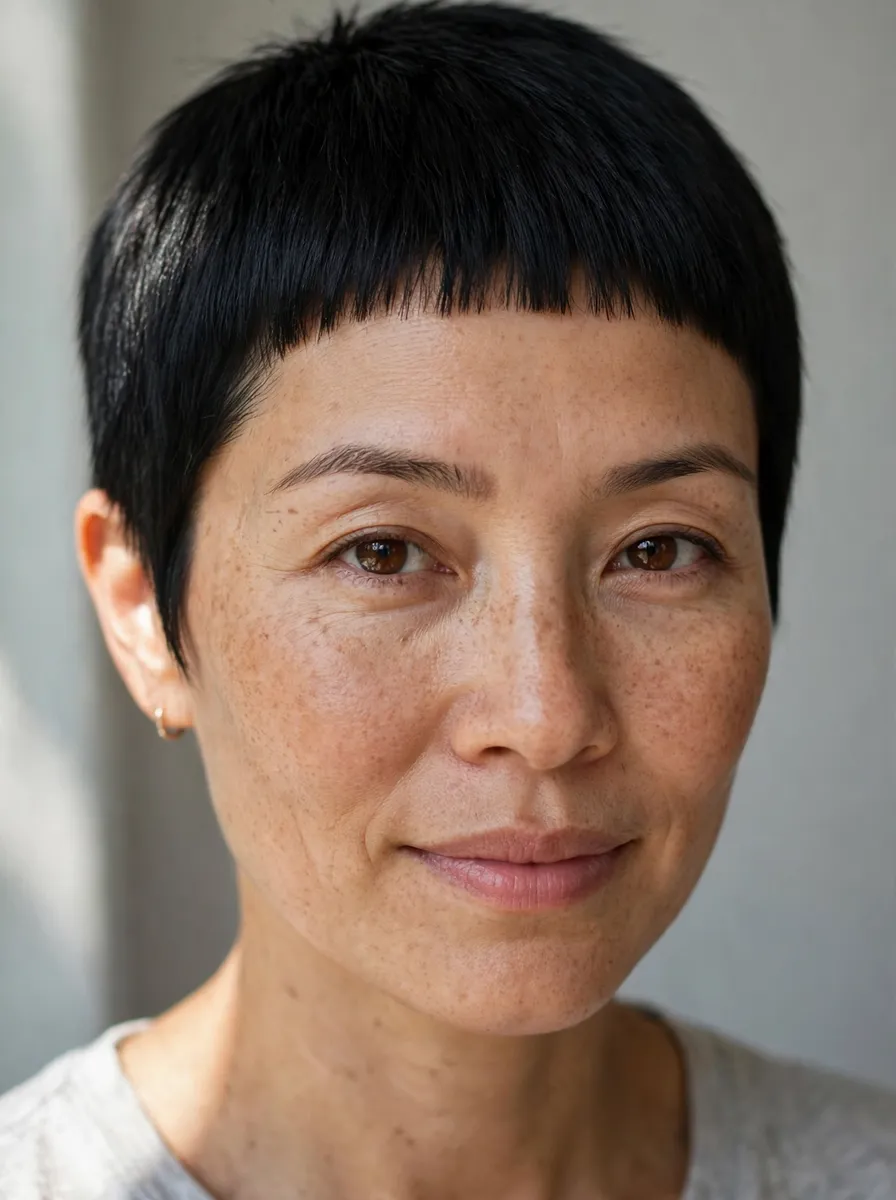
A micro fringe cut well above the eyebrows: the boldest option here and the most face-revealing. Baby bangs open the whole face up, which suits oval and heart shapes and anyone with strong brows they want to show off. They are unforgiving of cowlicks at the hairline and need a trim every two to three weeks — but at a few centimetres long, that trim takes your stylist five minutes.
4. Pixie with Choppy Bangs
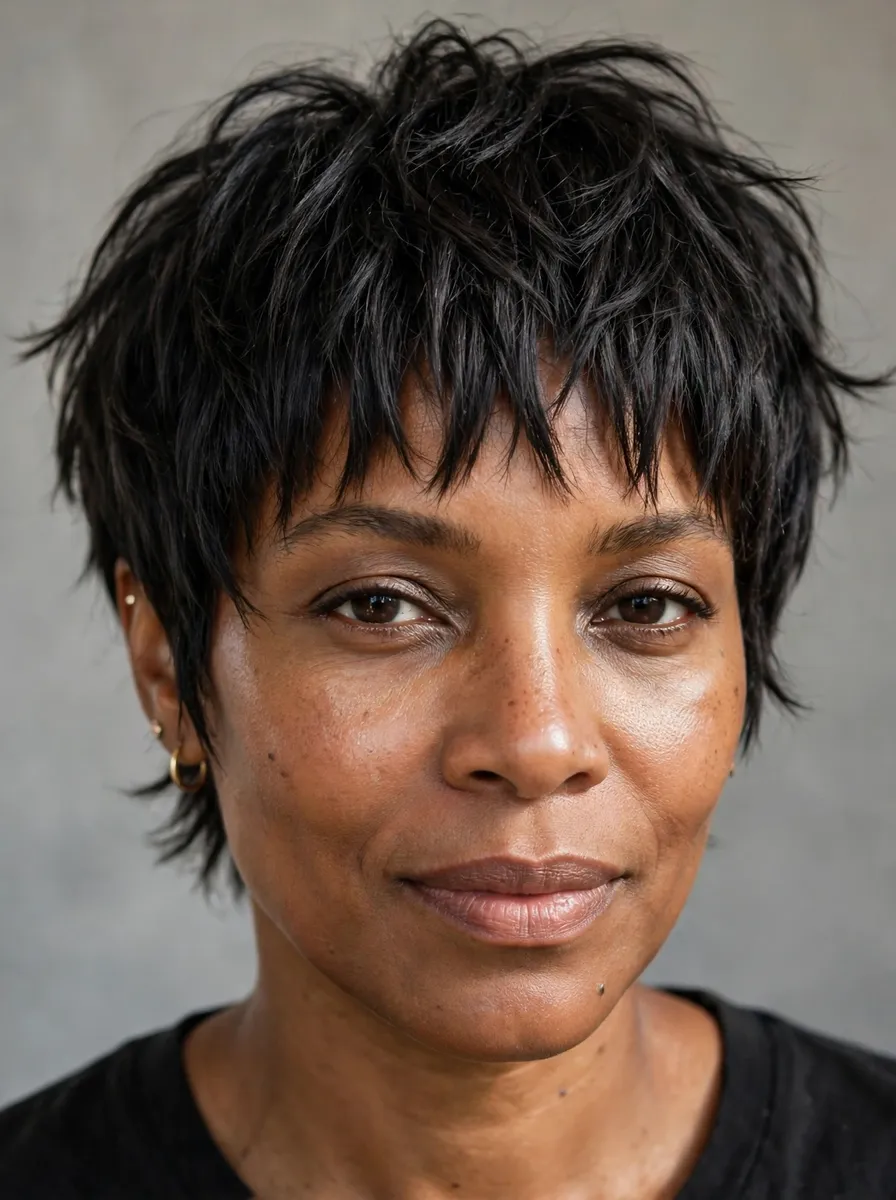
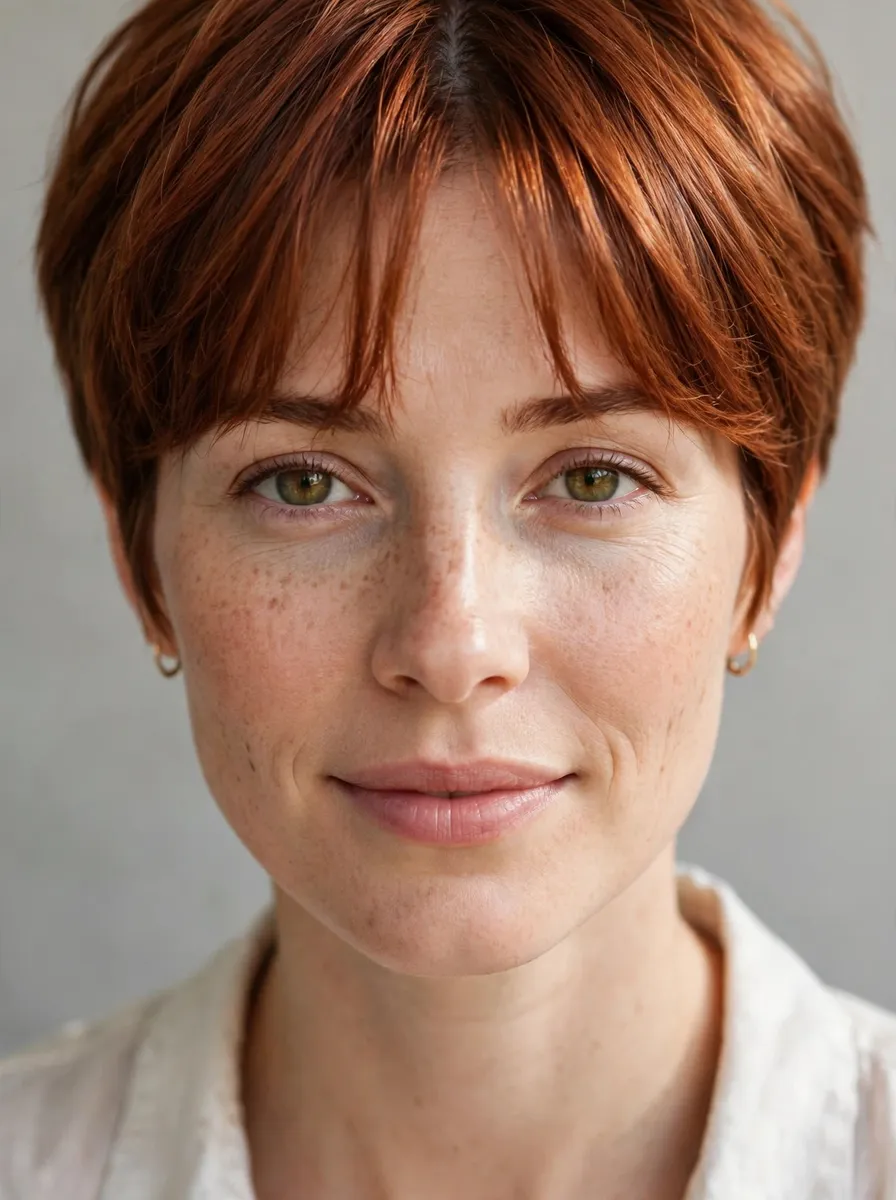
Point-cut, piecey and deliberately uneven: choppy bangs match a textured pixie perfectly because the fringe and the crop speak the same language. The broken edge is also strategic — it camouflages a sparse hairline better than any blunt fringe can, and it is the most forgiving fringe to style, since precision was never the point. A pinch of paste through the ends is the entire routine.
5. Long Pixie with Long Bangs
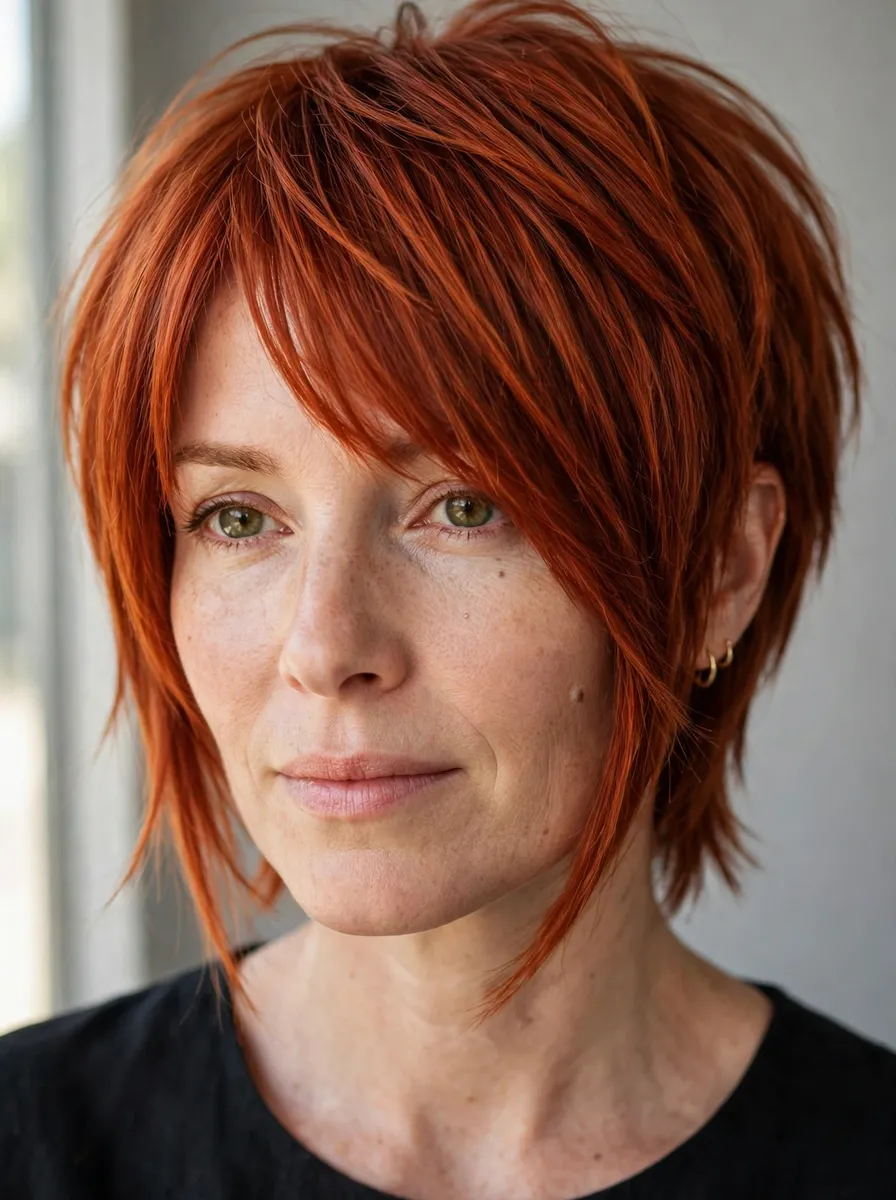
Maximum fringe: cheekbone-length bangs over a long pixie base, worn forward and full or pushed into a sweep. The long fringe carries the whole style, so it suits anyone who wants short hair without the exposed feeling at the front. It is also the easiest pixie-and-bangs combination to grow out into a bob, because the front is already halfway there.
6. Pixie with Blunt Bangs
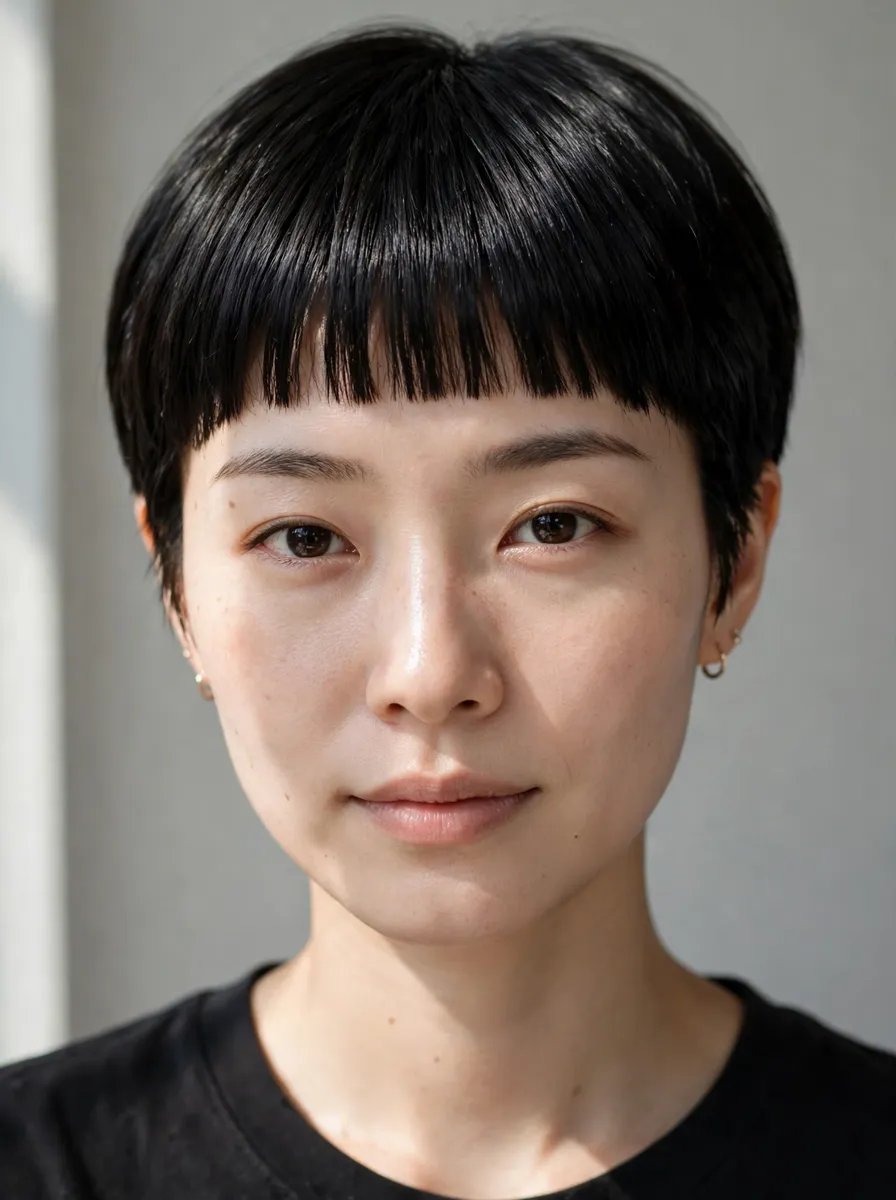
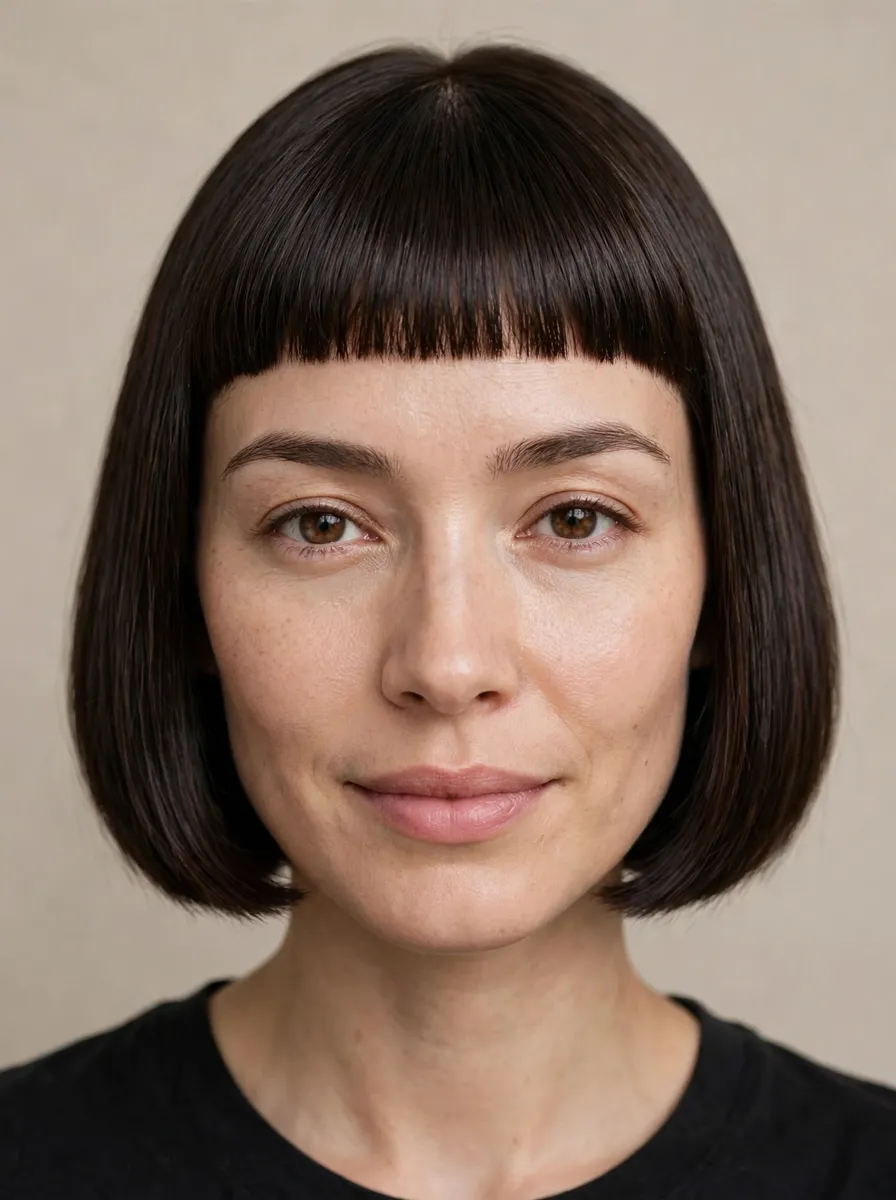
A straight-across fringe at brow level over a neat pixie: graphic, polished, and unmistakably intentional. It flatters oval and long faces by visually shortening the forehead, and it pairs beautifully with glasses, where fringe and frames form one clean horizontal story. The demands: straight or straightenable hair, a hairline without a strong cowlick, and trims every three weeks to hold the line.
7. Pixie with Wispy Bangs
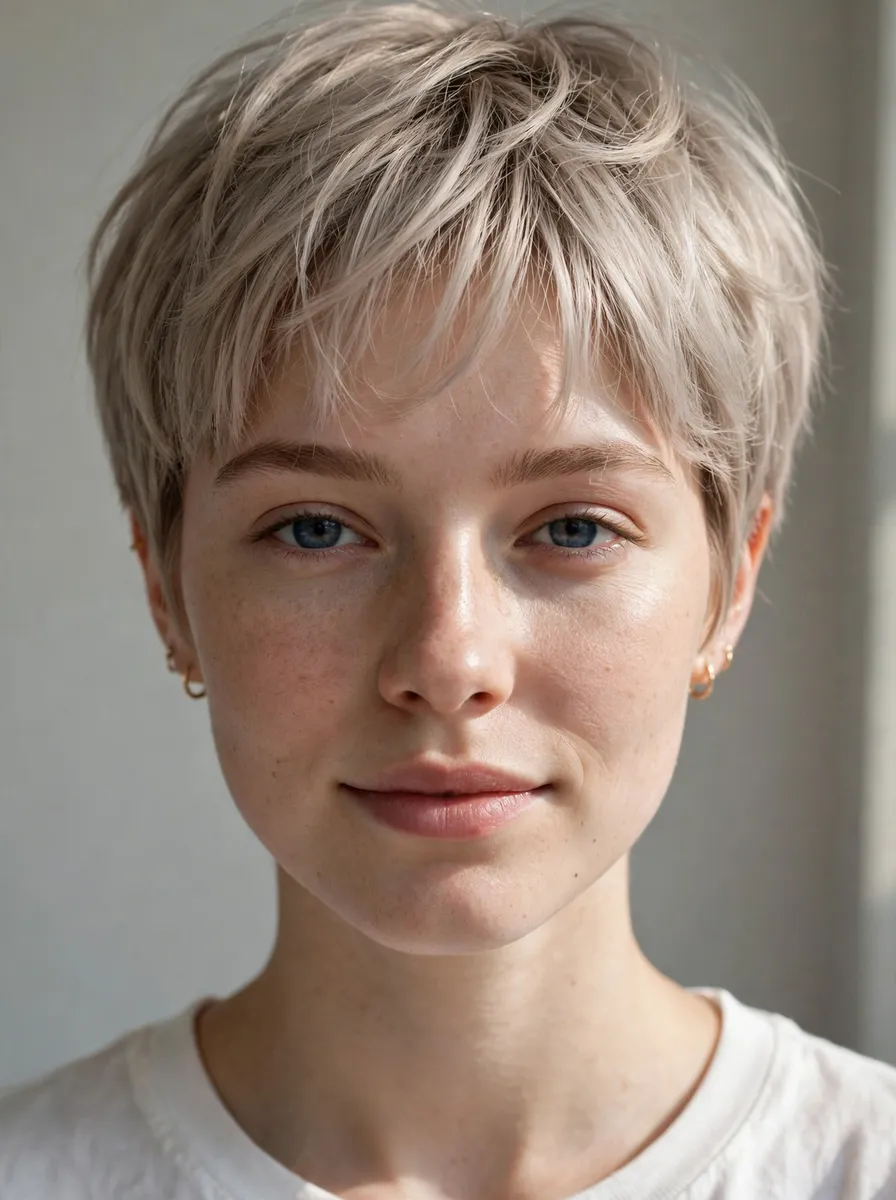
A feather-light fringe with visible skin showing through the ends: the gentlest way to try bangs on a pixie. Wispiness suits fine hair best — thick hair cut this wispy can look accidental rather than delicate — and it softens the forehead without committing to a full fringe’s styling. If you are testing whether bangs suit you at all, this is the reversible experiment.
8. Asymmetrical Pixie with Bangs
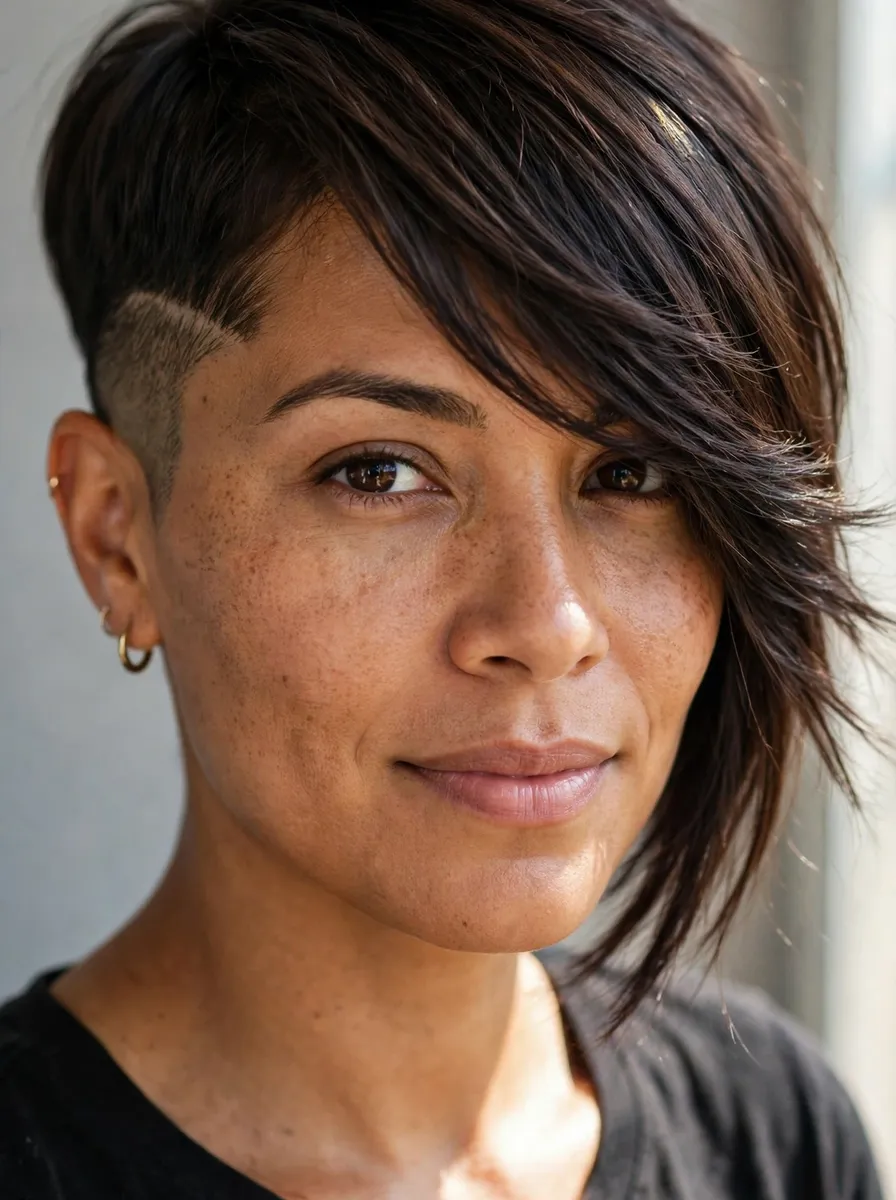
One side clipped close, the fringe left long and diagonal across the forehead: the asymmetry is the style. It creates the strongest face-framing of any cut here and, because one side is cropped, it removes bulk — a genuine advantage on thick hair. Wear the long side over your “good side” for photos; the cut will do the rest.
9. Curly Pixie with Bangs
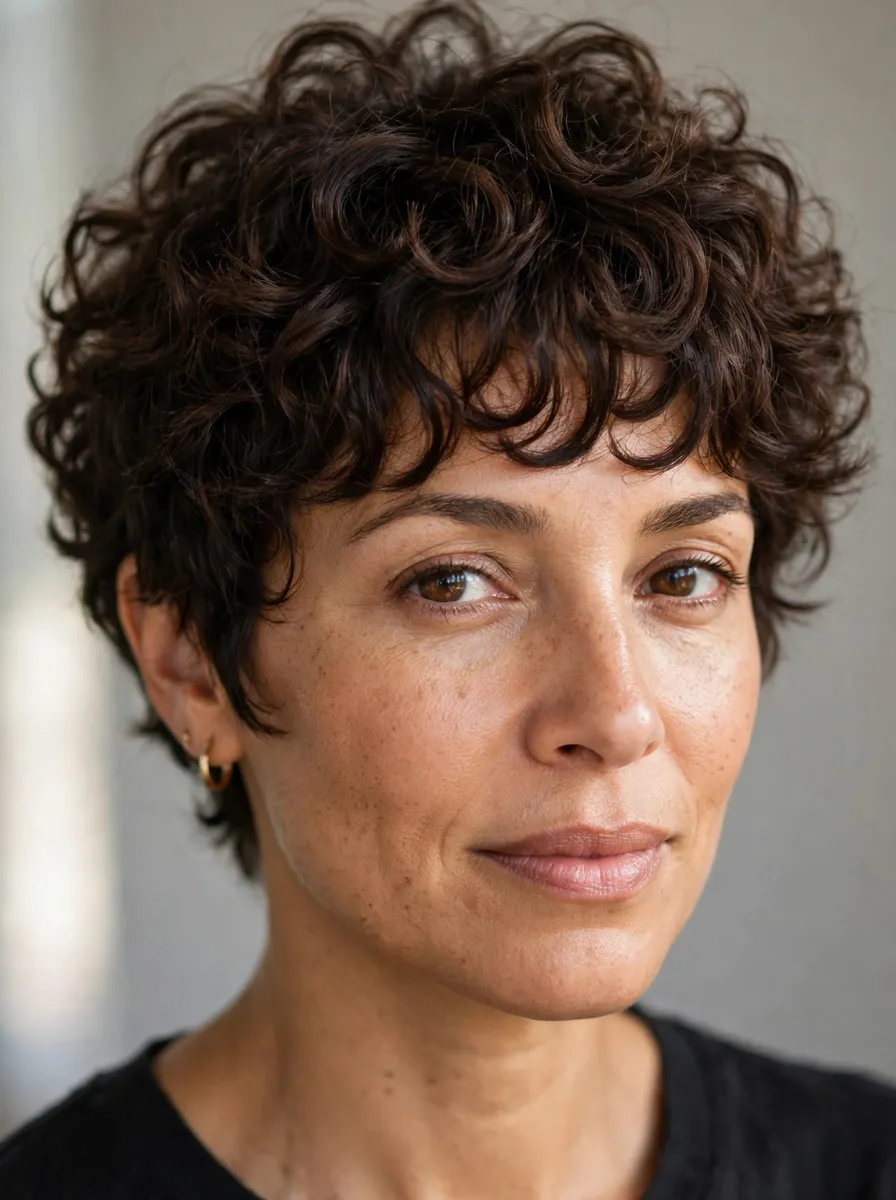
Yes, curly hair can have bangs — cut dry, curl by curl, and longer than the target length, because curls spring up. A curly fringe over a curly pixie gives the cut its focal point and its softness at once. The honest caveat is humidity: a curly fringe has its own weather opinions, so keep it long enough to pin back on the days it stages a protest.
10. Pixie Bob with Bangs
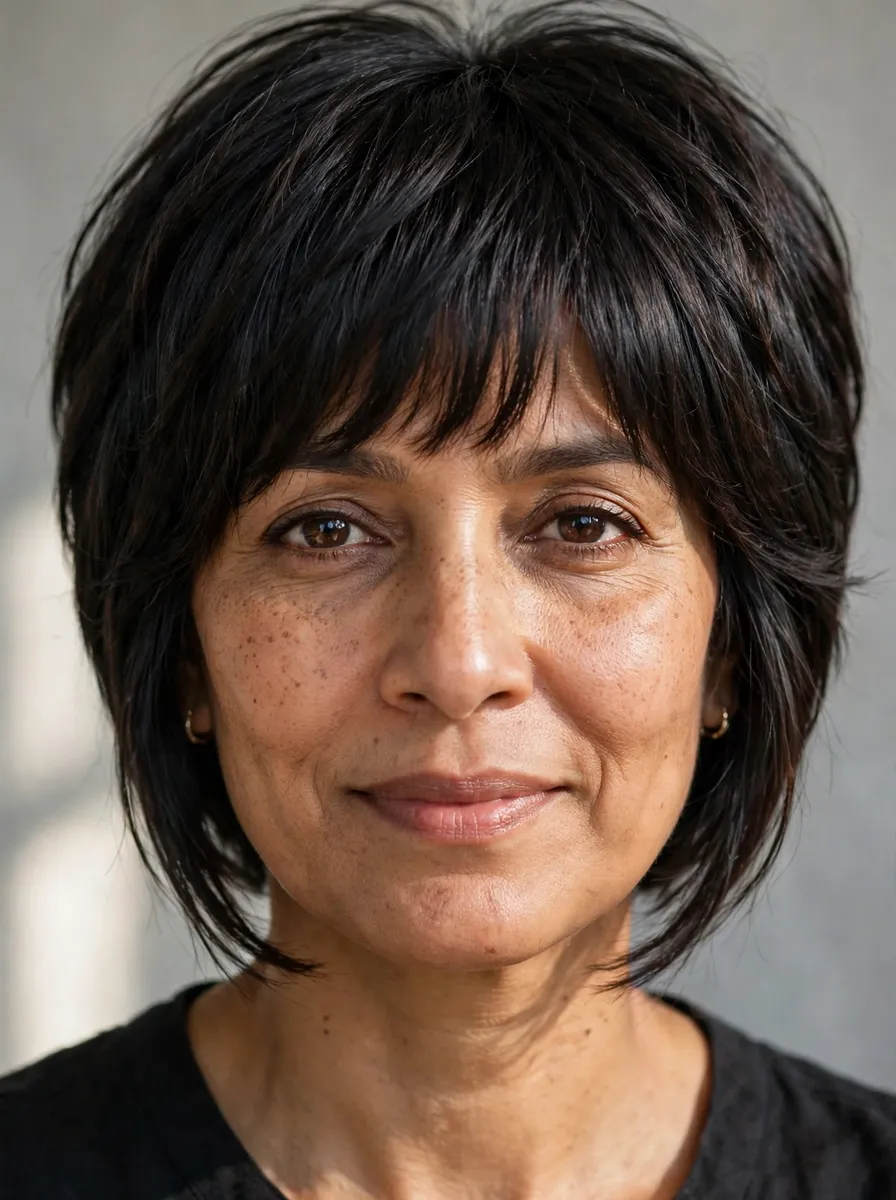
The hybrid base — cropped back, bob-length front — with a fringe added makes the most complete face frame in this guide: bangs in front, length at the sides, nothing exposed. Any fringe type works over it, though side-swept and curtain are the natural pairings. Browse the pixie bob haircuts collection for the base shapes.
Matching Bangs to Your Face Shape
Round face: side-swept or curtain bangs — diagonal and vertical lines only; avoid straight-across fringes, which add width. Square face: side-swept or wispy bangs soften the jaw; avoid blunt lines that echo it. Long face: blunt or baby bangs shorten the forehead visually — this is your shape’s superpower fringe. Heart shape: curtain or side-swept bangs balance a wider forehead and narrower chin. Oval face: everything works; choose by hair type and maintenance appetite instead.
Choosing by face shape as well as fringe? Pixie cuts for round faces shows which pixie shapes add length and angles where you want them.
Frequently Asked Questions
What type of bangs look best with a pixie cut?
Side-swept and curtain bangs suit the widest range of faces, hair types and lifestyles — they are diagonal, soft and easy to grow out. Blunt and baby bangs make the strongest statement but demand the right face shape (oval or long), a cooperative hairline and frequent trims. When in doubt, start with a long side-swept fringe: it can be shortened into almost any other fringe later, while the reverse is not true.
Do bangs with a pixie suit glasses?
Yes, with one rule: the fringe should either sit clearly above the frames (baby or short blunt bangs) or sweep diagonally clear of them (side-swept, curtain). The awkward zone is a fringe that ends exactly at frame height and tangles with them all day. Take your glasses to the appointment and have the fringe finished with them on.
How do I grow out bangs on a pixie?
The graceful route is diagonal: as the fringe grows, sweep it increasingly to the side so it merges with the pixie’s longer top, then into the sides — this is why stylists call side-swept the exit fringe. Curtain bangs grow out almost invisibly for the same reason. Blunt and baby fringes have an awkward middle phase of about six weeks; clips, a twist pinned to the side, and patience get you through it. Our guide to growing out bangs covers the week-by-week tactics.
Will bangs hide forehead lines?
A fringe is the original forehead softener — it covers the area entirely or, in wispy and side-swept forms, breaks up the light across it so lines are far less visible. It is one of the most common reasons women choose bangs with a pixie after 40, and it works at any age. Soft, textured fringes flatter more than severe blunt ones for this purpose, since hard lines anywhere on the face draw the eye to lines elsewhere.
How much styling do pixie bangs need daily?
About a minute for most types. The trick is to style the fringe first, while the hair is still damp, because a fringe that dries in the wrong direction will fight you all day: a quick downward-and-across pass with a dryer and brush sets it. Side-swept and curtain bangs are the most forgiving; blunt bangs on wavy hair are the most demanding and may want a straightener pass.
Can fine hair pull off bangs with a pixie?
Yes — wispy, choppy and side-swept fringes are made for fine hair, because they do not ask for density the hair does not have. The mistake is a thick blunt fringe, which borrows hair from the top and sides and leaves the rest looking sparser. A stylist cutting fine hair should take the fringe from a shallow section close to the hairline, not a deep one. The pixie cuts for fine hair guide covers the density rules in full.