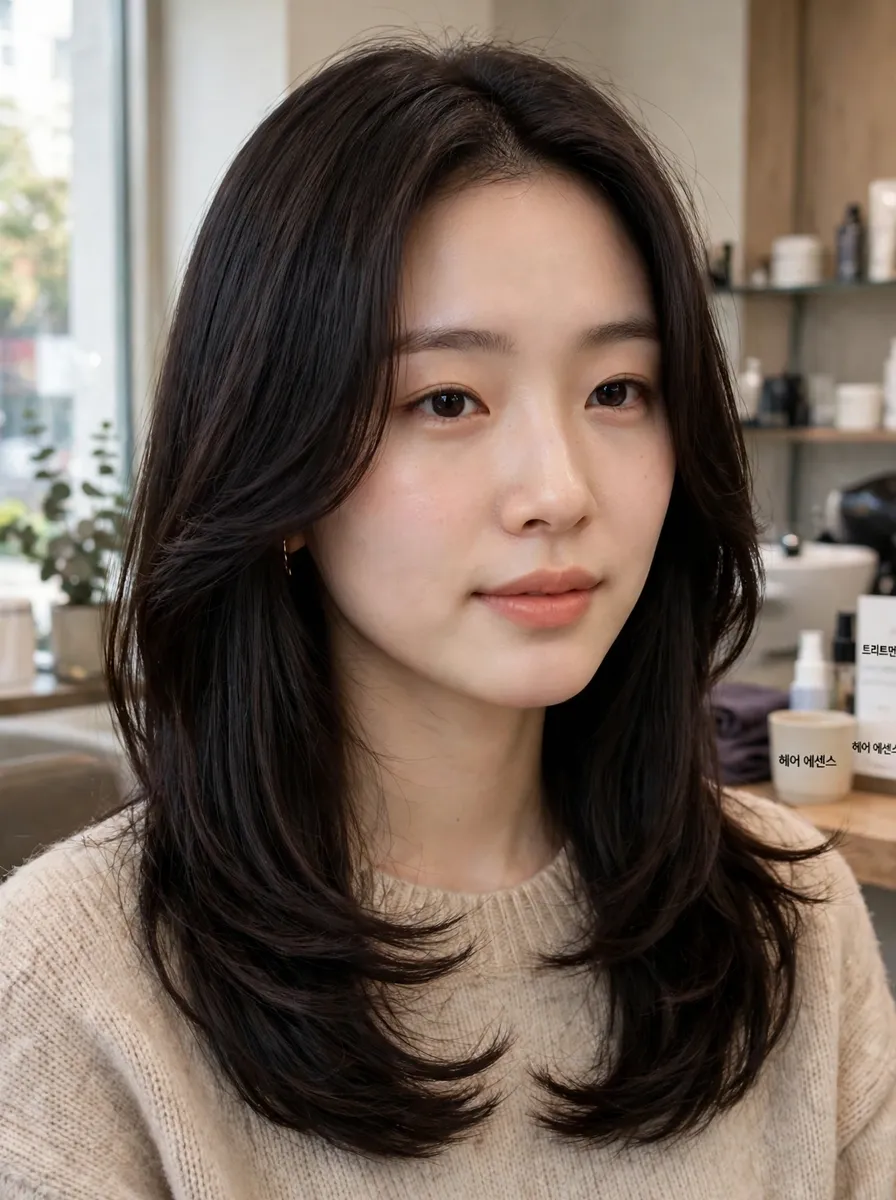
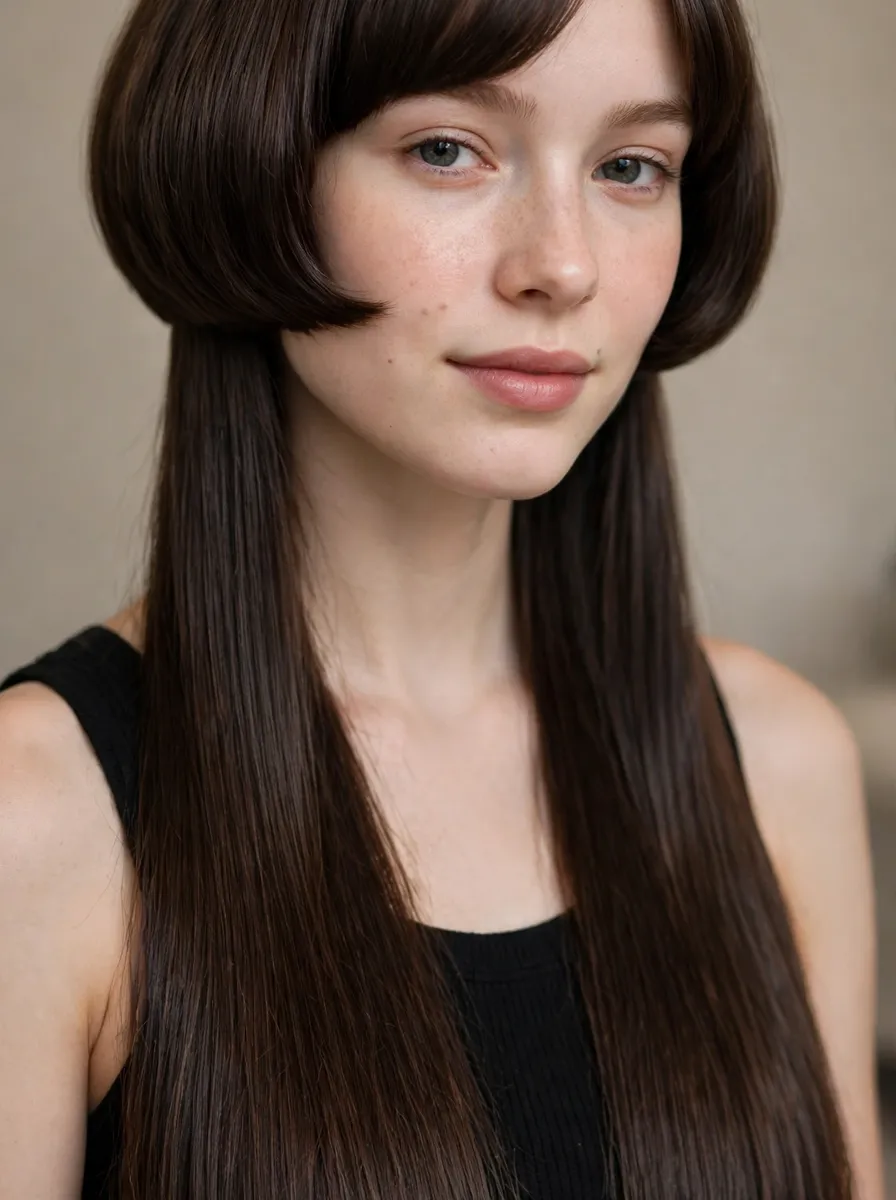
Long Layered Haircuts: 10 Ways to Add Movement
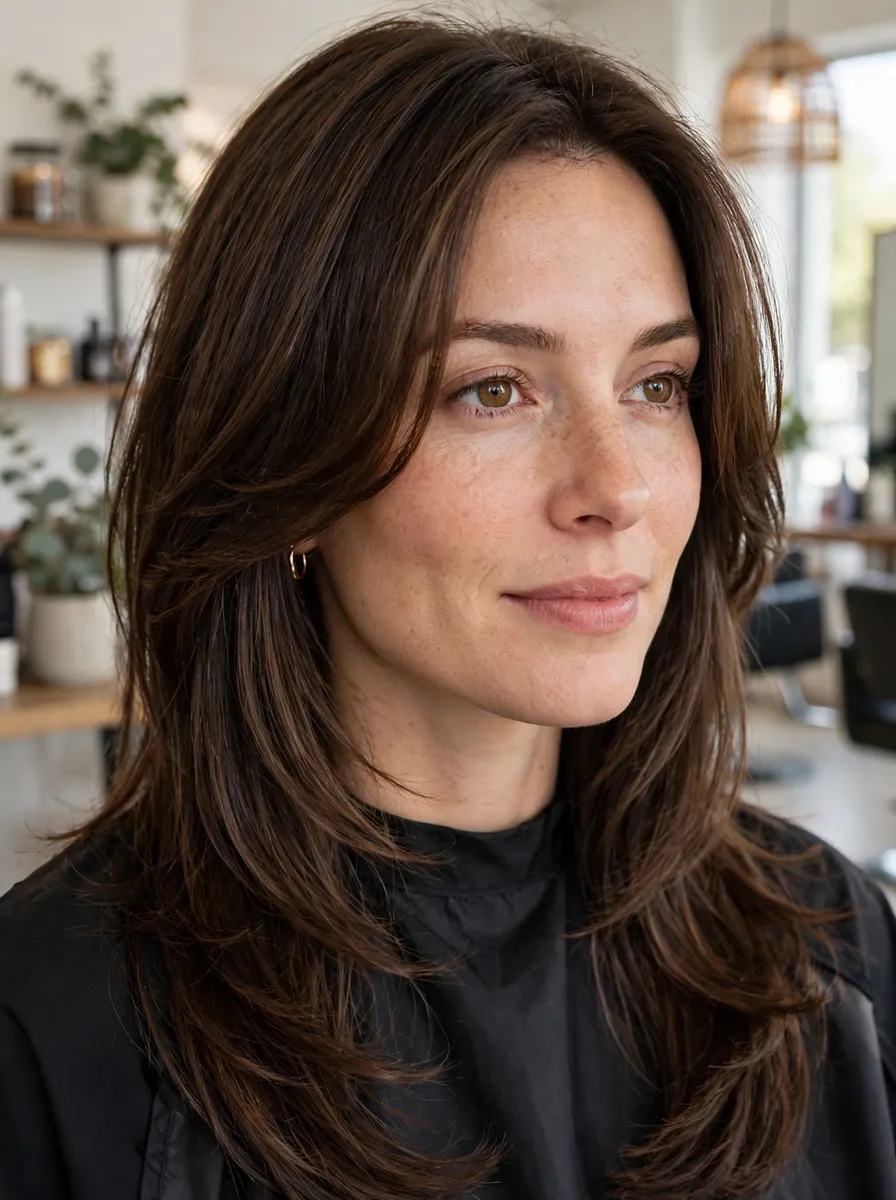
Long hair has one recurring problem: past a certain length it stops looking styled and starts looking like a curtain — heavy at the ends, flat at the roots, and triangular the moment it grows out. Layers are the fix that doesn’t cost you length. Done well, they remove the weight that drags long hair down, build movement through the mid-lengths, and frame the face, while the overall length stays exactly where you wanted it.
The ten cuts below are organised by what they do — face-framing, volume, bulk removal, texture — with the hair types each one suits. The medium-length version of this family lives in our medium-length layered haircuts guide; this page is for hair that falls below the shoulders. One warning that applies to every cut here: layers are not one-size-fits-all, and the difference between the versions below is mostly where the shortest layers start — that single decision is what you are really choosing.
1. Long Layers with Face Framing
The most requested long layered cut, and the safest first step into layers: long gradual layering through the back, with shorter pieces that start at the cheekbones or jaw and cascade around the face. The back keeps its weight and length; the front gets all the shape. It suits every face shape because the framing pieces can start higher (cheekbone, for round faces) or lower (jaw, for long faces). Our dedicated face-framing layers guide goes deeper on choosing that starting point.
2. Long Butterfly Layers
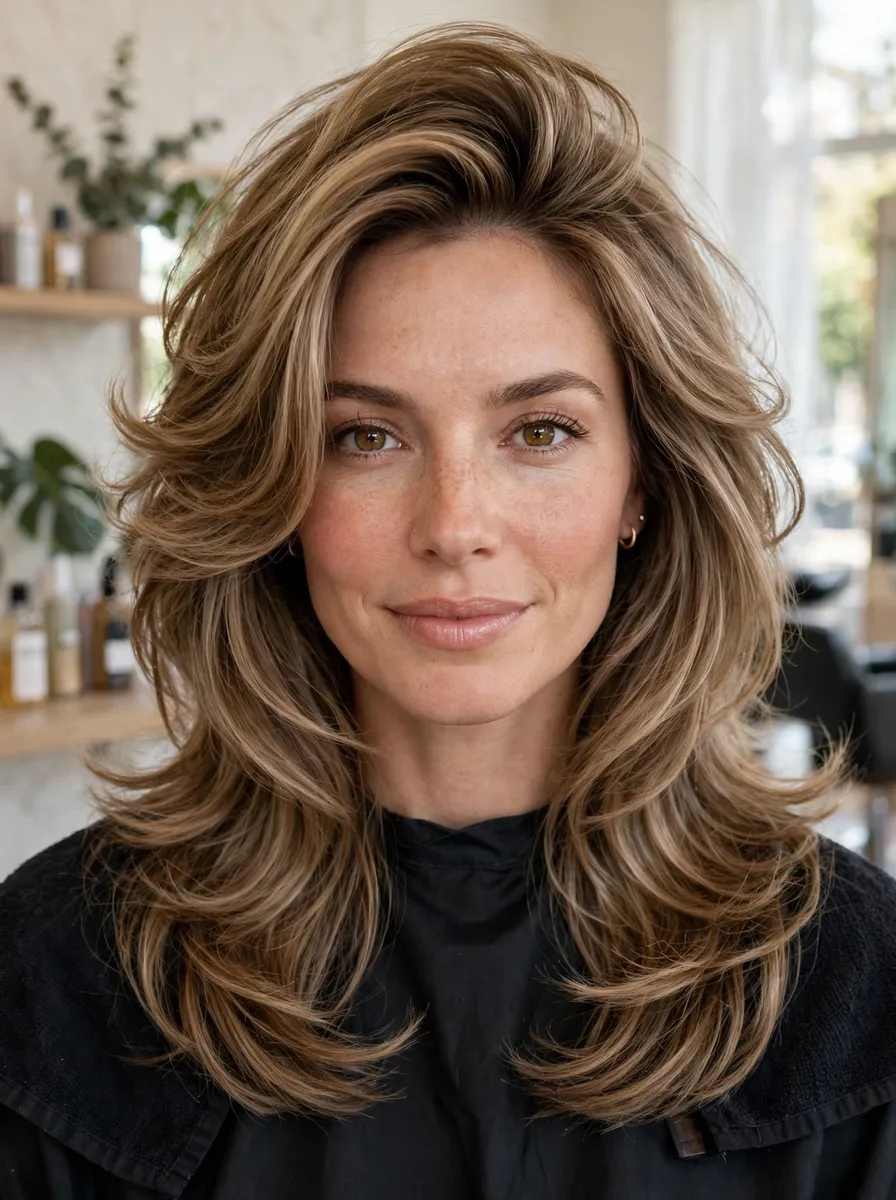
The butterfly cut at full length: short, feathery layers through the crown and around the face — short enough to pull into a high pony that mimics a bob — blended into long layers below. It delivers the most volume and bounce of any cut here, and it is the one to choose if you love a blowout. The full breakdown of the shape is in the butterfly haircut guide; at long length it reads softer and less “styled” than the medium version.
3. Long Layers with Curtain Bangs
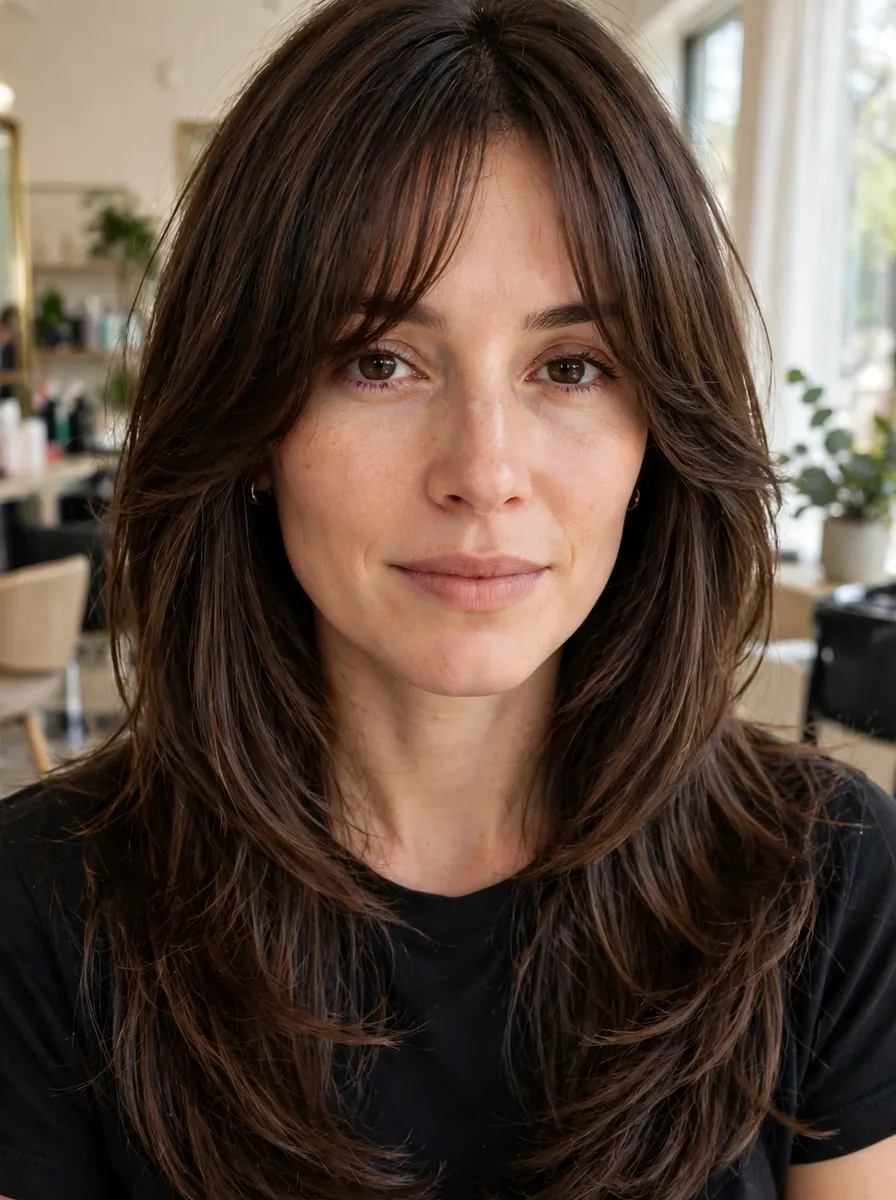
Curtain bangs flow directly into the first layer, so the whole front of the haircut becomes one continuous cascade. It is the most face-softening combination here and the easiest fringe to live with — centre-parted, low-maintenance, and it grows out into face-framing layers without an awkward stage. It suits oval, heart and long faces best; round faces should start the curtain pieces slightly lower. The curtain bangs guide covers styling the fringe itself.
4. Long Layered Waves
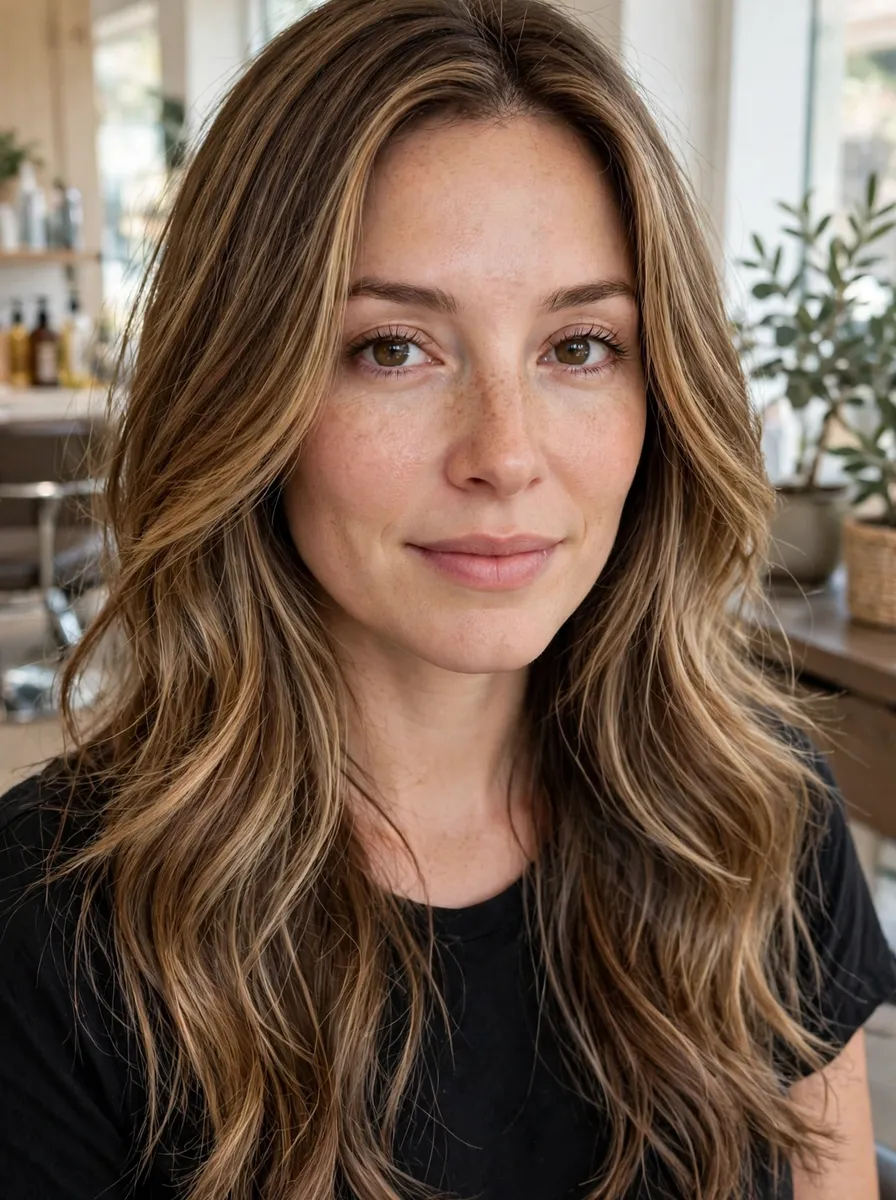
Layers cut for natural wave: longer, blended layers that let the wave pattern form in full S-shapes instead of being chopped mid-curve. The layers here start lower than most — mid-back rather than shoulders — which keeps the silhouette smooth while removing the triangular weight at the bottom. If your hair is wavy and you’ve ever had layers that exploded into frizz, they were probably cut too short and too dry; wave should be assessed (and usually cut) with its pattern visible.
5. Long Layers for Thick Hair
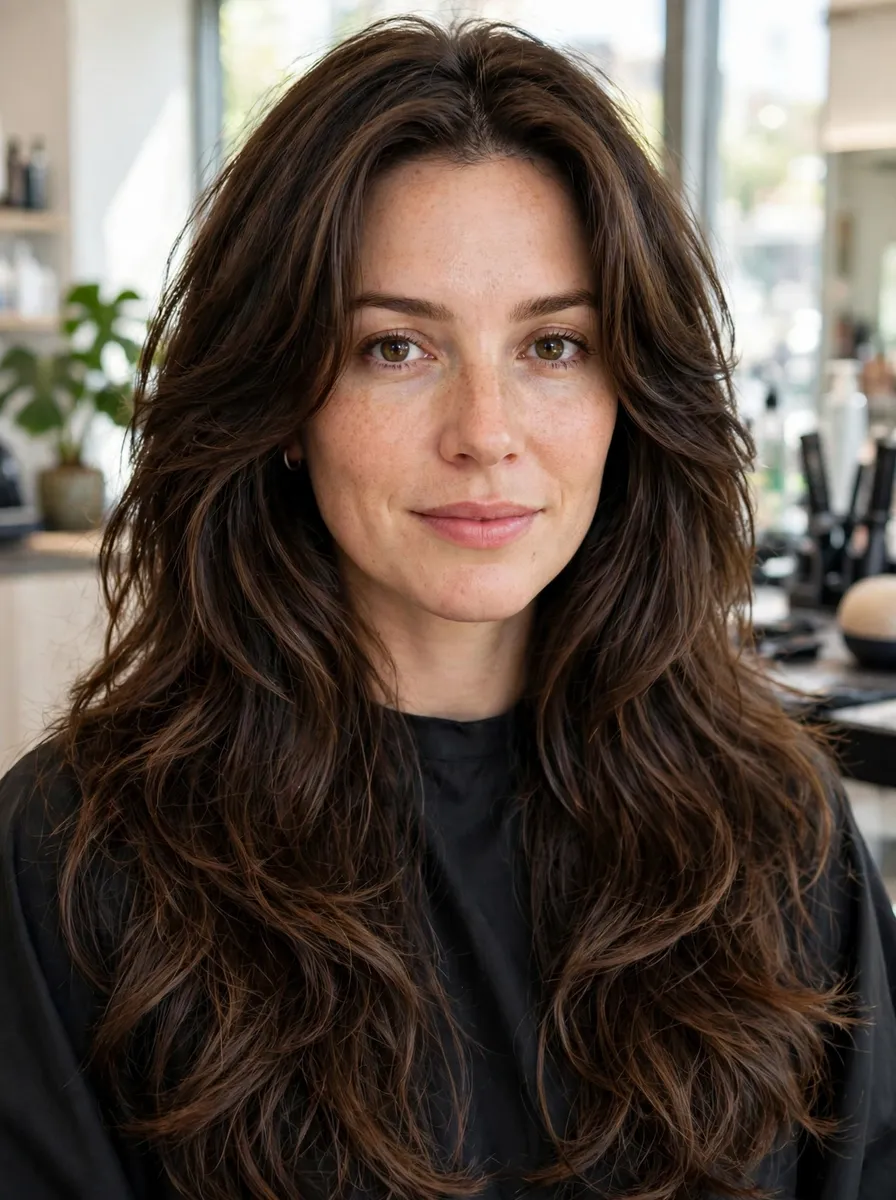
For thick hair, layers are less about decoration and more about load-bearing: internal layering removes the bulk that makes long thick hair heavy, hot and impossible to dry in reasonable time. Ask for layers that start deep — your stylist can also undercut or point-cut the interior — while keeping the surface smooth so the hair still looks sleek. Avoid very short top layers, which on thick hair create a shelf that sticks out.
6. Feathered Layers for Fine Long Hair
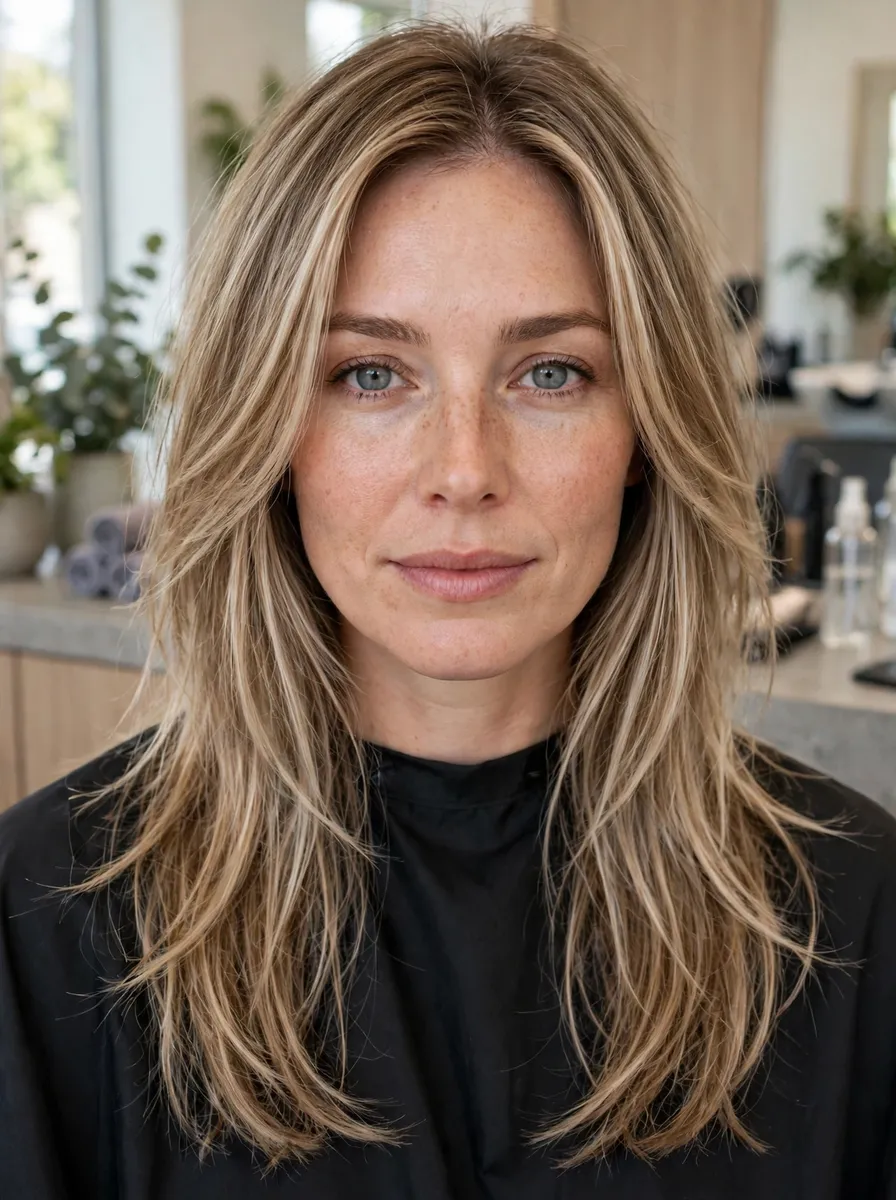
Fine long hair needs the opposite prescription: few, long, feathered layers, concentrated around the face and through the last few centimetres. Heavy layering is the fastest way to make fine long hair look stringy and thin at the ends — the perimeter must stay as full as possible. Done this lightly, layers give fine hair movement and a styled edge without sacrificing the density that makes long fine hair look healthy.
7. Sleek Straight Long Layers
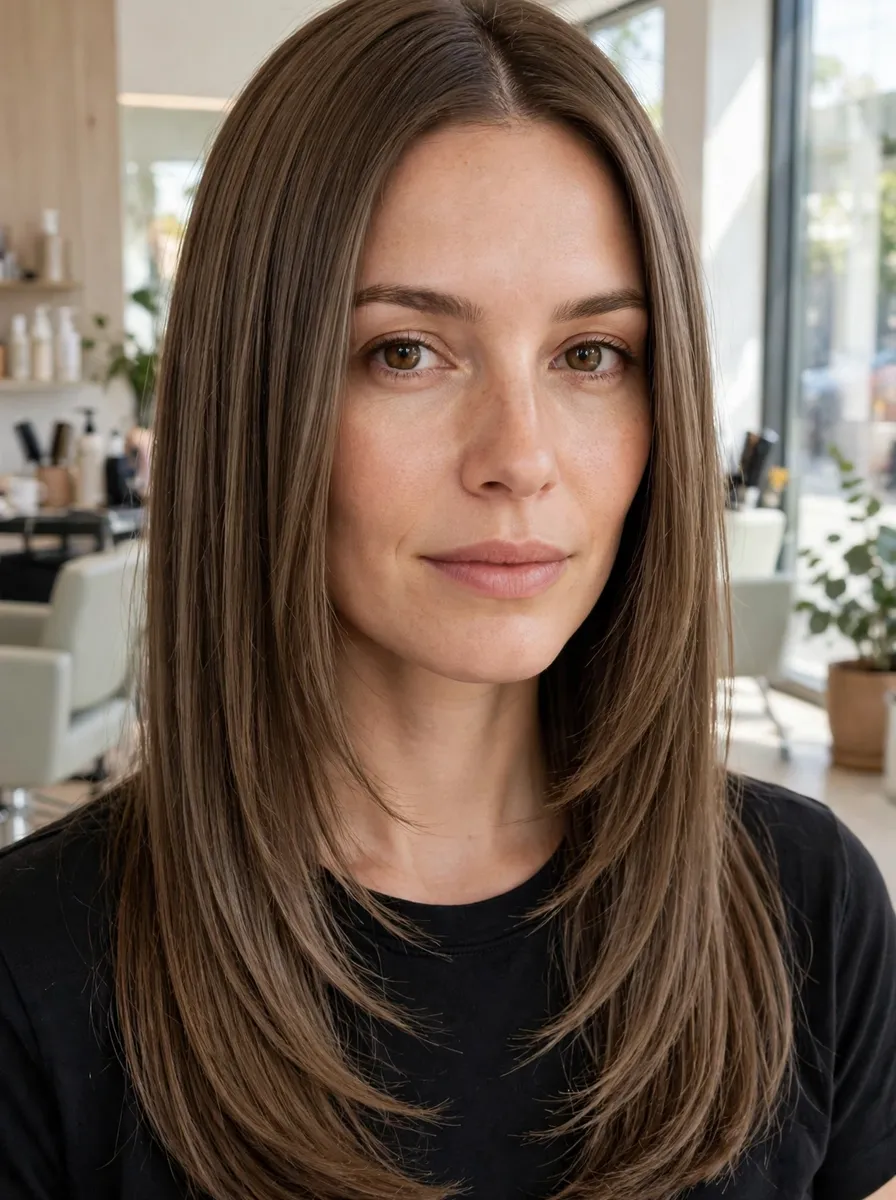
Worn poker-straight, layers show their geometry: clean diagonal lines stepping down through the lengths. This version needs the most precise cutting and the most honest ends — splits and wispy tips are fully visible on straight hair — but it is also the most polished-looking long cut here. It suits straight and straightened hair, oval and long faces, and anyone whose style is more tailored than tousled.
8. Long Layers on Curly Hair
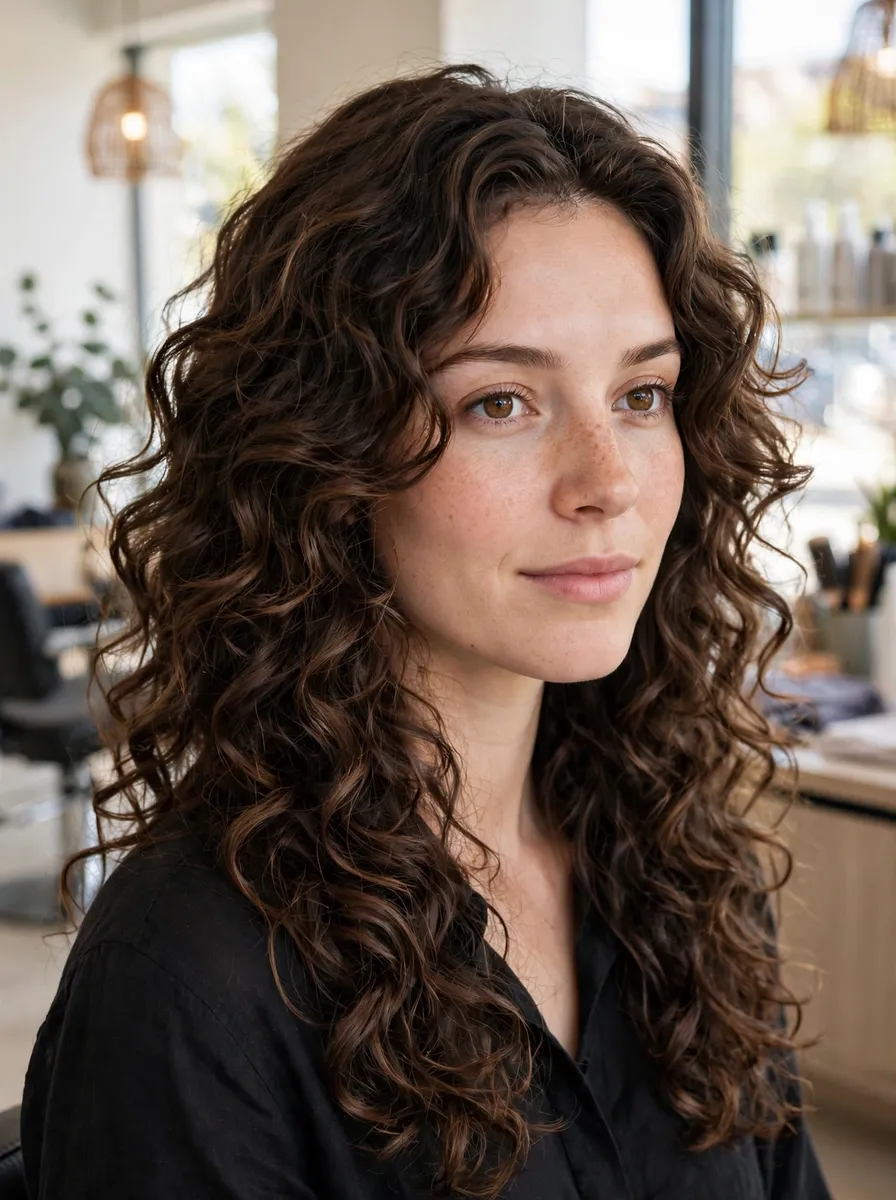
Curly hair at long length without layers forms a triangle: flat at the roots, wide at the bottom. Layers redistribute that volume upward, letting curls stack through the lengths instead of all landing at the hemline. They should be cut curl by curl, dry, by someone who works with curls regularly — wet cutting stretches the curl and the layers spring up unevenly. The result keeps every centimetre of length but changes the entire silhouette.
9. Long Layers with Balayage
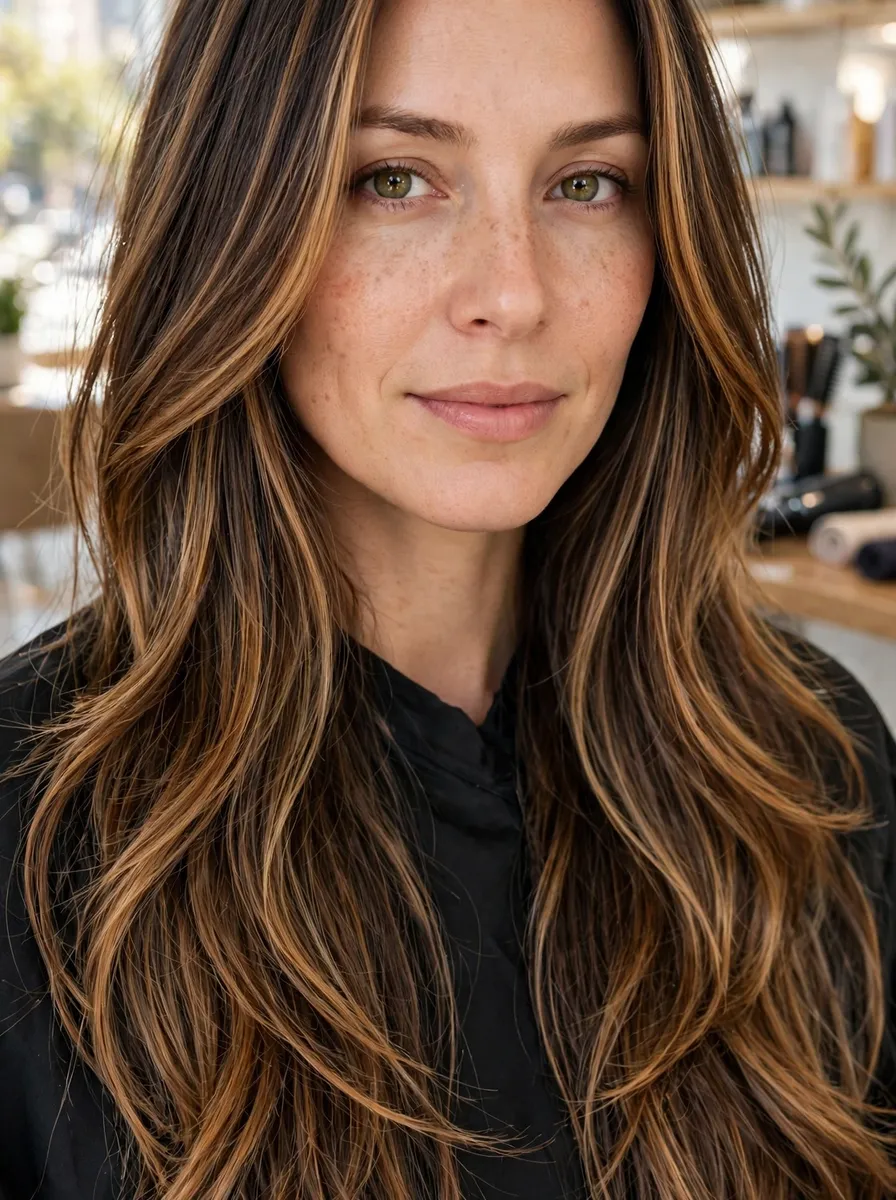
Colour and cut working together: balayage painted onto the layered sections makes each layer visible, so the movement the cut creates shows up as light and shadow. If your layers ever felt invisible — especially on dark, one-tone hair — dimension is usually what was missing, not more cutting. Keep the lightest pieces on the face frame and the ends of the layers, where hair naturally catches light.
10. Long U-Cut with Layers
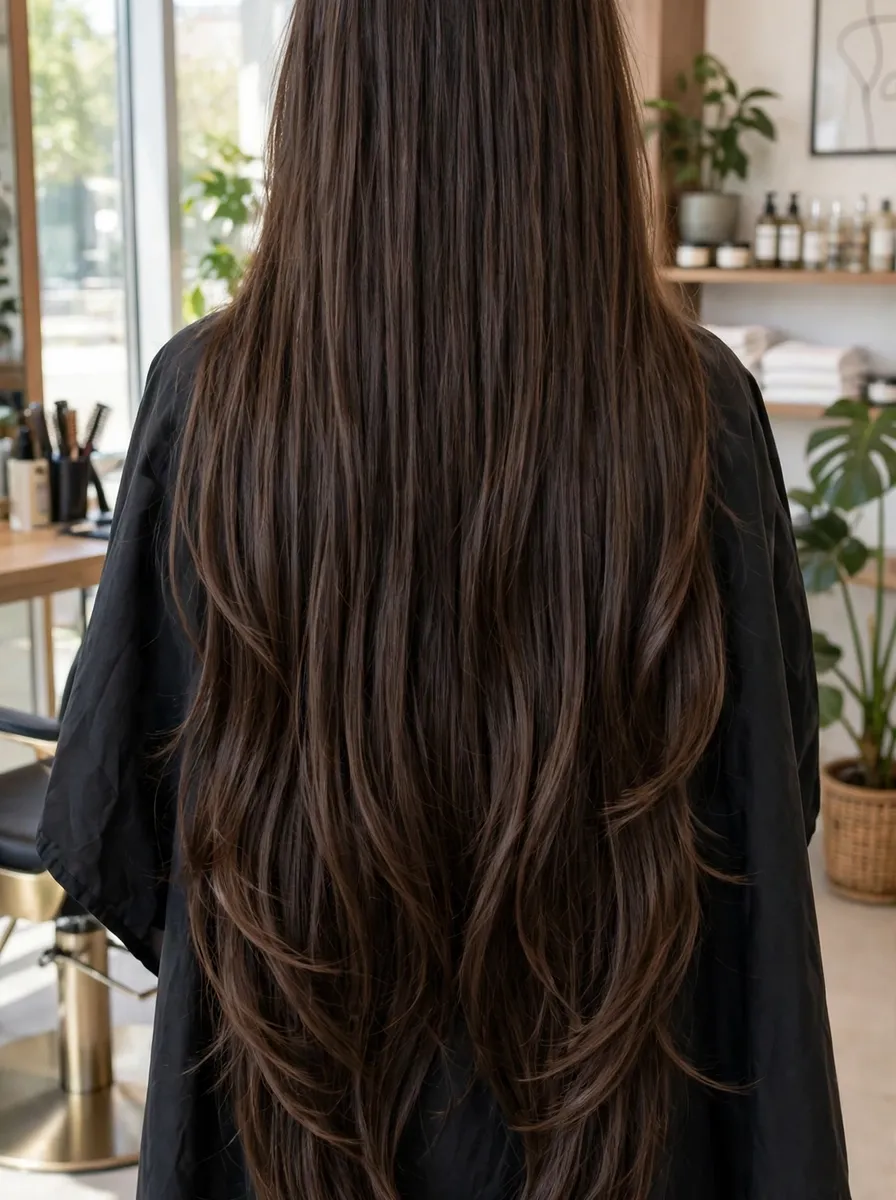
The hemline decision: a U-cut curves the back length into a soft arc — longer in the middle, shorter at the sides — which pairs naturally with layers because the sides blend into the face frame without a hard step. It is the best choice if you wear your hair up often (the arc prevents the thin-looking sides a straight cut can leave in a ponytail) and the most forgiving shape as it grows out.
How to Ask for Layers Without Losing Your Ends
The classic disappointment — asking for layers and leaving with thin, see-through ends — comes from layers cut too high and too aggressively through the back. Protect yourself with specifics: say you want to keep the perimeter full, name where the shortest layer should start (jaw, shoulders, or mid-back), and ask for long, blended layers rather than short choppy ones unless that is genuinely the look. If your hair is fine, say the ends matter more to you than volume. A good stylist will translate all of that; a vague “just add some layers” is where the trouble starts.
Frequently Asked Questions
Do layers make long hair look thinner?
They can, if cut too short or too heavily through the back — that removes density from the ends. Long, blended layers that start low and keep the perimeter full add movement without thinning. Fine hair should ask for light, face-focused layering only.
How often do long layers need trimming?
Every 8–12 weeks keeps the shape; the face-framing pieces lose their placement first. Long layered cuts are more forgiving than most as they grow out, because the blending hides uneven growth — which is one reason they’re popular with low-maintenance wearers.
What is the difference between layers and face-framing layers?
Layers run through the whole haircut and control weight and movement everywhere. Face-framing layers are only the graduated pieces around the front. Most long layered cuts in this guide combine both; you can also have face framing alone on otherwise one-length hair.
Do layers help thick long hair feel lighter?
Yes — this is one of their main jobs. Internal and long layers remove bulk from the mid-lengths where thick hair carries its weight, which also cuts drying time noticeably. Ask your stylist to keep the surface smooth so it still looks sleek.
Can I get layers if I wear my hair up a lot?
Yes, but mention it: very short face-framing pieces will fall out of ponytails and buns. A U-cut hemline and framing that starts at the jaw or lower keep updos neater, with just a few intentional tendrils rather than constant escapees.
Are layers a good idea before growing hair even longer?
Generally yes. Layers remove damaged, tapered ends through the mid-lengths while you grow, and they stop the heavy triangular shape that makes people cut length off in frustration. Just keep the perimeter trims regular so the ends stay strong.
Final Thoughts
Long layers are the highest-reward, lowest-regret change available to long hair: the length stays, the weight and flatness go. Choose by your hair type first — bulk removal for thick hair, a light touch for fine hair, dry curl-by-curl cutting for curls — and by where you want the shortest layer to start. If you are also weighing up shorter options, the layered haircuts with bangs guide covers the medium-length, fringe-forward branch of the same family.