Sock Curls: How to Get Heatless Curls with a Pair of Socks

Sock curls are the most low-tech heatless method there is: two ordinary socks, damp hair, and a night’s sleep produce soft, bouncy curls by morning — no heat, no damage, no equipment to buy. The technique works because hair is set in its wrapped shape as it dries, and a sock is thick and soft enough to form a large, smooth curl rather than a tight ringlet.
This guide covers the two-sock wrap-and-weave method in full. If you want to compare it with the other overnight options first — the ribbon curler and the topknot — our heatless overnight curls guide puts all three side by side, and the heatless curls for short hair guide adapts the whole idea to shorter lengths.
What You’ll Need
- Two long socks — tube or knee socks are ideal; ankle socks are too short to work with. Clean, soft cotton, no thick seams at the toe.
- A spray bottle with water, or just freshly washed hair towel-dried to damp
- A brush and a wide-tooth comb
- Two small elastics or claw clips
- Optional: a pea-sized amount of mousse or leave-in cream for hold, and a silk scarf or bonnet to protect the wraps overnight
Step-by-Step: The Two-Sock Method
Step 1: Start with Damp, Detangled Hair
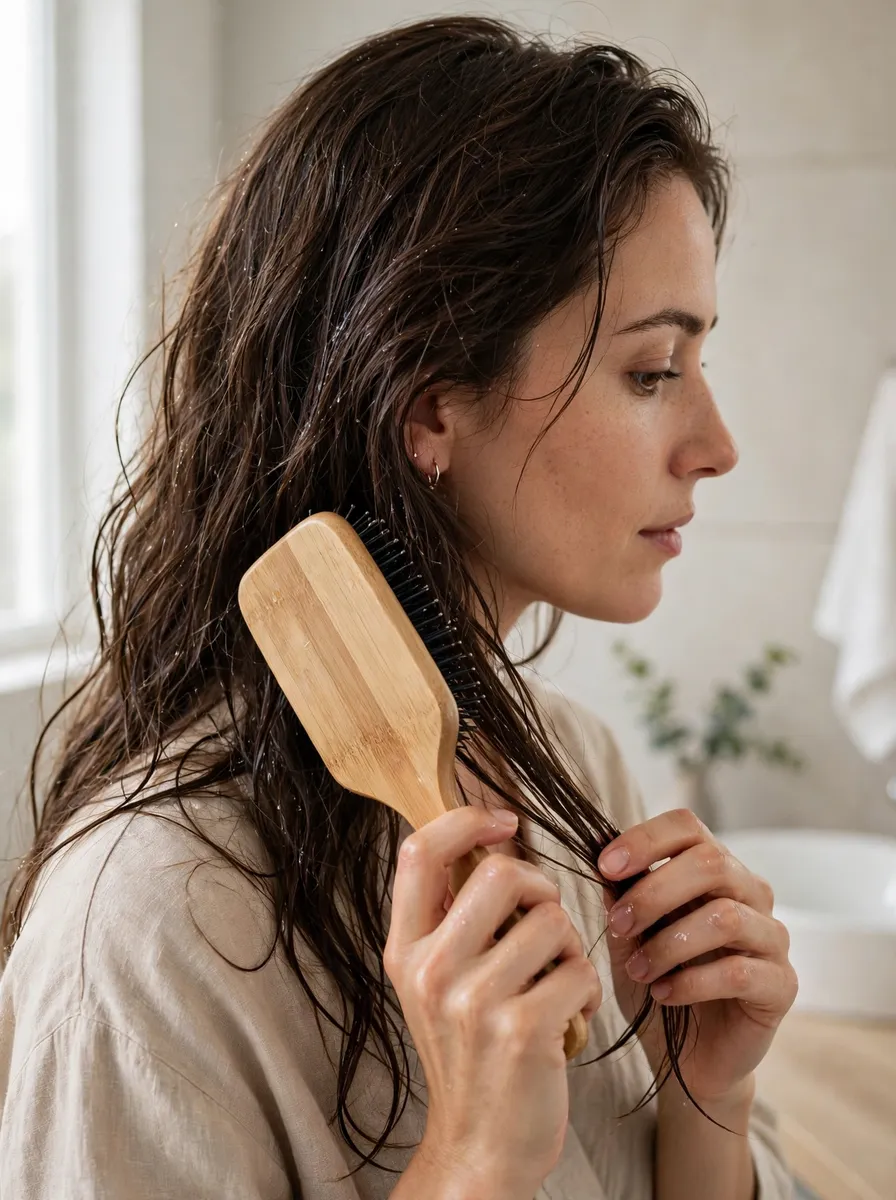
Hair should be about 80% dry — damp to the touch, never dripping. Fully wet hair will still be wet in the morning inside the wraps; fully dry hair will not set. Brush everything smooth and part it where you normally wear it. If your hair is freshly washed, a little mousse through the lengths helps the curls hold; on second-day hair, just mist with water.
Step 2: Section the Hair and Place the First Sock
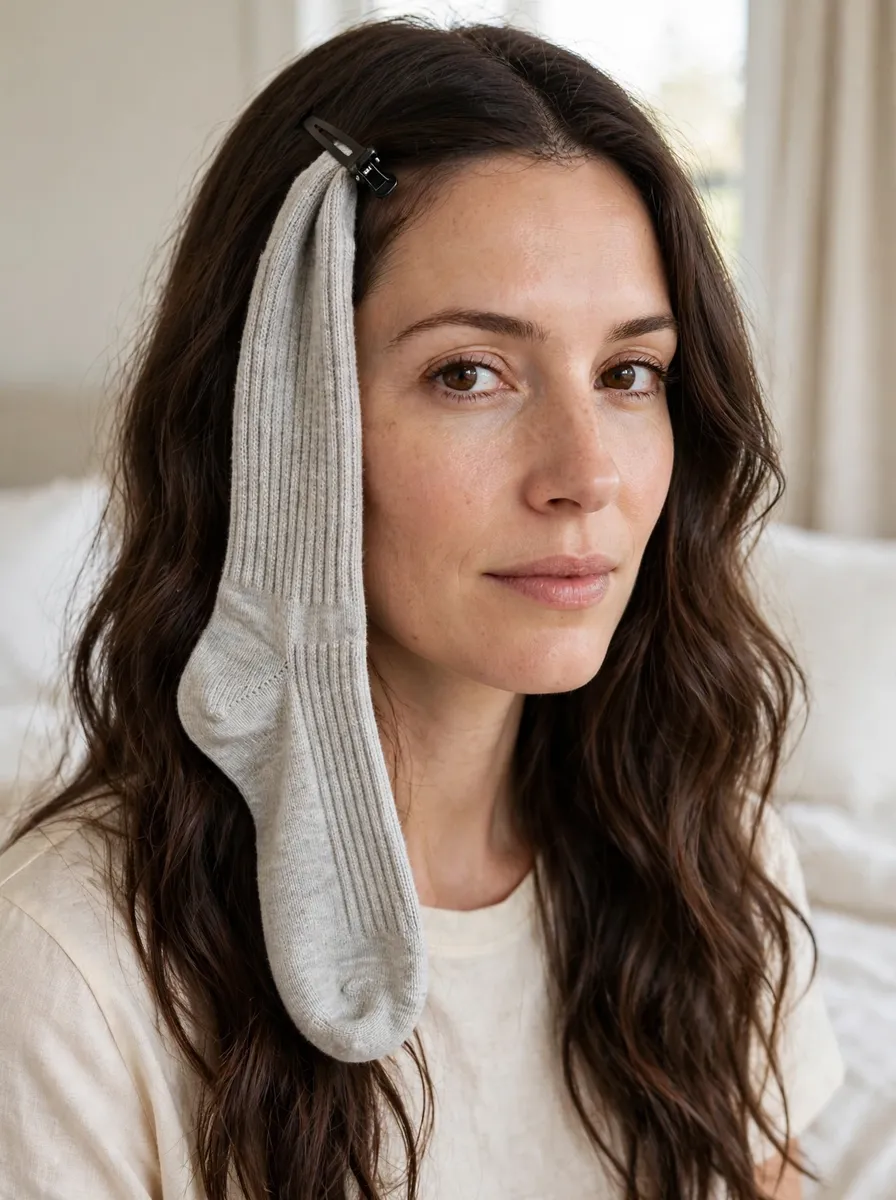
Split your hair into two halves, left and right. Take the first sock and clip or hold it at the top side of your head, near the front hairline, with the sock hanging down alongside your face like a long tail. The toe of the sock points down. You will wrap this half of your hair around it in the next step, working from top to bottom.
Step 3: Weave the Hair Around the Sock
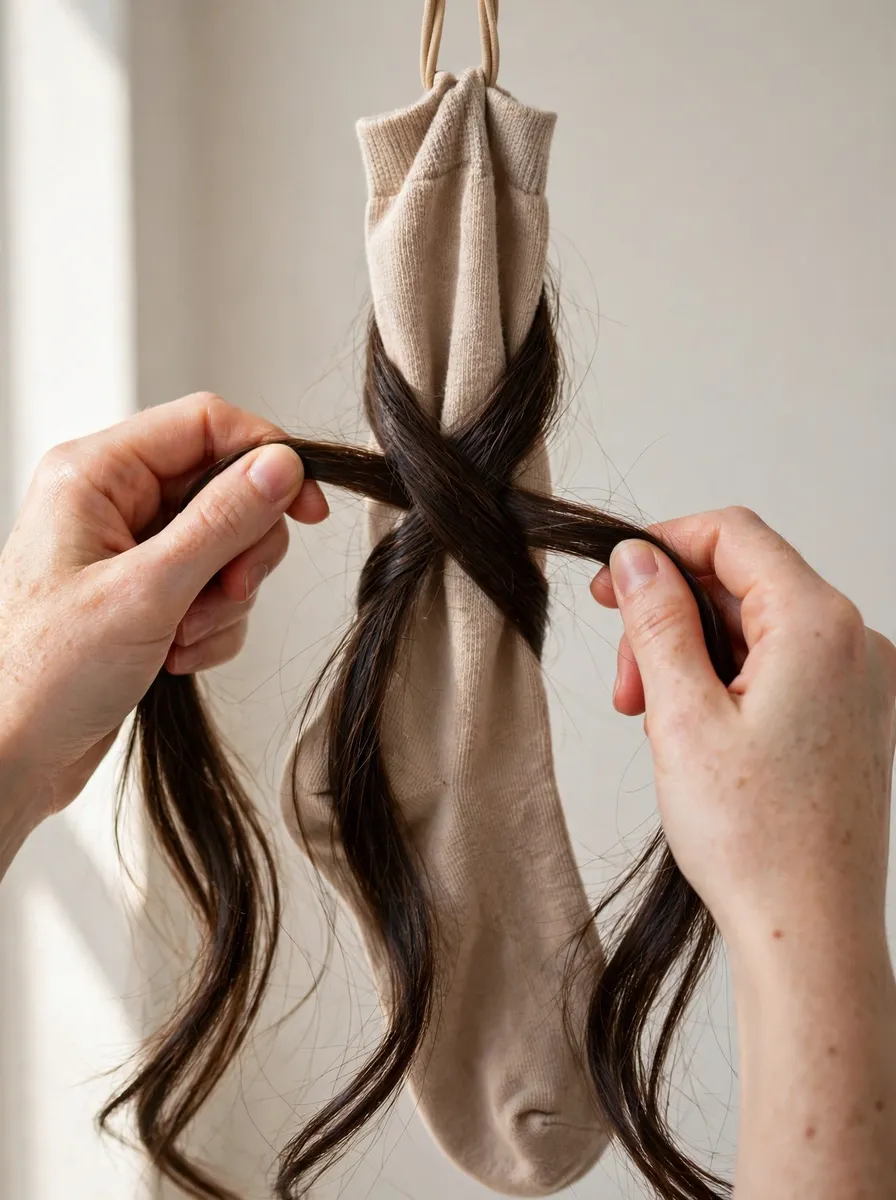
Take a section of hair from the front and wrap it over the sock, then take a section from the back and wrap it over from the other side, crossing the two sections over the sock in an X. Keep adding hair as you work down — front section over, back section over — exactly like the rhythm of a French braid, but around the sock instead of into a plait. Keep the wraps snug and smooth, not tight enough to pull.
Step 4: Secure the Ends
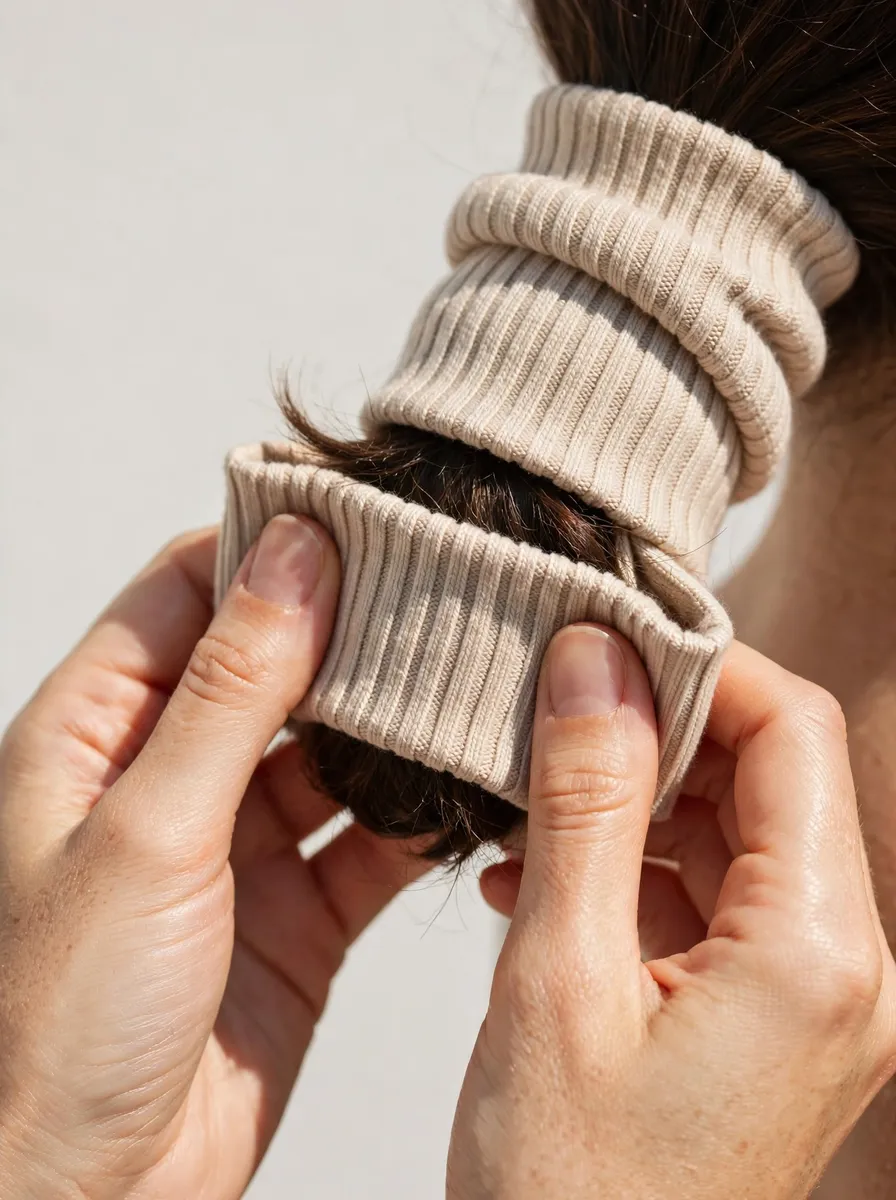
When you reach the ends of the hair, keep wrapping the remaining length around the sock until it runs out. Then fold the open cuff of the sock back over the wrapped end — the sock holds its own tail — or secure it with a small elastic. The whole wrap should feel firm but comfortable; you will be sleeping on it.
Step 5: Repeat and Protect Overnight
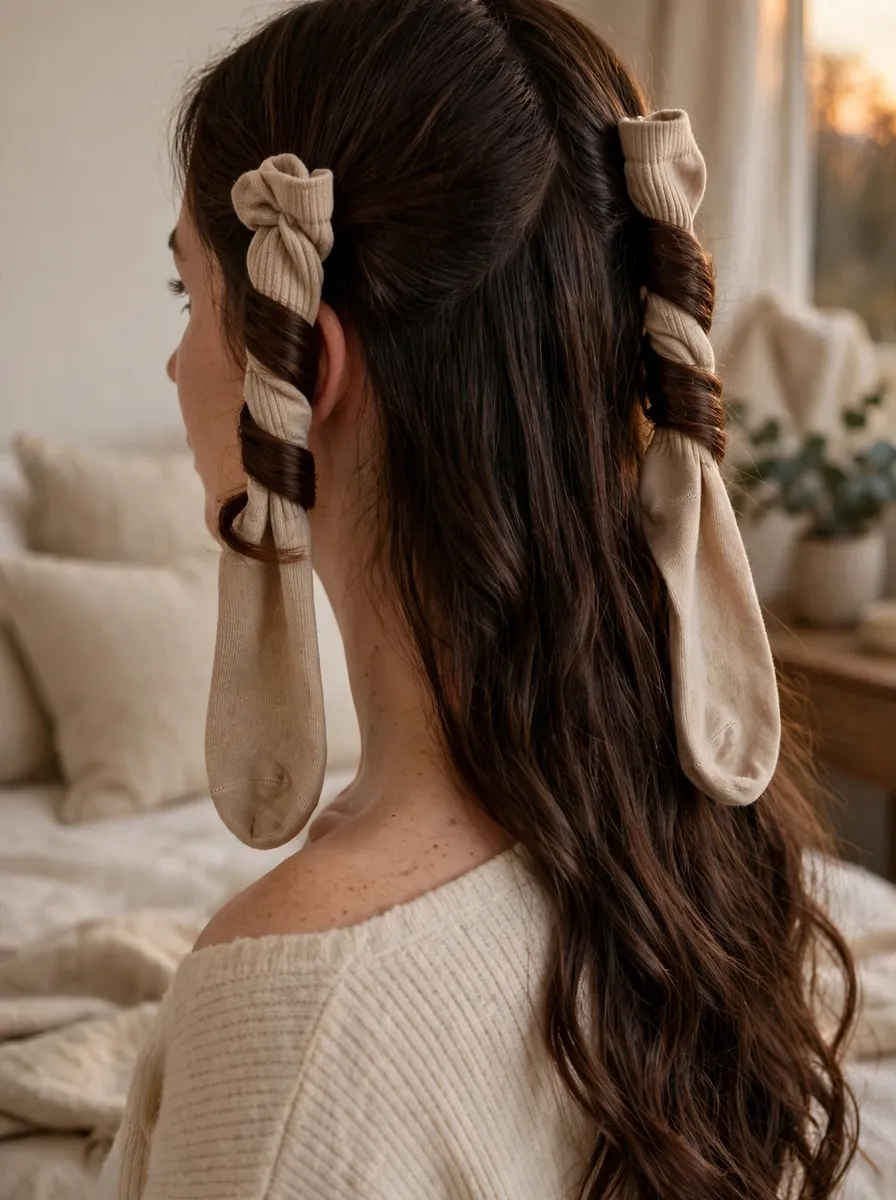
Repeat the same wrap on the other side. Two wraps, one on each side, are much more comfortable to sleep in than a single wrap at the back — you can rest your head between them. If you toss and turn, cover everything with a silk scarf or bonnet to stop the wraps rubbing against the pillow and frizzing. Leave them in for at least 6–8 hours, ideally the full night.
Step 6: Unwrap Carefully
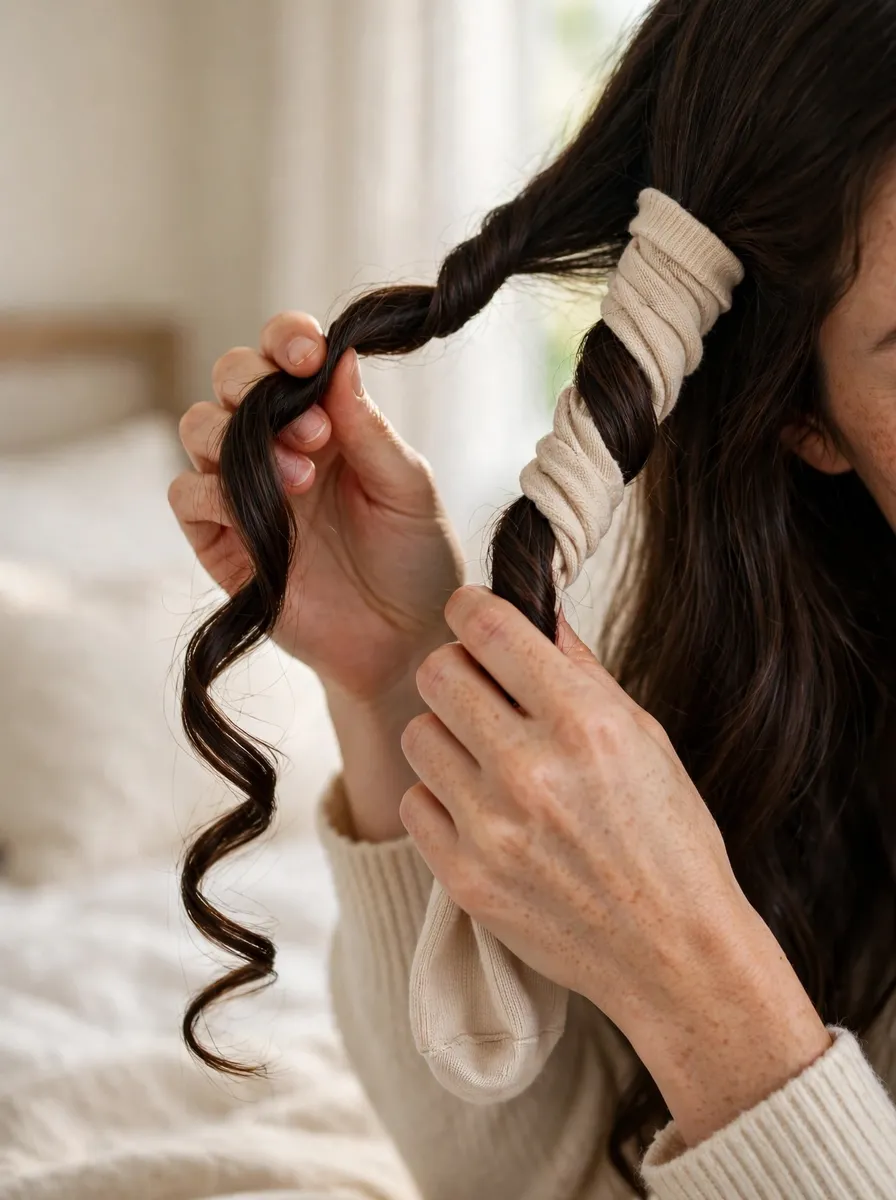
In the morning, make sure the hair feels completely dry before touching the wraps — this is the step that decides whether the curls last. Undo the cuff, then unwind each sock slowly, or slide it out while gently untwisting. Do not pull the curls apart yet, and do not brush. You will look like you have four stiff ropes; that is correct and temporary.
Step 7: Shake Out and Separate

Flip your head upside down and shake the roots with your fingertips. Then, with fingers only, gently separate each rope into two or three curls and twist any piece that looks frizzy back into shape. The curls will relax over the first hour into soft, natural waves. A drop of light oil on the ends is fine; a brush is not — it will turn the set into frizz.
Sock Curls for Short Hair and Long Hair
Short hair (chin to shoulder): use thinner socks or even rolled washcloths, and wrap smaller sections — short layers escape from thick wraps. Expect loose waves rather than full curls, and leave the wraps in the full night, because short hair springs back faster. The methods in our heatless curls for short hair guide are designed around the same problem.
Long or thick hair: use the longest socks you have, or move to four socks (two per side) so no wrap gets overloaded. Overloaded wraps dry unevenly — set on the outside, damp and straight in the middle. Make sure the hair is closer to 70% dry before wrapping; long hair holds water.
Troubleshooting
My curls fell out within an hour. The hair was too wet when wrapped, not fully dry at take-down, or your hair needs hold help: add mousse before wrapping and give the finished curls a light mist of hairspray after separating.
Frizz on the surface. The wraps rubbed in the night. Use smoother socks, wrap more snugly, and sleep in a scarf or bonnet. A tiny amount of leave-in cream on the lengths before wrapping helps too.
Dents or a strange kink at the ends. The last centimetres were folded rather than wrapped. In step 4, make sure the ends lie flat along the sock before you fold the cuff back.
One side curlier than the other. Almost always a wrapping difference — one sock wrapped tighter or with smaller sections. It evens out as the curls relax; next time, mirror your section sizes deliberately.
Frequently Asked Questions
How long do sock curls need to stay in?
Six to eight hours is the working minimum — long enough for the hair to dry completely in its wrapped shape. Overnight is the practical answer for most people. If you are doing them during the day, you can speed the drying with a cool-to-warm hairdryer blast over the wraps before taking them down, but the hair must be fully dry either way or the curls will drop.
Should hair be wet or damp for sock curls?
Damp — roughly 80% dry. Hair wrapped soaking wet often stays damp inside the sock all night and comes out lank and barely waved; hair wrapped bone dry has no way to reset its shape. If you are starting from dry hair, mist each section lightly with water (plus a little mousse for hold) as you wrap, rather than wetting the whole head.
What kind of socks work best for sock curls?
Long, soft, clean ones — tube socks or knee socks in smooth cotton. Length matters because you need enough sock to wrap a full side of hair plus a cuff to fold back. Avoid thick terry sports socks (they grip and frizz the hair) and anything with a heavy heel seam sitting mid-wrap. Two socks for the standard method; four if your hair is very long or thick.
Do sock curls work on short hair?
Yes, as waves more than curls. On chin-to-shoulder hair, use thinner socks, smaller sections and the full overnight set, and expect a soft, bent, beachy result rather than defined spirals. Very short hair (above the chin) usually cannot complete a wrap — for that length, finger-coiling or the ribbon method in our overnight guide tends to work better.
How long do sock curls last?
On most hair types, the defined curl lasts the first day and relaxes into loose waves for day two — many people prefer the day-two result. Fine, straight hair sits at the shorter end (use mousse and resist touching the curls) and naturally wavy or coarse hair holds longer. Sleeping with the hair in a loose high ponytail or a bonnet preserves the shape overnight.
Are sock curls damaging?
No — that is their main appeal. There is no heat and no chemical processing, and the sock is soft, so there is no hard edge to kink or stress the hair. The only cautions are comfort ones: do not wrap so tightly that it pulls at the scalp, and do not sleep in wraps that are still soaking wet night after night, since hair is more fragile while wet.