Velcro Rollers: How to Use Them for Volume and a Bouncy Blowout
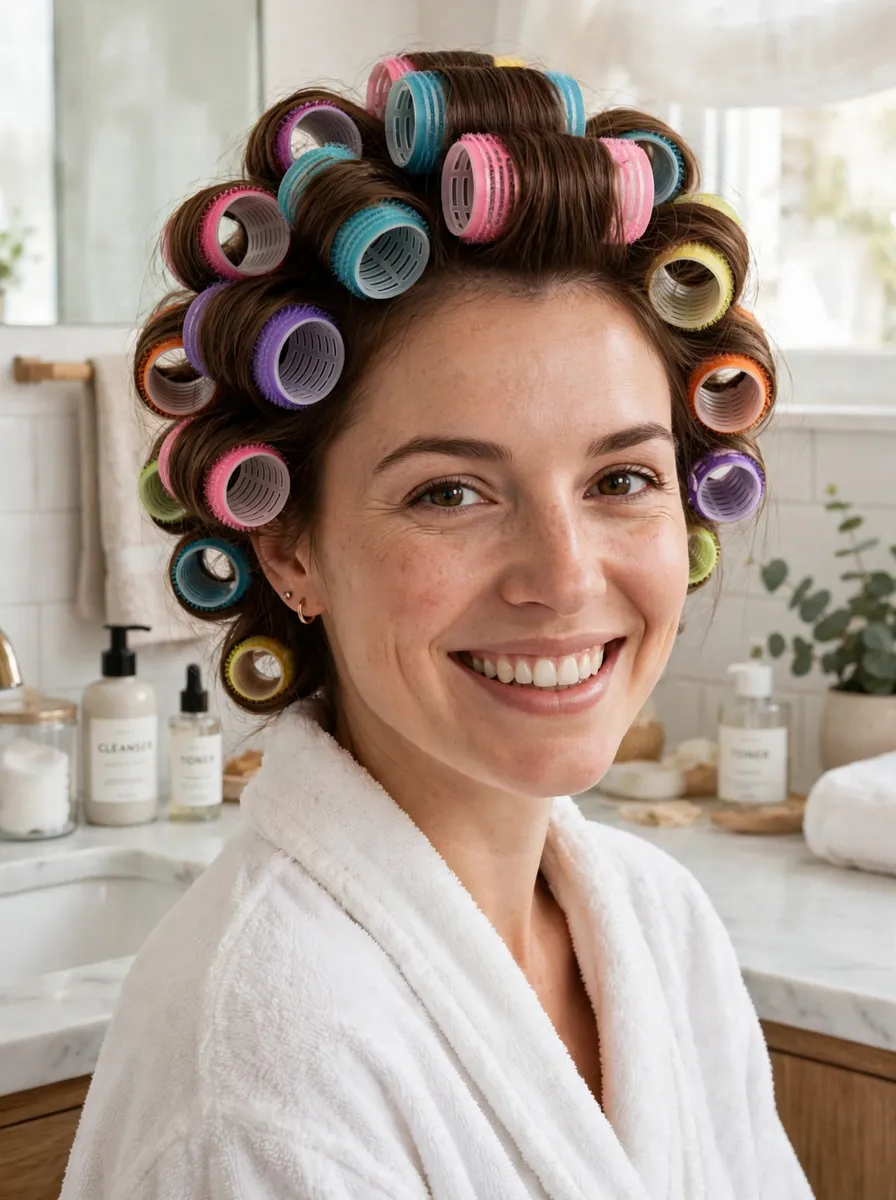
Velcro rollers are the oldest trick behind the bouncy salon blowout: sections of hair are wound onto grippy cylinders, left to cool and set, then released into smooth waves with lifted roots. The roller does the shaping while you get on with your morning.
One honest note before we start. Velcro rollers are not a fully heatless method in the way our sock curls or robe belt curls are. They work best on freshly blow-dried hair, or on damp hair finished with a hairdryer — a little heat, followed by complete cooling in the roller, is what locks in the lift. For a genuinely no-heat overnight set, socks or the robe belt are the better tools; for volume and bounce in under an hour, rollers win every time.
1. What Velcro Rollers Do (and What They Don’t)
A velcro roller’s surface is covered in tiny hooks that grip the hair, so it stays put without pins or clips on most hair types. Hair wound on and allowed to cool in that shape keeps a smooth curve — the bigger the roller, the softer the curve. Rollers are a volume and smoothing tool first: expect root lift, a polished bend through the lengths and a fringe that swoops. Do not expect tight curls; for defined, lasting curl, the overnight heatless methods hold far better.
2. Choose the Right Roller Sizes
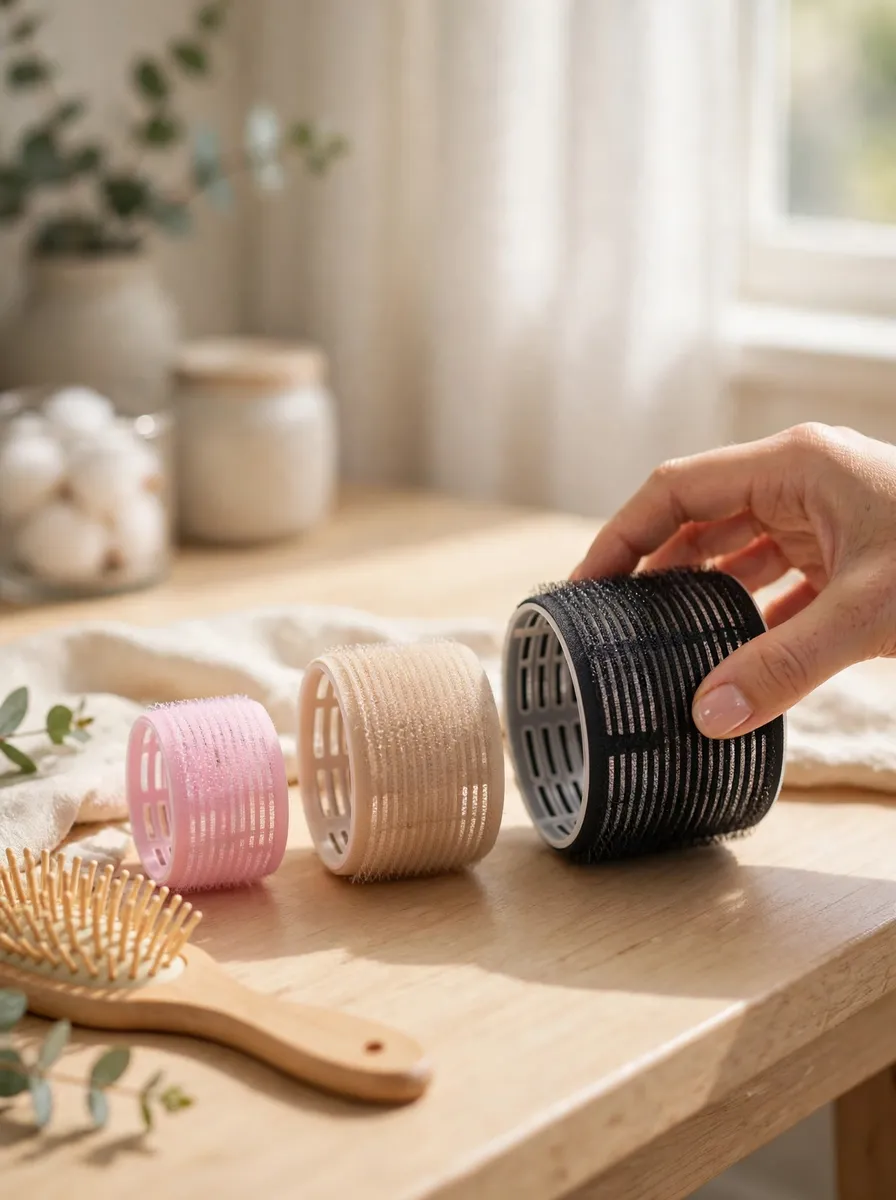
Most sets come in three sizes, and where each size goes matters more than how many you own:
- Small rollers (around 20–30 mm) grip short hair and create the strongest bend. Use them on short lengths, a short fringe, or anywhere you want a real curl rather than a wave.
- Medium rollers (around 32–44 mm) are the all-rounders: the sides and back on most lengths, and the whole head on shoulder-length hair.
- Jumbo rollers (around 48–66 mm) barely curl at all — they lift. Use them on the crown and top layer, where root volume and a smooth, sweeping curve are the goal, and on long hair that would swallow a smaller roller.
A working rule: a section should wrap around its roller at least one and a half times. If it cannot, the roller is too big; if it wraps four or five times, go up a size for a softer result. Six jumbo and six medium rollers cover most heads as a starting kit.
3. Prep: Hair, Products and a Little Heat

Rollers can go into hair two ways. On freshly blow-dried hair — the classic method — dry the hair completely with a brush, then roll each section while it is still warm; the cooling happens in the roller and sets the shape. On damp hair, start from hair about 80% dry, roll, then finish with the hairdryer and let everything cool fully before removal. Bone-dry, cold hair with no heat at all gives the weakest set.
Whatever the route, apply heat protectant before blow-drying, and work a golf-ball-sized amount of mousse (half that for fine hair) through the lengths before rolling — mousse gives the set its memory, and without it fine, silky hair can drop within the hour. Brush each section smooth just before rolling it: any kink present at rolling is still there at removal.
4. Section the Hair Before You Roll
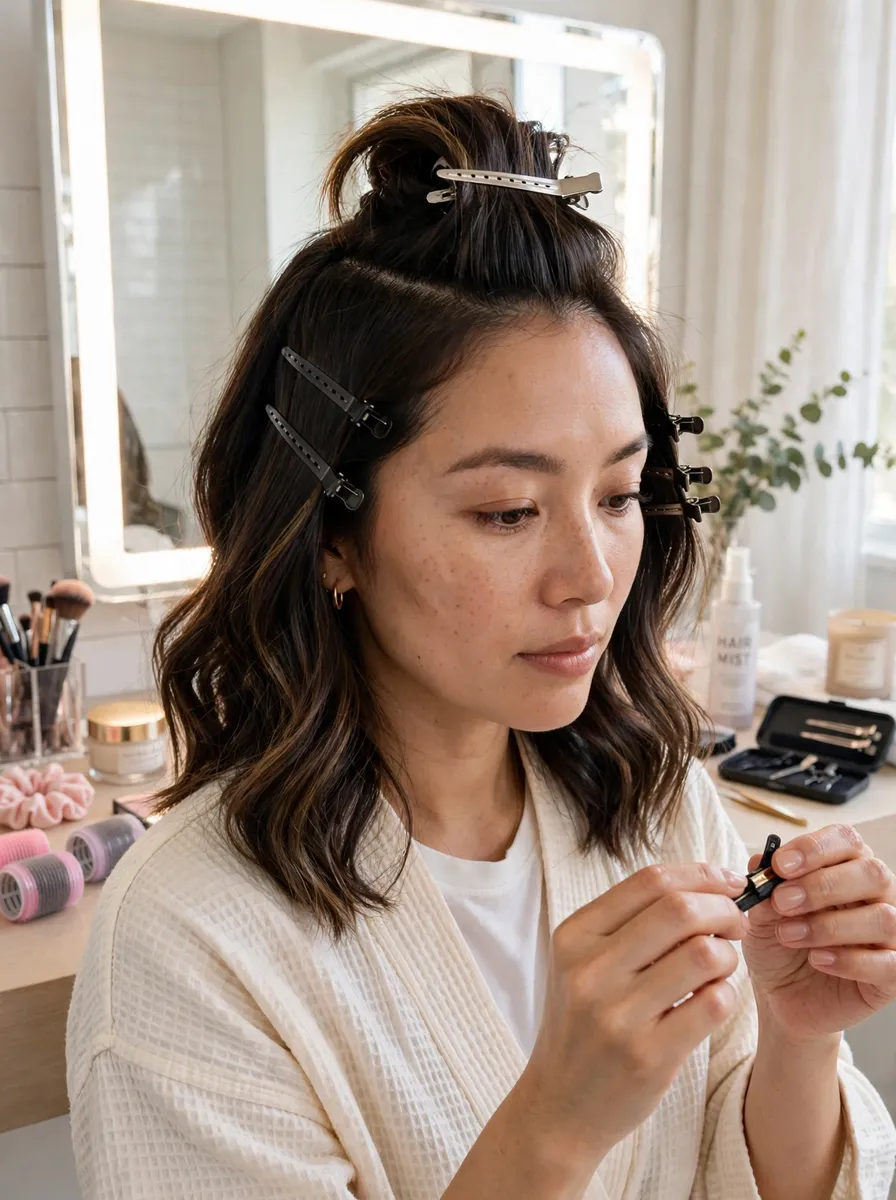
Random rolling gives a random result. Work to a simple map instead: a central strip along the top of the head, from the front hairline to the crown (the “mohawk” section), then the two sides, then the back in two or three horizontal rows. Clip everything up and release one section at a time.
Size each section to its roller: no wider than the roller, and thin enough that the hair spreads evenly across its surface rather than bunching in the middle. Overloaded rollers cause most dents, slipping and uneven bends. If a section feels thick, split it in two.
5. Roll the Front and Crown: Away from the Face
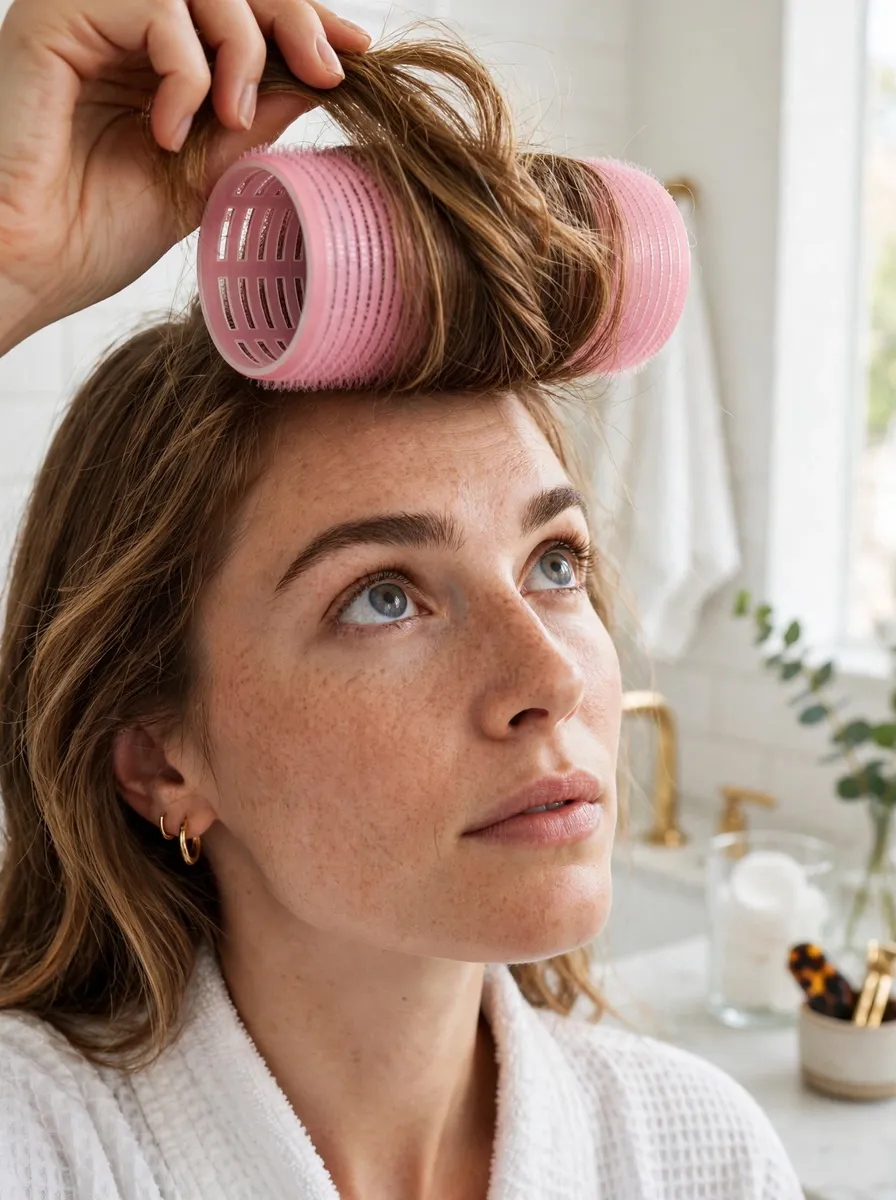
For the front and the central strip, direction creates the blowout shape. Comb the section straight up, hold the roller at the ends, and roll down towards the head, away from the face — the hairline hair should sweep backwards, not forwards over the forehead. Pull the section slightly forward beyond vertical as you roll (overdirecting, in salon terms): that extra angle is what produces root lift once the roller comes out.
Roll firmly, keep the tension even, and tuck the ends neatly onto the roller rather than folding them — stray ends dry into fish-hooks. Jumbo rollers along the crown strip, one behind another, give the classic lifted, swooping top.
6. Roll the Sides and Back: Downwards, Then Set
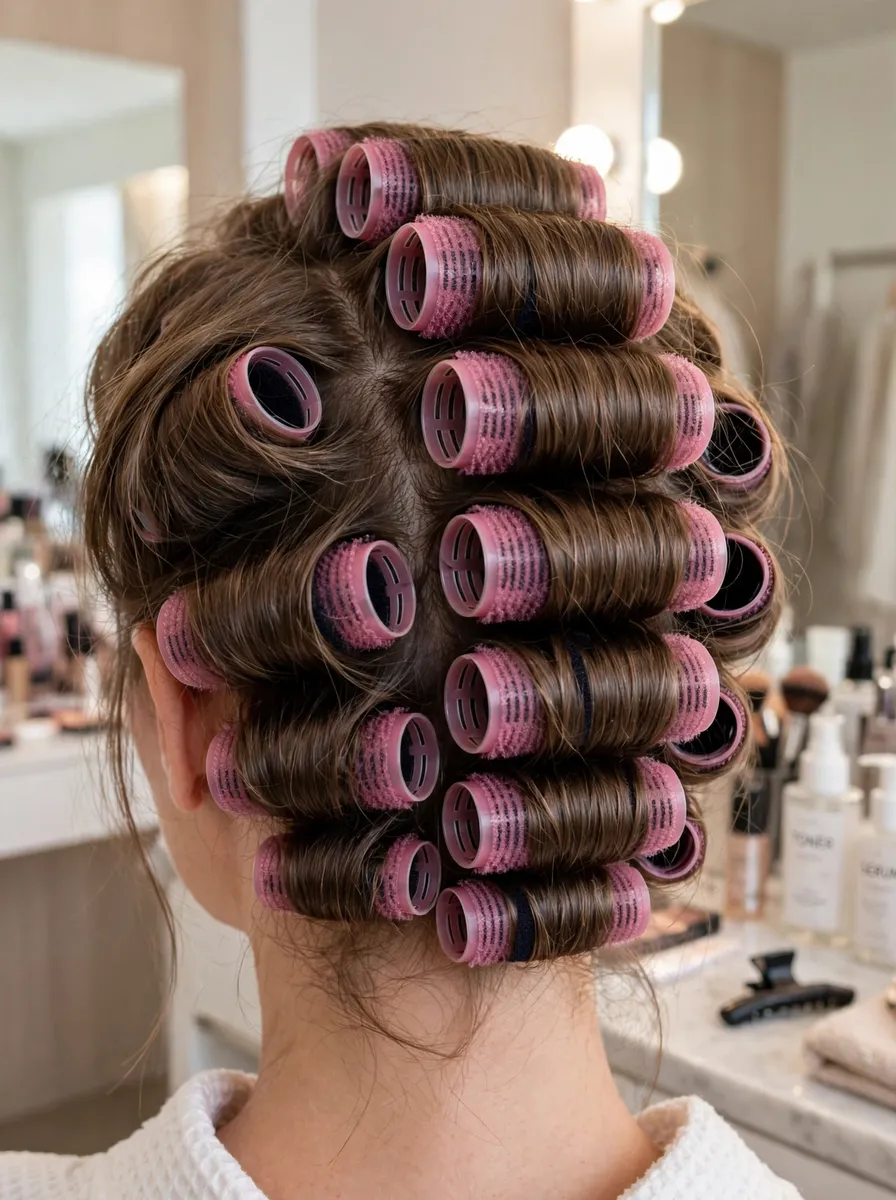
On the sides, roll downwards, so the hair travels towards the shoulders and the finished wave falls rather than sticks out. At the back, work in horizontal rows from the nape upwards, rolling down and under. Back sections are where slipping happens; if a roller feels loose, add a single clip through it rather than re-rolling tighter.
Now set the shape. Leave the rollers in for 20–30 minutes on pre-dried hair. On damp hair, blow-dry the rollers on medium heat until the hair feels fully dry, then give them a cool shot — a minute or two of cold air over the whole head. The governing rule: hair must be completely cool, as well as dry, before a single roller comes out. Warm hair released early relaxes within the hour.
7. The Fringe Trick, and Removing Rollers Without Frizz
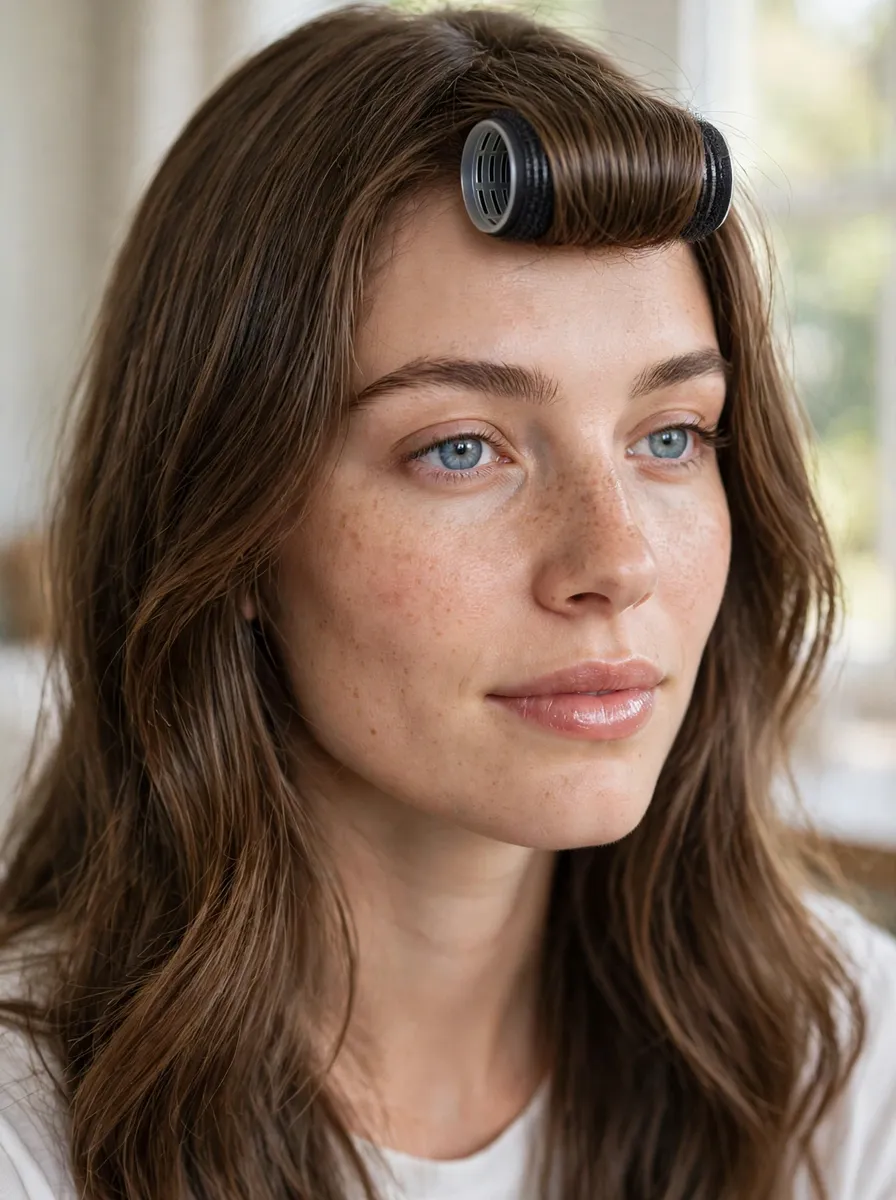
A fringe gets its own roller and its own direction. Take the whole fringe as one section, comb it forwards, place a medium roller underneath at the ends, and roll it under and towards the forehead, so it sets with a curved, swooping bend rather than a flick. Take it out last — fringes drop fastest, so they need the longest set.
Removal is where frizz is made or avoided. Never drag a roller straight out: the hooks tear at the surface and shred the set. Instead, hold the hair at the root with one hand and gently unroll the roller in reverse with the other, letting it rotate out of the section. If a roller resists, slide it slightly downwards as you unroll. Work from the bottom layers up to the crown, and do not brush anything yet.
8. Finish, Fix the Mistakes, and Make It Last

Once every roller is out, tip your head upside down and shake the roots with your fingertips, then rake through the lengths with fingers only. A brush at this stage turns bounce into fluff. Finish with a light mist of flexible-hold hairspray at arm’s length, or a pea-sized amount of shine serum on the ends — never at the roots you just lifted.
The common mistakes, briefly: sections too big (dents and slipping — split them); rollers out too early, while the hair is still warm (the set drops by lunchtime); rolling the front towards the face (a fringe that hangs rather than swoops); skipping mousse on fine hair (no hold); and yanking rollers out (frizz — always unroll).
A roller set holds its full bounce for a day, softening into a loose wave on day two. You cannot sleep in the rollers themselves — they are hard, they slip, and they flatten on one side — so at night, pile the hair loosely on top of your head in a scrunchie (the “pineapple”) or wrap it in a silk scarf. In the morning, refresh by re-rolling just the crown and fringe for 15 minutes, or mist the roots and blast them for a minute with the dryer. For a set that genuinely works overnight, that is what sock curls and robe belt curls are for.
Frequently Asked Questions
Which velcro roller size should I use for my hair length?
Short hair (above the shoulders) sets best on small and medium rollers — jumbos will not get enough wraps to grip. Shoulder to mid-length hair suits mediums through the sides and back with jumbos on the crown. Long hair needs jumbos on top and mediums underneath.
Should velcro rollers go in damp or dry hair?
Either works, but they are not equal. The strongest set comes from freshly blow-dried hair rolled while still warm, then left to cool completely. Damp hair (about 80% dry) also works if you finish it with the hairdryer and a cool shot. Completely dry, cold hair gives the weakest result — a little heat is what sets the shape.
How long should I leave velcro rollers in?
Twenty to thirty minutes, and the real condition is not the clock but the temperature: the hair must be fully dry and fully cool before removal. On damp hair, dry the rollers first, then allow 15–20 minutes of cooling. Removal while the hair is still warm is the commonest reason a set drops quickly.
Why do my velcro rollers frizz my hair on removal?
Almost always the removal technique. Dragging a roller straight out pulls its hooks through the hair and roughs up the surface. Unroll each roller in reverse instead, supporting the hair at the root. Frizz also creeps in when sections were not brushed smooth before rolling, or the hair was still slightly damp at removal.
My hair is fine and the rollers keep slipping out. What helps?
Work with smaller sections and one size smaller roller, so the hair wraps more times and grips better. Mousse is non-negotiable on fine hair — it gives the surface something to hold on to. Roll with firm, even tension, and if a roller still will not stay, push one clip through it.
Can I sleep in velcro rollers?
Honestly, no. They are rigid plastic, they dig in, they slip out as you move, and the side you sleep on comes out flat. Velcro rollers are a morning or pre-evening method — 20 to 30 minutes while you dress. For overnight curls, use a soft method instead: sock curls or robe belt curls.
Final Thoughts
Velcro rollers ask for ten minutes of rolling and half an hour of patience, and repay it with a root lift no overnight method quite matches. Get the sizes right, respect the cool-down, and unroll rather than pull — the second attempt is always better than the first.