Hair Tinsel: How to Put It In, Style It and Take It Out

Hair tinsel is the quickest transformation in party hair: a few dozen hair-thin strands of shimmer, worked into your own hair, that flash whenever light catches them or your hair moves. There is no dye, no glue and no commitment — the strands come out again, and your hair underneath is untouched. It is sometimes sold as fairy hair, and the effect earns the name: not a colour change, just sparkle threaded through the hair you already have.
There are three ways in — tying single strands in with a knot, clamping them in with micro beads, or clipping in ready-made strips — and they suit different hair, budgets and levels of patience. This guide walks through all three, plus care and clean removal.
What Is Hair Tinsel?
Tinsel strands are fine filaments of polyester — each one about the width of a single hair, but flat, metallic and light-reflective, so a strand reads as a thread of glitter running through the hair. They come in bundles of a few hundred strands, from natural gold, copper and silver to holographic rainbow. Because each strand attaches to only a few hairs, the result moves exactly like your own hair — and catches the light most in motion.
What You’ll Need
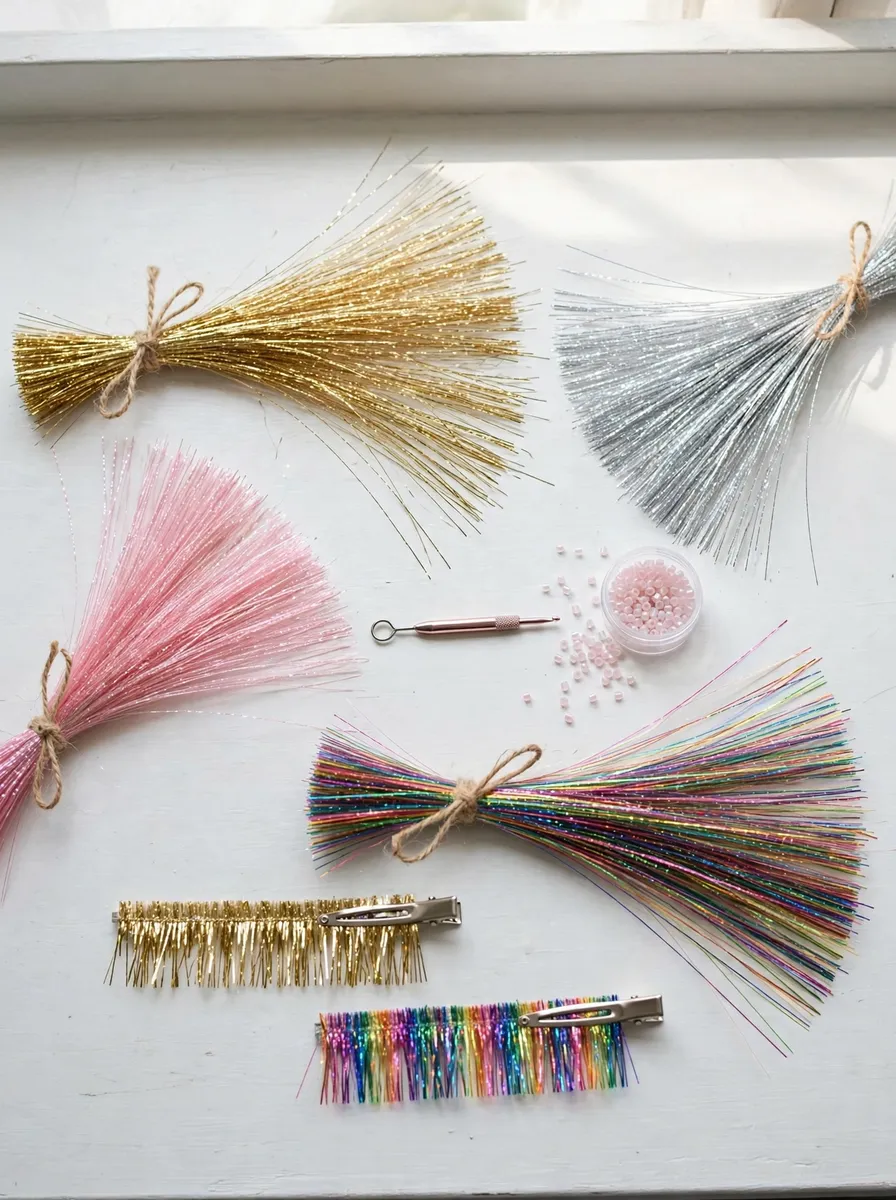
- A bundle of hair tinsel in your chosen colour — a standard 300–600 strand pack covers several applications
- A fine-tooth comb and sectioning clips
- For the knot method: nothing else — your fingers are the tools
- For beads: silicone-lined micro beads matched to your roots, a loop threader and small flat pliers
- For the shortcut: clip-in tinsel strips, pre-attached to small snap clips
- A mirror — or a friend, which makes the back far easier
Method 1: The Single-Knot Tie-In
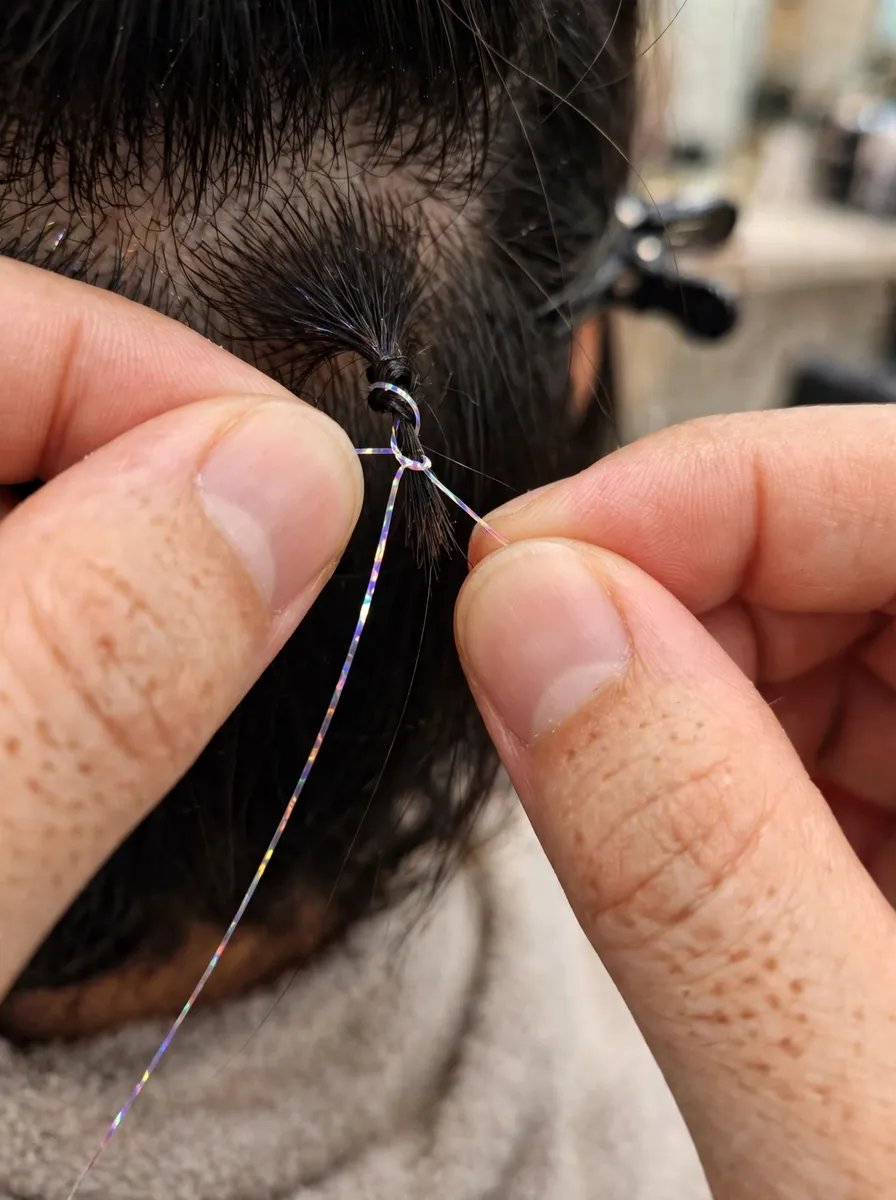
The original method, and still the most natural-looking, because each strand is attached individually and falls where you place it.
- Fold a strand in half to form a small loop at the fold.
- Take three to five hairs — no more — and lay them across the loop, close to the scalp.
- Make a slip knot: pull the two tinsel ends through the loop so the knot closes around the tinsel and the hairs, slide it up to the root and tighten gently.
- Secure it with one or two tiny extra knots in the tinsel just below the first, so it cannot work loose.
- Trim the strand to match the hair around it, and repeat, spacing strands a centimetre or two apart.
Pros: no tools, no cost beyond the tinsel, completely weightless, and the most scattered, natural sparkle. Cons: the fiddliest method by far — expect a few practice strands to slide straight out — and the shortest-lived: knots shed with the hairs they are tied to, so most are gone within two weeks.
Method 2: Micro-Bead Application
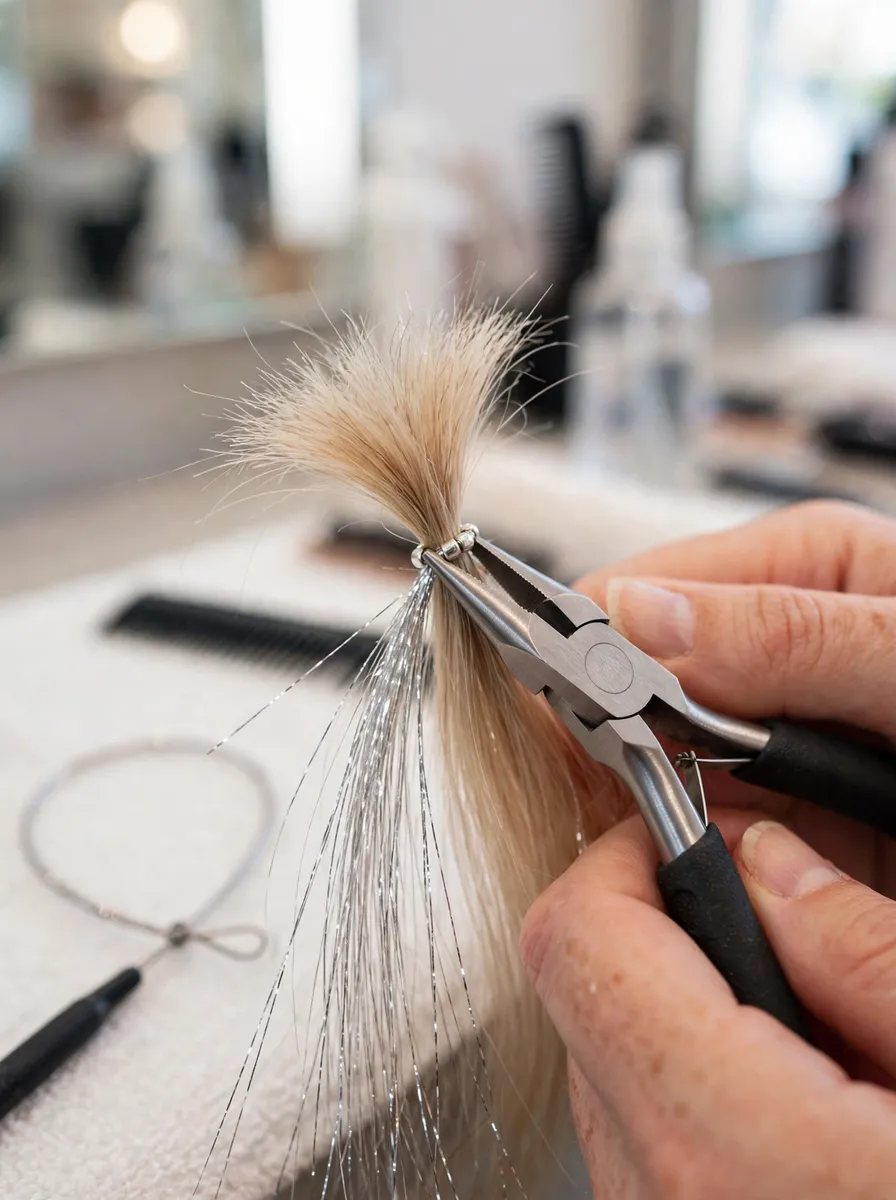
The salon method, borrowed from extension work: each small group of strands is locked in with a tiny bead.
- Thread a bead onto the loop tool, hook a small section of hair with it, and pull the hair through the bead.
- Fold two to four tinsel strands over the section, inside the bead, so the fold sits just above it.
- Slide the bead up to about a centimetre from the scalp and clamp it flat with the pliers — firm, not crushed.
- Trim to length and repeat, in neat rows under the top layer of hair.
Pros: by far the longest-lasting — four to six weeks is typical, and the strands survive washing and styling best. Cons: needs the tools, costs more, and the beads can be felt at the root; clamped too tight or ripped out carelessly, they can snap the hairs inside them.
Method 3: Clip-In Tinsel Strips
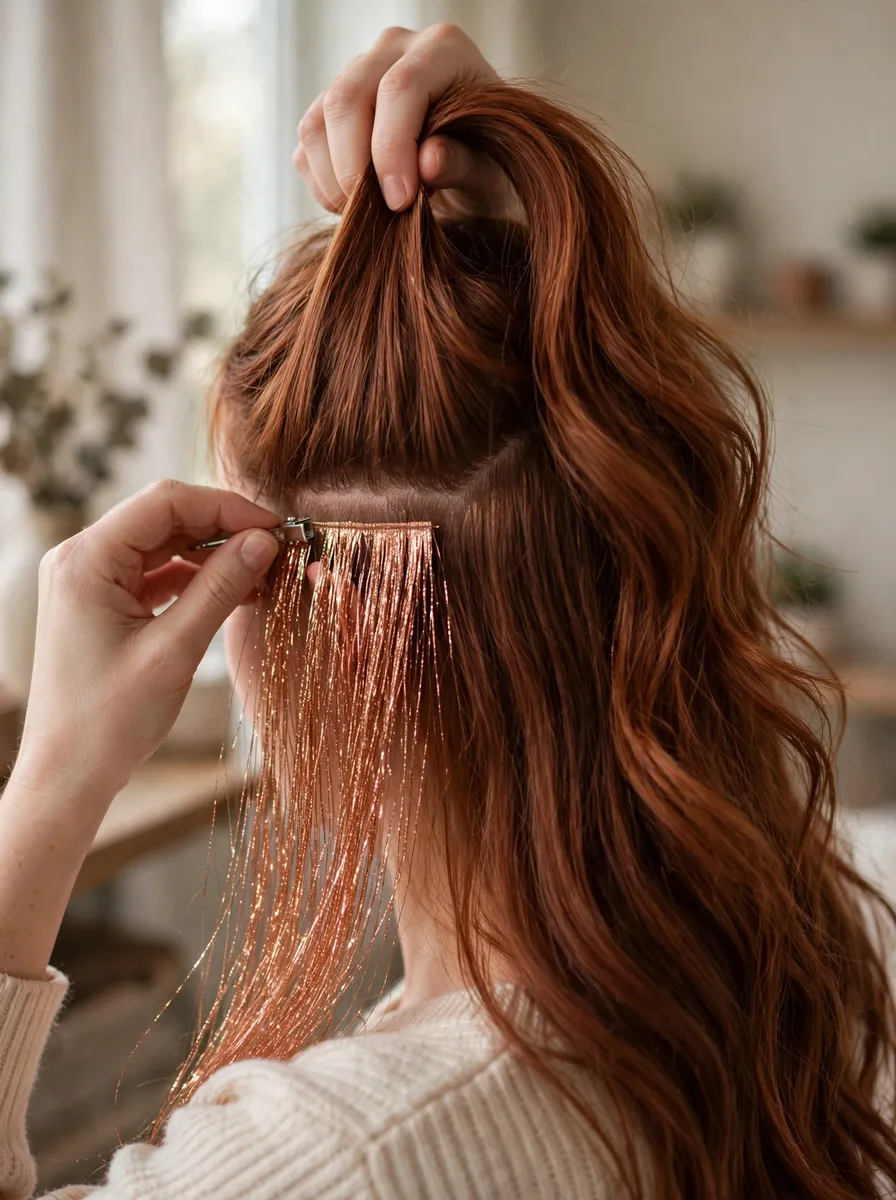
Tinsel pre-sewn onto narrow strips with snap clips — the same idea as clip-in extensions, at a fraction of the weight. Lift the top layer, clip a strip underneath on each side and one or two at the back, and drop the top layer over the clips to hide them.
Pros: in or out in two minutes, fully reusable, zero shedding, and the only method with no learning curve — the obvious choice for a single party. Cons: it lasts exactly as long as you wear it — the clips come out before bed — and strips give a denser, more even curtain of sparkle rather than the scattered glint of individual strands. On very fine hair the clips can creep; a dusting of texture spray at the root gives them grip.
Colour, Placement and How Many Strands You Need

How many: for a subtle glint that only shows in movement, 10–20 individual strands are plenty. For clearly visible shimmer, aim for 25–40. For full festival coverage, 50 or more — at that density, beads or clip-ins are the practical route.
Colour: match the family of your hair colour for the elegant version — gold and copper glow against brunette and red hair, silver and icy holographic suit blonde and ash tones — or go deliberately against it: rainbow on dark hair is the festival classic. Placement matters more than quantity: keep strands just under the surface layer, around the parting and the face-framing pieces. Strands sitting on top of the hair look like actual tinsel; strands peeking through it look like light.
Caring for Hair Tinsel
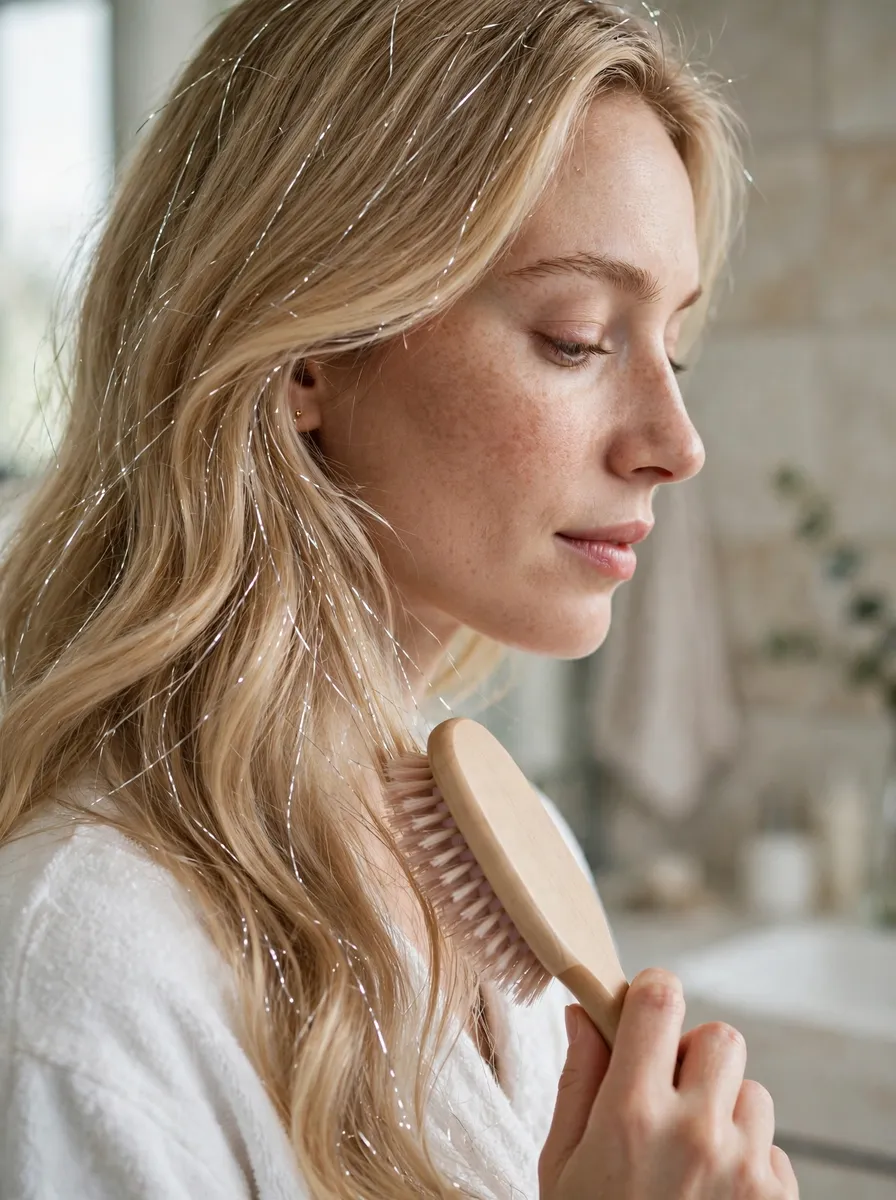
Tinsel asks for very little. Wash as normal — shampoo and conditioner do not loosen knots or beads — but brush with a little more awareness: start from the ends, and at the roots hold the hair above the brush so you are not dragging directly on knots or beads. Tie hair up loosely for sleep to stop strands tangling overnight.
Heat needs one honest caveat: most tinsel is polyester and tolerates low heat, and many brands rate their strands for straighteners and curling irons — but ratings vary, and a strand that meets a very hot plate can melt or frizzle. Check your pack, keep tools on their lowest effective setting, and where you can, style the hair and let the tinsel follow rather than pressing strands directly.
How to Remove Hair Tinsel
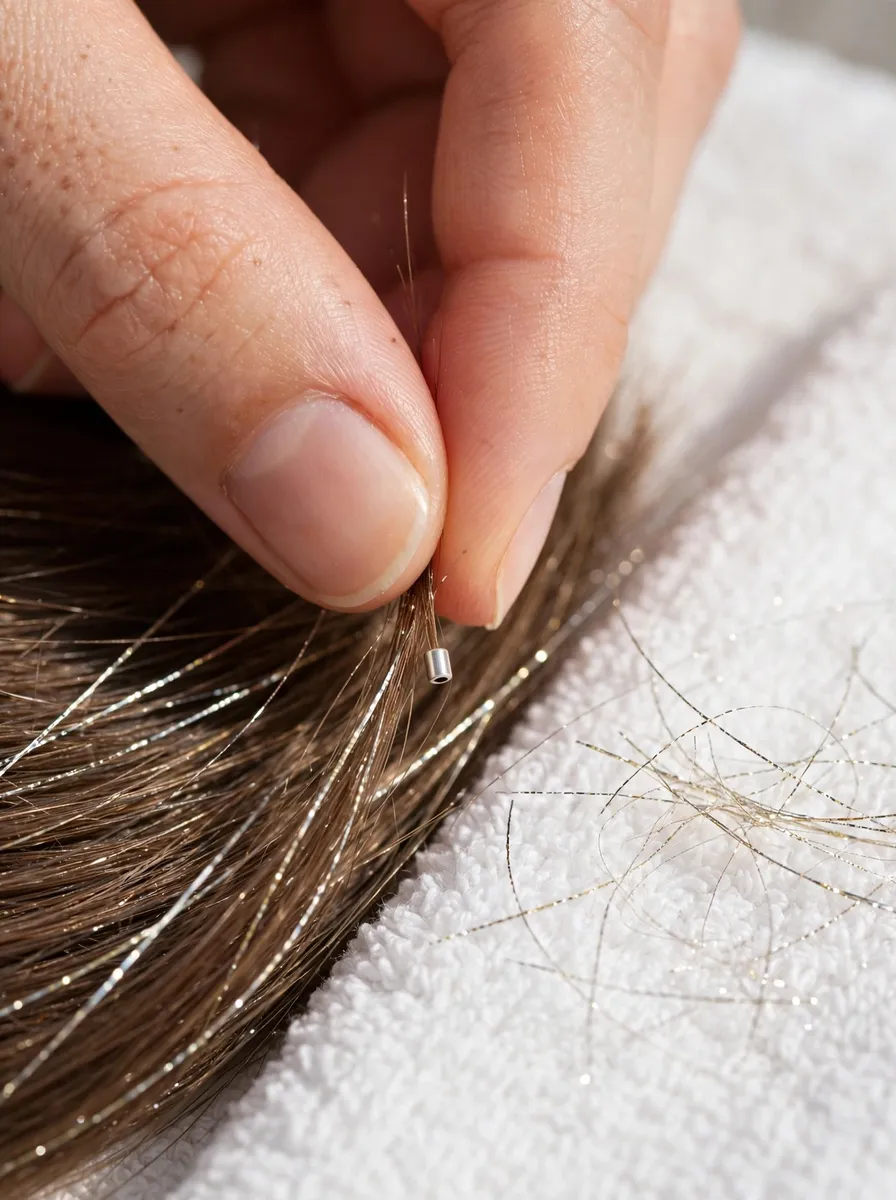
Removal is method-specific, and in every case the rule is the same: never pull a strand out by force.
- Knots: most slide down and off with gentle coaxing, or loosen after a wash. If one will not budge, snip the tinsel — not your hair — just below the knot, and the knot unravels.
- Beads: squeeze the bead with the pliers in the opposite direction to open it back into a tube, then slide it down and off, holding the hair at the root.
- Clip-ins: unclip. That is all.
A few strands will always shed on their own across the wear — that is the hairs they were attached to completing their natural cycle, not damage.
Who It Suits — and Which Hair Struggles
Tinsel works on almost every hair type, length and colour, because the weight per strand is negligible. Two honest exceptions. Very fine, silky or slippery hair sheds knots quickly — sometimes within a day or two — because there is little texture for the knot to grip; beads, which clamp mechanically, hold far better here. And fragile or heavily bleached hair should skip beads at the front hairline, where hairs are weakest, and use knots or clip-ins instead. On curly and coily hair, place strands on defined curls so they lie along the curl rather than across it.
Styling Ideas

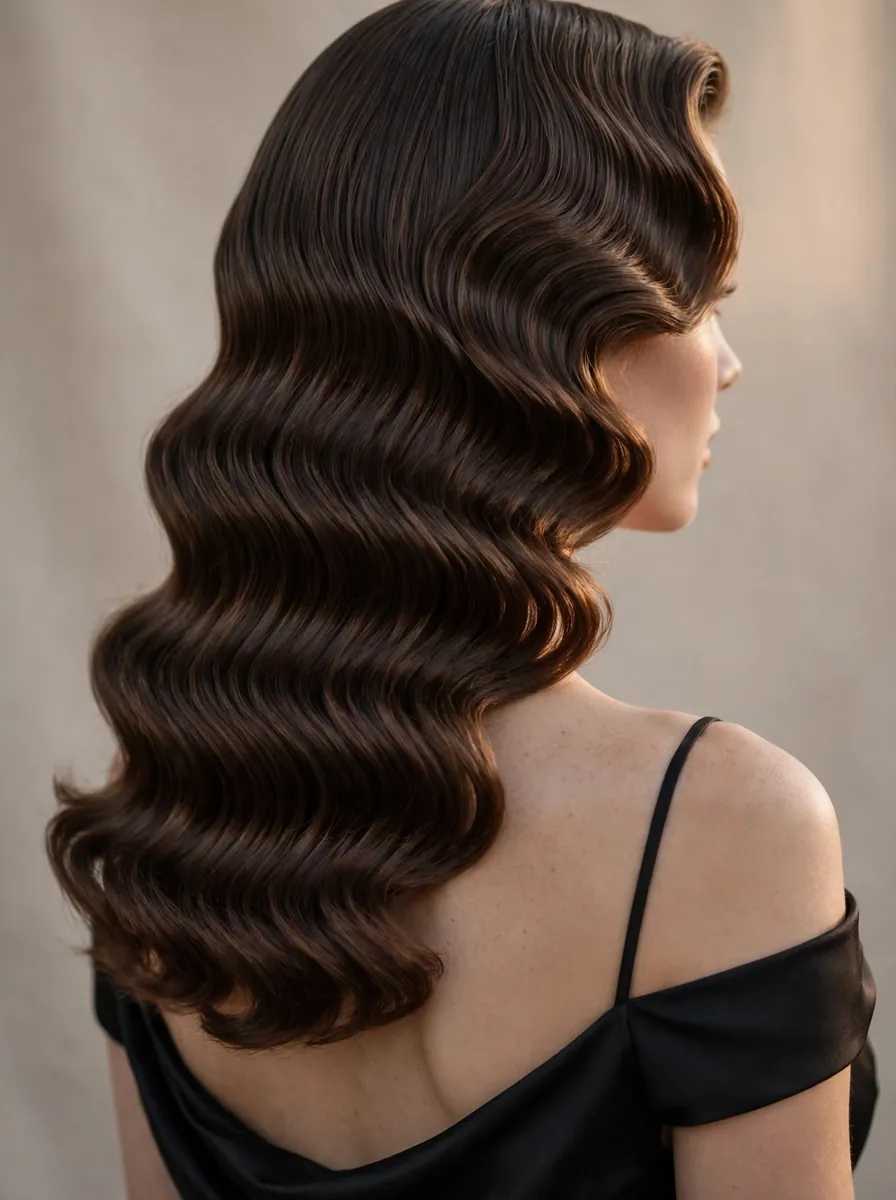
Loose waves are the natural partner — the strands surface and disappear as the waves move. Braids show tinsel beautifully too: a strand group worked into a plait flashes at every crossover. For updos, thread a few strands through space buns for the full festival effect, or add gold strands to a sleek low bun for evening sparkle that reads as jewellery. It is a natural fit for the party styles in our homecoming hairstyles guide as well.

Christmas is tinsel’s home fixture, in every sense: red, gold and green strands through loose waves or a half-up style pick up fairy lights beautifully. Our Christmas hairstyles guide is the companion piece — treat tinsel as the finishing layer over any style there.
Frequently Asked Questions
How long does hair tinsel last?
It depends on the method. Knotted strands shed gradually over a few days to about two weeks. Micro-bead strands typically last four to six weeks. Clip-in strips last indefinitely as a product, but only for the day you wear them.
Can you wash your hair with tinsel in?
Yes. Shampoo and condition as normal — neither loosens knots or beads. Brush from the ends upwards, hold the hair at the root when you reach the attachments, and avoid dragging a brush directly over beads.
Can you use straighteners or a curling iron on hair tinsel?
Usually, on low heat — most tinsel is polyester and many brands rate it for heated tools. Ratings vary between packs, though, and excessive heat can melt a strand, so check the packaging and use the lowest setting that works.
Does hair tinsel damage your hair?
Knots and clip-ins do not — there is no glue, heat or chemical involved, and removal is gentle. Beads are safe when applied and removed properly, but a bead clamped too tightly, or torn out instead of opened, can snap the few hairs inside it.
How many strands of hair tinsel do you need?
For a subtle glint, 10–20 knotted strands. For visible shimmer, 25–40. For full festival coverage, 50-plus — at which point beads or clip-in strips are far quicker. One bead holds two to four strands, so 12–15 placements deliver a full result.
Why does my hair tinsel fall out so quickly?
Usually the hair, not the technique: very fine, silky hair gives a knot almost nothing to grip, so strands slide out within days. Tie knots with an extra securing knot, add a little texture spray before tying, or switch to micro beads, which hold mechanically rather than by friction.
Final Thoughts
Start with knots to test the idea for free, beads for a month of sparkle, and clip-ins if there is a party on Saturday and no patience before it. Whichever route you choose, placement beats quantity: fifteen strands in the right places will out-sparkle fifty in the wrong ones.