Brunette Balayage: 12 Rich, Dimensional Ideas for Brown Hair
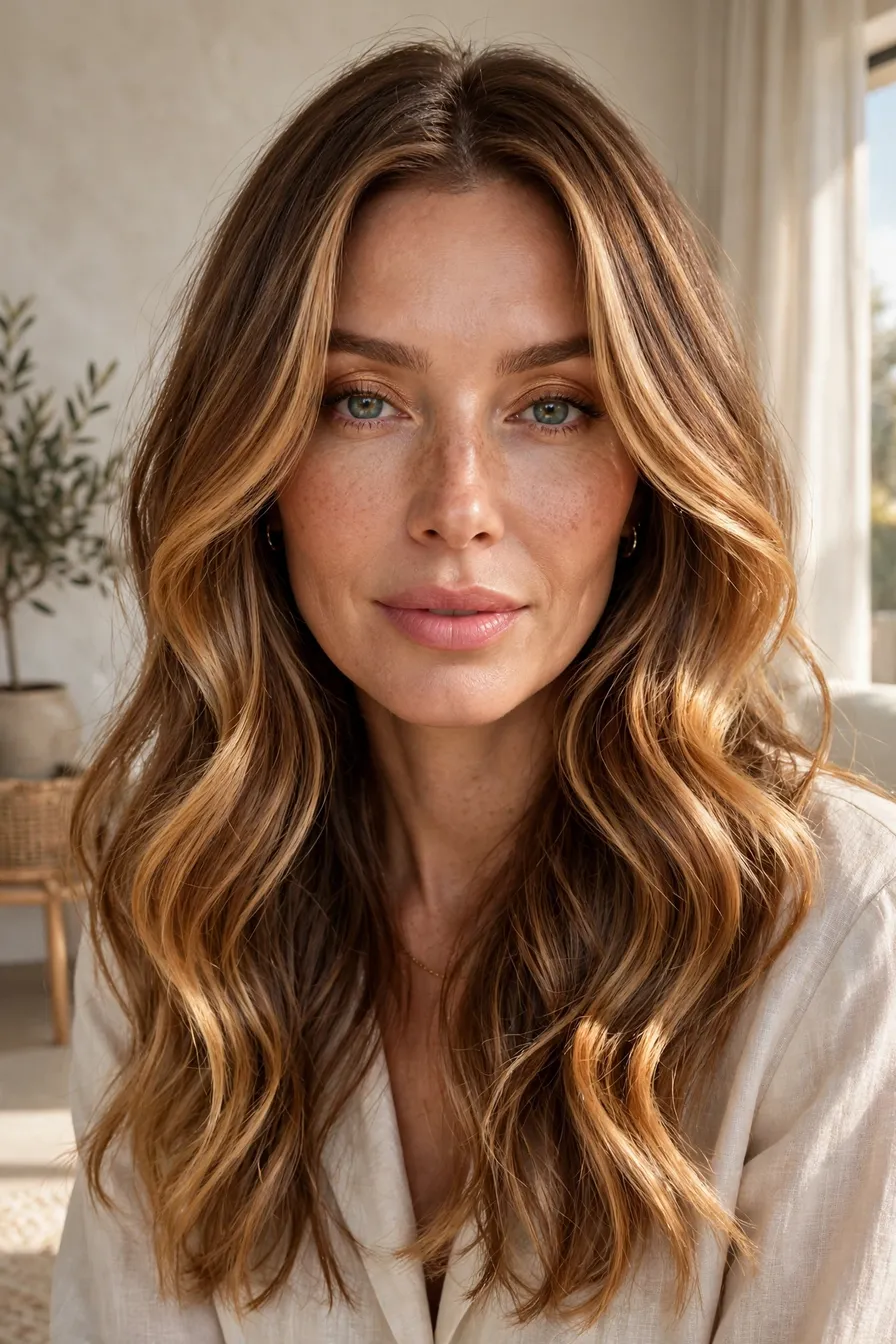
Balayage is a technique before it is a colour: dye or lightener is painted onto the surface of the hair in sweeping strokes, so the lightness concentrates through the mid-lengths and ends and stays soft and sparse at the roots. On brunette hair it is the most forgiving way to go lighter, because the two things that make traditional highlights high-maintenance — a hard regrowth line and uniform brightness at the root — are exactly what the technique avoids.
The twelve ideas below are organised by tone family, from warm caramel to cool mushroom, on bases from near-black to light brown. If your taste runs moodier and redder instead, our cherry cola brunette guide covers the wine-toned branch of brunette colour; this page is for the lighter, dimensional branch.
1. Classic Caramel Brunette Balayage
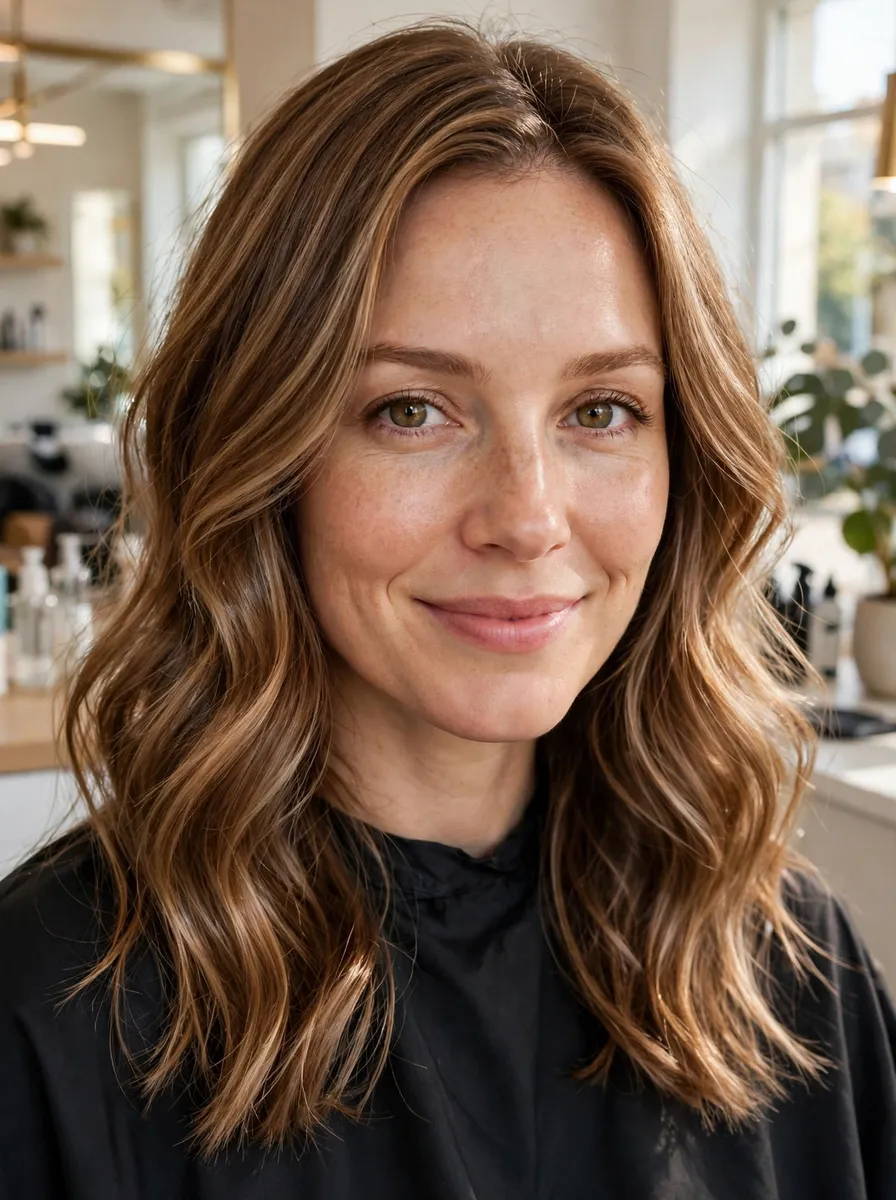
The reference version: a medium-brown base with caramel ribbons painted through the lengths, brightest around the face and the ends. Caramel is the safest first balayage for most brunettes because its warmth harmonises with natural brown pigment instead of fighting it — the lift looks like sun, not dye.
2. Dark Brunette Balayage with Subtle Dimension
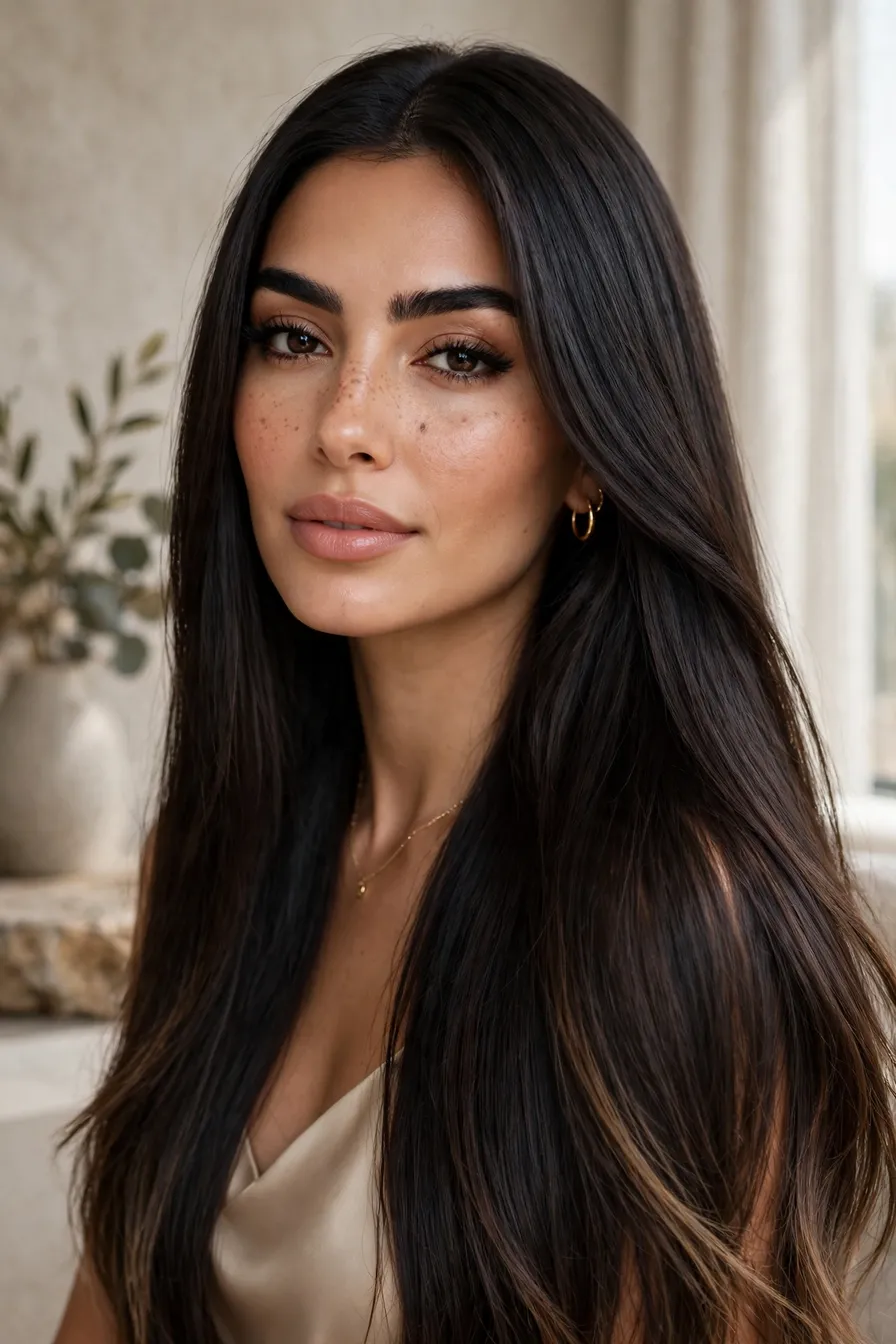
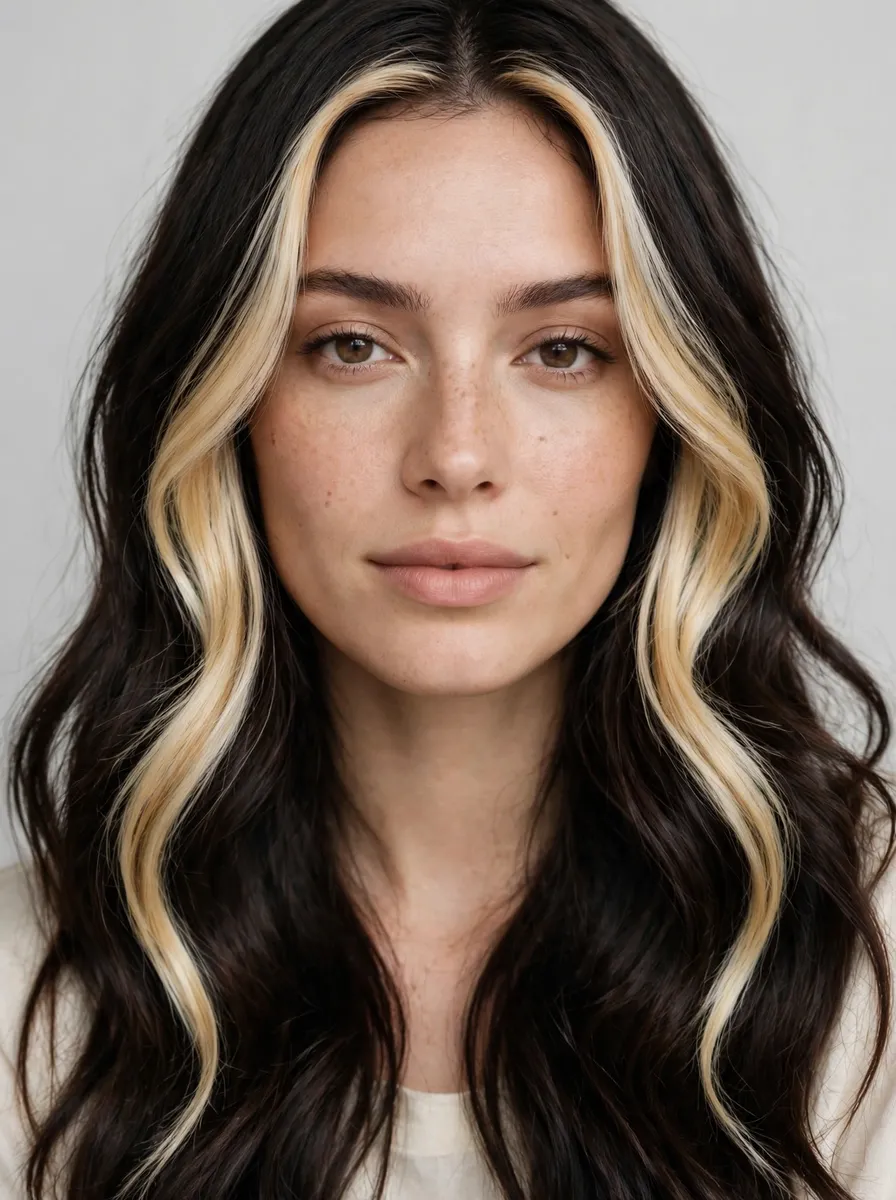
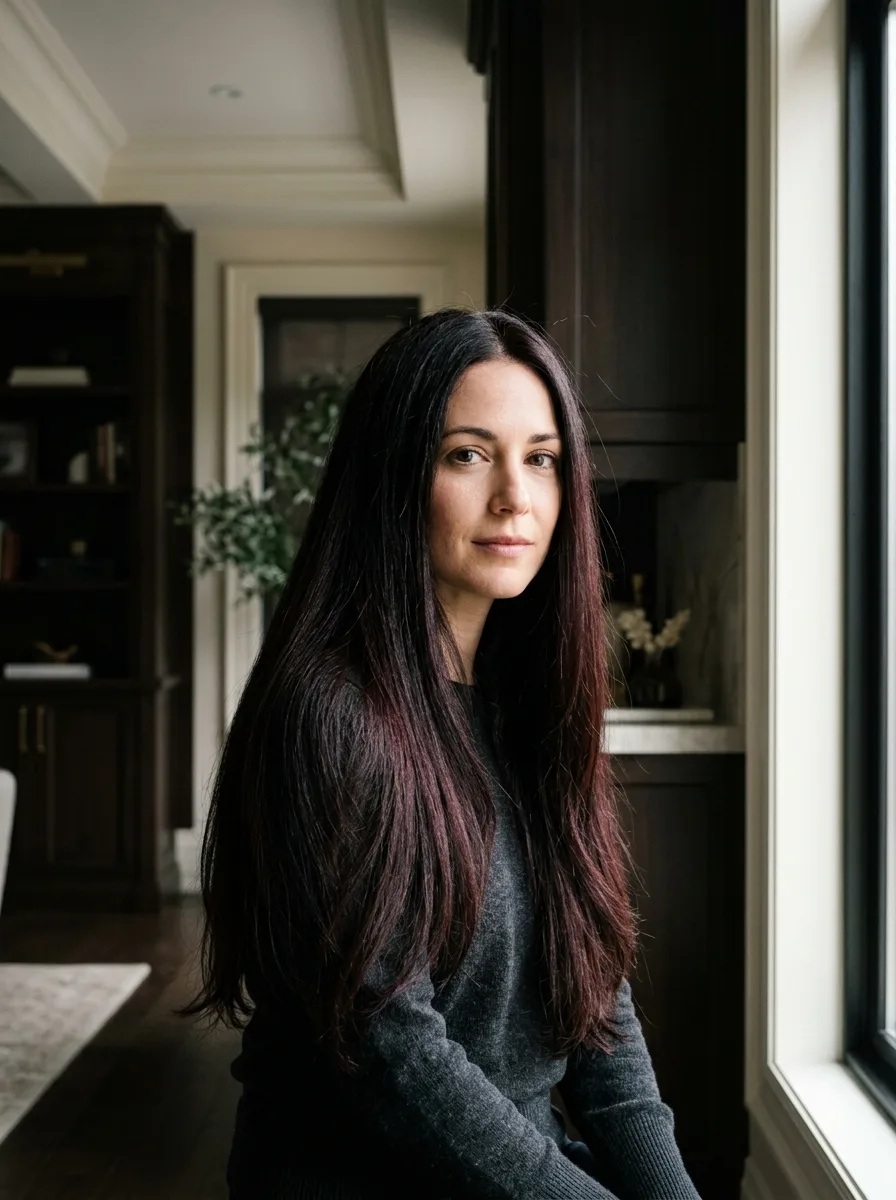
On a dark brown or near-black base, restraint is the look: pieces lifted only two or three shades, placed sparsely, so the hair reads as dark hair with movement rather than highlighted hair. This version has the softest grow-out of all twelve and suits anyone whose workplace or taste rules out obvious colour.
3. Honey Brunette Balayage
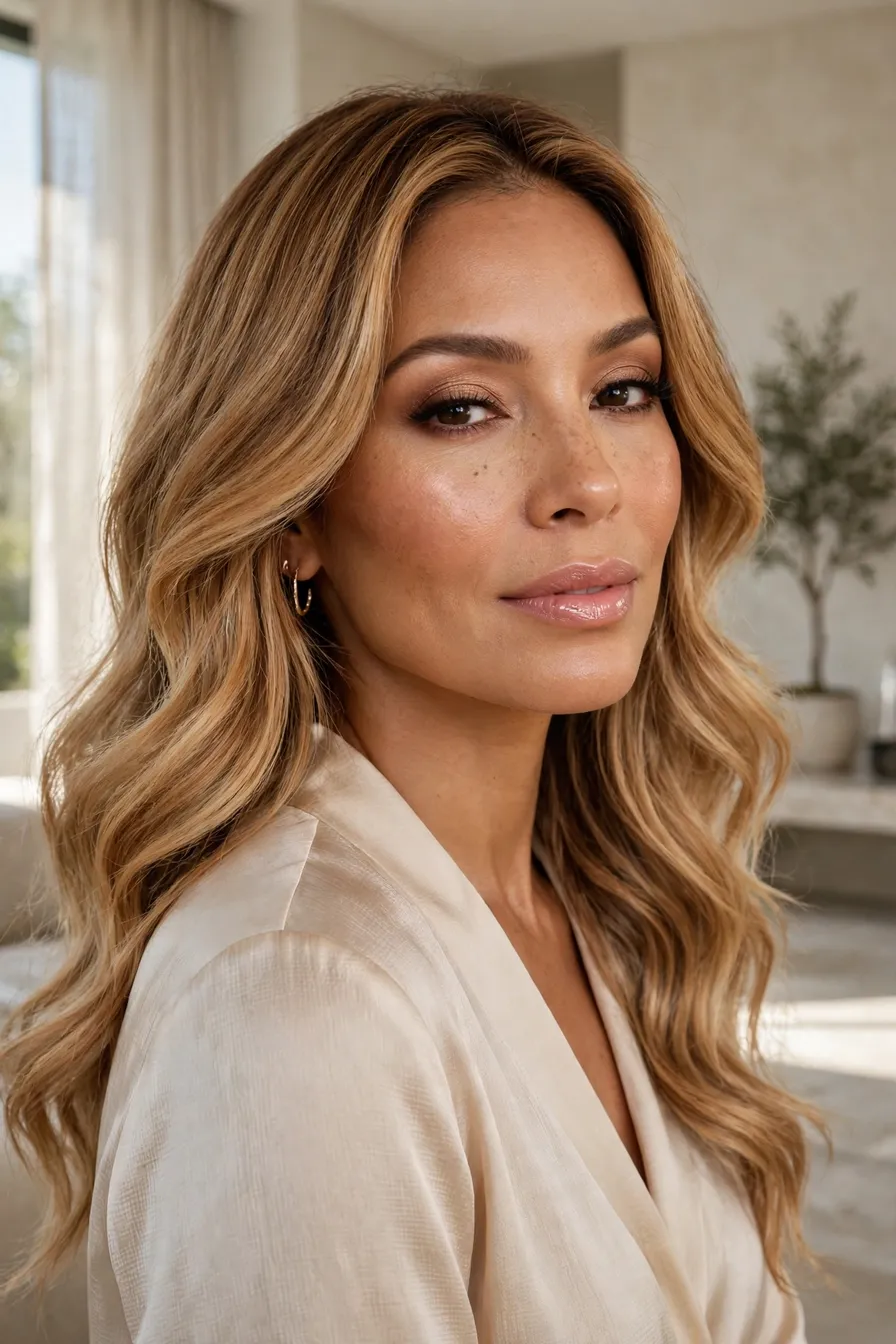
Warmer and brighter than caramel, honey balayage pushes the painted pieces toward golden. It flatters warm and olive skin tones particularly well, and on a light-brown base it can take the hair close to dark blonde at the ends while the roots stay brunette — the lowest-commitment way to test blonde-adjacent colour.
4. Ash Brunette Balayage
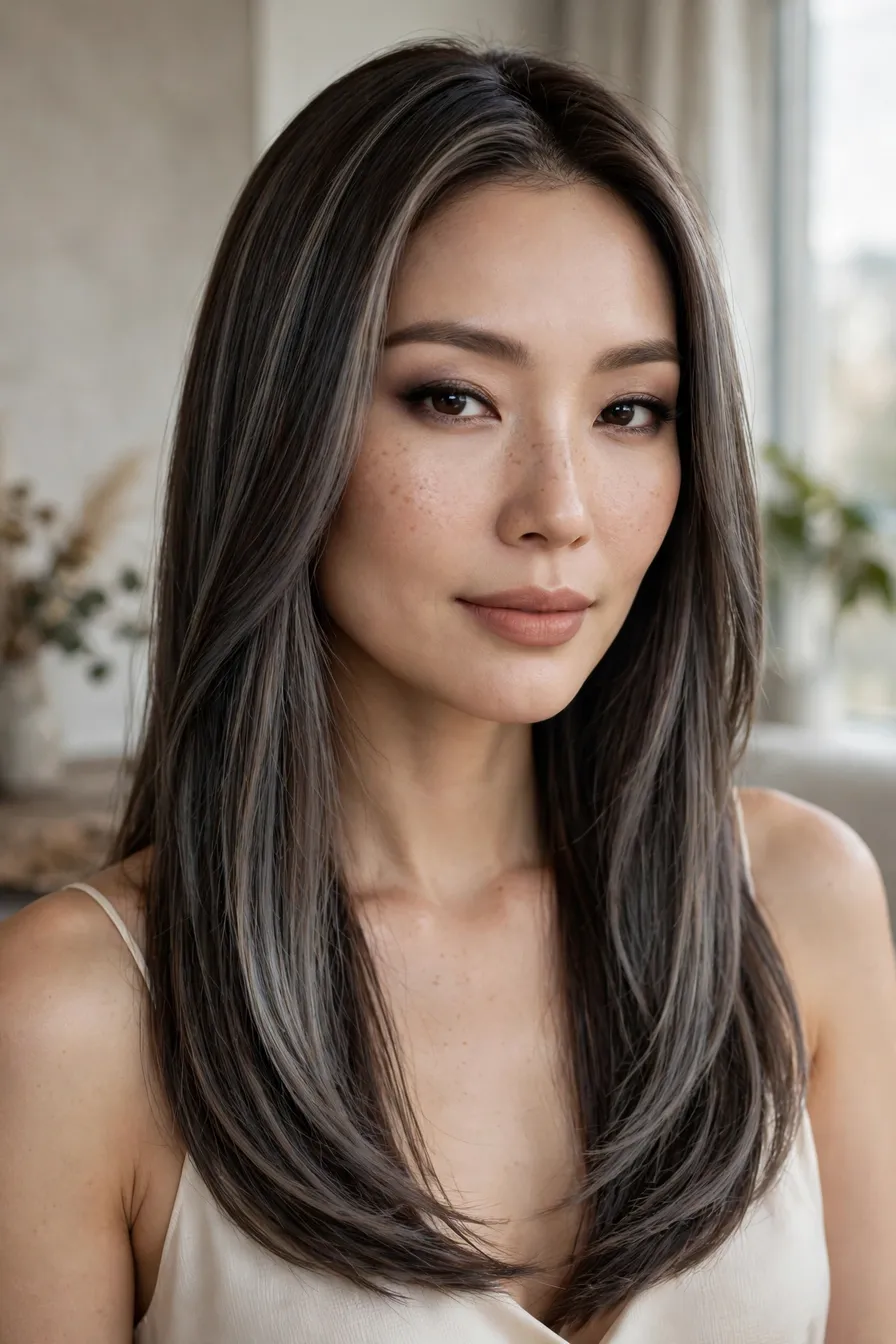
The cool-toned branch: smoky, grey-leaning pieces that cancel the red warmth dark hair naturally lifts to. Ash balayage is the highest-maintenance tone here — the cool toner fades fastest and warmth creeps back within weeks — so budget for glosses between appointments and a purple or blue shampoo at home.
5. Mushroom Brunette Balayage
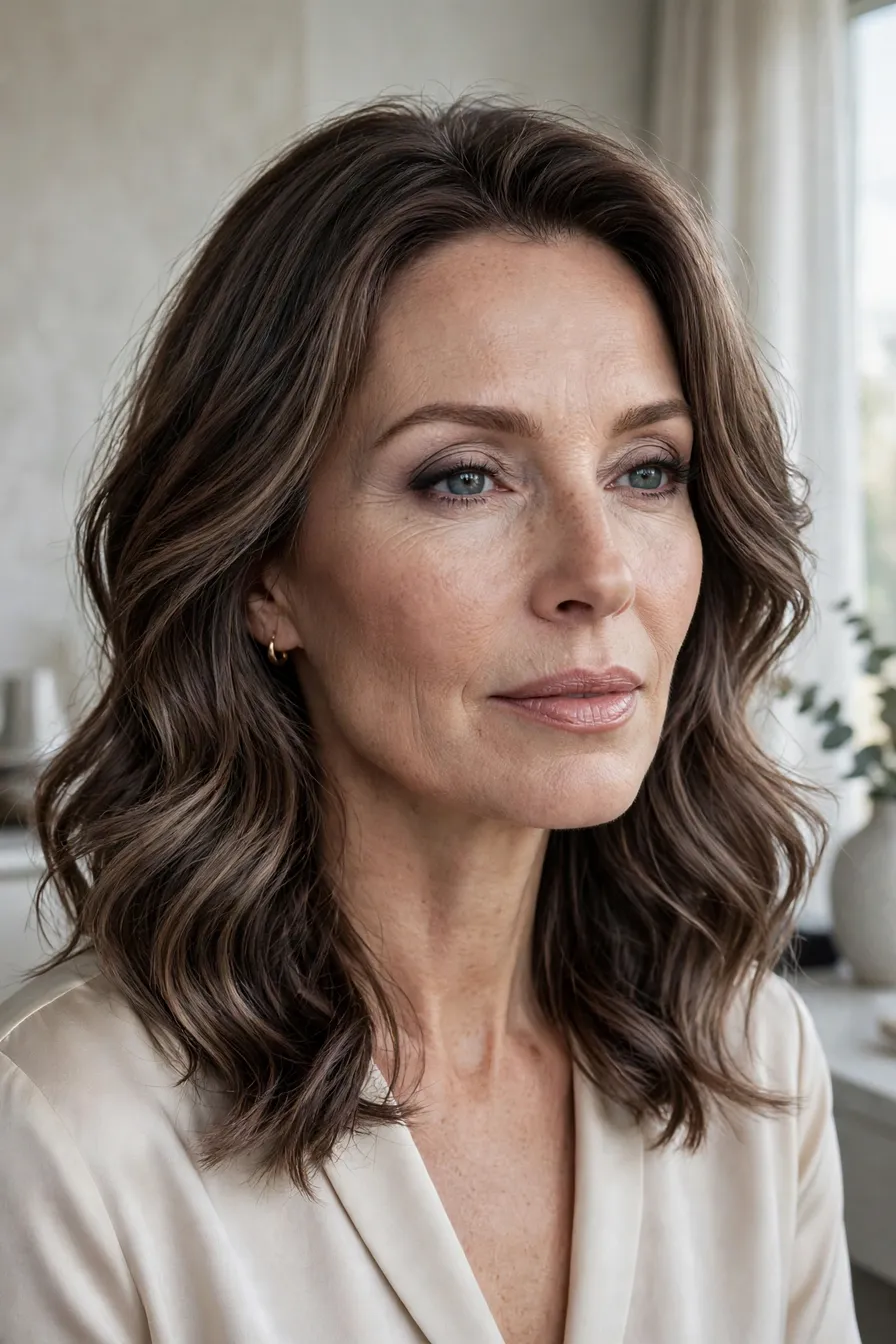
Mushroom brunette sits between ash and neutral: muted taupe-brown pieces with no obvious warmth or gold. It is the most modern-looking tone family in this list and the most dependent on your colourist’s toning skill — bring photos, because “mushroom” still means slightly different things in different salons.
6. Brunette Balayage with a Money Piece
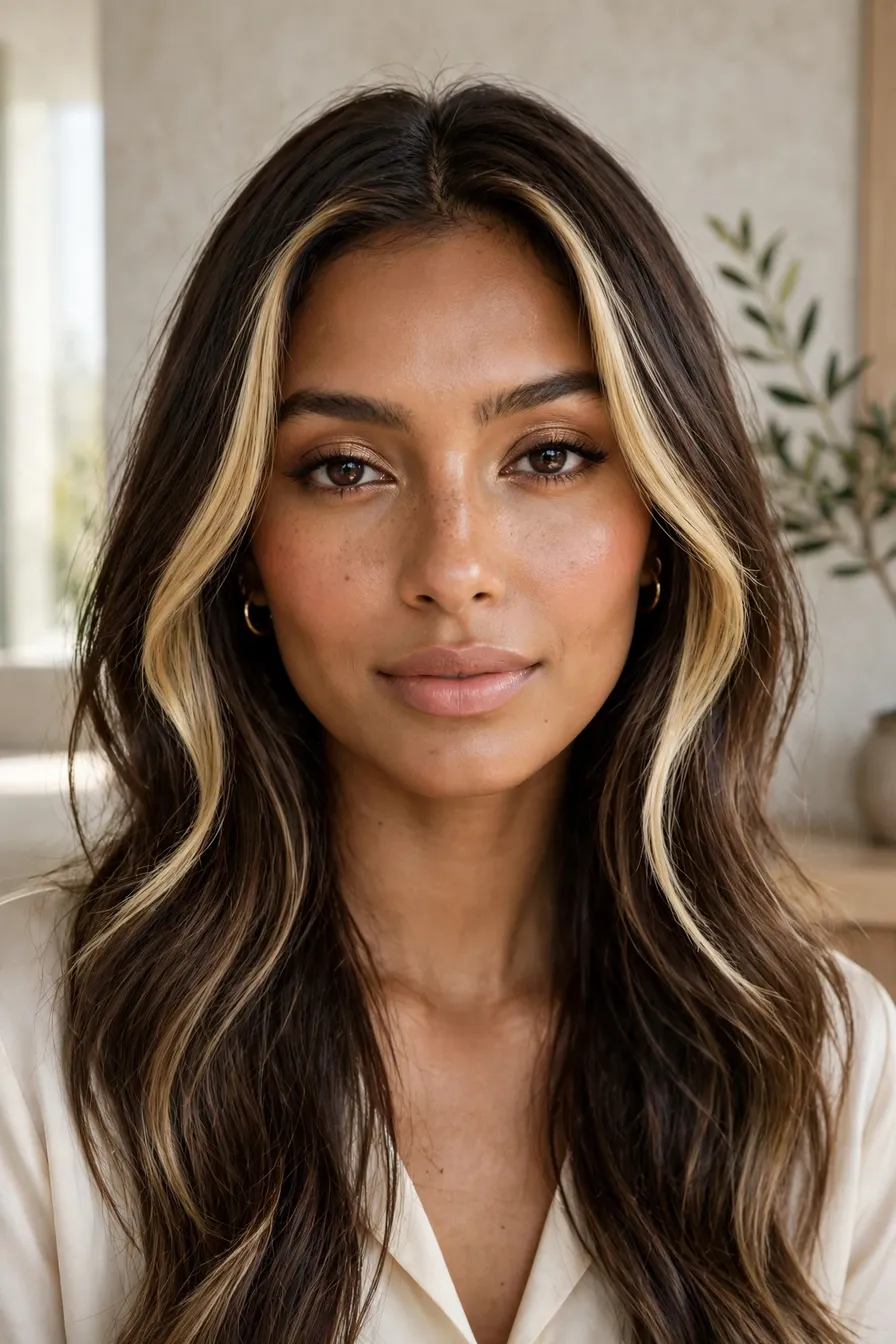
Balayage through the lengths plus two brighter, bolder strands framing the face. The money piece does outsized work: it is what people see in the mirror and in photos, it brightens the face, and it can be refreshed at a short appointment without redoing the whole head. If you try one experiment with brunette colour, this structure is the safest place to put it.
7. Chocolate Brunette Balayage
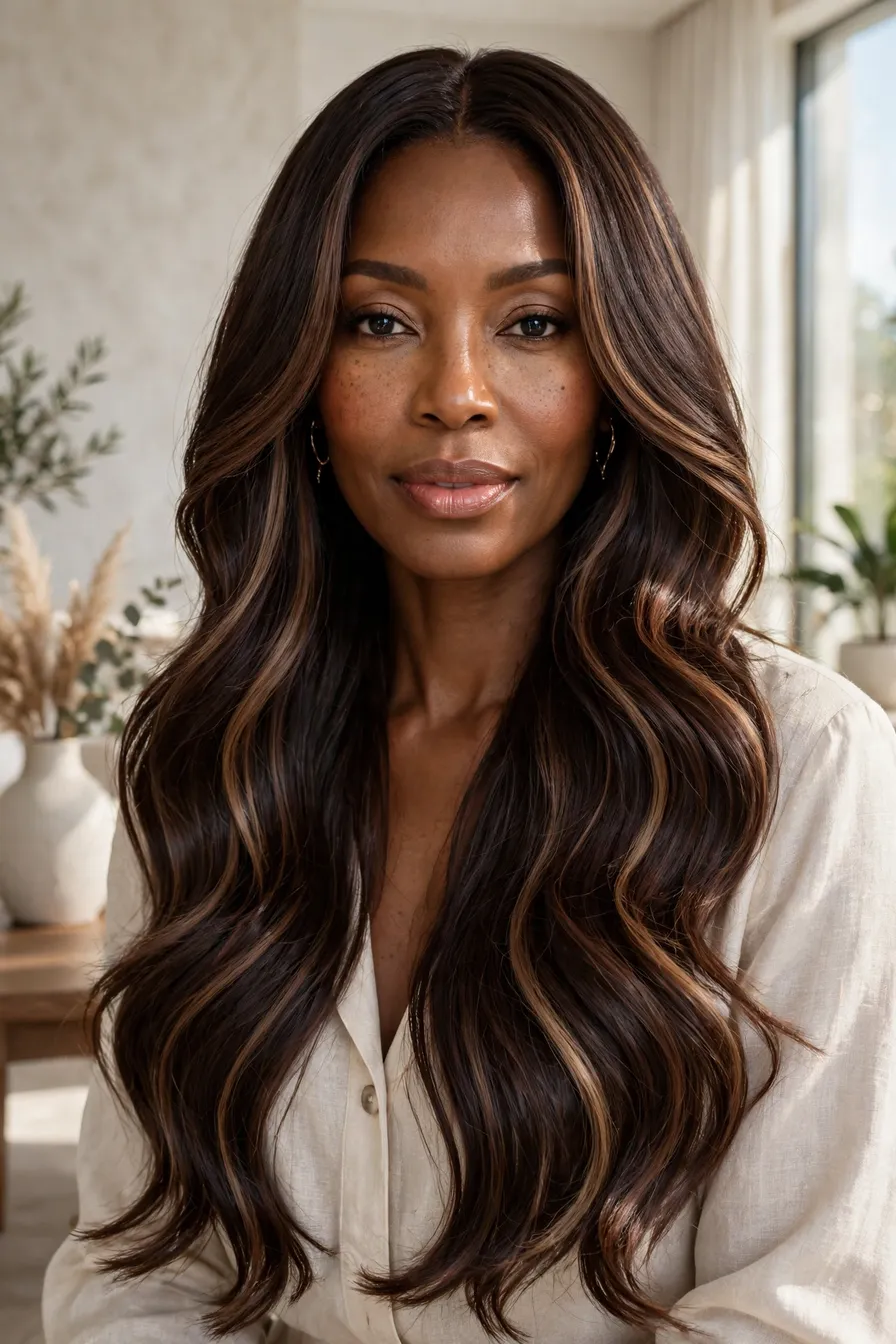
Tones within the brown family itself — milk-chocolate pieces through a dark-chocolate base. Because nothing goes truly blonde, the hair stays glossy and healthy-looking, the grow-out is nearly invisible, and the effect reads as expensive rather than coloured. The best choice for very long hair, where ends have survived years and cannot take aggressive lightening.
8. Brunette Balayage on Long Hair
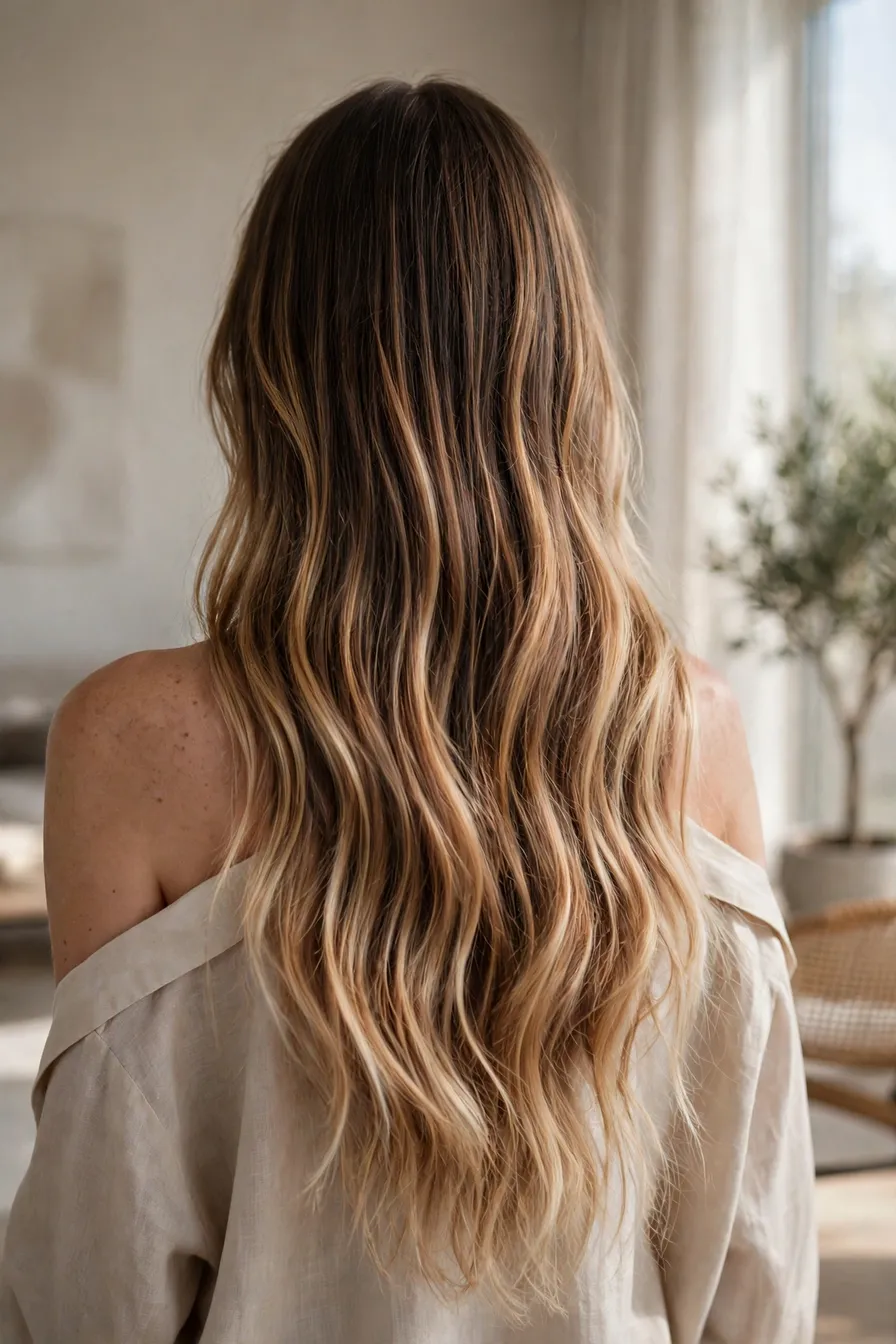
Length gives balayage room to do its gradient properly: dark at the root, transitioning through the mid-lengths, lightest across the last third. Long hair also shows the technique’s painterly quality best in movement. Protect the investment — the lightened ends are the oldest, driest hair on your head and want a mask weekly.
9. Brunette Balayage on a Bob
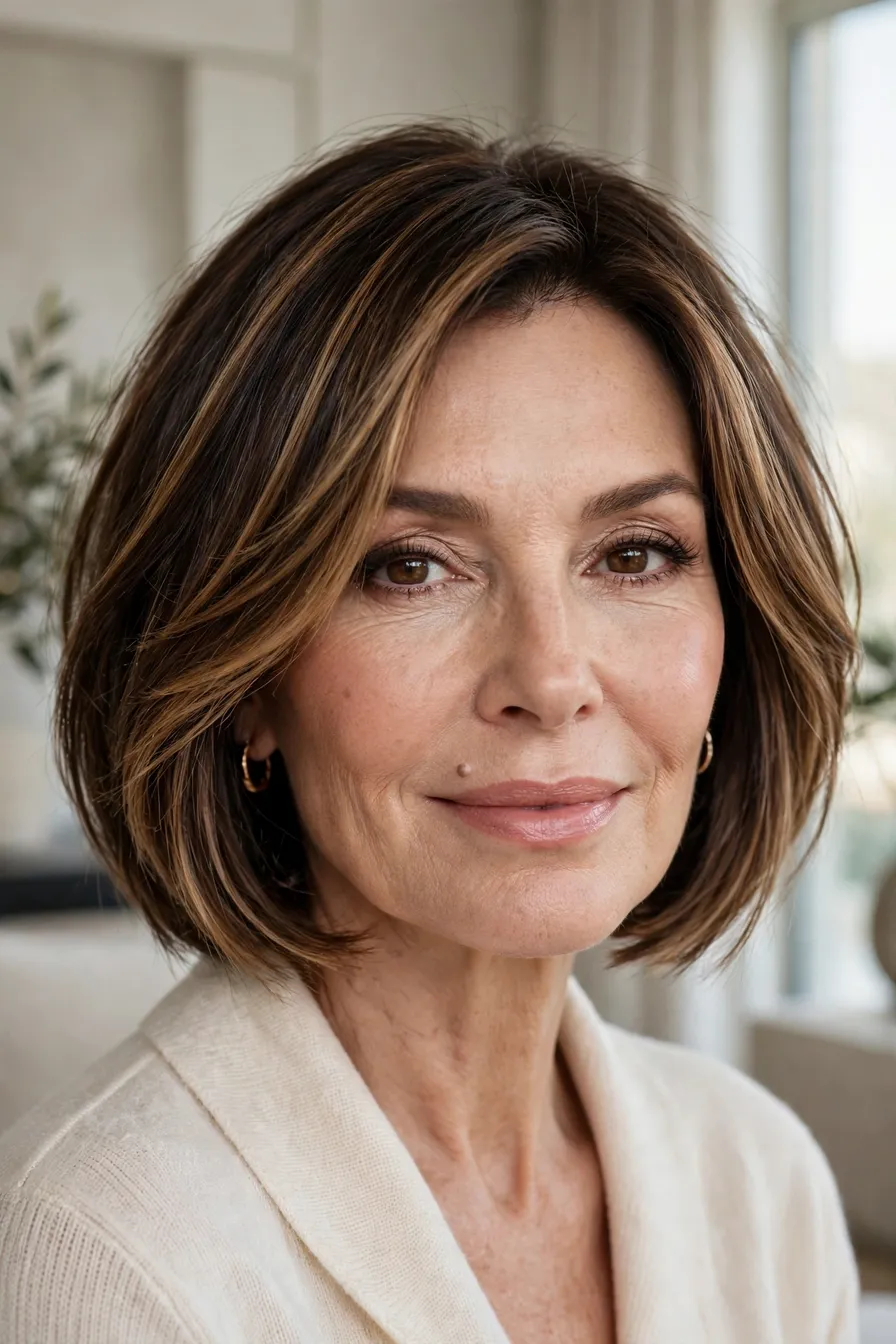
On short hair the painting compresses: fewer, more deliberate pieces, concentrated at the front and the surface layers, because there is less length for a gradient to develop across. It adds the movement that one-length bobs can lack. See the shapes it suits in our bob haircuts guide — the layered and textured bobs take balayage best.
10. Brunette Balayage on Curly Hair
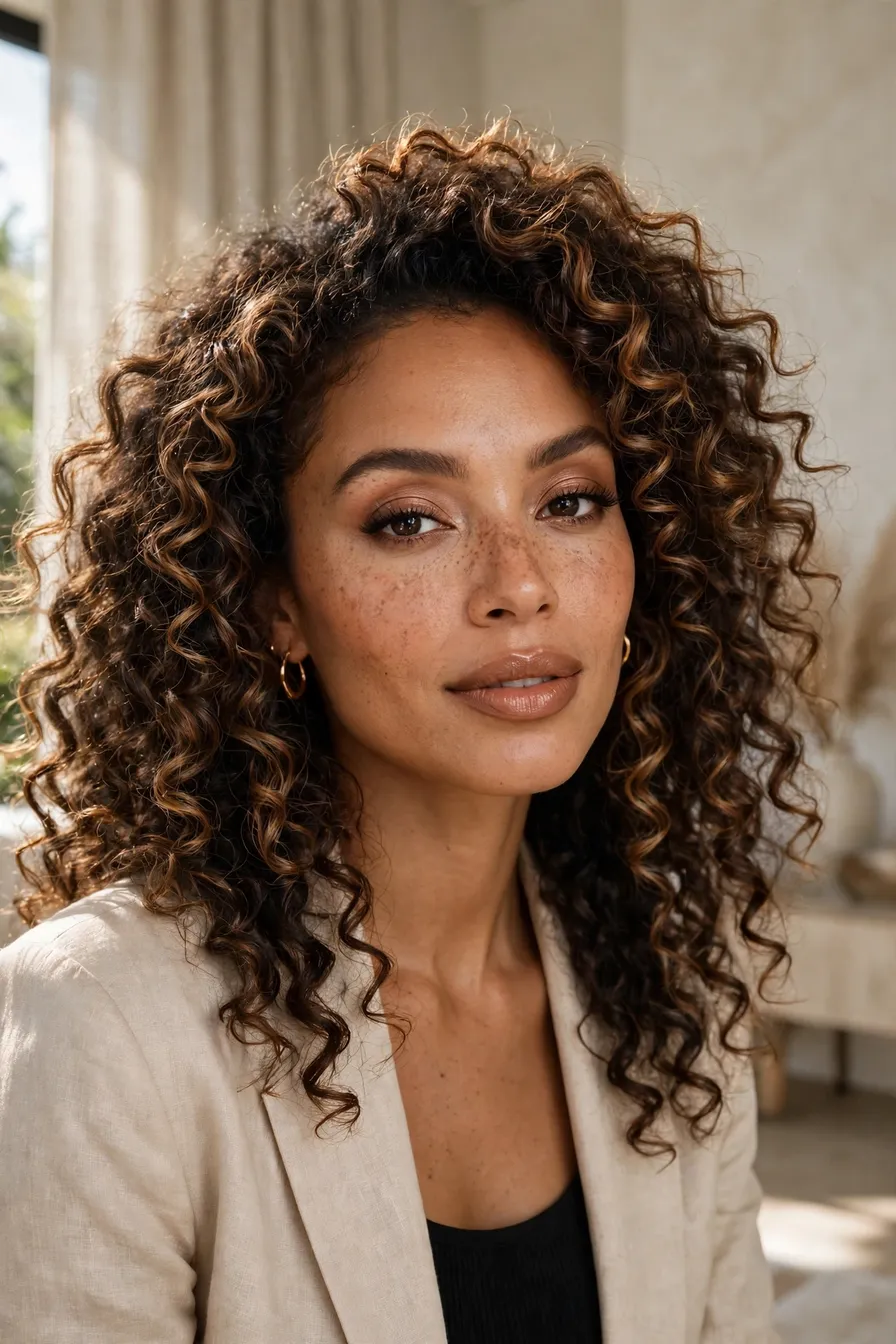
Curly balayage is painted curl by curl, on dry hair, placing lightness where each curl catches light naturally. Done this way it defines the curl pattern and adds visible depth; done with standard foils on wet hair, the placement lands randomly once the curls spring back. This is specialism territory — choose a colourist who paints curls regularly.
11. Low-Maintenance Lived-In Brunette Balayage
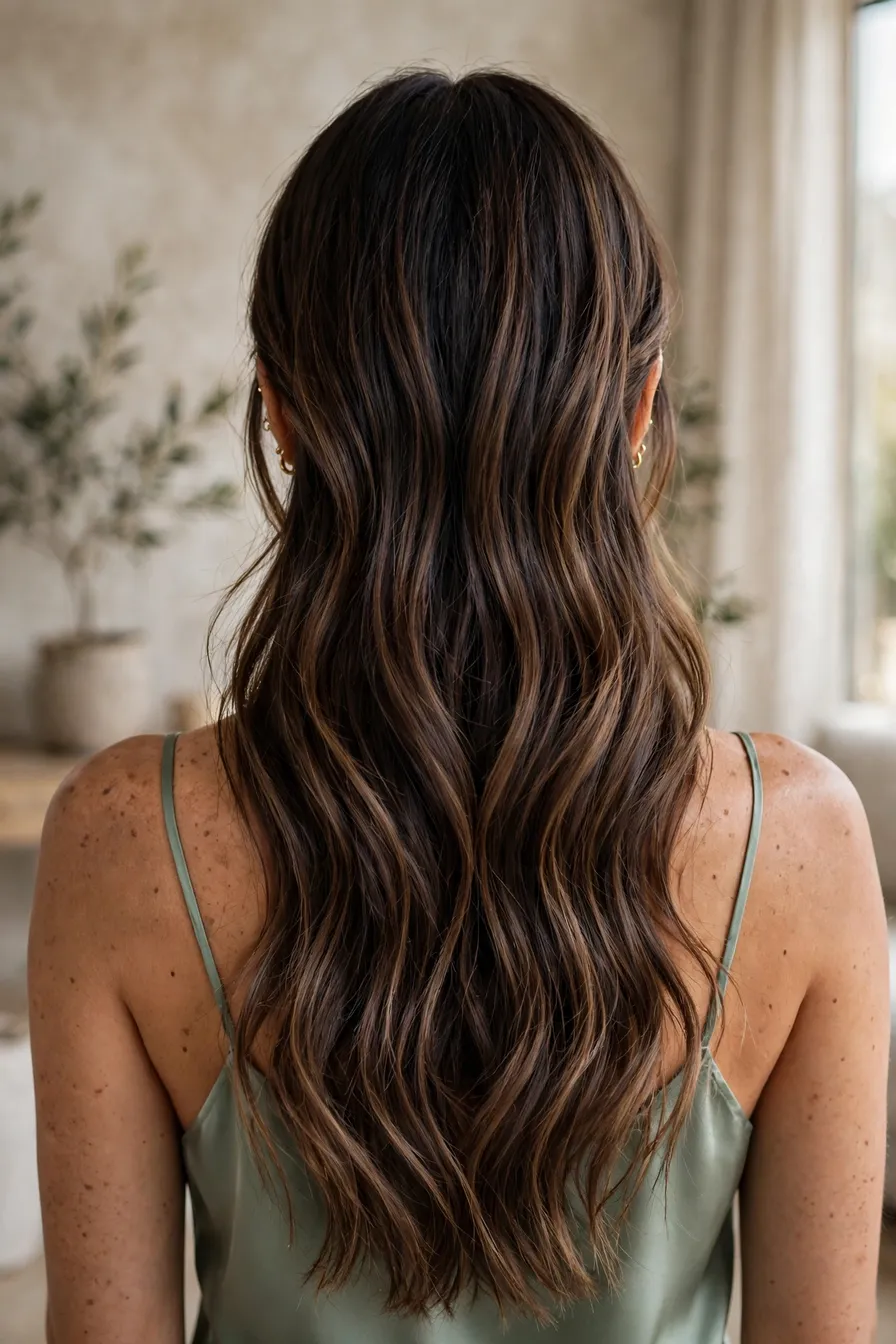
The version engineered for the longest gaps between appointments: a deeper root shadow, lightness starting lower on the shaft, and tones chosen close to your natural base so fading is gentle. Four to six months between salon visits is realistic. Most other entries on this page can be adapted into lived-in versions — tell your colourist the maintenance interval matters more to you than maximum brightness.
12. High-Contrast Brunette Balayage
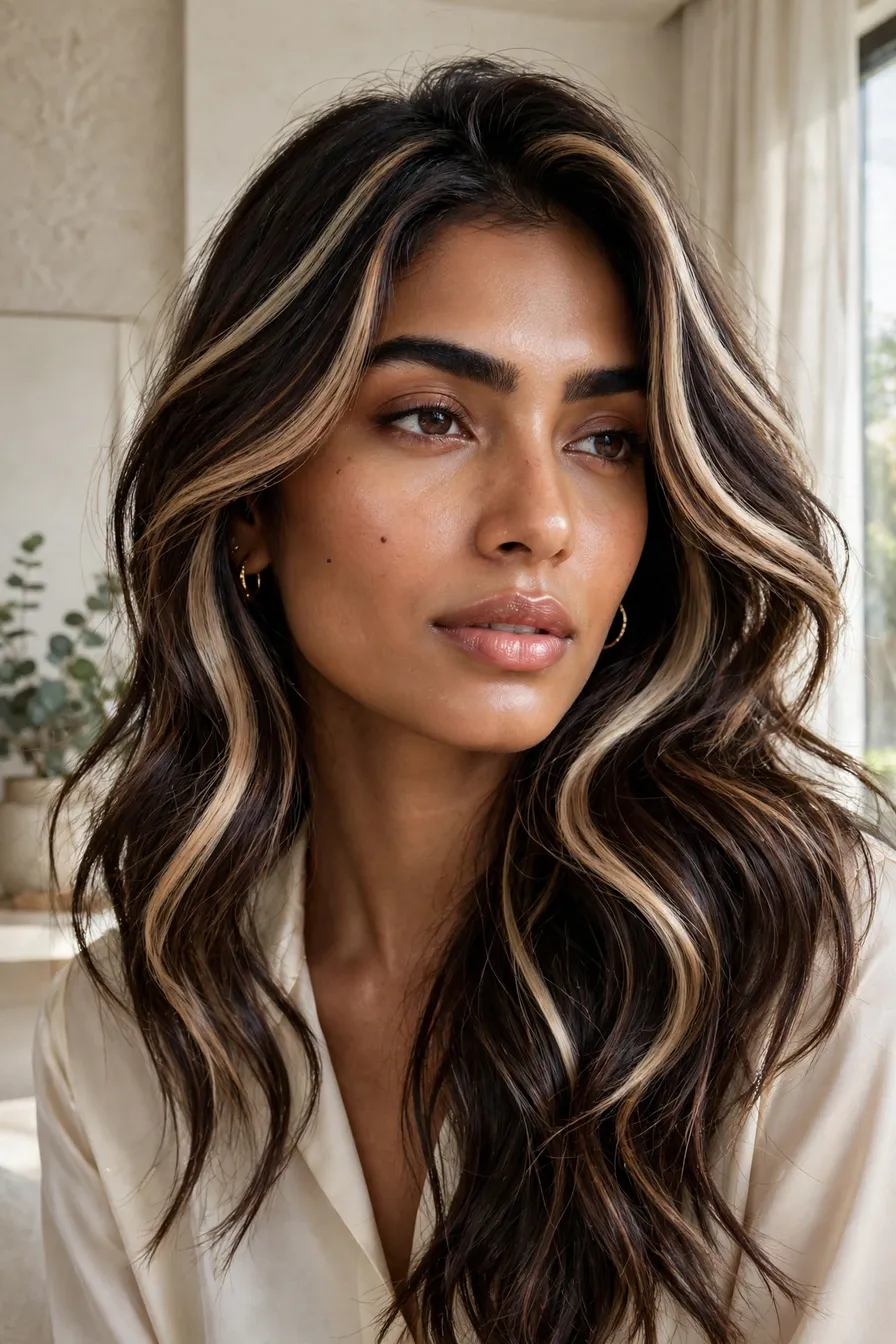
The dramatic end of the scale: a dark base kept dark, with ribbons lifted several levels so the contrast is unmistakable. It is striking and deliberately not natural-looking. The trade-offs are real — the most lightener, the most toning upkeep, and a grow-out that shows sooner — so it suits people who enjoy the salon rhythm rather than tolerate it.
Balayage vs Highlights on Brunette Hair
The honest comparison: foil highlights give uniform, brighter, root-to-tip lightness with a visible regrowth line and appointments every six to eight weeks. Balayage gives graduated, surface lightness with no hard line and appointments two to four times a year, but it cannot lift as dramatically in one session and costs more per visit. Brunettes who want to be noticeably lighter overall usually end up combining both — foils through the top for brightness, balayage through the lengths for the gradient — which most colourists call foilyage.
What to Ask For (and What It Costs)
Bring photos of your chosen tone family and say three things: how light you want the ends, how many months you want between appointments, and what your base colour is doing now (including any old dye — box colour history changes what lightener can achieve). Pricing varies widely by city and salon, but expect balayage to cost more per appointment than highlights and considerably less per year, because the appointments are a third as frequent. A toner or gloss refresh between full appointments is the small spend that keeps the colour looking like the photos.
Frequently Asked Questions
How long does brunette balayage last?
The grow-out is the point of the technique: with no hard regrowth line, most brunette balayage looks intentional for three to six months. What fades sooner is the toner — warmth creeps in after six to ten weeks — which a quick gloss appointment corrects without repainting.
Does balayage damage brown hair?
It uses lightener, so it is not damage-free, but it typically lightens less hair, less aggressively, than a full head of foils, and the ends bear most of it. The lived-in and chocolate versions are the gentlest. Deep-condition the lightened lengths weekly and the practical damage stays modest for most hair types.
What is the best balayage tone for dark brown hair?
Caramel and chocolate tones are the reliable choices: they work with the warm pigment dark hair lifts to, instead of against it. Ash and mushroom tones are achievable but fight that warmth continuously, which is why they need the most toner upkeep.
Can balayage cover grey hair?
It blends greys rather than covering them. Painted pieces around the hairline and parting disguise scattered greys very effectively — this is the popular “grey blending” use of the technique — but it will not give the complete, uniform coverage of a root tint. If greys are dense at the parting, most colourists combine a root colour with balayage lengths.
How much lighter can balayage take a brunette?
Realistically two to four levels at the ends in one session on virgin hair, less on previously coloured hair. Going from dark brown to very light blonde ends is a multi-session project; a good colourist will tell you that upfront rather than push the hair past what it can hold.
Is brunette balayage suitable for short hair?
Yes, with adjusted placement: fewer pieces, concentrated at the front and surface, as in the bob version above. Very short crops and pixies have too little length for a gradient — on those, a money piece or glossing is the better colour move.
Final Thoughts
Choose your tone family first, your maintenance interval second, and the specific photo third — in that order, brunette balayage almost never disappoints, because the technique itself is the most forgiving in colour. Start with caramel or chocolate if you are new to it, go lived-in if appointments are your enemy, and if the moodier end of brunette calls instead, the cherry cola guide is this page’s red-toned sibling.