The French Bob: How to Wear the Timeless Parisian Haircut

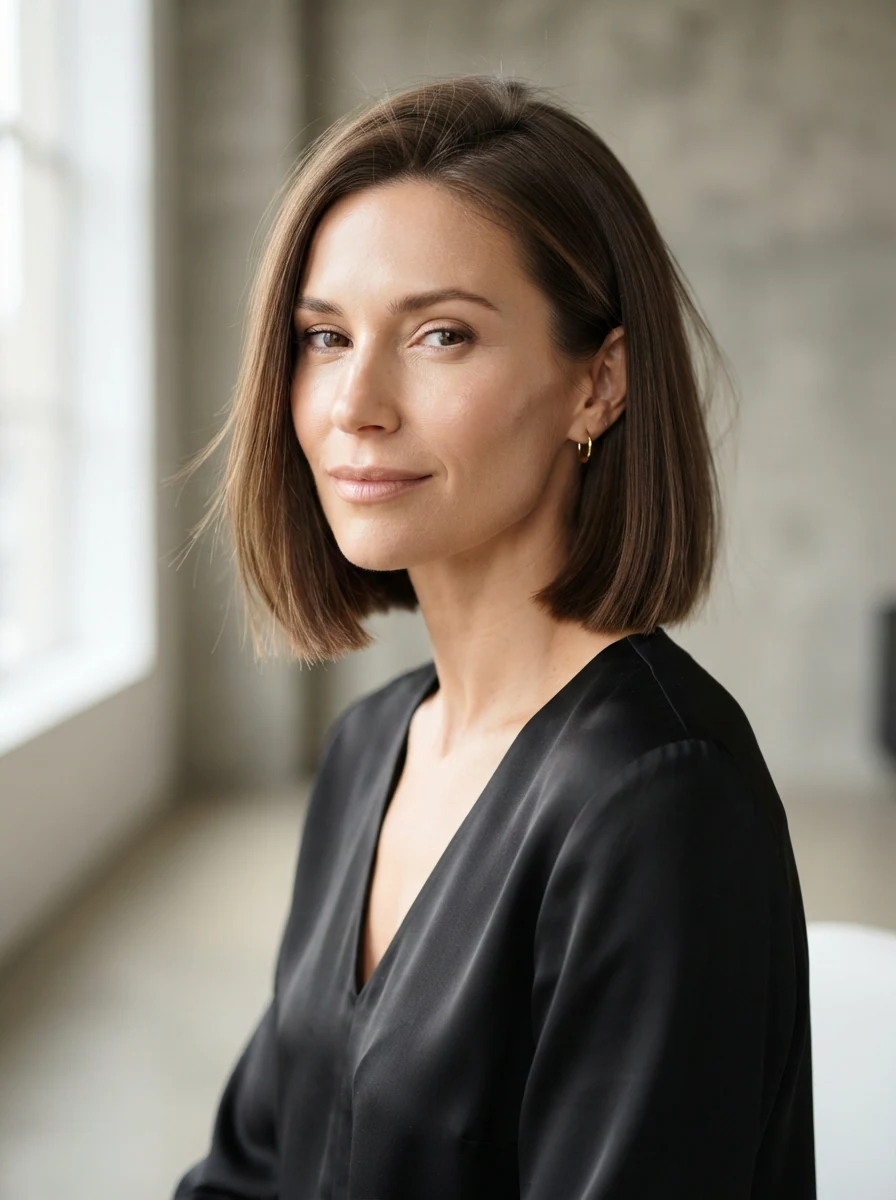
Few haircuts carry as much instant character as the French bob. Unlike a precision Anglo-American blunt bob that demands razor-sharp straightness, the French bob is built on subtle texture, natural movement, and an easy, lived-in feel.
Cut right along the cheekbone or jawline and paired with soft, wispy bangs that graze the eyebrows, this style frames your bone structure like nothing else.
Key Details of a French Bob
Bring reference images to your stylist and discuss these details before the cut:
- The Length: Traditionally hits between the bottom of the earlobe and the corner of the jawline. Grazing the mouth line creates maximum vintage charm.
- The Fringe: A light, brow-skimming or micro-fringe with soft, shattered ends rather than a heavy, solid block.
- Internal Layers: Subtle, invisible graduation underneath prevents the cut from taking on a triangular “pyramid” shape on thicker hair textures.
What to Ask Your Stylist
When you sit in the chair:
- Ask for razor cutting or point cutting: This gives the perimeter that signature soft, flicked-out edge rather than a sterile blunt line.
- Clarify your natural texture: If you have natural waves or curls, ask for the cut to be shaped while dry so shrinkage doesn’t take the length shorter than intended.
- Weight reduction at the perimeter: Request internal debulking around the nape so the hair sits close to the neck.
3 Low-Effort Ways to Style It
1. The Air-Dried Parisian Texture (Zero Hot Tools)
A French bob can be styled with little heat if the cut works with your natural texture.
- Towel-dry hair thoroughly using a microfiber towel or cotton t-shirt.
- Rake a dime-sized amount of air-dry styling balm or sea-salt cream from mid-lengths to ends.
- Tuck both sides behind your ears while damp—this trains the front pieces into a gentle S-curve as they dry.
- Once 100% dry, untuck behind your ears, flip your head upside down, and massage your roots.
2. The Soft Polished Wave
For evening events or professional settings where you want defined movement:
- Take a 1-inch flat iron and clamp 2-inch vertical sections.
- Alternate between twisting your wrist forward and backward in a gentle “wave” pattern down each strand.
- Leave the bottom half-inch of your ends straight for a modern edge.
- Finish with a drop of lightweight dry hair oil rubbed across your palms and lightly skimmed over surface flyaways.
3. The 60s Tuck
For retro French girl energy:
- Blow-dry with a medium paddle brush, gently beveling the ends inward toward your jawline.
- Keep the bangs straight and wispy.
- Tuck one side behind one ear to show off statement earrings or a crisp collared shirt.
Is a French Bob Right for Your Hair Type?
- Fine, Straight Hair: Gains immediate apparent density and volume because the shorter length eliminates heavy dragging weight.
- Naturally Wavy Hair: Waves can add movement to the cut; a light styling product may help shape the ends.
- Thick / Coarse Hair: Needs skilled internal texture carving from your stylist to prevent bottom-heavy puffiness.
- Curly Hair: Creates a stunning halo shape that highlights eye color and cheekbones.
Keep scrolling
All posts